
2021 Design Awards: Call for Entries

AIA Virginia’s Awards for Excellence in Architecture recognize outstanding design, built and unbuilt, from the past seven years. Also known as the Design Awards, the program is juried by a team of esteemed practitioners.

Each entry will be judged on how successful the project is in meeting its individual requirements. Consideration is given to aesthetics, social impact, innovation, context, performance, and stewardship of the natural environment — with particular emphasis on the Framework for Design Excellence.

Each entry must include a completed Framework for Design Excellence Project Information Form as page one of its submission. It is understood that every project is different and may not respond to each measure within the Framework. The jury will consider each design holistically and within context.

No specific number of awards is set, and the program is open to all categories of building as well as interiors projects. The location of projects is not restricted, but any built works submitted for consideration must have been completed on or after Jan. 1, 2014. Enter online.

In 2021, we’ve launched new and revised awards categories — including a small projects award and extended use awards. To learn more about these changes, watch the recording of an overview that we offered on May 14 at 4 p.m.

Check out the complete descriptions of each of the awards categories, and review the regulations, eligibility requirements, and frequently asked questions for more information.

Awards Categories include:

  • Architecture;
  • Contextual Design;
  • Extended Use with the following sub-categories:
    • Historic Preservation
    • Adaptive or Continued Use
    • Continued Use of Owner-Occupied Single-Family House Following Renovation
  • Interiors;
  • Residential; and
  • Small Projects with the following sub-categories:
    • Up to $150K in construction cost
    • Up to $500K in construction cost
    • Under 5,000 square feet (Updated from 2,500)

Entries are due by 5 p.m. on June 24, 2021. Note: You should be prepared to submit your concealed ID and project submission upon entry.

Entry fees

AIA Virginia Members:
$190 for the first project
$160 for each additional project
The Small Projects Category has a reduced entry fee of $100 for each entry
Note: The entrant must be a member of AIA Virginia to be eligible to receive the member discount. The submitting AIA Virginia member must be a contributor to the design team.

Non-members of the AIAVA (must have an office located in Virginia):
$245 for the first project
$220 for each additional project
The Small Projects Category has a reduced entry fee of $200 for each entry

Not an AIA Virginia member? Apply for unassigned membership.

About the Framework for Design Excellence

Developed by members of the AIA, the Framework for Design Excellence, represents the defining principles of good design in the 21st century. It’s intended to be accessible and relevant for every architect, every client, and every project — regardless of size, typology, or aspiration.

The 10 measures that make up the Framework are intended to inspire progress toward a zero-carbon, equitable, resilient, and healthy built environment. They represent standards of excellence as defined by members of the AIA. These measures align with the AIA’s core values which are collectively defined by members across the country.

The completed Framework for Design Excellence Project Information Form is required and shall be page 1 of each submission.

We recognize every project is different and may not respond to every measure within the Framework. The jury will consider the design holistically and within context.

Data may not be available for some metrics on the form, or the client may prefer to keep certain metrics confidential. If this is the case, space is provided on the form to provide an explanation.

Entrants are encouraged to call out extraordinary responses to specific measures in the remaining 6 pages of their submission as well.

Cheadle, Cushing, and Daniel Granted Honorary Membership from Virginia Architects

Judy Cheadle, Patrick Cushing, and Sam Daniel will be recognized by AIA Virginia with Honorary Membership for their sustained commitment and tireless work on behalf of the Commonwealth’s 7,000 licensed architects. Honorary Membership is bestowed upon a person of esteemed character who is not eligible for membership in the AIA Virginia but who has rendered distinguished and exemplary service, over a sustained period of time, to architecture and the built environment within the domain of AIA Virginia.

Cheadle, who is retiring as AIA’s Director of Sales this year, served as the key business development team member instrumental in the financial success of AIA Virginia programs. For sponsors, exhibitors, and partners, she was the “face” of architecture, working tirelessly to make Architecture Exchange East, Design Forum, Art of Practice, and Inform Magazine valuable venues and resources for architects, product manufacturers, and everyone in the region’s design community. “ Her success is easily acknowledged by the number of allied partners who continue to support AIA Virginia year after year to build professional relationships with our 2,500 architects and designers,” says Elizabeth Reader, FAIA, in her nomination letter. “Undoubtedly, there is a direct and obvious link between Judy’s contributions to the profession and the success of AIA Virginia.”

Cushing, a Richmond-based attorney with Williams Mullen, has lobbied the Virginia General Assembly on behalf of the Commonwealth’s architects and engineers for nearly a decade, advancing the work of AIA Virginia’s and Virginia ACE’s Joint Legislative Committee. Cushing’s work has been instrumental in protecting Qualifications Based Selection, limiting low-bid practices for architecture and engineering services, and establishing a statute of limitations on design claims by state agencies, among other accomplishments.

Of Cushing, Kenneth Payne, AIA, Vice President of Quality Control, Risk Management, and Training at Moseley Architects and an AIA Virginia representative on the JLC, asks, “You may think, ‘Isn’t that what we pay him to do?’ Perhaps, but consider this: When negotiations were not going well and it looked like the other side was going to oppose our bill, Patrick could have given up, as well, but instead, encouraged us to keep discussions going.” Simply put, says Payne, “Patrick has rendered distinguished and exemplary service representing the architectural community before the General Assembly for nearly ten years.”

Daniel, of Daniel & Company, a full-service general contracting and construction management firm, is a committed preservationist who eagerly accepts projects with historical significance and executes thoughtful and contextual renovations and additions. His company’s passion for “Building History,” underscores decades of fruitful partnerships with Virginia’s premier firms to preserve whenever possible, restore in a respectful way, and construct anew with more than an eye toward the Commonwealth’s architectural heritage. “His leadership and support of the  Branch House through his stewardship efforts has been outstanding and the building’s health is turning the corner toward stabilization and prominence,” note architect Robert Boynton, FAIA, and AIA Richmond President Nick Cooper, AIA.

Daniel is also a champion of sustainability, encouraging all of Daniel & Company employees to participate in continuing education and obtain LEED Certification, enabling the company to successfully complete LEED Certified Projects, some achieving Gold status. Over the years, Daniel & Company has worked with a who’s who of Virginia firms, from Hanbury Evans to Carlton Abbott to BAM Architects to Odell to Commonwealth Architects, among dozens of others. His affiliations over the years have included the Virginia Council of CEOs, the Construction Specifications Institute, and the Monument Avenue Preservation Society, as well as Virginia AIA, about which Boyton and Cooper write, “His impressive credentials and his continued support of AIA Virginia will certainly enrich all of our architectural lives.”

Honorary Membership will be conferred at Visions for Architecture on Thursday, Oct. 8 in an online awards ceremony beginning at 4:30 p.m. The program is free but registration is required.

Bulova and VCU Office of Planning and Design Recognized with AIA Virginia Honors

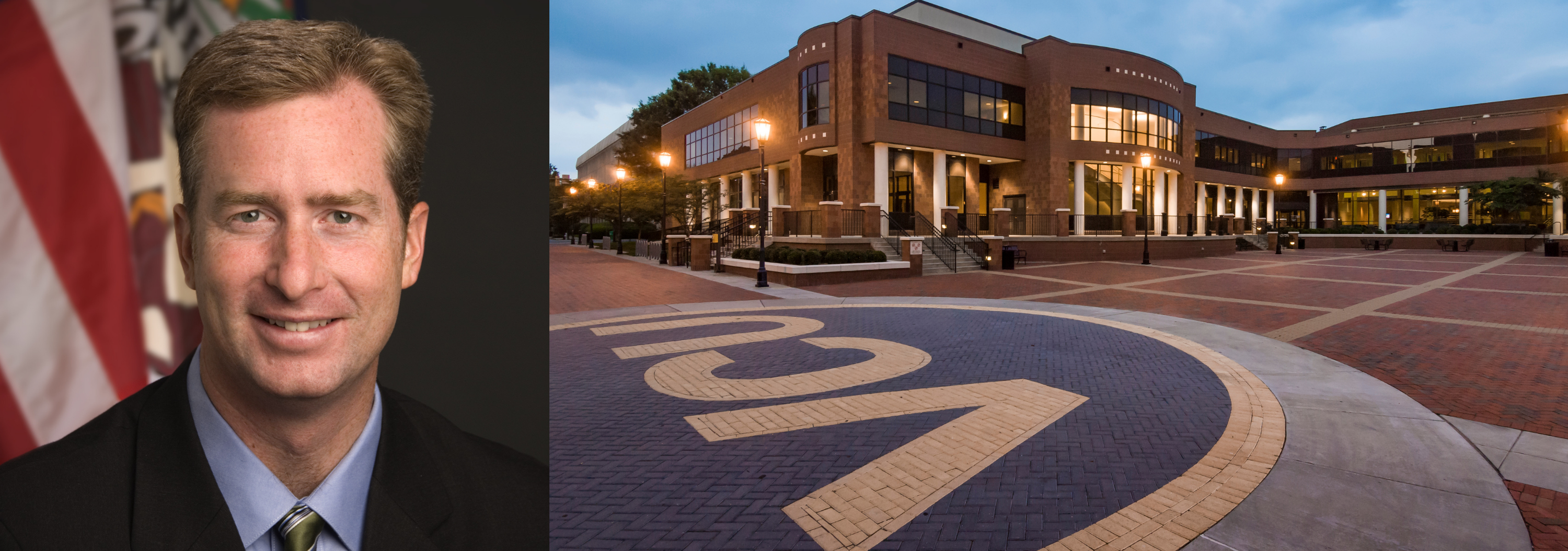
Delegate David Bulova and the Virginia Commonwealth University (VCU) Office of Planning and Design were recognized with AIA Virginia Honors in 2020. AIA Virginia Honors may be bestowed on non-member individuals or organizations that have inspired, influenced, or complemented the architecture profession in Virginia through practice of an allied profession, research, education, planning, legislation, architectural writing, the arts, or crafts.

AIA Virginia Honoree, the Honorable David Bulova, is a delegate from Virginia’s 37th House District, representing the City of Fairfax and parts of Fairfax County. Bulova’s achievements in the areas of smart growth, equity, and alternative energy have garnered praise from many quarters, and his reputation as a results-driven legislator is matched by his knowledge of architecture’s practice and regulation. His appreciation for the role architecture and planning play in shaping livable places without compromising environmental health has been made abundantly clear by his legislative achievements in the areas of transportation, education, affordable housing, energy, and the environment. As an acclaimed member of the allied field of environmental planning, and as a respected member of the Virginia House of Delegates for fifteen years, Delegate Bulova has championed legislation that furthers the goals of AIA Virginia’s Strategic Plan and Directory of Public Policies and Position Statements. Those achievements include House Bill 1471 giving Fairfax additional authority to negotiate with developers to provide affordable housing, House Bill 1913, authorizing localities to require sidewalks during development to promote walking, biking, and public transit, and House Bill 1158, requiring the review of a state water supply plan by the State Water Control Board when making permitting decisions. Delegate Bulova’s personal, professional, and legislative endeavors attest to his commitment to equity and sustainability in both the built and natural environments; a commitment that we share as architects.

AIA Virginia Honoree, the VCU Office of Planning and Design, led for the last 27 years by Mary P. Cox, FAIA, has transformed the City of Richmond’s largest campus from a commuter school into a rich and vibrant collegiate community. VCU has taken its place among its peers with robust enrollment numbers and by investing more than $1.5 billion in new construction, renovations, and additions in the 27 years of the Office of Planning and Design’s existence. Acting as the design conscience of VCU, the Office of Planning and Design has effectively collaborated with architects over the years and challenged them to consider Richmond’s urban fabric, the university’s needs, and the health and wellness of its students, faculty, staff, and neighbors.

The office, itself, is known as an environment of mutual trust and respect in its support of staff and the creative process of design, as well as an effective public advocate of architectural literacy. The Office of Planning and Design has long partnered with organizations to engage the architecture profession, the larger design community, and the public’s trust, including AIA Virginia, the Association of University Architects, the Society for College and University Planning, and the Children’s Museum of Richmond, among others.

At the helm, Noland Medal recipient Mary Cox has defined, defended, reinvigorated, and advanced the Office of Planning and Design, which, in turn, has advanced VCU’s standing within higher education. As part of her tenure, no fewer than five master plans have been adopted by the university, and dozens of new academic, medical, athletic, and research facilities have been designed and constructed. Her retirement in July of 2020 signals the end of an era for the Office of Planning and Design, but her vision and steadfast commitment over the years has created an ample foundation for VCU’s next chapter at a time when concepts like physicality, health, and community will need to evolve at campuses everywhere.

The Awards will be presented at Visions for Architecture on Thursday, Oct. 8 in an online awards ceremony beginning at 4:30 p.m. The program is free but registration is required.

Virginia Beach City Public Schools Awarded the Architecture Medal for Virginia Service

Virginia Beach City Public Schools (VBCPS) will be awarded the Architectural Medal for Virginia Service this year for its commitment to environmental, social, and financial health in its building campaigns, and aligning this commitment with curricular innovation. As the AIA Virginia’s most prestigious public award, the Architecture Medal for Virginia Service honors an individual or an organization that has made an unusually significant contribution to Virginia’s built environment or to our understanding and awareness of the built environment. Since 1984, and with this year’s award, 35 individuals and two organizations have been premiated with the medal.

VBCPS students actively learn about the interconnectedness of our world, and through the school district’s efforts, they are able to recognize the importance of place, values, and culture in the Commonwealth. For the past 15 years, VBCPS has been both a regional and statewide recognized leader in school design and sustainability. Since the development and initiation of their Sustainable Schools program in 2006, VBCPS has constructed nine LEED buildings, and plans to complete three more in 2020 alone, bringing its LEED building inventory to over 2 million square feet. Since 2006, they have managed to reduce their energy use per square foot by 27 percent, even while adding nine percent to their total building square footage, resulting in a cumulative cost avoidance of $45 million since 2006.

VBCPS’s commitment has expanded beyond the building envelope to demonstrate how the Commonwealth’s fourth largest school district can walk the walk on sustainability in a real and long-term way. Examples include implementing a “cook-from-scratch” program for cafeteria food (thereby relying less on packaged items and instructing students on food sourcing and preparation), to supporting electric buses and charging stations, to its 25-year partnership with the Chesapeake Bay Foundation to create outdoor learning experiences, to integrating sustainable messages, practices, and principles into all aspects of its curriculum for all grades.

In his nomination letter, AIA Hampton Roads President Scott A. Campbell, AIA, applauded “VBCPS’s exceptional and relentless dedication to their mission of ‘educating students about the Triple Bottom Line and understanding the interconnectedness and interdependency of social, economic and environmental systems,” and calling VBCPS’s award, “a well-deserved honor for their incredible accomplishments in school design and sustainability.”

The Architecture Medal for Virginia Service will be presented at Visions for Architecture on Thursday, Oct. 8 in an online awards ceremony beginning at 4:30 p.m. The program is free but registration is required.

Mark Gardner Announced as 2020 Design Awards Jury Chair

Principal of New York-based firm Jaklitsch/Gardner Architects and Director for the Parsons New School MArch program Mark Gardner, AIA, NOMA will serve as the jury chair for the 2020 Design Awards program.

About Mark Gardner, AIA, NOMA

Gardner takes a serious interest in the nexus of architecture and art — one of long-standing importance to both his professional practice and his writings. He is committed to practicing architecture as a socially beneficial art form.

Jaklitsch / Gardner Architects is an award-winning design practice with an international reputation for design excellence, material research, and its exacting commitment to craft. The firm has won an AIA National Honor Award and numerous AIANY, NOMA, and Architizer design awards. The practice is currently working with a non-profit partner on a Honey Bee Study Center in Dodoma, Tanzania.

Gardner is the Assistant Professor of Architectural Practice and Society at the School of the Constructed Environments, Parsons the New School. He’s on the Board of Overseers for the University of Pennsylvania Weitzman School Of Design, where he is helping the school study issues of diversity and inclusion. He also currently serves on the board of the Youth Design Center (YDC), a nonprofit on a mission to reduce the number of disconnected youth in Brownsville, Brooklyn by lowering their barriers to entry to the STEAM professions and increasing their relevant experience in the innovation economy.

He is Past President and former Advocacy Chair for nycobaNOMA, the New York Chapter of the National Organization of Minority Architects. He is a member of the AIANY Exhibition Committee and Past Co-Chair and current member of the AIANY Diversity & Inclusion Committee. He is Vanguard Member of the Van Alen Institute’s Board of Trustees and a Fellow of the Urban Design Forum.

About the Design Awards

AIA Virginia’s Awards for Excellence in Architecture recognize outstanding design, built and unbuilt, from the past eight years. The location of projects is not restricted, but any built works submitted for consideration must have been completed after January 1, 2012. 

There are five categories in the Awards for Excellence: Architecture; Historic Preservation; Interiors; Contextual Design; and Residential Design.

Each entry will be judged on how successful the project is in meeting its individual requirements, with particular emphasis on design excellence. In each category, consideration is given to aesthetics, social impact, innovation, context, performance, and stewardship of the natural environment.

Highlight Your Interiors Work in Inform

Show off your design research and interiors projects! Contribute a project profile or your research and insights to the upcoming Interiors Issue of Inform Magazine.

Articles should be between 300-1,000 words (depending on the topic) and may link to outside sources — including your firm or university website. Content may be edited for style and accuracy.

Content Guidelines

Inform Magazine’s goal is to highlight our members’ contributions to the built environment to each other and to the public, so it is ideal to highlight methods, research, and materials that elevate the overall understanding of a particular typology or approach.

We ask our contributors to avoid marketing or sales-oriented language (as well as “archi-speak”) in submitted pieces, however you are welcomed —even encouraged — to credit consultants or products that contributed to the overall success of the project.

We’d ask you to share images of your work or research. We prefer images to be at least 650 pixels wide and ask that you include any necessary image credits.

Let us know if you want to contribute by Aug. 3.  The content deadline is Aug. 19. Questions? Contact Rhea George.   

Inform celebrates Virginia’s rich culture of design and the diverse individuals who shape it.

Show Us your Sketches

Art can be healing. Inspiring. Challenging. Liberating. It can put a smile on someone’s face, bring people together, or provoke hard conversations. (Sometimes all at once.) Frankly, we could probably use a little bit of each of these things right now. Show us your sketches and we’ll share them with the world through Inform Magazine‘s platform.

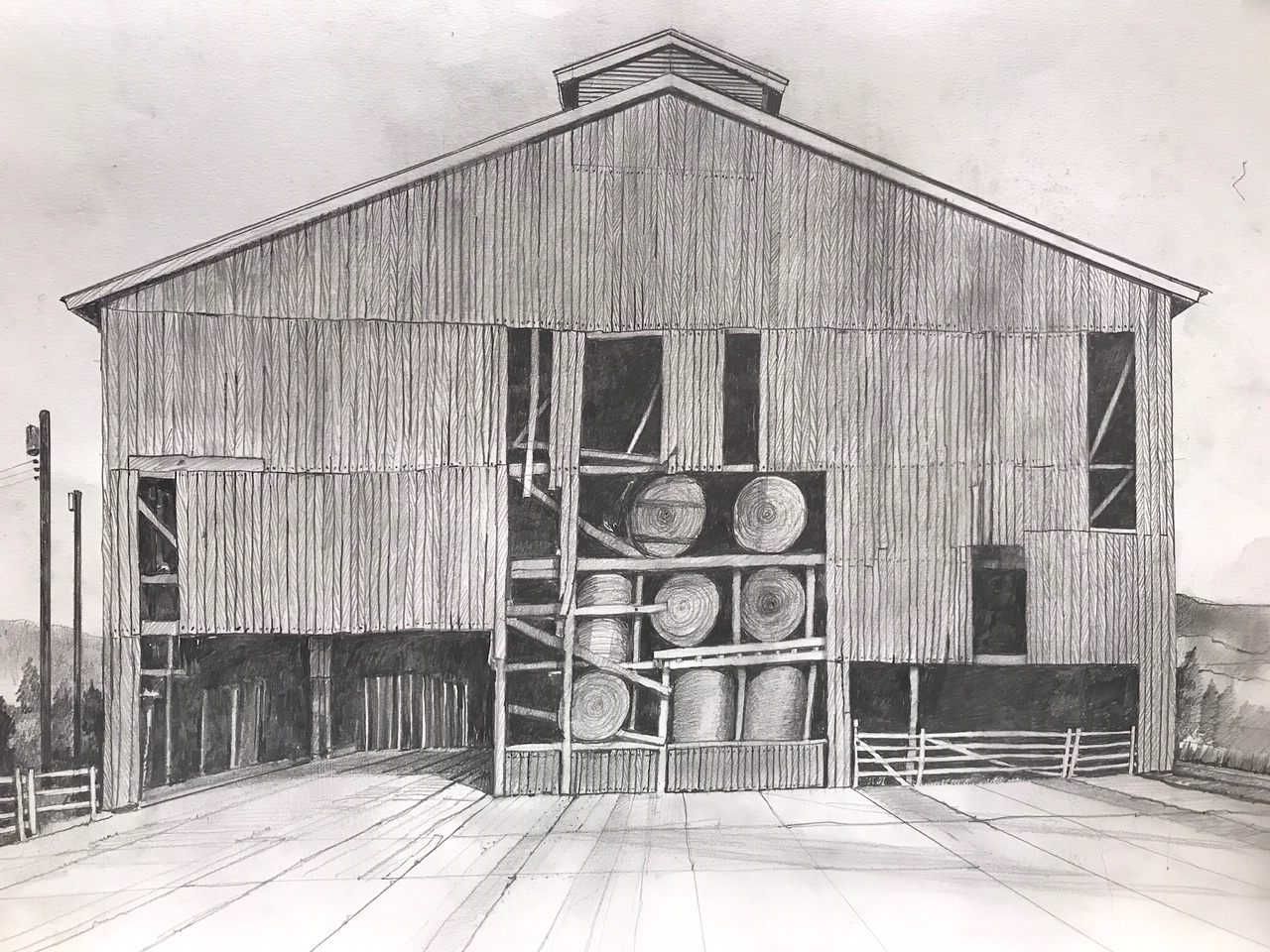
Since its inception, we hoped Inform would be a place to exchange ideas and art. We’ve been lucky enough to have Virginia legend Carlton Abbott, FAIA be the first to share his sketch of a Nelson County Barn. Now, we’re hoping you’ll share your work too!

Simply fill out this brief form, give us your name and tell us a little bit about your sketch (if you feel like it), upload your sketch, and give us the thumbs up to share it. We’re looking forward to seeing what you’ve got!

Call for Entries: 2020 Design Awards

AIA Virginia’s Awards for Excellence in Architecture recognize outstanding design, built and unbuilt, from the past eight years. Also known as the Design Awards, the program is juried by a team of esteemed practitioners. No specific number of awards is set, and the program is open to all categories of building as well as interiors projects. The location of projects is not restricted, but any built works submitted for consideration must have been completed after January 1, 2012. Enter online.

There are five categories in the Awards for Excellence:
Architecture
Historic Preservation
Interiors
Contextual Design; and
Residential Design.

Each entry will be judged on how successful the project is in meeting its individual requirements, with particular emphasis on design excellence.

In each category, consideration is given to aesthetics, social impact, innovation, context, performance, and stewardship of the natural environment.

Check out the complete descriptions of the awards categories, and review the regulations, eligibility requirements, and frequently asked questions for more information.

Entries are due by 5 p.m. on Thursday, July 16, 2020. Note: You should be prepared to submit your concealed ID and project submission upon entry.

Entry fees
AIA Virginia members: $190 for first project; $160 for additional projects
AIA Virginia Associate members: $85 for each project
Non-member w/ office in Virginia: $245 for first project; $220 for additional projects

Note that you must be a member or associate member of the AIA Virginia to receive a member discount. Only members of AIA Virginia are eligible for the discounted member rate, regardless of your national AIA member status.

Not an AIA Virginia member? Apply for unassigned membership.

2019 Design Awards Announced

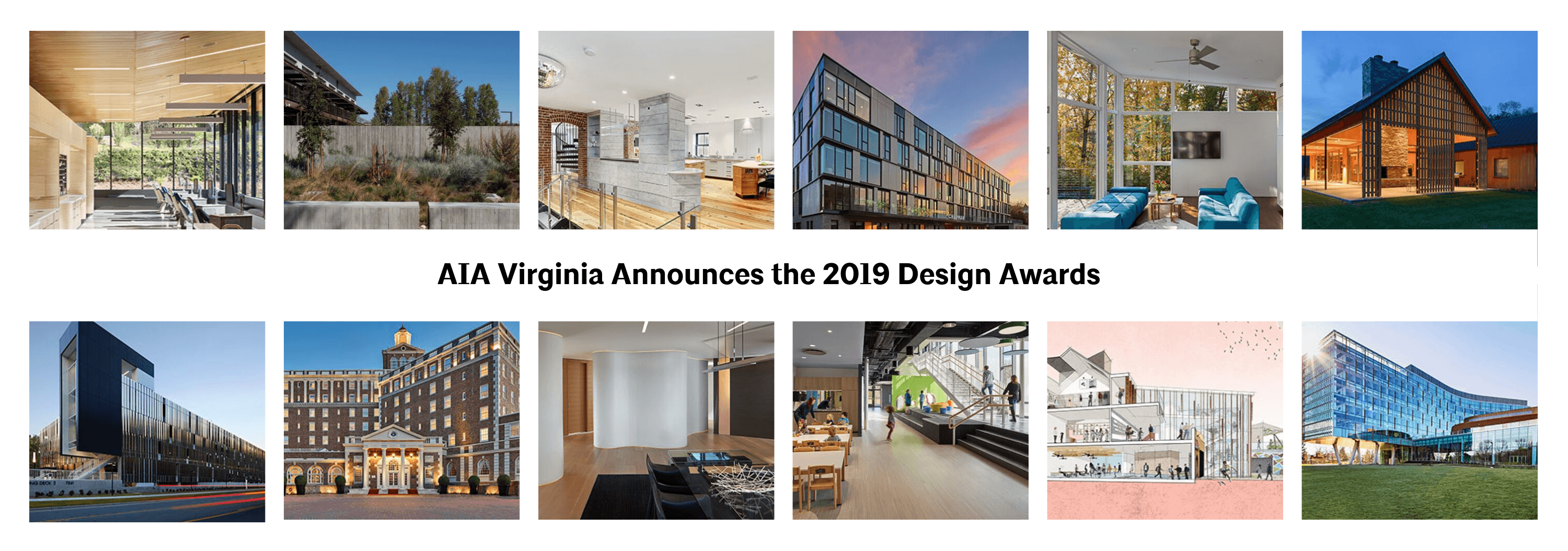
AIA Virginia is pleased to announce the 2019 Awards for Excellence in Architecture. Also known as the Design Awards, these honors celebrate projects no older than seven years that contribute to the built environment and are clear examples of thoughtful, engaging design. Award categories include Architecture, Contextual Design, Historic Preservation, Interior Design, and Residential Design. These 22 projects will be celebrated at the Visions for Architecture gala on Friday, Nov. 8, 2019, at the Hilton Downtown Richmond.  Jury Chair Ann Beha, FAIA, will offer insights from the jury at Architecture Exchange East at 2:45 p.m. on Friday, Nov. 8.

In the ARCHITECTURE category

The jury considers aesthetics, adherence to the client wishes, proven and projected building performance, and concept development during its deliberations.

Awards of Honor

Blue Ridge Orthodontics

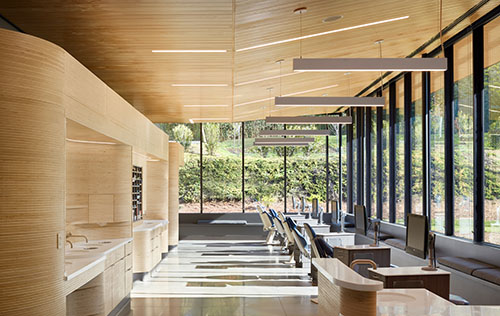
Blue Ridge Orthodontics (Ashville, N.C.)
This project brings an infusion of well-considered craft and good planning into the medical office building type. Light materials convey cleanliness without being institutional and the views to the outdoors convey a sense of tranquility.

Architecture Firm: Clark Nexsen
Owner: Blue Ridge Orthodontics
Contractor: Beverly-Grant, Inc.
Photographer: Mark Herboth Photography, LLC


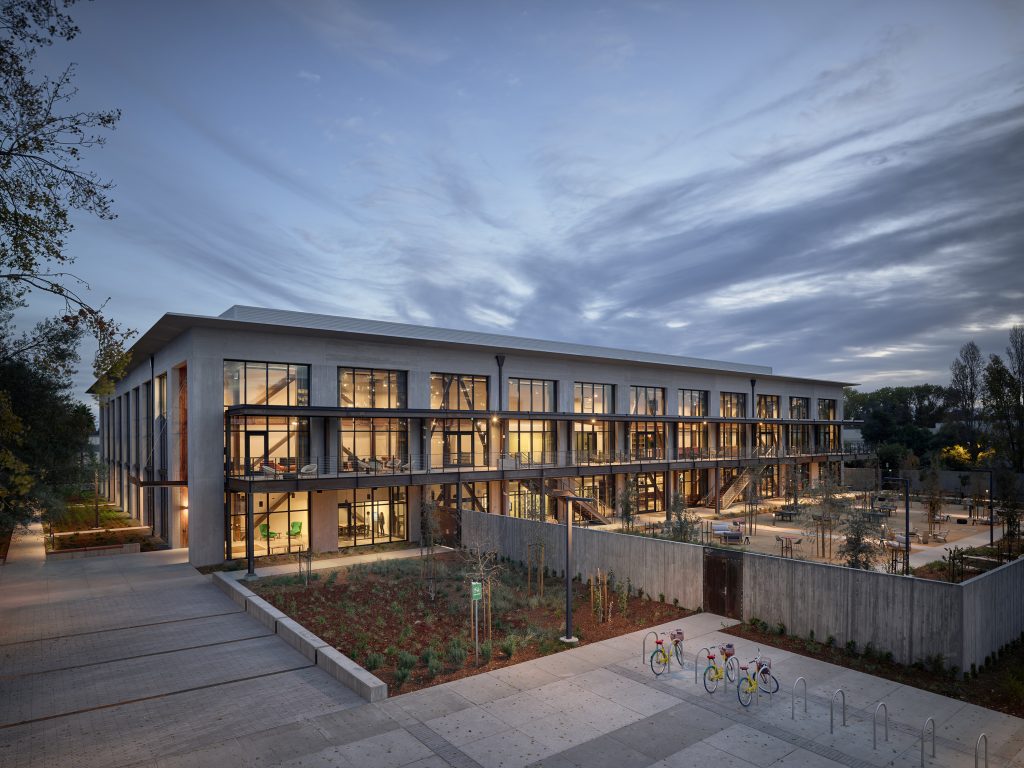
Google at 1212 Bordeaux

Google at 1212 Bordeaux (Sunnyvale, Ca.)
This thoughtfully-planned project is well connected to its compact setting. The materials and bridges help achieve unity and visibility in this highly-collaborative office space.

Architecture Firm: Parabola Architecture
Owner: Google
Contractor: Devcon Construction, Inc.
Photographers: Prakash Patel Photography (featured) and Kevin Burke Photography


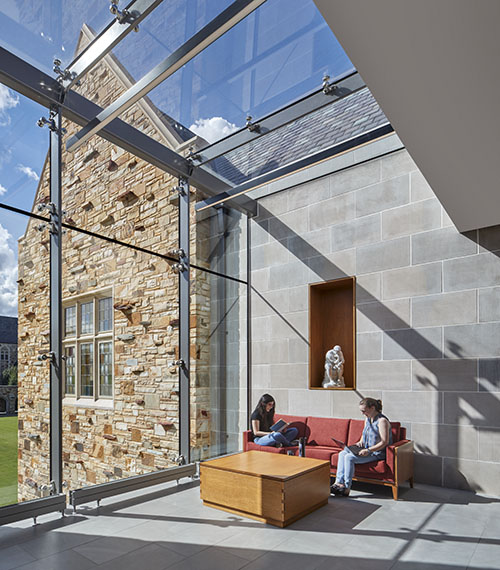
Rhodes College Robertson Hall

Rhodes College Robertson Hall (Memphis, Tn.)
This was an appealing, engaging response to a clear historic context. The architects “pushed it” despite prescriptive exteriors. Fewer materials make the project more coherent and more powerful.

Architecture Firm: Hanbury
Owner: Rhodes College
Contractor: Grinder Tabor & Grinder
Photographer: Robert Benson Photography

Awards of Merit

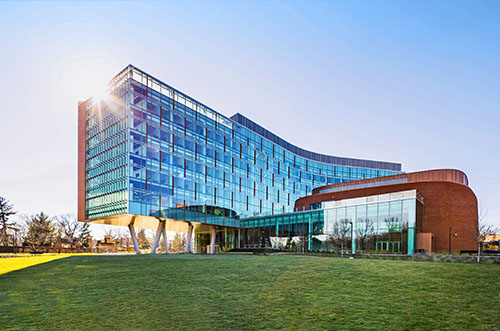
The Brendan Iribe Center for Computer Science and Engineering

The Brendan Iribe Center for Computer Science and Engineering (College Park, Md.)
As a campus gateway, this succeeds in place-making. It showcases “the arrival” with a strong, contemporary statement. The interiors are varied and welcoming, legibly emphasizing STEM education.

Architecture Firm: HDR Architecture, Inc.
Owner: University of Maryland
Contractor: Whiting-Turner Contracting Company
Photographer: Dan Schwalm | HDR


Elon W. Rhodes Early Learning Center

Elon W. Rhodes Early Learning Center (Harrisonburg, Va.)
The scale is good and the planning is extremely strong. Public circulation is active and the adjacencies and flexibilities will make this a long-term asset to the school system.

Architecture Firm: VMDO Architects
Owner: Harrisonburg City Public Schools
Contractor: Nielsen Builders
Photographer: Alan Karchmer


Hotels at The Wharf – Canopy by Hilton & Hyatt House

Hotels at The Wharf – Canopy by Hilton & Hyatt House (Washington, D.C.)
An Urbanistic success! The simple, slender façade and skillful massing create active, outdoor spaces which are full of life and urban vitality. The podium and geometries are considerate of site, scale, and marketplace conditions.

Architecture Firm: SmithGroup
Owner: Hoffman-Madison Waterfront
Contractor: Donohoe Construction Company
Photographers: Hoachlander Davis Photography (featured), Photofusion Media, Alex Fradkin


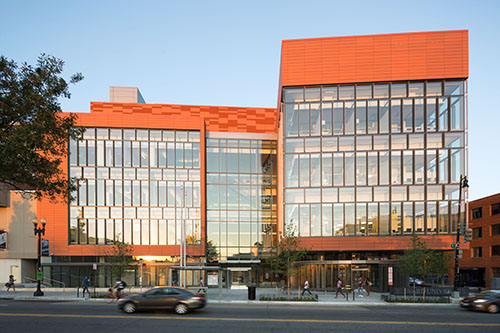
Howard University Interdisciplinary Research Building

Howard University Interdisciplinary Research Building (IRB) (Washington, D.C.)
This project makes a strong, simple statement. It is powerful yet restrained in composition with a clear and dynamic street presence.

Architecture Firm: HDR Architecture, Inc.
Owner: Howard University
Contractor: Turner Construction
Photographer: Ari Burling | Architectural Photography


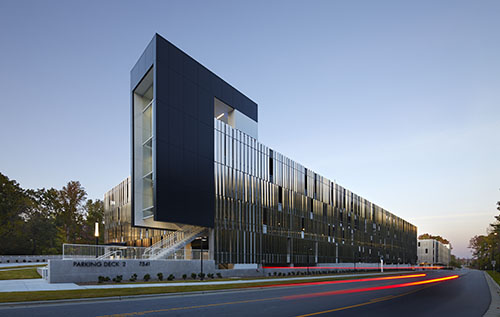
WTCC Parking Deck 2

WTCC Parking Deck 2 (Raleigh, N.C.)
As a parking garage at community college, this really is a good citizen. The cladding and crenellations are good solar control strategies and the views and daylight promote safety and clear wayfinding.

Architecture Firm: Clark Nexsen
Owner: Wake Technical Community College
Contractor: SKANSKA
Photographer: Mark Herboth Photography, LLC

In the CONTEXTUAL DESIGN category

The awards for contextual design are chosen based on outstanding architecture that perceptibly reflects the history, culture, and physical environment of the place in which it stands and that, in turn, contributes to the function, beauty, and meaning of its larger context.

Awards of Merit

550 East Water Street

550 East Water Street (Charlottesville, Va.)
This project claims its own identity while still successfully responding to its site between the rail tracks and street. It’s a wonderful example of good urban infill.

Architecture Firm: Formwork Design Office, LLC
Owner: 550 E. Water St., LLC
Contractor: Martin Horn, Inc.
Photographer: Kevin Blackburn Photography and Michael Stavaridis (featured)


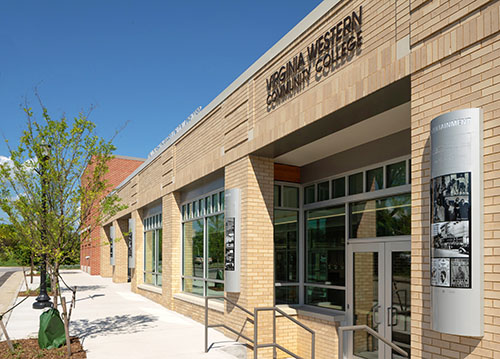
Claude Moore Education Complex (Roanoke, Va.)
With its simple streetscape and successful interior kitchen and training facilities, this is architecture that respectfully contributes to the neighborhood’s vibrant history.

Architecture Firm: Spectrum Design, PC
Owner: Roanoke Higher Education Authority
Contractor: Avis Construction
Photographer: Boyd Pearman Photography


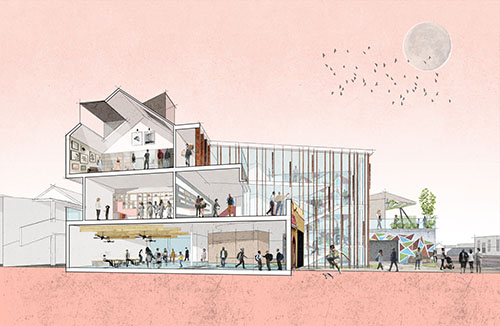
Re-Imagining Benefield

Re-Imagining Benefield (Richmond, Va.)
This is a successful representation of how an engaged design team and a participatory community can work together to create a design that reflects a neighborhood’s values while pushing it to be all it can be.

Architecture Firm: HKS, Inc.
Owner: Boaz & Ruth
Contractor: Urban Core
MEP: Integral Group
Structural Engineer: Dunbar Milby Williams Pittman & Vaughan, PLLC
Renderings: HKS, Inc.

In the HISTORIC PRESERVATION category

The historic preservation category focuses specifically on excellence in strategies, tactics, and technologies that advance the art, craft, and science of preserving historically significant buildings and sites. The jury takes into consideration adherence to local, state, and national criteria for historic preservation.

Award of Honor

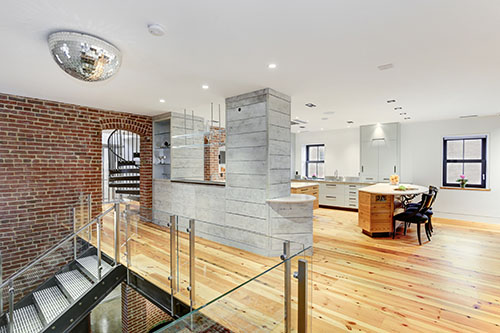
Spencer Carriage House Deep Energy Retrofit

Spencer Carriage House Deep Energy Retrofit (Washington, D.C.)
This is a robust example of repurposing that is both sensitive to history and appealing to a contemporary audience. Balancing the client’s net-zero energy goals with responsible historic preservation is well-documented and laudable.

Architecture Firm: Peabody Architects, Building Envelope and Restoration
Owner: Lew Hages and Gerard Boquel
Contractor: Ari Fingeroth
Interiors Architect: Yoko Barsky, Deco Design Studio
Photographer: David Peabody, Buzz Photo (featured)

Awards of Merit

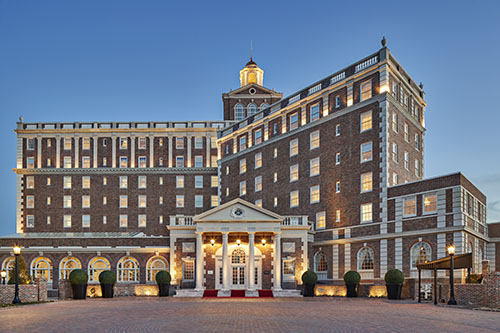
The Cavalier Hotel Rehabilitation

The Cavalier Hotel Rehabilitation (Virginia Beach, Va.)
The design confirms the connection between the hotel and its rich history. Structural solutions are well considered and very innovative.

Architecture Firm: Hanbury
Owner: Gold Key / PHR
Contractor: W.M. Jordan Co.
Photographer: Robert Benson Photography


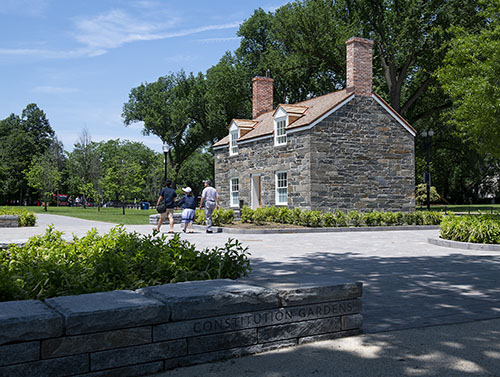
The Lockkeeper’s House

The Lockkeeper’s House (Washington, D.C.)
The exterior, interior, and landscape are all well executed — it feels like welcoming back a lost treasure.

Architecture Firm: Davis Buckley Architects and Planners
Owner: National Park Service
Client: Trust for the National Mall
Contractor: Hensel Phelps
Photographer: Michael Ventura Photography

In the INTERIOR DESIGN category

Interior design projects are judged on mastery of composition, functionality, material and color palettes, and well-integrated adherence to the highest levels of accessibility, health and safety, environmental, and occupant-comfort considerations, standards, and regulations.

Awards of Merit

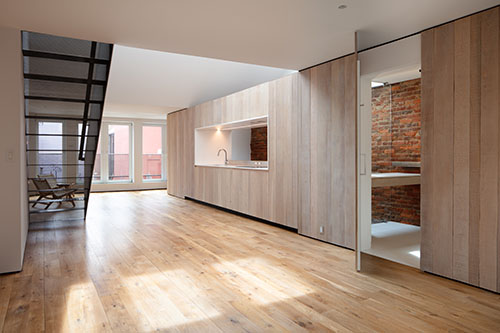
118 East Main St.

118 East Main St. (Charlottesville, Va.)
The small footprint feels airy and enlarged. The simple, disciplined approach optimizes the two windows and is an excellent example of understated elegance.

Architecture Firm: Bushman Dreyfus Architects
Owner: West Cote Properties, LLC
Contractor: Longview Management & Construction Co., LLC
Photographer: Virginia Hamrick


San Francisco Tech Company

San Francisco Tech Company (San Francisco, Ca.)
The efficient, modular approach celebrates the steel frame.  The industrial ambiance and mezzanine are very successful and the floor trenching creates future flexibility.

Architecture Firm: Parabola Architecture
Client Liaison and Project Management: Alex Neuhold Consulting
Contractor: Devcon Construction, Inc.
Photographers: Prakash Patel Photography (featured) and Kevin Burke Photography


Watergate 502

Watergate 502 (Washington, D.C.)
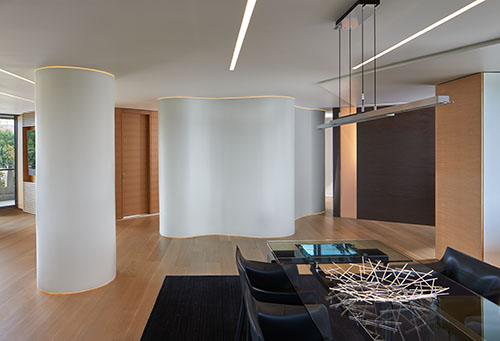
This is a reinstatement and enlargement of thoughtful modernism. The curved element, integrated columns, and angularity of the plan are well-handled.

Architecture Firm: Robert M. Gurney, FAIA, Architect
Owner: (Withheld)
Contractor: Added Dimensions, Inc.
Interior Design: Baron Gurney Interiors
Photographer: Hoachlander Davis Photography

In the RESIDENTIAL DESIGN category

Aesthetic appeal and functionality are two long-established criteria for home design, as are affordability and resource efficiency. The jury looks at each submission in its totality toward meeting those goals.

Awards of Honor

Chapman Stables Housing

Chapman Stables Housing (Washington, D.C.)
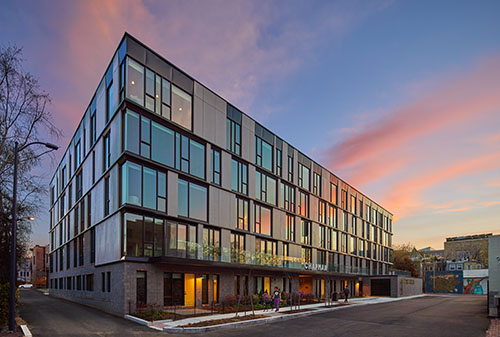
The design offers hints at the structure’s history, expressing how the building has evolved over time. The massing and site planning are notable.

Architecture Firm: Studio Twenty Seven Architecture
Owner: 57 N Street LLC
Contractor: GCS | Sigal
Photographer: Hoachlander Davis Photography
Civil Engineer: Christopher consultants
Structural Engineer: Ehlert Bryan
MEP Engineer: Meta Engineers
Landscape Engineer: Clinton & Associates


Mid Century Modern Residence

Mid Century Modern Residence (Bethesda, Md.)
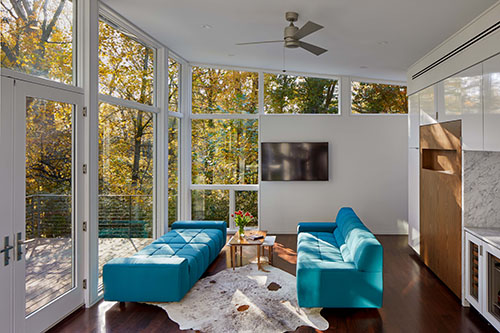
This design respected the form of the original house and amplified it. The new co-exists harmoniously with the original. The composition is clear and the landscape is elegantly integrated.

Architecture Firm: Studio Twenty Seven Architecture
Owner: Tori and Sam Wales
Civil Engineer: Christopher consultants
Structural Engineer: Ehlert Bryan
MEP Engineer: Provectus
Contractor: Washington Landmark Construction
Photographer: Hoachlander Davis Photography


Mossy Rock

Mossy Rock (Free Union, Va.)
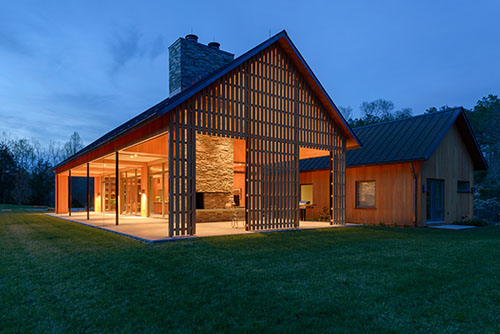
This simple new construction features clean lines and beautiful use of materials. The scale of the outdoor porch is appealing and well-connected to the landscape.

Architecture Firm: Bushman Dreyfus Architects
Owner: Anonymous
Contractor: Dammann Construction
Photographers: Stephen Barling (featured), Will Kerner

Awards of Merit

AUTO-haus

AUTO-haus (Washington, D.C.)
The spatial properties of the existing condition were optimized to create a courtyard-like feel. The industrial vocabulary was consistent and clever.

Architecture Firm: KUBE architecture PC
Owner: Nick Rubenstein & Jennifer Hsu
Contractor: ThinkMakeBuild
Photographer: Hoachlander Davis Photography


Lyon Park House

Lyon Park House (Arlington, Va.)
This light-filled renovation recalls the original while still being adventurous. It conveys a message about future possibilities while still being a good contextual neighbor.

Architecture Firm: Robert M. Gurney, FAIA, Architect
Owner: (Withheld)
Contractor: Arta Construction
Structural Engineer: D. Anthony Beale LLC
Photographer: Hoachlander Davis Photography


About the Jury

Ann Beha, FAIA, Jury Chair, Principal at Ann Beha Architects
Rodrigo Abela, ASLA, PLA, LEED AP BD+C, Principal at Gustafson Guthrie
Sara Caples AIA, LEED, Principal at Caples Jefferson Architects
Anthony Pangaro, Partner at Millennium Partners (retired)
James Elmasry, AIA, LEED AP, Senior Program Planner at Yale University

Read more about the jury.

About the Awards for Excellence in Architecture

All entries must be the work of architects who have an office in Virginia or are members of AIA Virginia. The location of projects is not restricted, but any built work submitted must have been completed after January 1, 2011. Un-built work was also considered, as long as it was commissioned by a client as opposed to hypothetical work completed in the mode of research or academic training.

Drake, Hogan, and McKinley Honored with Emerging Professional Award

April Drake, Emily Hogan, and Andrew McKinley will be recognized with the Virginia Emerging Professional Award at the Visions for Architecture gala on Friday, Nov. 8, 2019, at the Hilton Downtown Richmond. Launched in 2015, the Virginia Emerging Professional Award is intended to recognize the accomplishments of emerging leaders in Virginia for their contributions to the profession in one or more of the following categories: design, research, education, or discourse; service to the profession; mentorship; or service to the community.

“In the midst of challenging projects, she never loses sight of her top priority: building up the next generation of architects, while delivering to them and future generations a profession that values equity and inclusion.”

-Jessica Anderson, PE and Jonathan Oswald, AIA with HDR
April Drake, AIA

Throughout her 15 year career, April C. Drake, AIA, has been a dedicated leader in the profession. She has been a passionate advocate for underrepresented voices and committed to building a more diverse, equitable, and inclusive profession. She regularly attends, plans, and presents at local, regional, and national events, highlighting the achievements of women and minorities in architecture.

In addition to her role as a senior project architect with HDR, Drake currently serves on the AIA Northern Virginia Board of Directors and is the past chair of the Women in Architecture (WIA) committee. As a WIA leader, she championed her own innovative STEM event for local Girl Scout troops and focused her efforts on introducing school-aged girls to the field of architecture.

But, her service to the profession isn’t limited to the AIA — since 2014, she has helped NCARB navigate the transition from ARE 4.0 to ARE 5.0 through involvement on a Mapping Task Force and development of case studies for the exam. For the past two years, she has served on the NCARB Examination Committee which oversees development of several subcommittees and task forces and is a thought leader for NCARB regarding licensure assessment both now and into the future.

Her contributions to the profession, service to the community, mentorship of others, and efforts to engage students will have an indelible impact on the profession in the Commonwealth and beyond.

“As an architect, Emily Hogan represents her profession’s best qualities. She demonstrates an artistic creativity combined with a thoroughness and a keen eye for detail, whether engaging and guiding stakeholders through discovery, translation, and implementation phases successfully or in the role of advocate.”

–Andrew Pearson, Director of the Library, Bridgewater College
Emily Hogan, AIA

An award-winning architect with Quinn Evans Architects, Emily Hogan, AIA, has distinguished herself not only through her work, but also through exemplary service to the profession, her community, and to others. She has immersed herself in supporting the design community after graduating from the Emerging Leaders in Architecture program in 2014. She served as the AIA Richmond Treasurer and has been an active member of Richmond Women in Design, helping to coordinate some of the chapter’s largest events and programs. In 2017, she was recognized for her service with the Richard L. Ford Award for Young Architects. She has also exhibited a dedication to mentoring the next generation of leaders, organizing and hosting tours for students and young professionals.

In addition to her service to the profession, she has been a committed volunteer in her community — from supporting Dress for Success, to serving as campaign leader for the United Way, to serving on the Museum District Association, to being a part of service projects through Hill City Church— she has made service a genuine part of her identity.

“Andy’s design talents and technical knowledge have significantly impacted the quality of buildings for his clients and local communities.”

– Scott M. Campbell, AIA
Andrew McKinley, AIA

Andrew McKinley, AIA, a principal with VIA design architects, has been a leader in design, sustainability, and mentorship throughout his career.

As co-chair of the membership committee for AIA Hampton Roads, he championed and helped lead the AIA Hampton Roads “Let’s Talk” firm discussion series with the goal of building relationships with all architecture firms — not just those who are actively engage with the AIA. A dedicated mentor, he has organized a number of Shadow Day programs to provide high school and college students the opportunity to spend a day at a local design firm. In 2018 alone, more than 60 students were paired with local firms, introducing them to the profession and helping them understand the impact a project can have on a community. He has also hosted Hampton University students for the “Firm Forward” program, giving them a glimpse into various firms’ operations. A graduate of the Emerging Leaders in Architecture program, he has committed to giving back to the profession by serving on the local steering committee. He also served on the York County Board of Zoning Appeals between 2010 and 2014.

McKinley has a passion for sustainable architecture and design for local public entities. He has been diligent in researching and understanding the positive impact that passive strategies an innovative technologies can have on the sustainability of our collective future. Moreover, he has committed to sharing his expertise with his peers. Within his firm, he launched a sustainability committee. Outside of it, he has presented a case study before the USGBC chapter and has focused on helping owners and builders understand how sustainable design reduces building operating and maintenance cost.