Michael Ermann, AIA, David Keith, AIA, and Kevin Sneed, FAIA, will be recognized with the Award for Distinguished Achievement at the Visions for Architecture gala on Friday, Nov. 8, 2019, at the Hilton Downtown Richmond. The Award for Distinguished Achievement signals especially noteworthy achievement by an architect in any one of the following categories: design, practice, education, service as “citizen architect,” and service to the profession. This award may serve as an accolade for the work of an entire career or recognize the current accomplishments of a younger leader.
“I am pleased to have been a colleague of his, and continue to be impressed with his selfless approach to the education of professionals, young and old.”
Jack Davis, FAIA
Michael Ermann, AIA
Since 2001, Michael Ermann, AIA, has made significant contributions to the profession as an educator and researcher. During his time as a professor at Virginia Tech, he has taught design studio, building systems, architectural acoustics, materials and methods, architectural structures, and even a walking tour class for non-majors titled “Design at Every Scale.” For this work, he has been recognized with numerous teaching awards, including the university-wide Virginia Tech Teacher of the Week award and the Virginia Tech School of Architecture + Design Lecture or Seminar Teaching Excellence Award, twice. He has received perfect student evaluations in six different courses.
In addition to his more than 18 years teaching at Virginia Tech, he launched an ARE prep program that has benefited thousands of practitioners around the country. His Amber Book and video series, have transformed the understanding of critical information on life safety, site design, construction, structures and mechanical and electrical systems aiding countless professionals along the path to licensure. He has also conducted vital architectural acoustics research which was published in Architectural Acoustics Illustrated(Wiley, 2015), and recognized with the AIA Virginia Prize for Design Research and Scholarship.
He has further been recognized as an accomplished designer,
winning several design awards from AIA Blue Ridge.
“David has a visceral enthusiasm for every step of the design process. People want to work with him, work for him … Throughout his career, he has raised the bar for what qualifies as ‘good design’ all across Virginia.”
–Eric Keplinger, AIA
David Keith, AIA
David Keith, AIA, is a design principal and the Chief Executive Officer of Hanbury. Throughout his 30 year career, he has left a tangible impact on some of Virginia’s most well-known architecture firms as well as cities and institutions across the state. Recognized for his unwavering commitment to design excellence, he has worked on more than 250 projects, amassing an impressive number of Design Awards.
In addition to his service as Vice President on AIA Virginia’s Board of Directors and the Editorial Advisory Board for Inform Magazine, he has also served on the Hampton Roads Design Build Institute of America and the Virginia Beach Planning and Design Review boards.
A leader who is deeply committed to education and mentorship, he has delivered dozens of lectures and talks and has contributed numerous articles to nationally-recognized publications. Deeply engaged in Hanbury’s Summer Scholars program, he has helped to identify research areas that frequently reveal opportunities in communities that could profoundly impact their shape, vibrancy and economy.
Kevin G. Sneed, FAIA, is an architect passionate about the profession who, early in his career, engaged in groundbreaking activities that have become mainstream initiatives for guiding the future of the profession.
John Burns, FAIA
Kevin Sneed, FAIA
OTJ’s Kevin Sneed, FAIA, has approached his career with a clear dedication to public and professional service.
Since joining the AIA in 1987, right out of school, he has been an enthusiastic advocate and engaged participant. In addition to serving as secretary, treasurer, and president, he also co-founded AIA Northern Virginia’s Young Architects Committee, setting a precedent for organizing activities to nurture emerging architects that now thrives in components throughout the Commonwealth — and across the country. He later served on AIA Virginia’s board and at the national level on the Young Architects Forum, Diversity Committee, Brand Advisory Committee, and the Interior Architecture Knowledge Community. In 2004, he was recognized with the National AIA Young Architect Award for his substantial contributions to the profession.
He used his role as a leader in the AIA to forge connections within the industry. He strengthened ties between the AIA and the National Organization of Minority Architects and leveraged his chairmanship of the Interior Architecture Knowledge Community to improve collaboration with interior design organizations, the Construction Specifications Institute, and the U.S. Green Building Council.
The T. David Fitz-Gibbon Firm Award will be presented to 3north at the Visions for Architecture gala on Friday, Nov. 8, 2019, at the Hilton Downtown Richmond. As the highest honor bestowed by the AIA Virginia to a Virginia-based architecture firm, the Fitz-Gibbon Architecture Firm Award recognizes a firm that has consistently produced distinguished architecture for at least ten years.
“I can say without reservation that 3north’s body of work rivals that of any of the top national design firms whose work I’ve observed at first hand. I cannot give them higher praise than to say that, as a knowledgeable client, I would place 3north in the top tier of any short list”
Samuel A. Anderson, III, FAIA
Since its founding in 1999, 3north has grown from a single architect to a multidisciplinary design firm with offices in Richmond and San Francisco. Their diverse portfolio of work — which includes hospitality, civic, commercial, educational, and residential projects — has earned awards and recognition for achievements in design excellence, environmental sustainability, and historic preservation.
The firm is deeply committed to supporting community nonprofits
and has created an office culture that encourages pro bono work, broad-based
volunteerism, board service, and speaking engagements. Beyond their community
involvement, the firm’s principals and staff have a long history of service to
the AIA and the profession. Through support of programming like AIA Richmond’s Front
Porch and Richmond Women in Design, to engagement with AIA Virginia in the
Emerging Leaders in Architecture program, the Art of Practice, and Architecture
Exchange East, to service at the national level through the Small Firm
Exchange, 3north has been a model for service to the profession.
In addition to cultivating a culture of service, the firm has nurtured an entrepreneurial spirit, founding several affiliate businesses and holding a number of patents pending.
A founding principal of VMDO Architects, Robert W. Moje, FAIA, will be recognized with the William C. Noland Medal at the Visions for Architecture gala on Friday, Nov. 8, 2019, at the Hilton Downtown Richmond. As the highest honor bestowed by AIA Virginia to an architect, the Noland Medal is intended to honor a distinguished body of accomplishments, sustained over time, spanning a broad spectrum of the profession, and transcending the scope of normal professional activities. The honor is in memory of William C. Noland, FAIA, one of the founders of the AIA in Virginia, its second president, and Virginia’s first member to be elevated to fellowship.
“Bob’s work in architecture is framed by three essential, interrelated commitments: a commitment to the discipline and practice as a public, civic endeavor; a commitment therefore to the communities in which he is called to work; and further, a specific commitment to education as both the fundamental design commission and the fundamental societal value … [his] design vision and leadership is purposeful, utterly authentic, and deeply holistic.”
Peter MacKeith, Dean and Professor, University of Arkansas
Moje has been a leader in the planning and design of educational facilities for more than 42 years. Through his award-winning designs, research, and professional and public service, he has advanced the practice of educational facility design considerably. His innovative instructional environments have elevated the level of discourse on design, teaching, learning, and the communal aspect of educational facilities on an international scale. In 2014, he served as chair for the global AIA Committee on Architecture for Education (CAE) conference titled The Value of Design: Enhancing Education through Architecture in Barcelona, Spain.
Moje has a long history of service to his profession and his community. Since 1997 he has served as the only architect on the Commonwealth of Virginia Joint House/Senate Subcommittee on Educational Infrastructure. He has also contributed his time on the Charlottesville Board of Architecture review, including a stint as chair, the Virginia Computer Foundation, the Virginia Center for Architecture, and numerous others.
Beyond his design and research accomplishments, he has been an exemplary leader at VMDO. He helped establish a firm culture that is people-oriented, family-friendly, and inclusive of different viewpoints, backgrounds, and experience levels. He has contributed an effective transition plan and a generous profit-sharing system that is available to all at the firm.
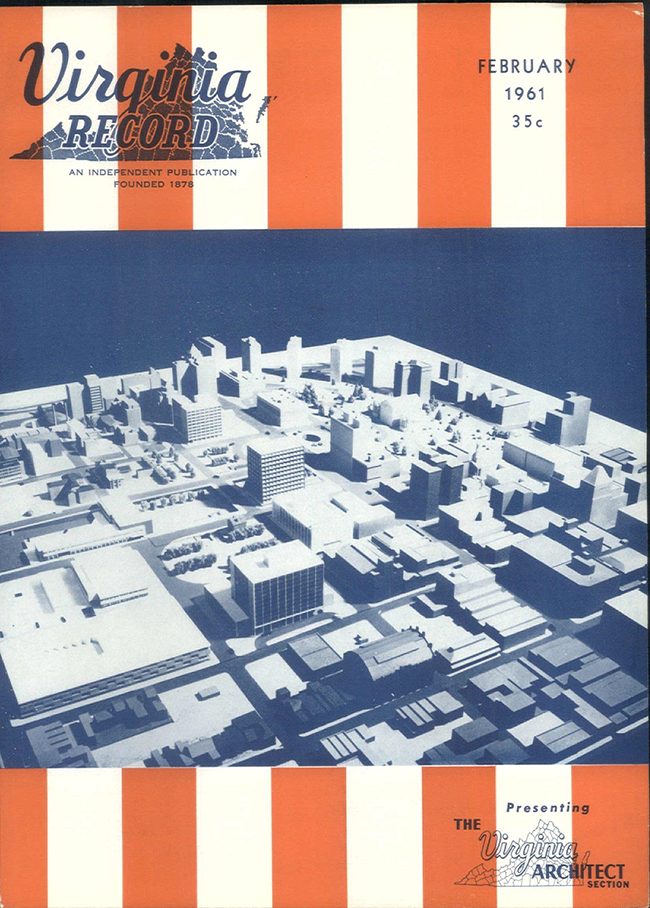
AIA Virginia is pleased to announce a partnership with USModernist to offer a digital archive of both Virginia Record and Inform Magazine. Issues dating back to January 1958 are now available online. Access to full editions of the publications are downloadable, searchable, and available at no charge to users.
The USModernist architecture magazine library houses
more than 2.6 million pages of nearly every major U.S. architecture magazine
since 1891. The library includes Architectural
Record, Progressive Architecture, Residential Architect, Architectural
Forum, House+Home, AIA New York Oculus, Architectural Index, among many others.
Once complete, the USModernist library will be the largest
open digital collection of major US 20th-century architecture magazines with
approximately 1.4 million searchable, downloadable pages. USModernist® is part
of Modernist Archive, Inc., a North Carolina 501C3 nonprofit educational
archive.
AIA Virginia, a Society of the American Institute of Architects, honors work done by Virginia-based architects with the 2017 Awards for Excellence in Architecture. Also known as the Design Awards, these honors celebrate projects no older than seven years that contribute to the built environment and are clear examples of thoughtful, engaging design. This year’s jury has identified three Honor Awards, ten Merit Awards, and three Honorable Mentions. Award categories include Architecture, Contextual Design, Residential Design, Interior Design and Historic Preservation.
The AIA Virginia Design Awards are sponsored by Keith Fabry.
About the Jury
Jury Chair: Yvonne Szeto, FAIA, partner with Pei Cobb Freed & Partners in New York City
Joan Blumenfeld, FAIA, design principal at Perkins+Will in New York City Lorcan O’Herlihy FAIA, founder and principal of Lorcan O’Herlihy Architects in Los Angeles Jeffrey Murphy FAIA, founding Partner of Murphy Burnham & Buttrick Architects in New York City
Alexander Lamis, FAIA, partner at Robert A M Stern in New York City
(image gallery follows)
In the ARCHITECTURE category
The jury considers aesthetics, adherence to the client’s wishes, proven and projected building performance and concept development during its deliberations.
Architecture Honor Award Recipient:
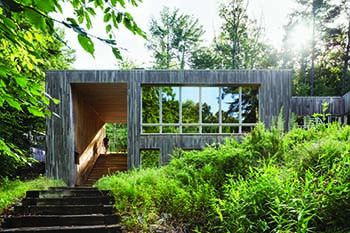
Lake House (North Wilkesboro, N.C.) by ARCHITECTUREFIRM, Richmond, Va.
The jury says “There is great clarity to the overall design. The decision to wrap the building in wood paneling, both celebrates the strength of employing a singular material throughout while embodying the context of the overall site. The strategic openings in the design allow for a fluid indoor/outdoor experience and frame the views of the surrounding woods in an interesting way.”
Glenn and Towers Renovation + Addition, Georgia Institute of Technology (Atlanta, Ga.) by VMDO Architects, Charlottesville, Va.
In the CONTEXTUAL DESIGN category
The awards for contextual design are chosen based on outstanding architecture that perceptibly reflects the history, culture, and physical environment of the place in which it stands and that, in turn, contributes to the function, beauty, and meaning of its larger context.
Contextual Honor Award Recipient:
Center of Hope Elementary School (Haiti) by Thrive Architecture, Charlottesville, Va.
The jury notes: “The design of this school overcomes the challenge of highly limited resources by cleverly leveraging local materials, building practices and labor to create a piece of real architecture. Overhanging roofs and strategically placed operable openings eliminate the need for artificial ventilation, and simple building techniques using local metal pipes, recycled bags of Styrofoam, and other inexpensive and relatively lightweight components were chosen and assembled piece by piece without heavy equipment. The creativity in technique is matched by the integrity of the architectural resolution, resulting in something that is both beautiful and sustainable.”
Contextual Honorable Mention Recipient:
Hodson House, St. John’s College (Annapolis, Md.) by Dynerman Architects, PC, Washington, D.C.
In the RESIDENTIAL DESIGN category
Aesthetic appeal and functionality are two long-established criteria for home design as are affordability and resource efficiency. The jury looks at each submission in its totality toward meeting those goals.
The historic preservation category focuses specifically on excellence in strategies, tactics, and technologies that advance the art, craft, and science of preserving historically significant buildings and sites. The jury takes into consideration adherence to local, state, and national criteria for historic preservation.
Interior design projects are judged on mastery of composition, functionality, material and color palettes, and well-integrated adherence to the highest levels of accessibility, health and safety, environmental, and occupant-comfort considerations, standards, and regulations.
Interior Design Honor Award Recipient
Rotunda Interior Renovation, University of Virginia (Charlottesville, Va.) by Glavé & Holmes Architecture, Richmond, Va.
The jury notes “The architects did an exemplary job of balancing contemporary requirements with a respectful return to Jefferson’s programmatic vision for the building. The jury appreciated the skillful selection of furniture and fabrics of a timeless aesthetic. Thoughtful attention to scale, function and flexibility in the interior design created more spaces for study and collaboration — bringing students back to the heart of the university.”
Interior Design Merit Award Recipients:
DPR Construction Mid-Atlantic Headquarters (Reston, Va.) by SmithGroupJJR, Washington, D.C.
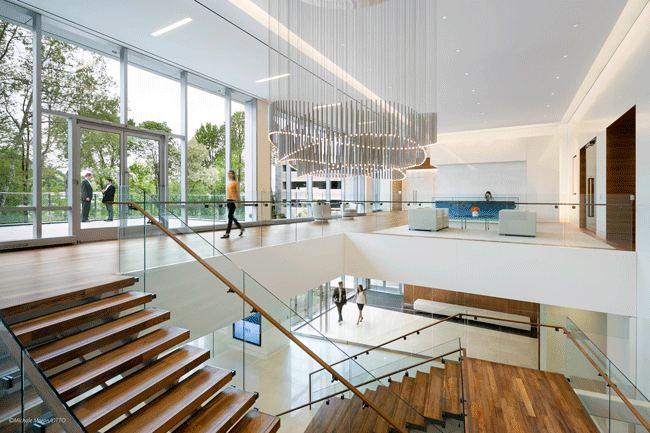
Sands Capital Management Headquarters (Arlington, Va.) by OTJ Architects, Washington, D.C.
Architecture Firm: ARCHITECTUREFIRM
Contractor: Peter Johnson Builders
Photographer: James Ewing Photography
Architecture Firm: Studio Twenty Seven Architecture
Contractor: MCN Build
Photographer: Anice Hoachlander, Hoachlander Davis Photography
Architecture Firm: BCWH
Project Consultant: Tappé Architects
General Contractor: Kenbridge Construction
Photographer: Chris Cunningham Photography
Project Team: Charles W. Wray, Jr., AIA, LEED AP; Andrea Quilici, AIA, LEED AP; Kylan Shirley, AIA, LEED AP; Emily Striffler, AIA; Shannon Wray, CID, IIDA, LEED AP; Erin Richardson, CID
Architecture Firm: Kohn Pedersen Fox Associates
Contractor: Whiting-Turner Contracting Company
Photographer: John Woodruff, Woodruff/Brown Architectural Photography
Architecture Firm: VMDO Architects
Associate Firm: Stevens & Wilkinson
Contractor: New South Construction Company
Photographer: Jonathan Hillyer
Architecture Firm: Thrive Architecture
Contractor: Building Goodness Foundation
Photographer: Thrive Architecture; Tom Cogill Photography, Building Goodness Foundation
Architecture Firm: Dynerman Architects, PC
Contractor: Brown Contracting
Photographer: Paul Burk
Design Team: Alan Dynerman, FAIA; Chris Nakamura
Architecture Firm: Bushman Dreyfus Architects PC
Contractor: Element Construction
Landscape Architect: Pray Design Associates
Photographer: Scott Smith Photography
Project Team: Jeff Dreyfus; Neil Higgins; Aga Saulle
Architecture Firm: Robert M. Gurney, FAIA, Architect
Contractor: Commonwealth Building and Design
Structural Engineer: D. Anthony Beale LLC
Landscape Architect: Campion Hruby Landscape Architects
Photographer: Anice Hoachlander, Hoachlander Davis Photography
Project Architect: Sarah Mailhot
Architecture Firm: Jones & Boer Architects
Interior Designer: Amy Zantzinger
Contractor: Mauck Zantzinger & Associates, Inc.
Photographer: Maxwell MacKenzie
Architecture Firm: Robert M. Gurney, FAIA, Architect
Contractor: Think Make Build, LLC
Structural Engineer: D. Anthony Beale LLC
Civil Engineer: Land Surveys, Inc.
Photographer: Anice Hoachlander, Hoachlander Davis Photography
Project Architect: Kara McHone
Architecture Firm: John Milner Associates Preservation a division of MTFA Architecture
Contractor: Whiting-Turner Contracting Company
Photographers: Benson Photography; Aaslestad
Restoration Team: Architectural Finishes: John Canning & Co.; Water and Roman Gilding: Gold Leaf Studios; Fine Art Conservation: Page Conservation, Inc.; Lighting Designer: Lighting Design Collaborative
MEP / FP Engineer: Loring Engineers; Acoustics: Polysonics; Floor Restoration: John Canning & Co.; Mechanical Contractor: Mallick Mechanical; Electrical Contractor: Valid Electric; Chandeliers and Sconces: Matthieu Lustrerie and Acu-Brite; Draperies: Knightsbridge Interiors, Inc., Tassinari & Chatel and Lesage Interieurs
Interior Design Firm: Glavé & Holmes Architecture
Architect of Record: John G. Waite Associates
Contractor: The Whiting-Turner Contracting Company
Photographer: Suttenfield Photography; Anna Wesolowska/www.photographerhedman.com
Interior Design Team: Eleanor Barton, CID, ASID, IIDA, CDT; Rebekah Russell, CID; Mindy Carter Bain, CID, LEED AP; Ashley Long, CID, LEED AP ID+C
Architect of Record: John G. Waite Associates
Design Firm: SmithGroupJJR
Contractor: DPR Construction
Photographer: Judy Davis, Hoachlander Davis Photography
Design Team: Lori Cappuccio, AIA; Marc Schneiderman, Assoc. AIA; Chris Smialek; Kelly Preston; David Fersh; Gregory A. Mella, FAIA; Sara Lappano; Don Posson; Matt Jantz; Eric Dixon; Jacob Pohlman; Katharine Gausseres; Patrice Mulhern
Design Firm: KUBE Architecture PC
Contractor: Metrix Construction
Photographer: Greg Powers Photography
Design Team: Janet Bloomberg, AIA; Andrew Baldwin
Design Firm: OTJ Architects
Contractor: James G. Davis Construction Corporation
Photographer: Eric Laignel
Virginia Architects are honoring the very best work by designers working in Virginia in the 2015 Awards for Excellence (also known as the Design Awards). These awards celebrate projects no older than seven years that contribute to the built environment and are clear examples of thoughtful and engaging design. This year juries have identified 8 Honor Awards, 13 Merit Awards and 8 Honorable Mention Awards. Award categories include Architecture, Contextual Design, Historic Preservation, Interior Design and Residential Design.
(image galleries follow each category announcement)
In the ARCHITECTURE category
The jury considers aesthetics, adherence to the client program, proven and projected building performance and concept development during its deliberations.
Architecture Honor Award Recipients:
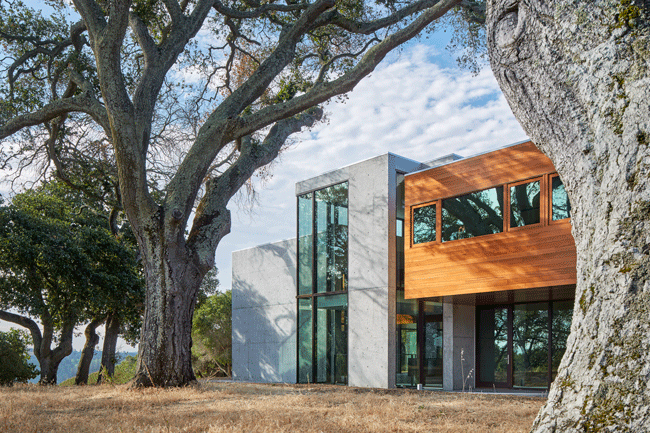
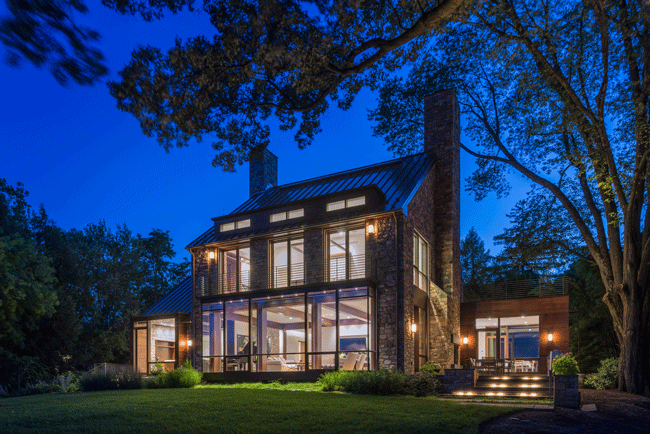
Woodside Residence (Woodside, Ca.) by David Jameson Architect, Inc. “The richness of its materials and textures contributes significantly to the overall character,” says the jury.
East Servery (Houston, Tx.) by Hanbury Evans Wright Vlattas + Company The jury stated, “This is a great ‘people space,’ beyond any expectations for an academic dining facility.”
Architecture Merit Award Recipients:
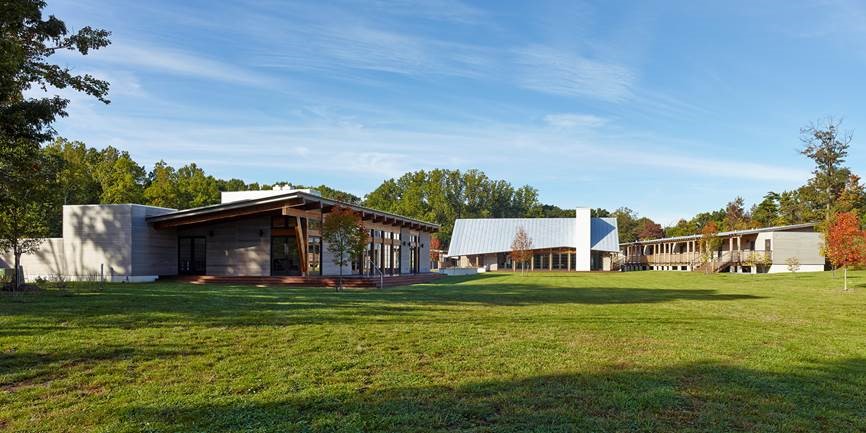
Calcagnini Contemplative Center (Bluemont, Va.) by Dynerman Architects, PC The jury commented, “The design for this spiritual retreat is carefully composed collection of buildings that creates a campus that is as charming in character as it is well organized.”
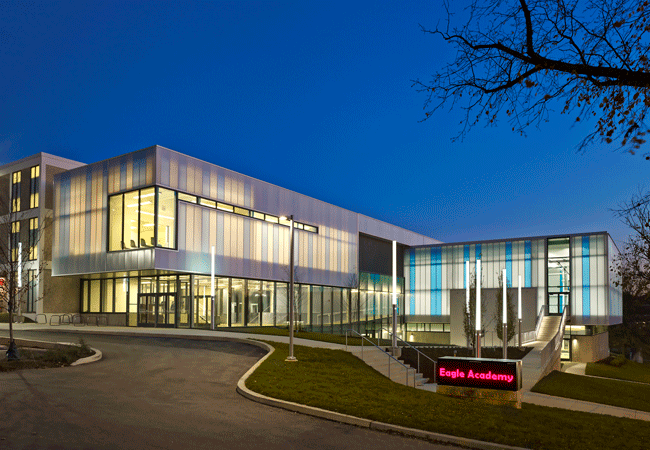
EAGLE ACADEMY Public Charter School at McGogney (Washington, D.C.) by Shinberg.Levinas Architects
The jury liked the “use of the polycarbonate material that allows the spaces to be filled with daylight but also turns the building into a glowing jewel at night.”
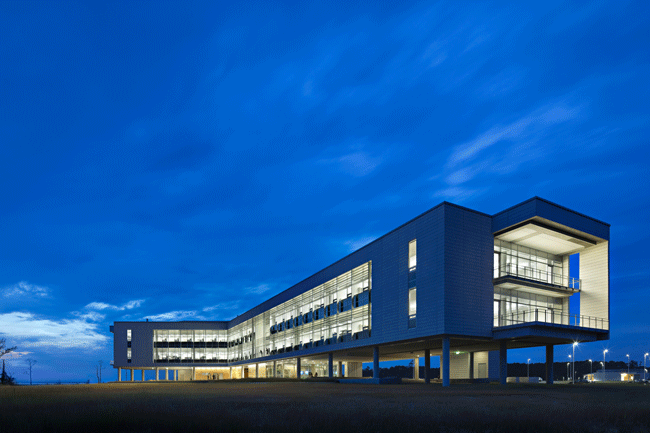
Research and Education Building (Wanchese, NC) by Clark Nexsen “Not only do they achieve a LEED Gold rating, but they also demonstrate numerous innovative features that help protect the land, water and other natural resources,” commented the jury.
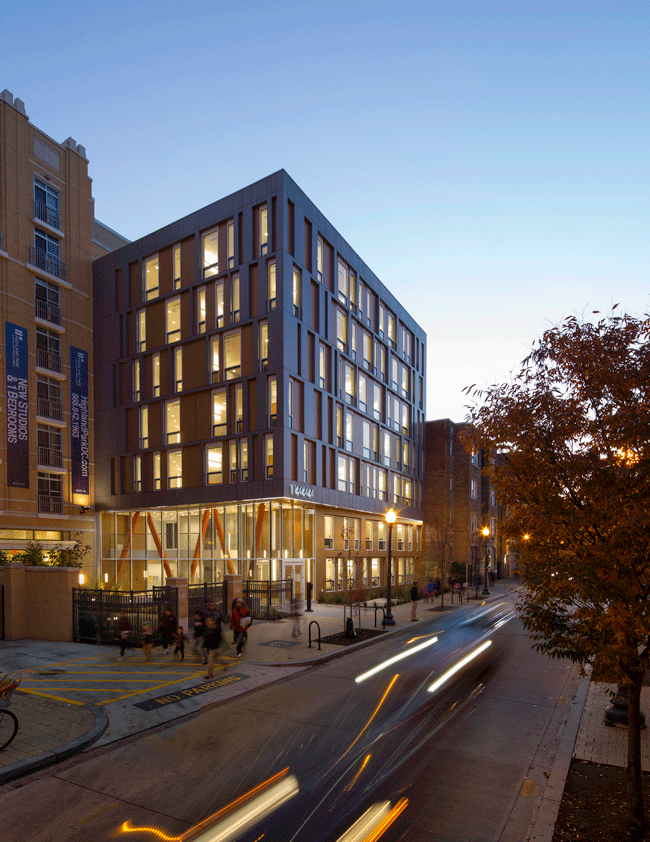
La Casa Permanent Supportive Housing (Washington, D.C.) by Studio Twenty Seven Architecture | Leo A Daly JV The jury said, “The architecture presents a residential building full of life and hope and should be regarded as a positive example for the building type.”
10th & G Street Offices and First Congregational United Church of Christ (Washington, D.C) by Cunningham | Quill Architects, PLLC The jury noted, “The subtle distortions in the shape of the office tower as it floats above the base are effective in softening the building form in a varied urban context while also expanding diagonal views past the structure.”
Architecture Honorable Mention Recipients:
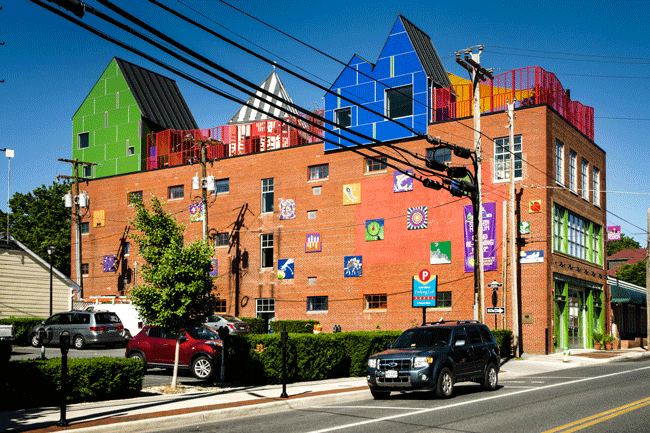
The Shenandoah Valley Discovery Museum (Winchester, Va.) by Reader & Swartz Architects, P.C. The jury commented, “The Discover Museum has reclaimed an existing structure and filled it with new life, energy … and fun!”
bm Modular One (Bethesda, Md.) by Robert M. Gurney, FAIA, Architect
“This house presents a well-executed advance in modular design,” said the jury.
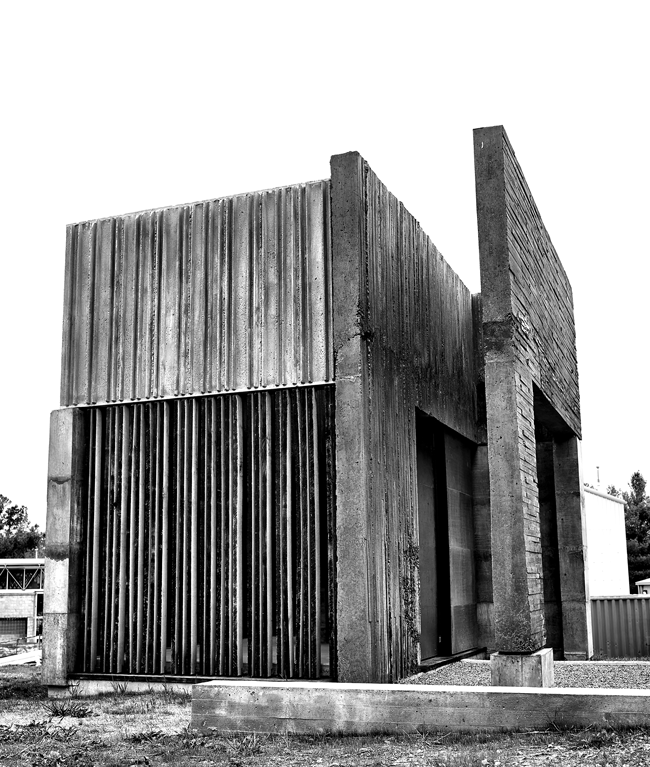
The Cube (Blacksburg, Va.) by College of Architecture and Urban Studies, School of Architecture + Design, Virginia Polytechnic Institute and State University. “This educational project is a very thoughtful exercise that reveals the possibilities and limitations of materials,” commented the jury.
Woodside Residence (Woodside, Ca.) by David Jameson Architect, Inc. Photo by Bruce Damonte Photography
East Servery (Houston, Tx.) by Hanbury Evans Wright Vlattas + Company. photo by Robert Benson Photography
Calcagnini Contemplative Center (Bluemont, Va.) by Dynerman Architects, PC. photo by Alan Karchmer
Eagle Academy Public Charter School at McGogney (Washington, D.C.) by Shinberg. Levinas Architects. photo by Alan Karchmer
Research and Education Building (Wanchese, NC) by Clark Nexsen. Photo by Mark Herboth Photography
La Casa Permanent Supportive Housing (Washington, D.C.) by Studio Twenty Seven Architecture | Leo A Daly JV. photo by Hoachlander Davis Photography
10th & G Street Offices and First Congregational United Church of Christ (Washington, D.C.) by Cunningham | Quill Architects, PLLC. photo by Michael Moran Photography, Inc.
The Shenandoah Valley Discovery Museum (Winchester, Va.) by Reader & Swartz Architects, P.C. photo by Peter Aeslestad.
bm Modular One (Bethesda, Md.) by Robert M. Gurney, FAIA, Architect. photo by Maxwell MacKenzie.
The Cube (Blacksburg, Va.) by College of Architecture and Urban Studies, School of Architecture + Design, Virginia Tech. photo by Patrick Doan, William Galloway, Bill Poff, Ryan Seavy.
In the CONTEXTUAL DESIGN category
The awards for contextual design are chosen based on outstanding architecture that perceptibly reflects the history, culture, and physical environment of the place in which it stands and that, in turn, contributes to the function, beauty, and meaning of its larger context.
Contextual Merit Award Recipients
Citizen 6 (Richmond, Va.) by Burt Pinnock, Baskervill “These townhouses successfully present a contemporary way to relate to a historical context while confidently adding another layer to the neighborhood history,” remarked the jury.
Seaside Hall, Virginia Institute of Marine Science (Wachapreague, Va.) by VIA Design Architects, P.C. The jury commented, “The design for this highly contextual project is directly influenced by the vernacular traditions of wood-framed buildings that are typical in this seaside marshland region.”
Contextual Honorable Mention Recipients
Chatham County Courthouse (Savannah, Ga.) by Dewberry Architects Inc. “It is difficult to design a contemporary program that requires a building larger in scale than the historic neighborhood, but this project has made the historic neighborhood a priority and resulting design celebrates the context,” noted the jury.
Citizen 6 (Richmond, Va.) by Burt Pinnock, Baskervill. photo by Ansel Olson.
Seaside Hall, Virginia Institute of Marine Science (Wachapreague, Va.) by VIA Design Architects, P.C. photo by Dave Chance Photography.
Chatham County Courthouse (Savannah, Ga.) by Dewberry Architects Inc. photo by Dewberry Architects Inc.
In the RESIDENTIAL DESIGN category
Aesthetic appeal and functionality are two long-established criteria for home design as are affordability and resource efficiency. The jury looks at each submission in its totality toward meeting those goals.
Residential Design Honor Award Recipients:
Riggins House (Cabin John, Md.) by Robert M. Gurney, FAIA, Architect. The jury noted that “The house maximizes interconnections between living spaces and the natural environment and offers tantalizing glimpses of nature from circulation areas.”
Alexandria Residence by cox graae + spackarchitects
“This house is a somewhat daring combination of modern and historical that is skillfully handled to achieve a highly refined residence,” noted the jury.
Residential Design Merit Award Recipients:
Orlean Americana (Marshall, Va.) by Reader & Swartz Architects, P.C. “The plan of this large house is nicely organized while the articulation of the plan and the overall massing takes great care in reducing the apparent size and scale of the house in every way,” commented the jury.
Twining Road Renovation (Potomac, Md.) by Robert M. Gurney, FAIA, Architect The jury said, “This project involves a remarkable transformation of a fairly typical suburban house. The primary living spaces flow together in a new open plan that works very well.”
Orlean Americana (Marshall, Va.) by Reader & Swartz Architects, P.C. photo by Nathan Webb, AIA, LEED AP
Riggins House (Cabin John, Md.) by Robert M. Gurney, FAIA, Architect. photo by Maxwell MacKenzie.
Twining Road Renovation (Potomac, Md.) by Robert M. Gurney, FAIA, Architect. photo by Hoachlander Davis Photography
Alexandria Residence by cox graae + spack architects. photo by Chris Ambridge, AIA
In the HISTORIC PRESERVATION category
The historic preservation category focuses specifically on excellence in strategies, tactics, and technologies that advance the art, craft, and science of preserving historically significant buildings and sites. The jury takes into consideration adherence to local, state, and national criteria for historic preservation.
Historic Preservation Honor Award Recipient:
The Birch Bayh Federal Building and U.S. Courthouse (Indianapolis, Ind.) by EYP, Inc. The jury commented, “This is a masterful restoration and an aggressive upgrade of a great historic building to meet contemporary standards for safety, accessibility, and environmental responsibility.”
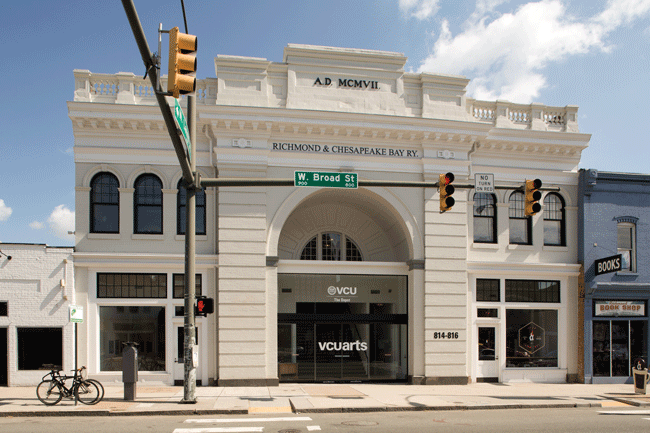
The VCU Depot (Richmond, Va.) by Commonwealth Architects “Not only did the design team for VCU uncover a gem of a historic building that had been hidden from the public for decades, they also knit together several neighboring buildings to create a new school for the arts and a center for the community,” commented the jury.
Historic Preservation Merit Award Recipients:
Smithsonian Institution Arts & Industries Building Revitalization – Shell Exterior and Structural Improvements (Washington, D.C.) by SmithGroupJJR The jury noted, “The many improvements to the interior and structure replace former less respectful adaptations and return the spaces to the original design intent.”
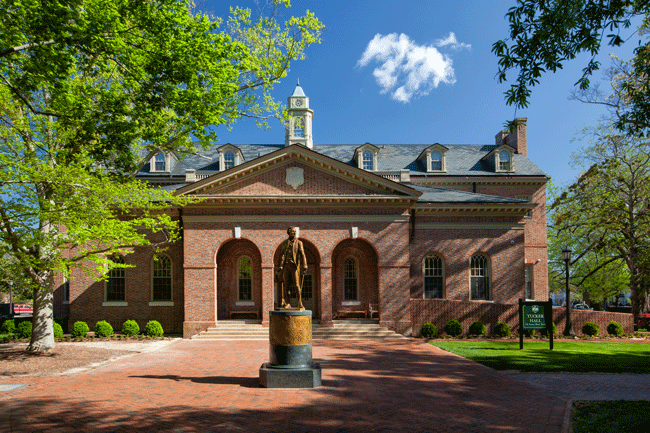
Tucker Hall (Williamsburg, Va.) by Cunningham | Quill Architects, PLLC “This project skillfully reintegrates the original features of the historic building in a manner that supports contemporary academic needs,” notes the jury.
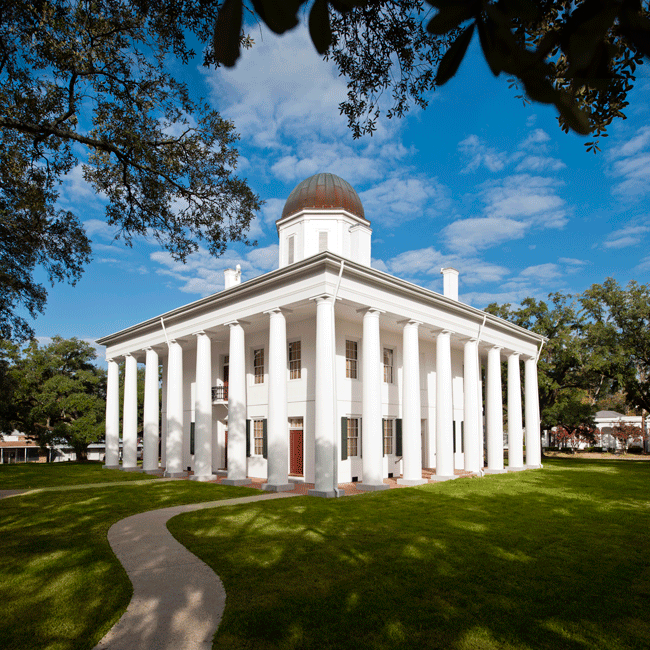
East Feliciana Parish Courthouse (Clinton, La.) by John Milner Associates Preservation, a division of MTFA Architecture, PLLC The jury said, “This is an extraordinary building and the jury commends the act of preserving such a historic treasure.”
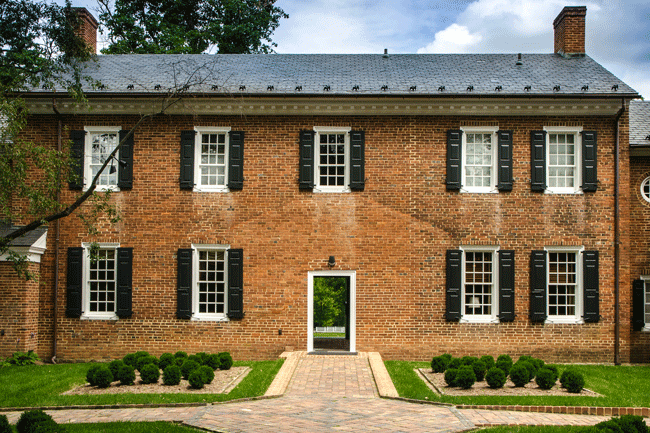
Glen Burnie Manor House (Winchester, Va.) by Reader & Swartz Architects, P.C. The jury noted, “The restoration and adaptive reuse of a historic house interestingly acknowledged the different periods of history that the house and its residents experienced.”
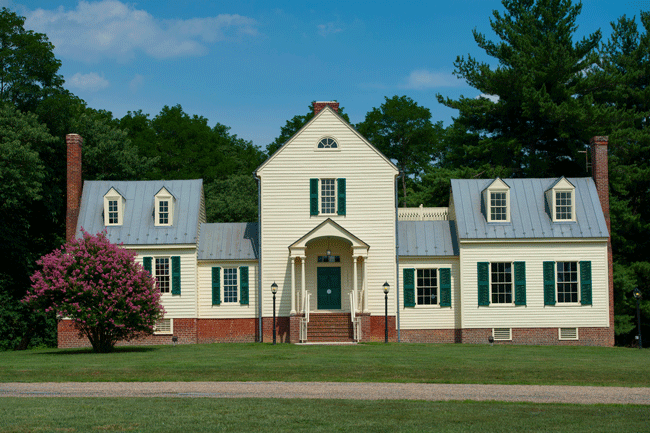
Restoration of Castlewood (Chesterfield, Va.) by Davis Buckley Architects and Planners “A beautiful restoration of a lovely vernacular structure,” commented the jury.
The Birch Bayh Federal Building and U.S. Courthouse (Indianapolis, Ind.) by EYP, Inc. photo by David Sundberg
The VCU Depot (Richmond, Va.) by Commonwealth Architects. photo by Lee Brauer Photography
Smithsonian Institution Arts & Industries Building Revitalization (Washington, D.C.) by SmithGroupJJR. photo by Maxwell MacKenzie.
Tucker Hall (Williamsburg, Va.) by Cunningham | Quill Architects, PLLC. photo by Chris Cunningham Photography
East Feliciana Parish Courthouse (Clinton, La.) by John Milner Associates Preservation, a division of MTFA Architecture, PLLC. photo by Dunford Photography.
Glen Burnie manor House (Winchester Va.) by Reader & Swartz Architects, P.C. photo by Rick Foster; Nathan Webb, AIA, LEED AP
Restoration of Castlewood (Chesterfield, Va.) by Davis Buckley Architects and Planners. photo by Michael Ventura Photography
In the INTERIOR DESIGN category
Interior design projects are judged on mastery of composition, functionality, material and color palettes, and well-integrated adherence to the highest levels of accessibility, health and safety, environmental, and occupant-comfort considerations, standards, and regulations.
Interior Design Honor Award Recipient:
Sherber + Rad (Washington, D.C.) by David Jameson Architect Inc.
“The use of simple surfaces contrasted with interesting experiments in materials results in a simple, elegant, and somewhat spiritual series of spaces,” commented the jury.
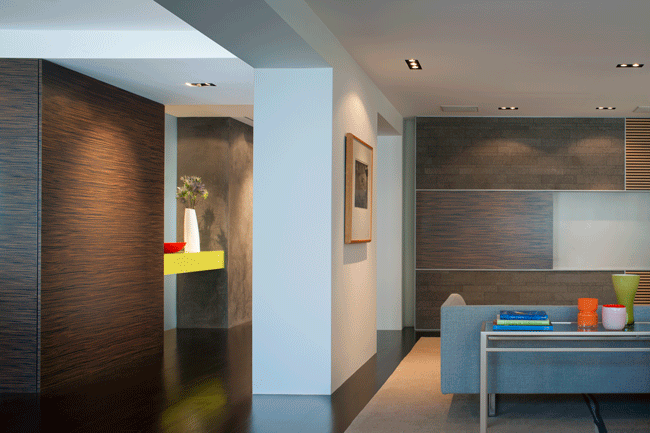
Apartment 24 (Washington, D.C.) by Robert M. Gurney, FAIA, Architect
The jury noticed, “The combination of materials and colors creates a warm, comfortable and beautiful palette.”
Interior Design Merit Award Recipient:
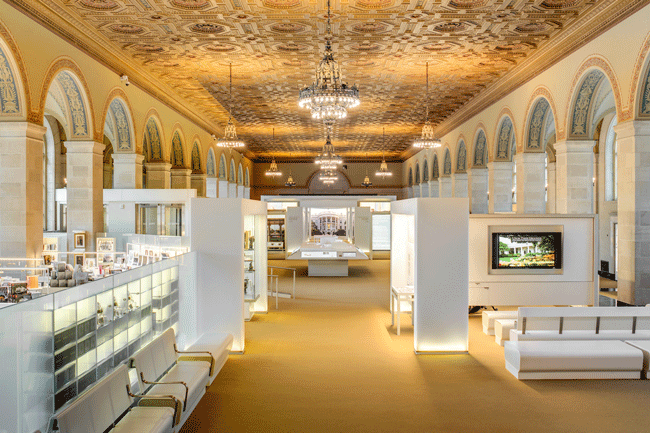
White House Visitor Center Rehabilitation (Washington, D.C.) by SmithGroupJJR
The jury noted, “The exhibit design makes the grand historical space it occupies and the historic artifacts on display more spectacular by their constrast rather than by any sense of replication.”
LMI (Tysons, Va.) by Gensler
The jury commented, “The use of a limited by well featured palette of materials contrasts with the white srufaces, and gives the interiors both richnoess and consistency.”
Interior Design Honorable Mention Recipient:
Architectural Office (Washington, D.C) by SmithGroupJJR
“This office design addressed the issue that office interiors often have a very high turnover, which has an impact on the building and environment. The fact that the project achieved LEED Platinum certification is a testament to the thoughtful investment made by the design team,” commented the jury.
Sherber + Rad (Washington, D.C.) by David Jameson Architect. photo by Paul Warchol.
Apartment 24 (Washington, D.C.) by Robert M. Gurney, FAIA, Architect. photo by Maxwell MacKenzie.
White House Visitor Center Rehabilitation (Washington, D.C.) by SmithGroupJJR. photo by Maxwell MacKenzie
LMI (Tysons, Va.) by Gensler. photo by Michael Moran.
Architectural Office (Washington, D.C.) by SmithGroupJJR. photo by Eric Laignel.
About the Awards for Excellence in Architecture
All entries must be the work of architects who have an office in Virginia or are members of the AIA Virginia. The location of projects is not restricted, but any built work submitted must have been completed after January 1, 2008. Un-built work was also be considered, as long as it was commissioned by a client as opposed to hypothetical work completed in the mode of research or academic training.
About the AIA Virginia AIA Virginia is a professional association representing nearly 2,500 members. Founded by 5 architects in 1914, AIA Virginia has represented the professional interests of architects and allied professionals in the Commonwealth of Virginia for 100 years. For more information, contact us at (804) 644-3041 or visit www.aiava.org.
Kirk Train, FAIA, has been selected to receive the Society’s highest honor bestowed upon an architect: the William C. Noland Medal. Train will be acknowledged before his colleagues during the Annual Meeting of the Membership on Thursday, Nov. 6, at 1 p.m. in room E11b during Architecture Exchange East, and the Medal will be presented at the Visions for Architecture gala on Friday, Nov. 7, at the Jefferson Hotel.
The award recognizes a lifetime of achievement for an individual architect. “In his integrity, character, service and commitment Kirk Train signifies for me that which is the best in our profession,” says Willard Scribner, FAIA. “His has been a thoughtful and principled voice advocating for an engaged profession, and leading by example.”
A gifted designer, Train and his firm have amassed a broad portfolio of award-winning designs over the past 25 years for projects throughout Virginia and the mid-Atlantic region. One client — another architect — noted that he designs simple things well. The rigor of the plan and the application of materials is beautifully resolved, and his work is both honest and straightforward, the embodiment of his belief that architecture dignifies our existence.
With decades of dedicated service to the community and as a champion of architectural causes that benefit humankind, his efforts have advocated for an engaged profession focused on public awareness, inspiration, and education. His long history of lending his expertise to make substantial contributions to the communities and citizens of Central Virginia includes serving as chair of the Albemarle County Board of Architectural Review and continued involvement in the Friends of the Jefferson-Madison Regional Library and the United Way Thomas Jefferson Area.
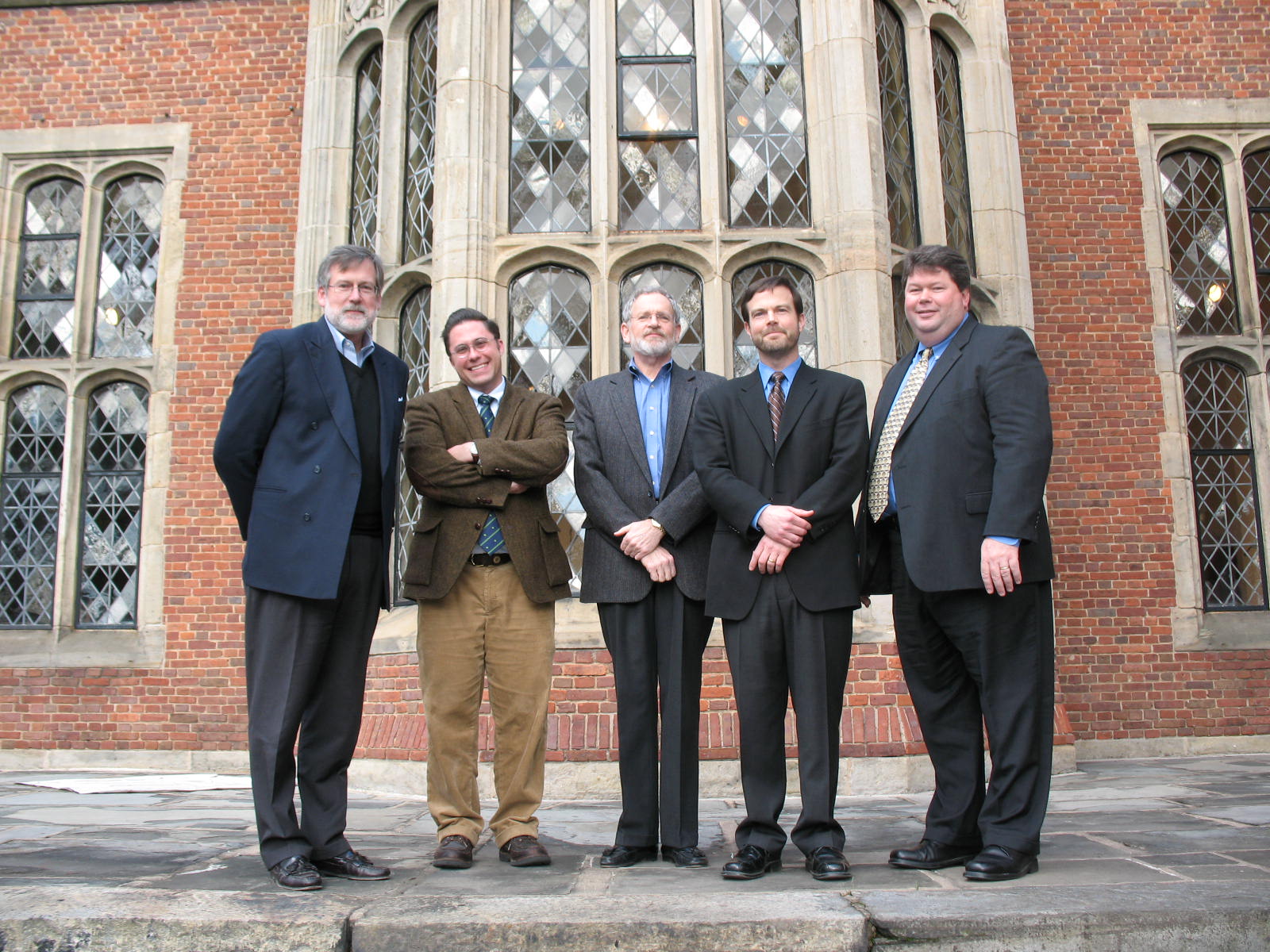
From the inaugural session of Emerging Leaders in Architecture. From the left: Kirk Train, Bryan Green, Will Scribner, Jay Hugo, Brian Frickie
The capstone of Train’s broad public engagement has been his role as a founding committee member for the Virginia Society’s Emerging Leaders in Architecture program. He played a pivotal role in establishing and leading this honors academy for young architects in Virginia, and it is through this program he believes his greatest impact will occur, as his passion for service and volunteerism will cultivate a new generation of Citizen Architects. “Acting with diplomacy and dignity, he is a true leader, one others have always wanted to follow throughout his career and in all spheres of influence,” says VSAIA Past President Brian J. Frickie, AIA. “We could not have a better advocate for the profession.”
Most notably, Train’s service to his fellow architects, and the profession as a whole, has been truly exemplary. He has worked tirelessly to strengthen the AIA at all levels, holding a variety of leadership positions in both local and state chapters including president of the VSAIA and president of the Central Virginia AIA chapter. Of particular note is his leadership in the Virginia Center for Architecture, serving as Chairman and working to raise the public’s awareness of good design through the establishment of the first architectural museum in the Southeast.
As a passionate leader and public servant whose efforts have yielded great benefits for his community, his fellow architects, and the greater society we serve, he has exemplified the profession’s highest ideals and created an enduring legacy. “Kirk’s extraordinary efforts to initiate collaborative projects within communities, his remarkable dedication to the AIA as the voice of the profession, and his steadfast belief that the architecture profession can meaningfully assist citizens in achieving a more balanced and wholesome life are, when considered collectively, attributes of the highest order for an architect,” says 2014 AIA President Helene Dreiling, FAIA.
For his unparalleled leadership, dedicated support of the profession, and service to the community, the Society awards M. Kirk Train, FAIA, the William C. Noland Medal.
Honorary Membership in the Virginia Society AIA will be conferred upon architectural historian Bryan Clark Green, Ph. D. and Virginia Society AIA Sales Administrator Cathy Guske at this year’s Visions for Architecture gala on Nov. 7, 2014 at the Jefferson Hotel. Honorary Membership may be bestowed upon individuals not eligible for membership in the Society, but who have rendered distinguished and exemplary service, over a sustained period of time, to architecture and the built environment in Virginia.
In conferring the honor, the Society recognizes Green’s 22 years of dedication to the preservation of Virginia’s historic architecture. As Director of Historic Preservation with Commonwealth Architects of Richmond, Va., Dr. Green’s expertise in research, building conservation, planning, and navigating the historic tax credit process has allowed dozens of historic buildings and structures to enjoy new life. Working closely with architects, designers, and engineers, he consistently seeks innovative ways to combine architectural history and historic preservation to creatively adapt historic buildings for new uses. Through his insight, project designers can embrace the elements that make these buildings unique, while still providing layouts and configurations suitable to modern office and living spaces.
Cathy Guske
In addition, Dr. Green remains professionally active in both education and publishing, enthusiastically promoting the value of preserving the Commonwealth’s historic architecture to the general public, as well as the next generation of historic preservation professionals.
During Cathy Guske’s more than 10 years of service, she has effectively developed and managed relationships with the Society’s advertisers and exhibitors. Though her active participation in the Allied membership program, her commitment to advancing Inform magazine and Architecture Exchange East, and her enthusiastic support of the Society’s initiatives, she has exhibited a deep and abiding respect for the profession. “I will very much enjoy celebrating this honor,” says EVP/CEO John Braymer, “but more importantly, expressing the sincere appreciation for the years of contribution to the VSAIA that earned it.”
The College of William and Mary’s Muscarelle Museum of Art, designed by Carlton Abbott, FAIA, has been selected to receive the Society’s Test of Time award.
The award recognizes a structure not less than 25 years nor more than 50 years from the date of initial construction; in addition, the project should still carry out the original program in a substantial manner and must be standing as originally designed in appearance and in good condition. The award will be presented at the Visions for Architecture gala on Friday, Nov. 7, 2014, at the Jefferson Hotel.
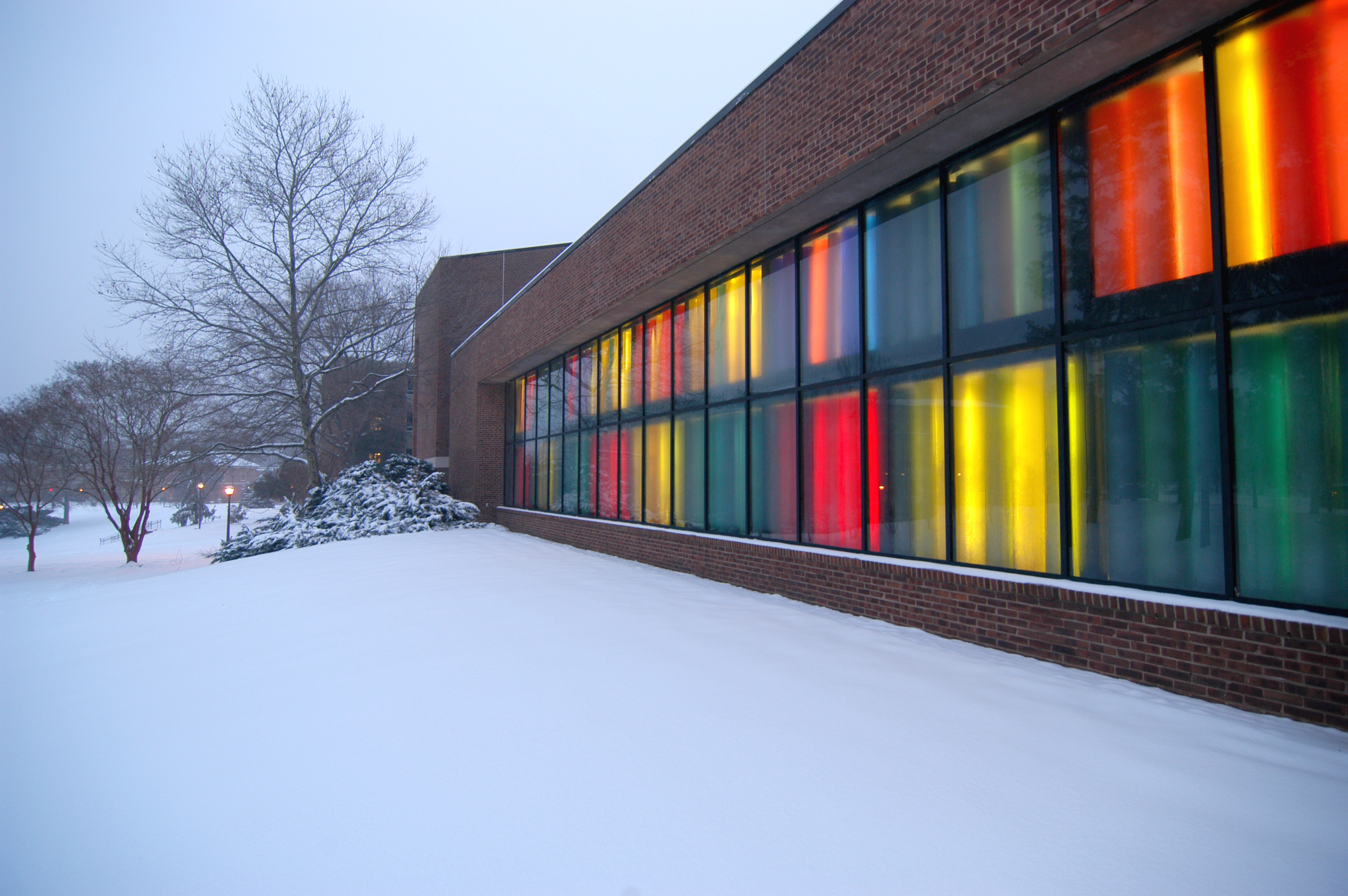
The Muscarelle Museum of Art was a gift to The College of William & Mary from alumni and friends. Completed in 1983, the building’s most notable feature is the ingenious trombe wall, which incorporates monumental tubes filled with colored water. The colors are changed several times a year, as the wall serves double-duty in transforming the south façade of the Museum into a dramatic and innovative work of art, while also functioning as a solar energy collection system.
In making this award, the selection committee noted the contemporary design as “cutting-edge” and “remarkable for the time in which it was built.” With its own permanent collection of more than 4,000 works of art and an impressive schedule of traveling exhibitions, the Society also recognizes the success of the building in fostering the full integration of a dynamic art museum into the life and liberal arts mission of the College, as well as the surrounding community.
Tom McGraw, Executive Vice President of W.A. Lynch Roofing Company in Charlottesville, Va., will be recognized with Society Honors at the Visions for Architecture gala on Friday, Nov. 7, 2014, at the Jefferson Hotel. Society Honors are bestowed upon organizations or citizens who have inspired, influenced, or complemented architecture or the architecture profession in Virginia through an allied profession, research, education, planning, legislation, journalism, the arts, or crafts.
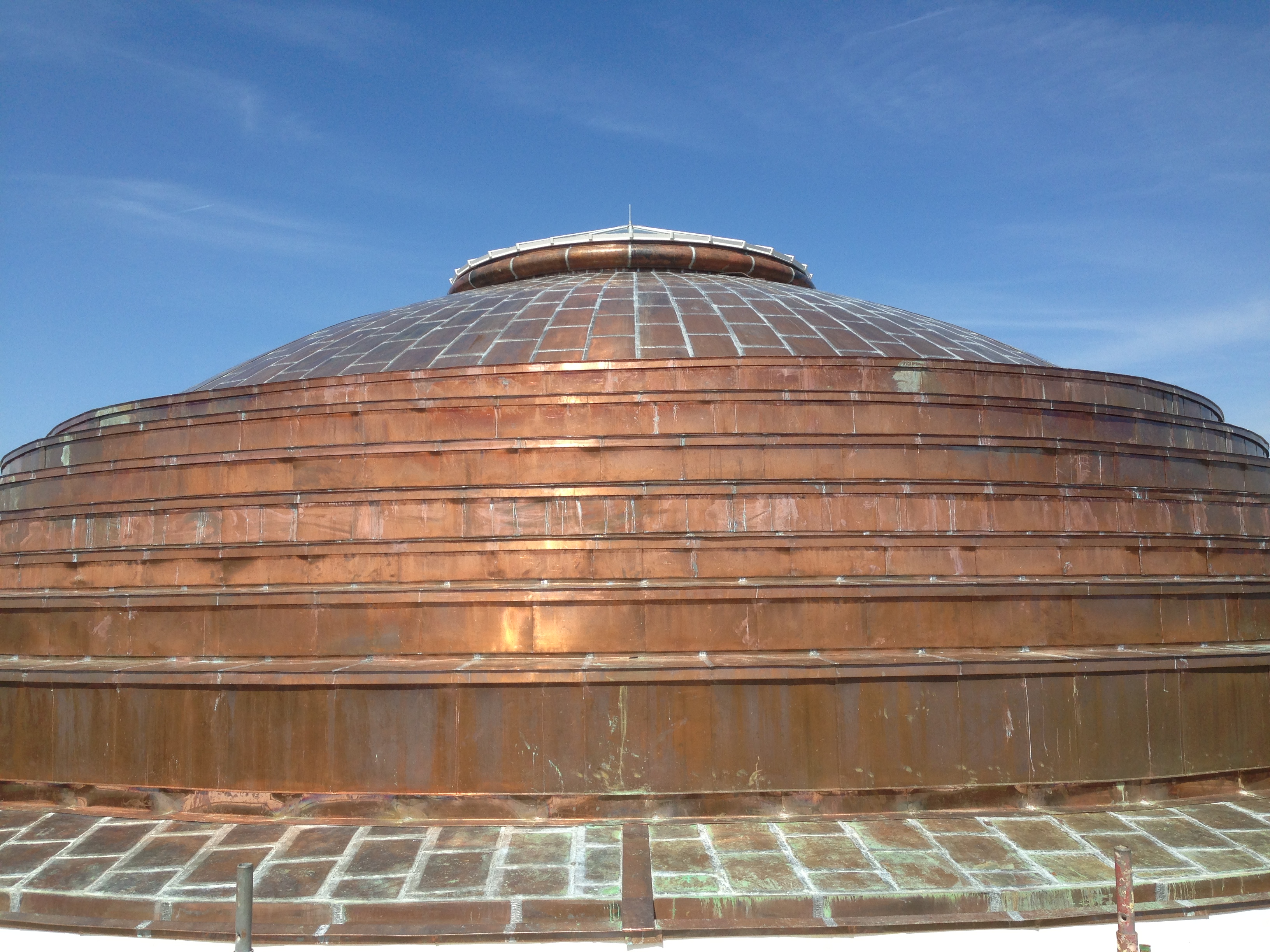
In making this award, the Society recognizes not only his decades of service in reroofing some of the finest architecture in Central Virginia, but also the superior quality and craftsmanship evident in each of his projects. Most notably, McGraw recently supervised the successful reroofing of the Rotunda at the University of Virginia, a challenging project on every front. Serving as an example of the exceptional workmanship for which he is being honored, the Society acknowledges McGraw for his dedication as a true craftsman.