AIA Virginia is pleased to announce that Mark Cavagnero, FAIA, Principal and Design Leader at Mark Cavagnero Associates Architects in San Francisco, California will chair the 2024 AIA Virginia Design Awards Jury.
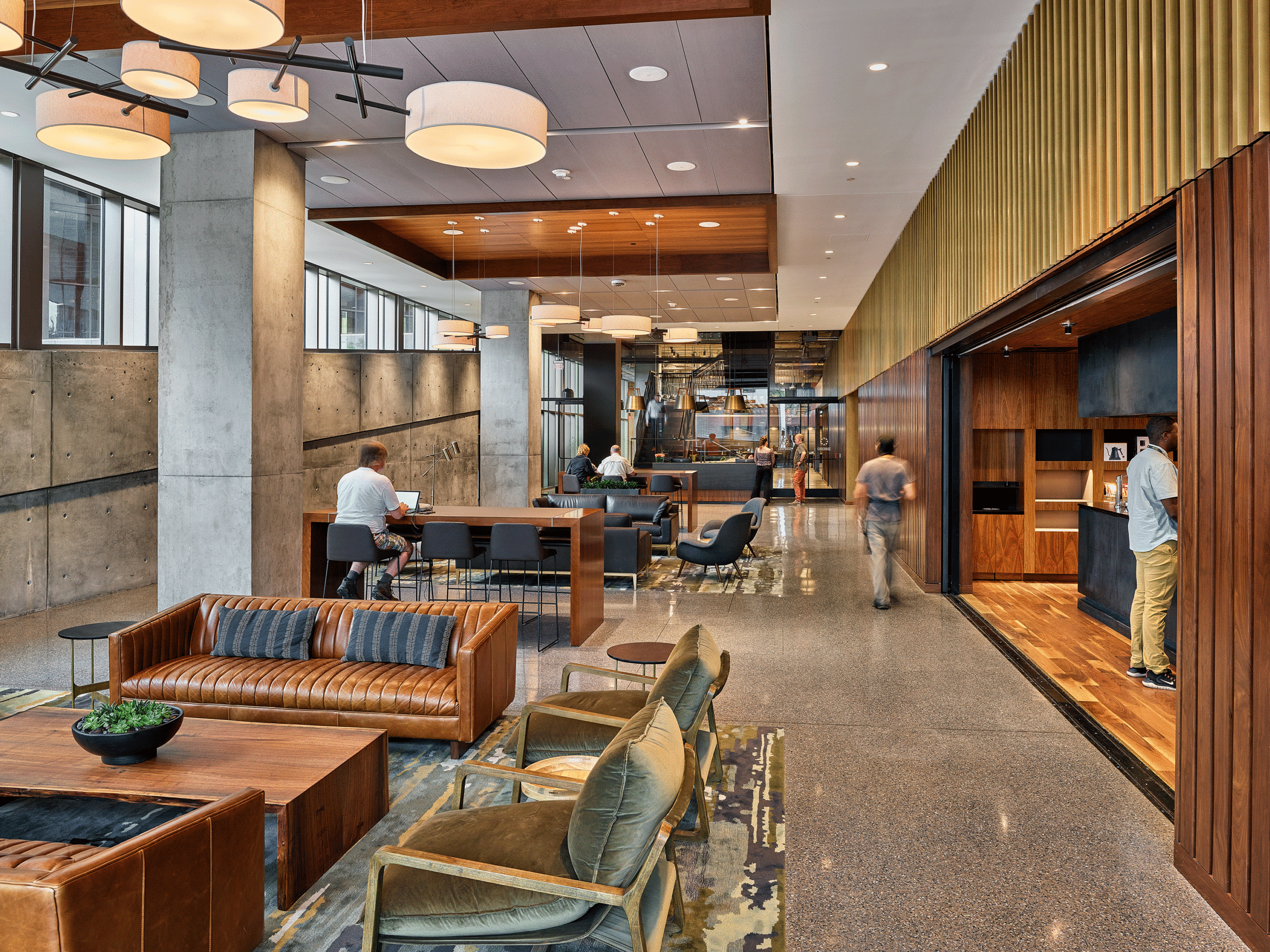
Mark Cavagnero directs a large architecture firm in California. He began his career in New York being mentored by Edward Larrabee Barnes, a nationally prominent architect known for work in the arts and higher education. In 1993, Mark established Mark Cavagnero Associates in San Francisco. The firm’s first project was the modernization of the iconic California Palace of the Legion of Honor. Over the course of the next three decades, Mark has led the design of a large and significant portfolio of new buildings and building modernizations. These projects have been widely published nationally and internationally and have received numerous awards. Projects include the SFJAZZ Center, the Oakland Museum of California, the ODC Theater Center, the Moscone Convention Center, the San Francisco Public Safety Building, the Diane B. Wilsey Center for Opera, the Finn Center in Mountain View, and the Bowes Center for the Performing Arts at the San Francisco Conservatory of Music. His work has included multiple projects in New York, Chicago, and Atlanta. He also has executed projects in numerous locations abroad: London, Amsterdam, Munich, Dublin, Tokyo, Paris, Hyderabad, and Sydney. He also currently serves as the master architect for the global software company Salesforce. Current projects include three embassies for the U.S. State Department- located in Estonia, Trinidad and Tobago, and Burkina Faso.
Mark’s projects have garnered well over 100 major design awards. These awards range from national, state, and local awards from the American Institute of Architecture, the Chicago Athenaeum Awards for both International and American Architecture, the International Interior Design Association Awards and numerous others. Mark was personally honored with the 2010 Distinguished Practice Award and the 2015 Lifetime Achievement Maybeck Award from the American Institute of Architects. In 2012 the firm received the Firm of the Year Award from the California Council of the American Institute of Architects. Under Mark’s leadership, the firm ranked #8 in Architect Magazine’s ranking of the top architecture firms in the country for design.
Mark has been very involved in the community in California. He has been a Board Member for a number of institutions, by way of example, currently serving on the Board of Trustees of the UC Berkeley International House, an organization initiated by the Rockefeller family to promote international understanding and collaboration for the past hundred years. His community efforts have also included many tasks of planning commission participation and chair leadership, athletic coaching, involvement with libraries and theater organizations, and fundraising for his college and graduate school alma maters. He has served UC Berkeley’s School of Architecture as a distinguished Howard Friedman Professor and as a member of the Chancellor’s Curriculum Committee.
Entries to the 2024 Design Awards program are now being accepted. AIA Virginia’s Awards for Excellence in Architecture (also known as the Design Awards) recognize outstanding design, built and unbuilt, from the past seven years. The program is juried by a team of esteemed practitioners from outside of the region.
Each entry will be judged on how successful the project is in meeting its individual requirements. Consideration is given to aesthetics, social impact, innovation, context, performance, and stewardship of the natural environment — with particular emphasis on the Framework for Design Excellence.
Each entry must include a completed Framework for Design Excellence Project Information Form as page one of their submission. Note: Entrants should not feel obligated to respond to every measure within the Framework — only those that apply to the project being submitted. It is understood that every project is different and may not respond to each measure within the Framework. The jury will consider each design holistically and within context. (Note on the form itself – make sure all of your entry text is visible from the PDF before uploading.)
No specific number of awards is set, and the program is open to all categories of building as well as interiors projects. The location of projects is not restricted, but any built works submitted for consideration must have been completed on or after Jan. 1, 2017. Enter online.
Entries are due by 5 p.m. on June 28, 2024.Note: You should be prepared to submit your concealed ID and project submission upon entry.
Entry fees
AIA VirginiaMembers: $210 for the first project $180 for each additional project The Small Projects Category has a reduced entry fee of $100 Note: The entrant must be a member of AIA Virginia to be eligible to receive the member discount. The submitting AIA Virginia member must be a contributor to the design team.
Non-members of the AIAVA (must have an office located in Virginia): $295 for the first project $270 for each additional project The Small Projects Category has a reduced entry fee of $200
Developed by members of the AIA, the Framework for Design Excellence, represents the defining principles of good design in the 21st century. It’s intended to be accessible and relevant for every architect, every client, and every project — regardless of size, typology, or aspiration.
The 10 measures that make up the Framework are intended to inspire progress toward a zero-carbon, equitable, resilient, and healthy built environment. They represent standards of excellence as defined by members of the AIA. These measures align with the AIA’s core values which are collectively defined by members across the country.
The completed Framework for Design Excellence Project Information Form is required and shall be page 1 of each submission. The remaining 6 pages of each submission may be designed and defined by the entrant.
Use the Project Narrative section to describe how the design aligns with the Framework for Design Excellence. Entrants are encouraged to address all applicable measures.
We recognize every project is different and may not respond to every measure within the Framework. The jury will consider the design holistically and within context.
Data may not be available for some metrics on the form, or the client may prefer to keep certain metrics confidential. If this is the case, space is provided on the form to provide an explanation.
Entrants are encouraged to call out extraordinary responses to specific measures in the remaining 6 pages of their submission as well.
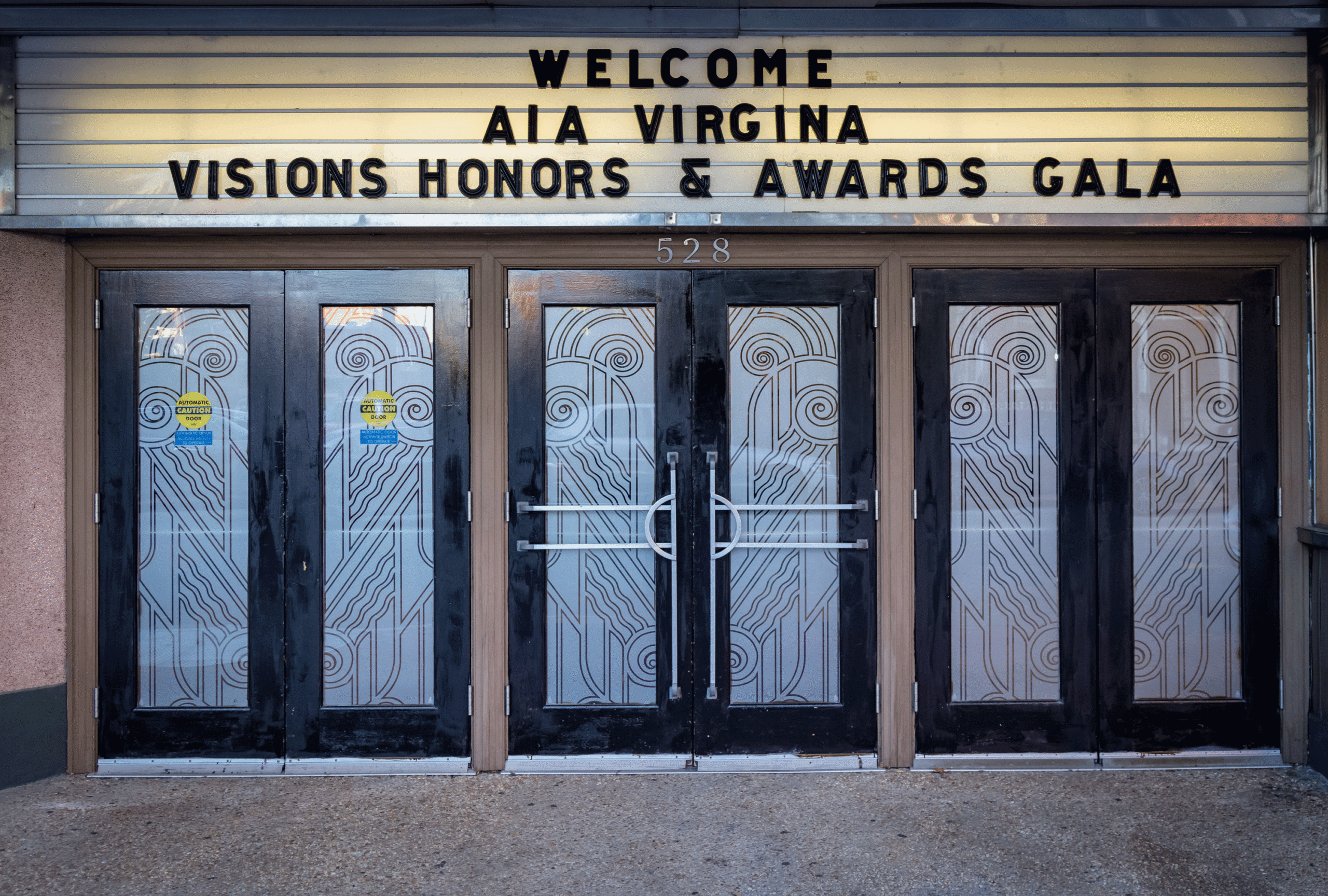
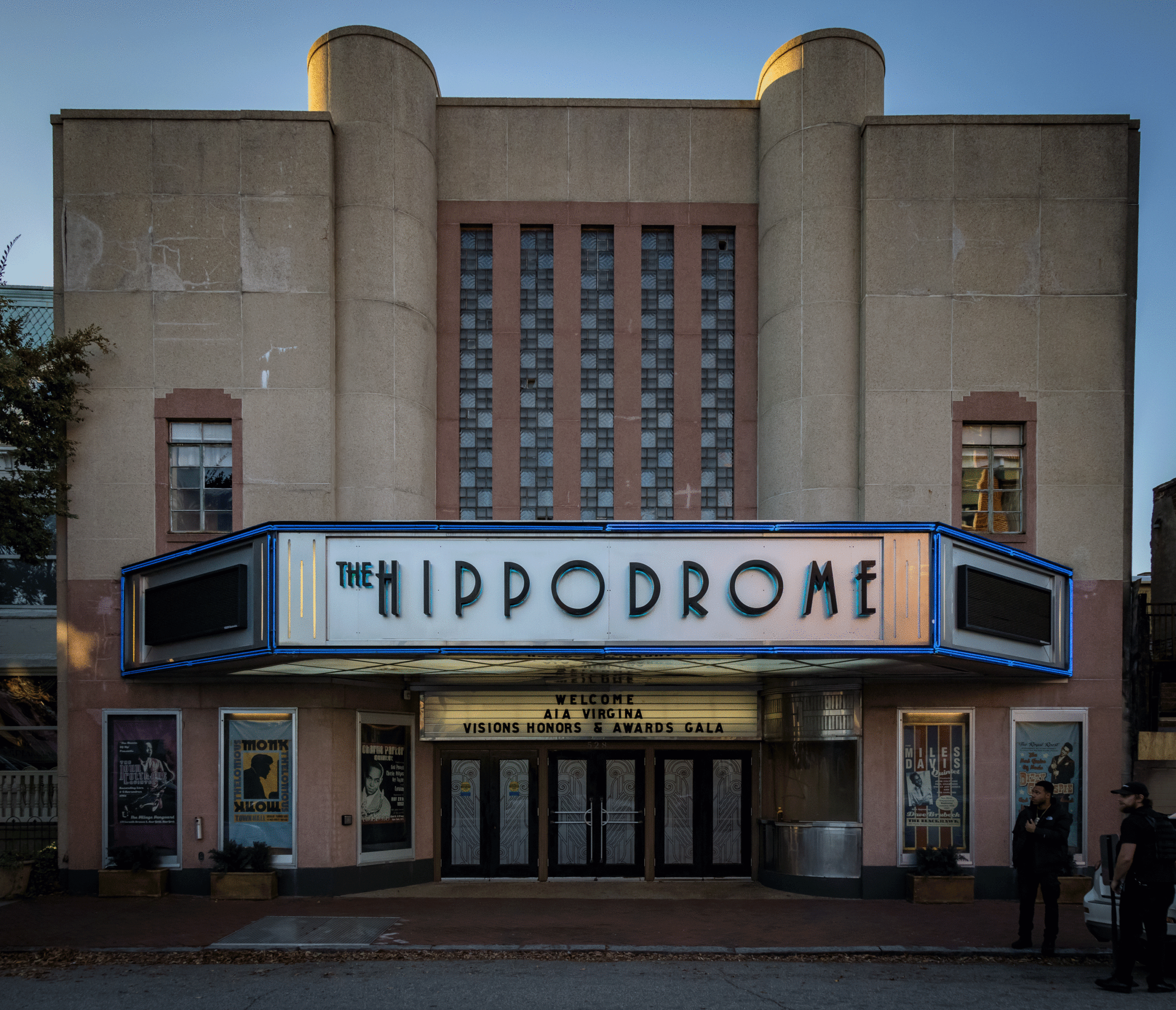
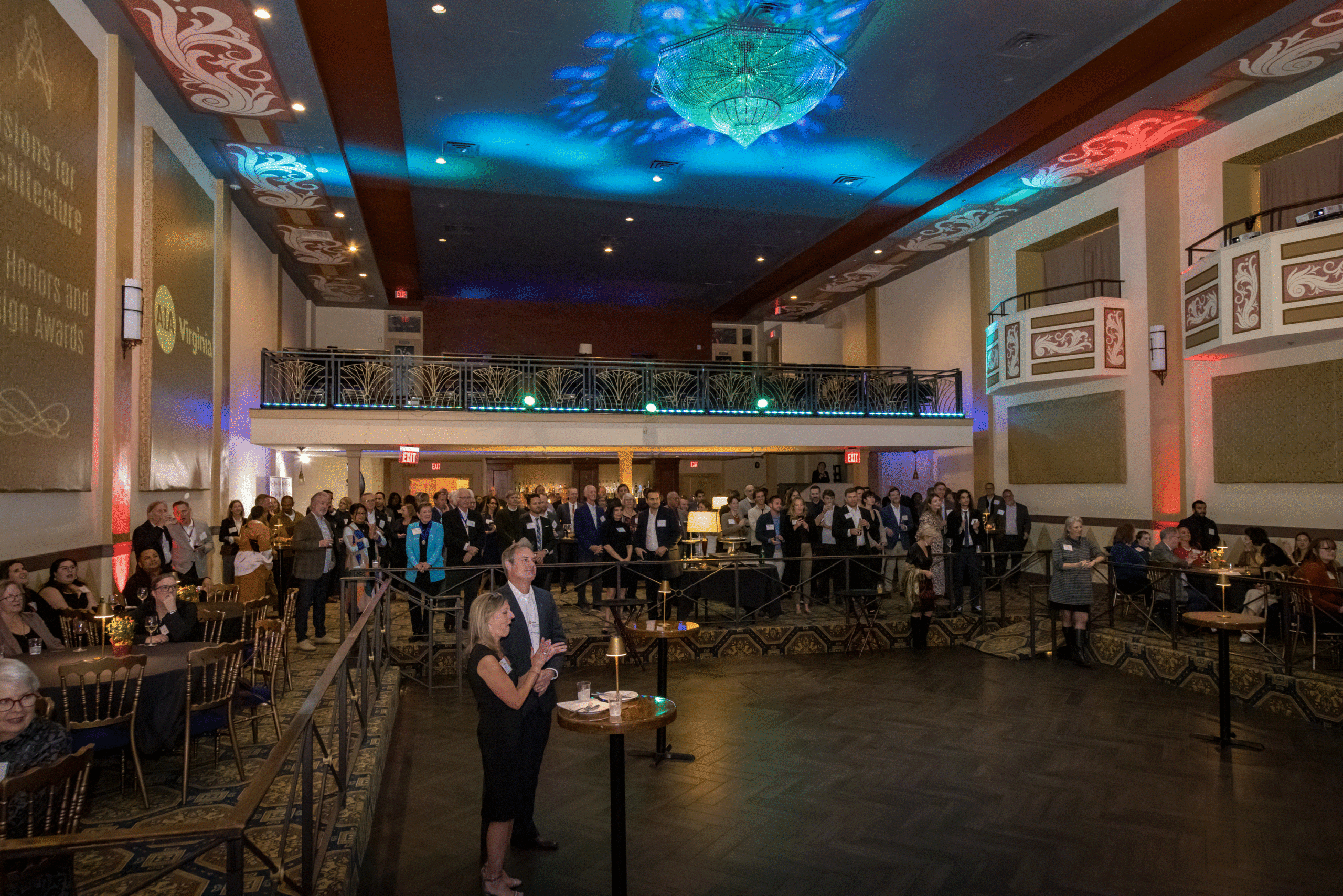
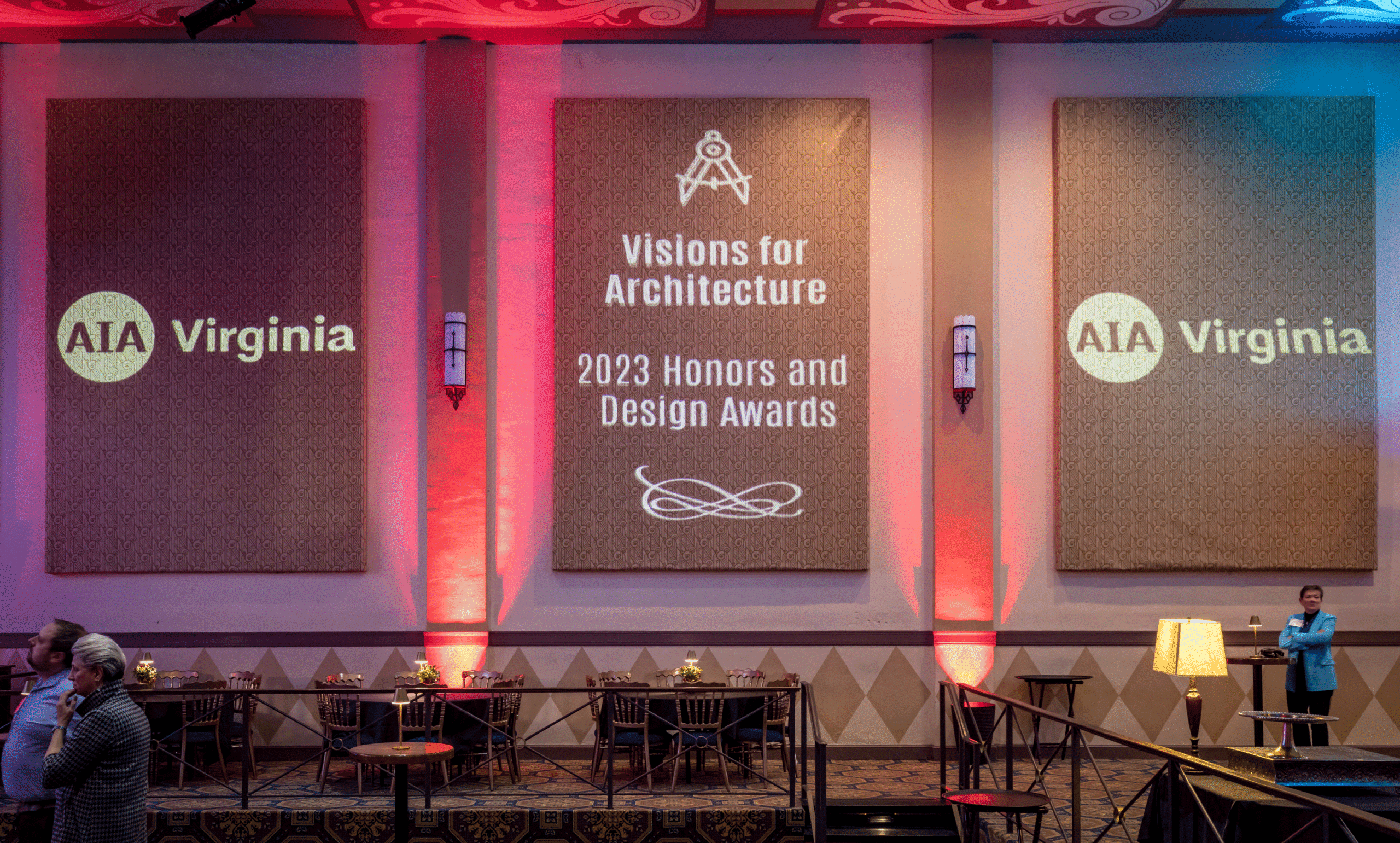
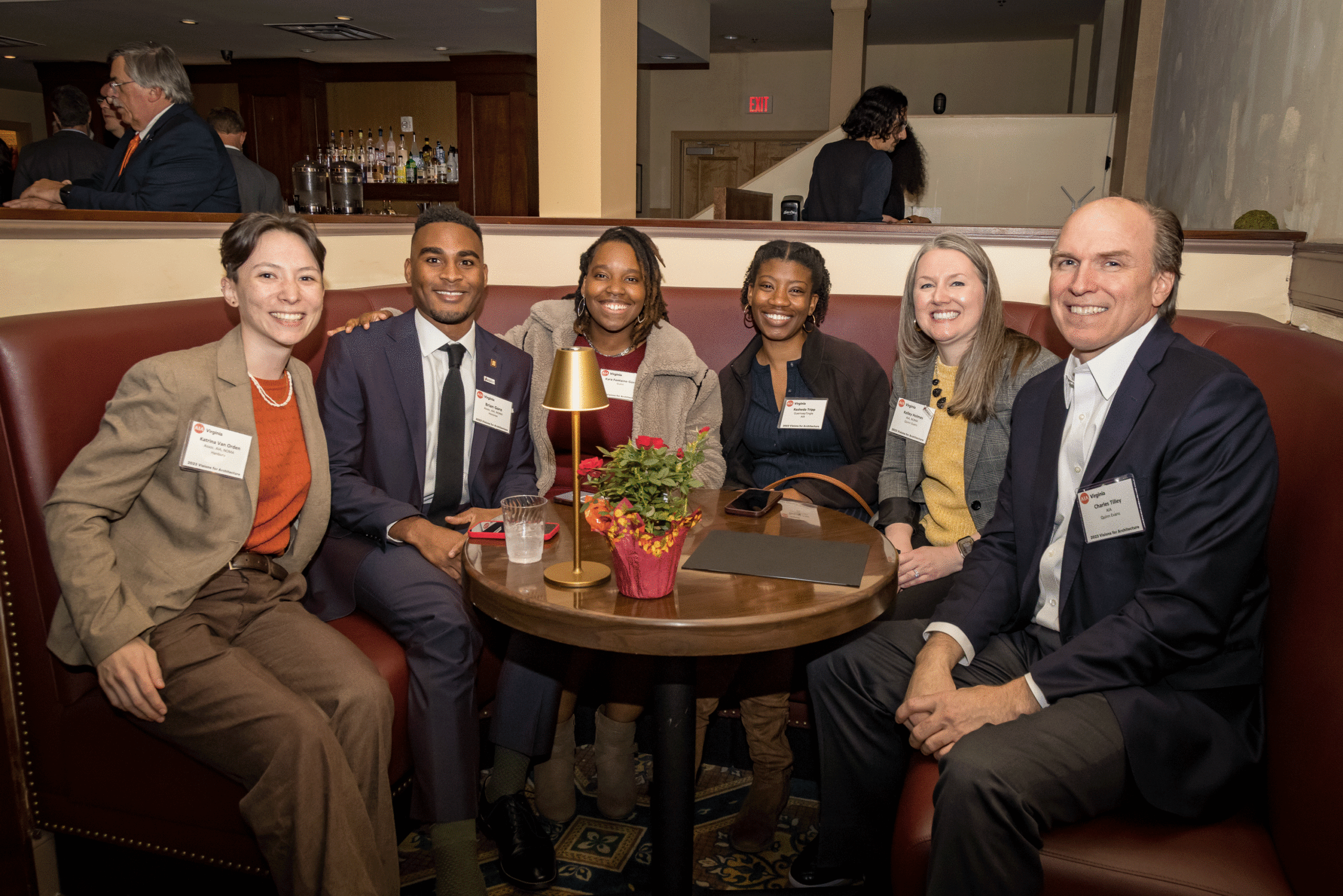
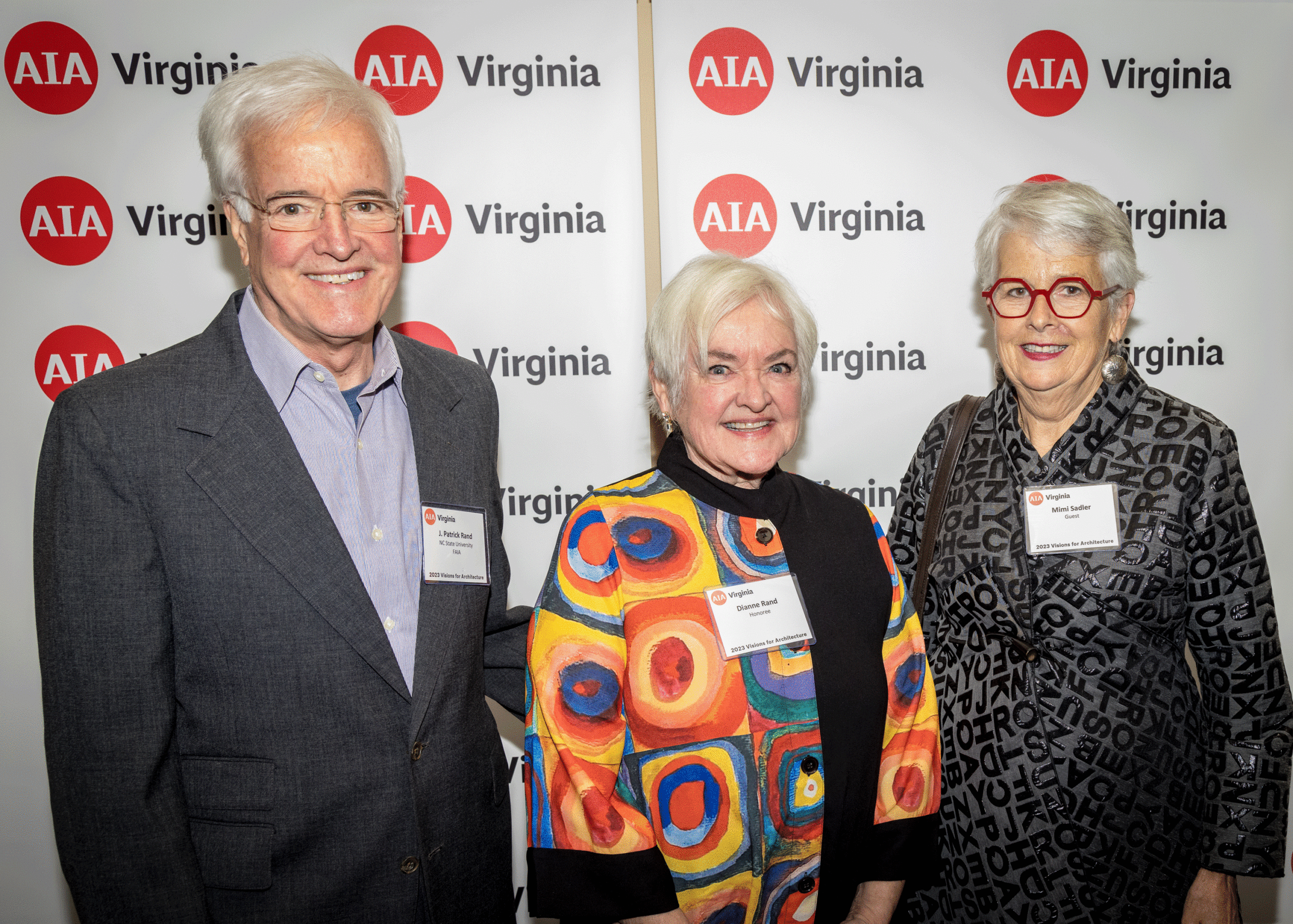
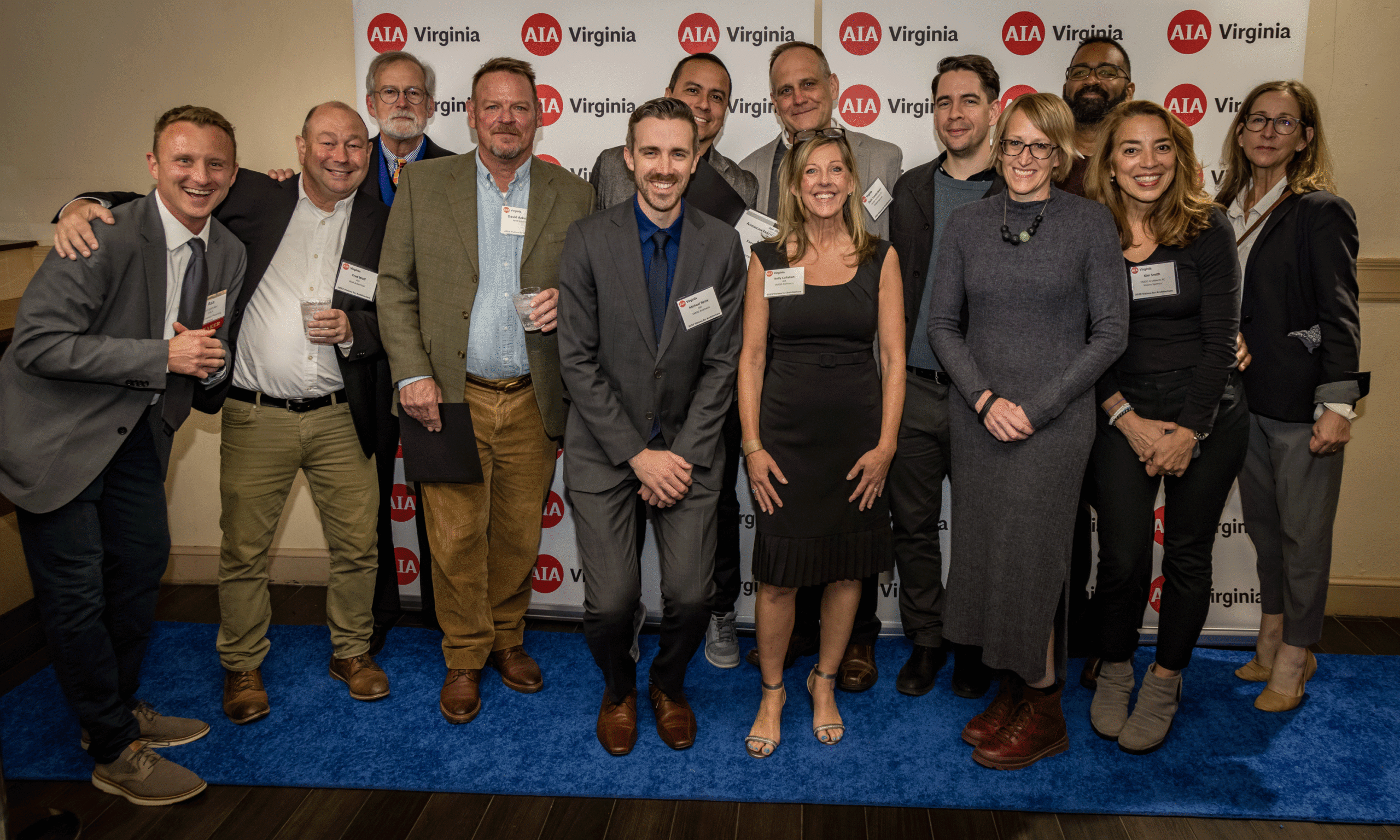
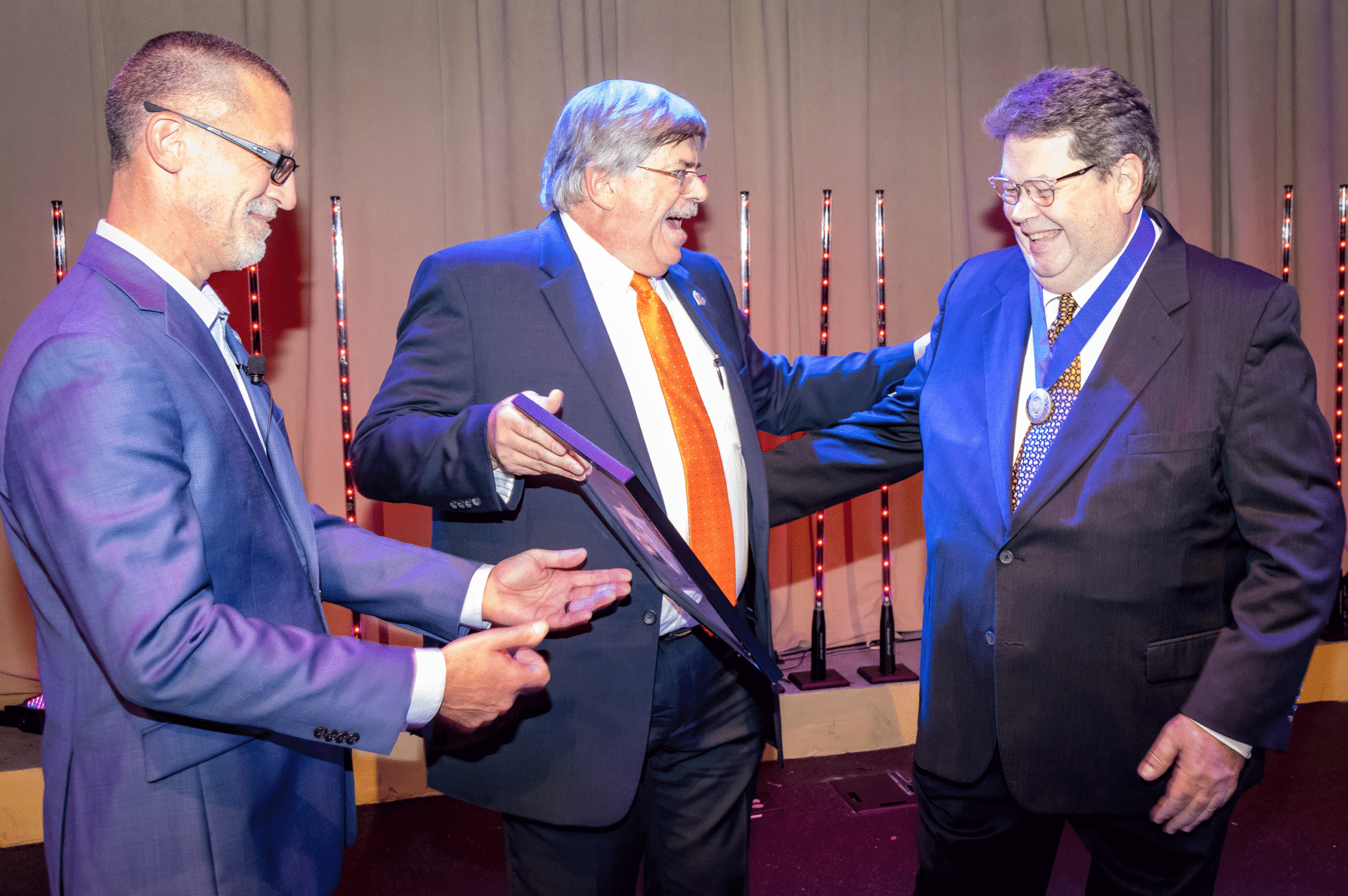
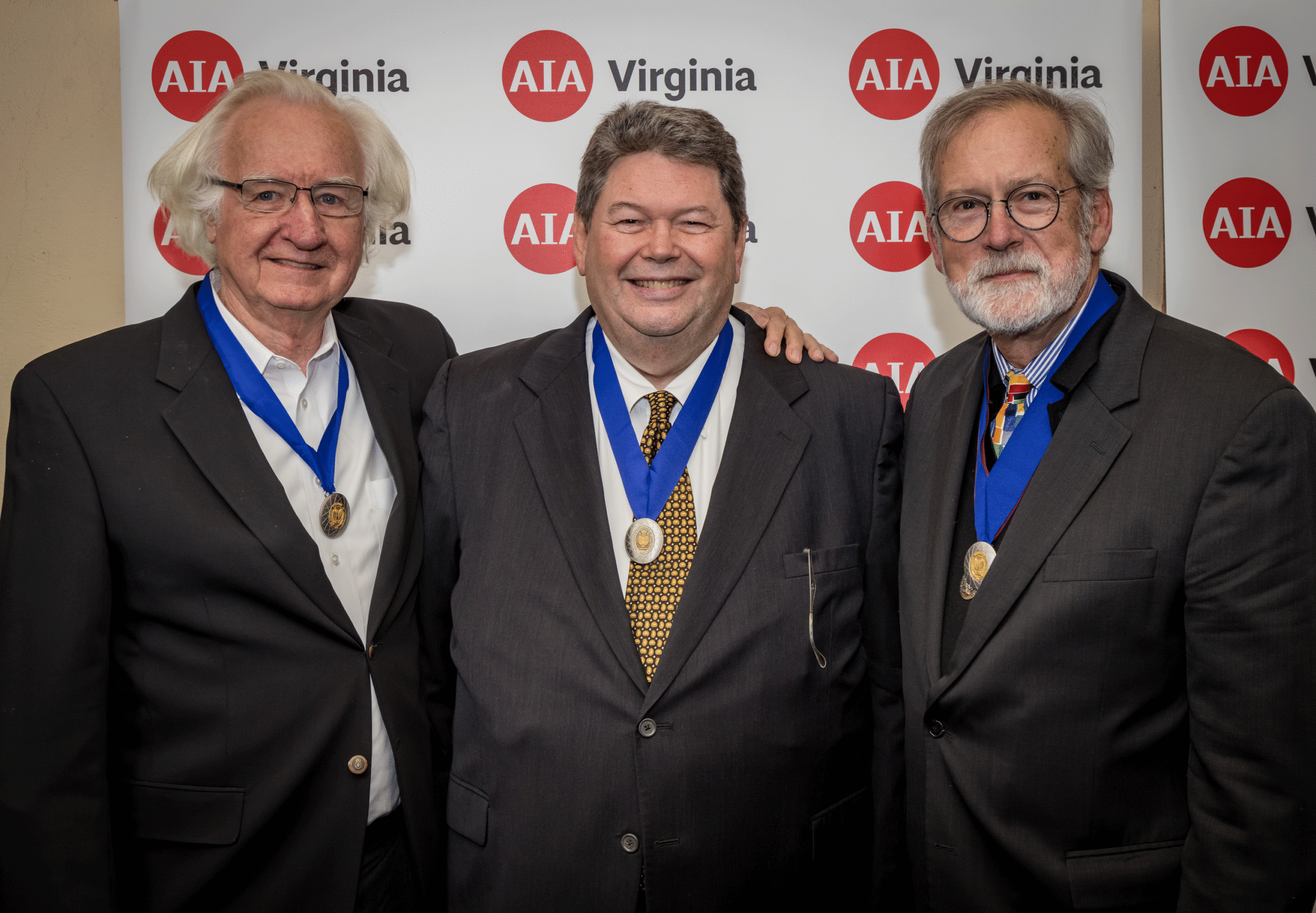
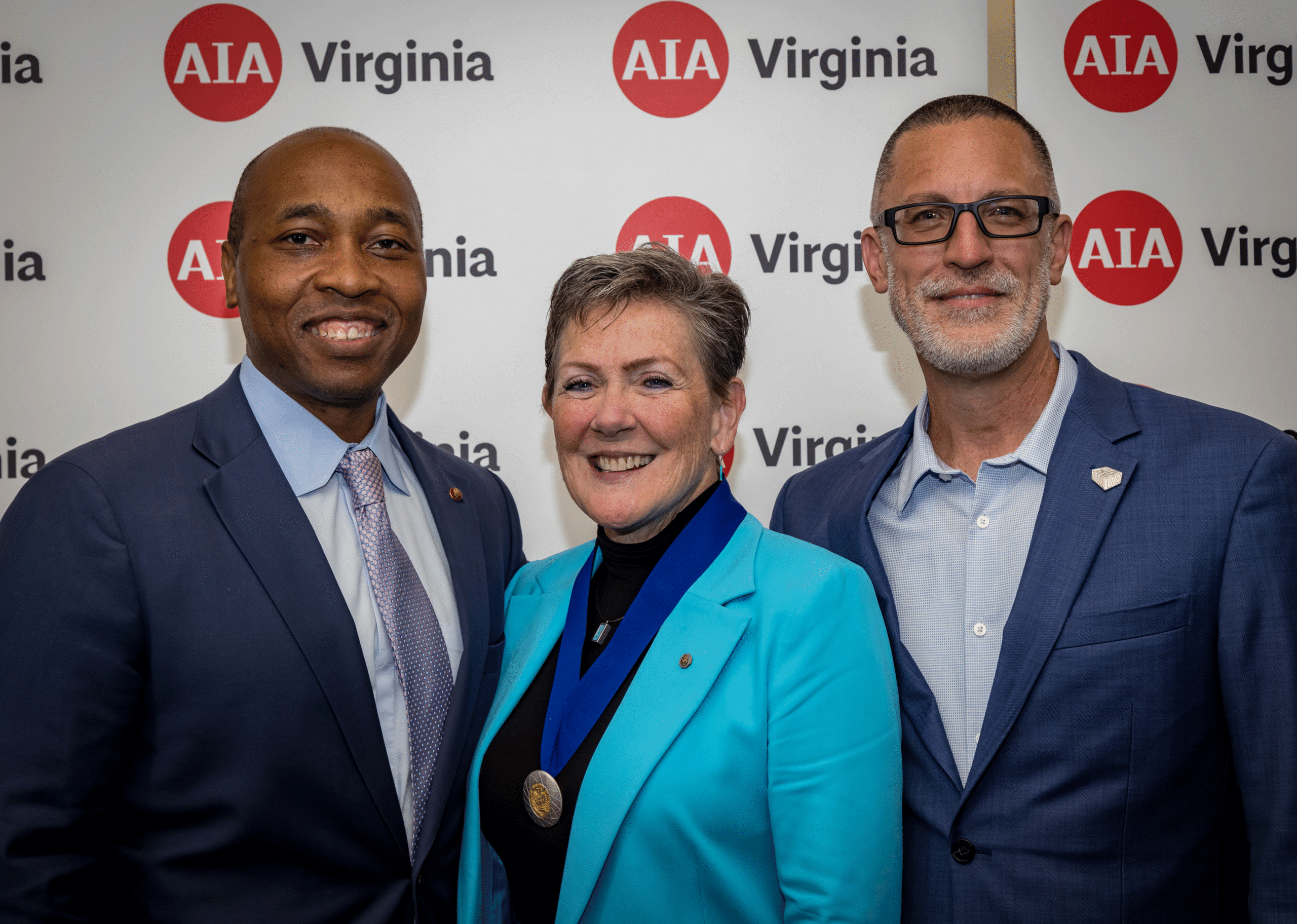
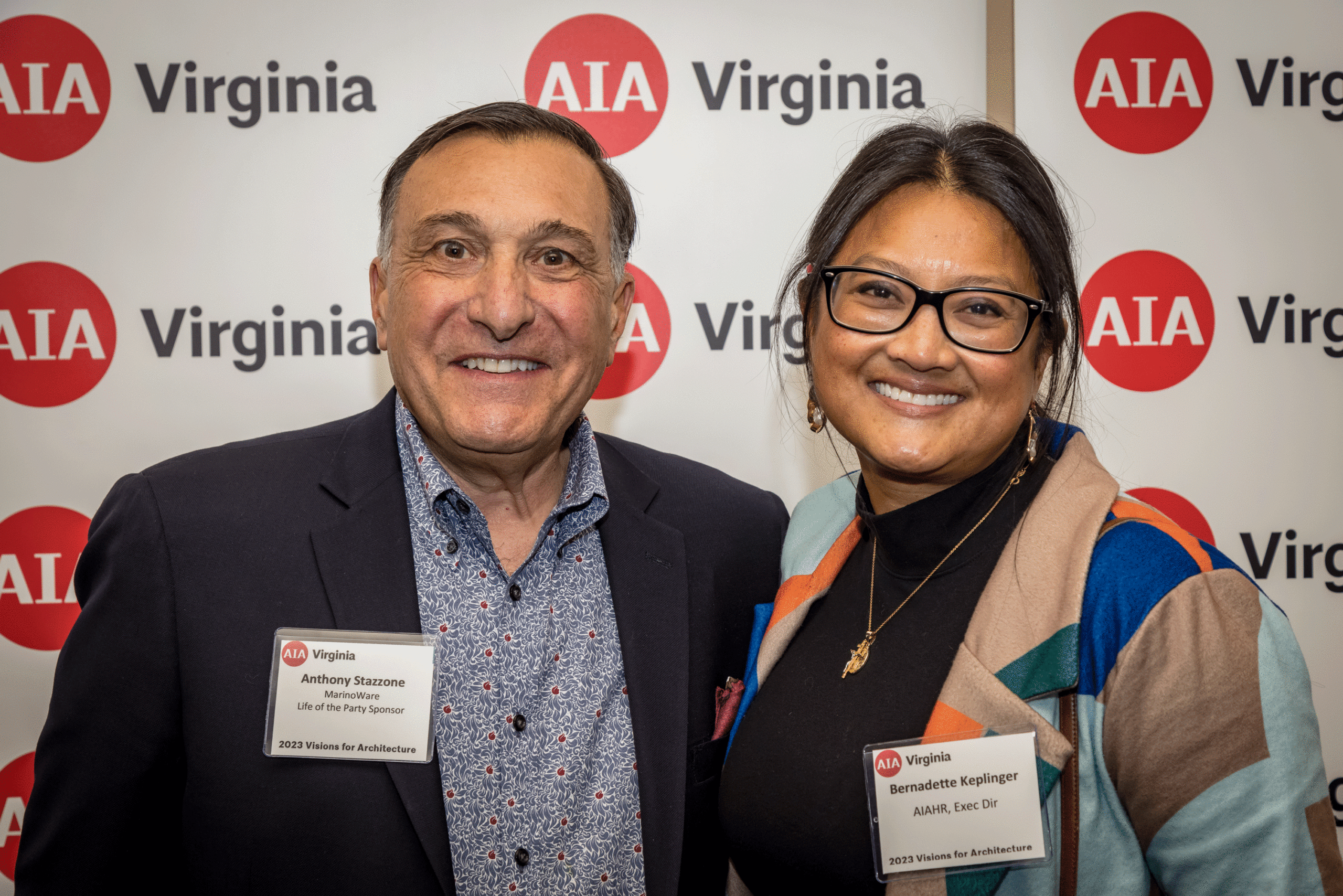
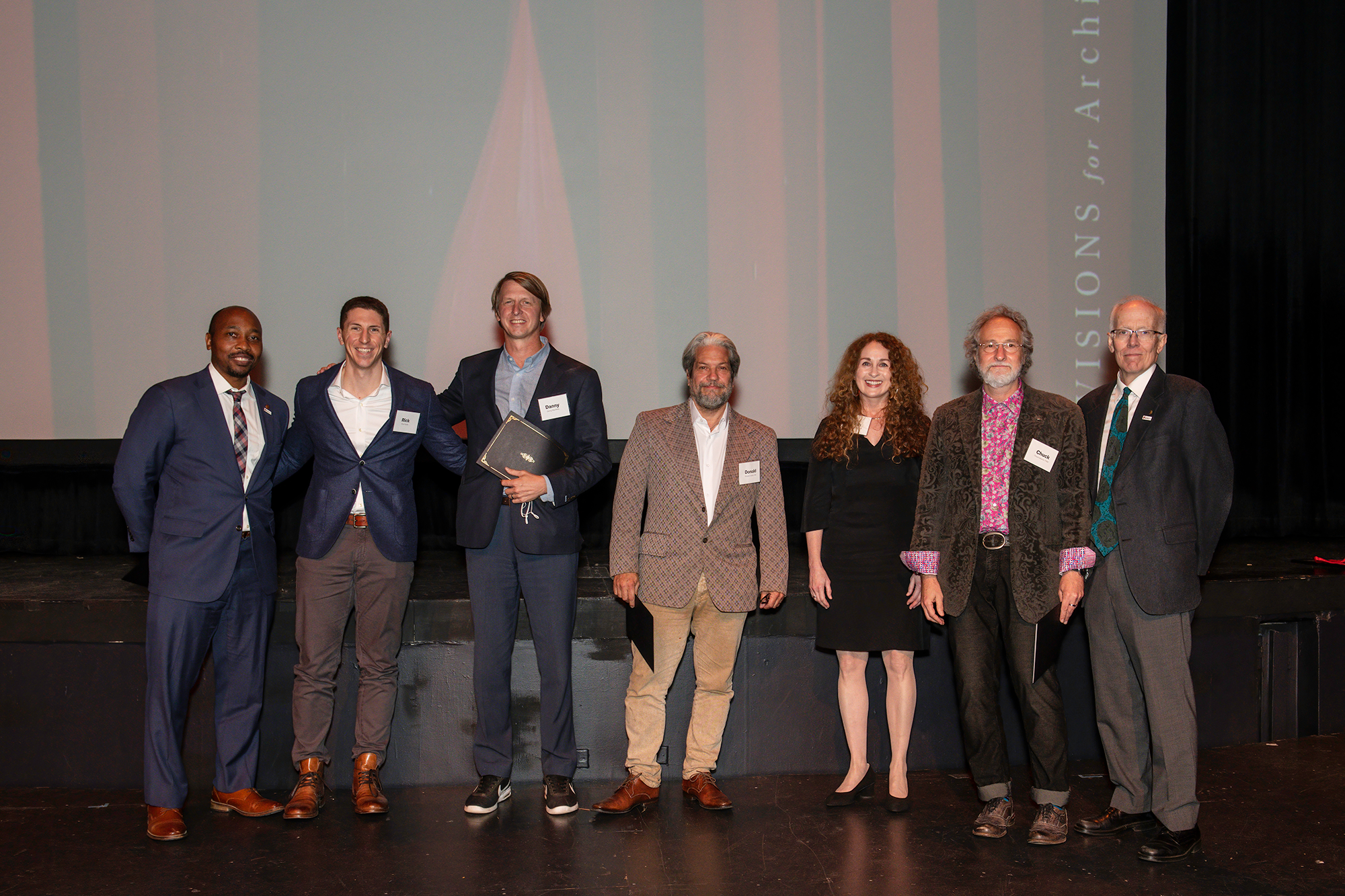
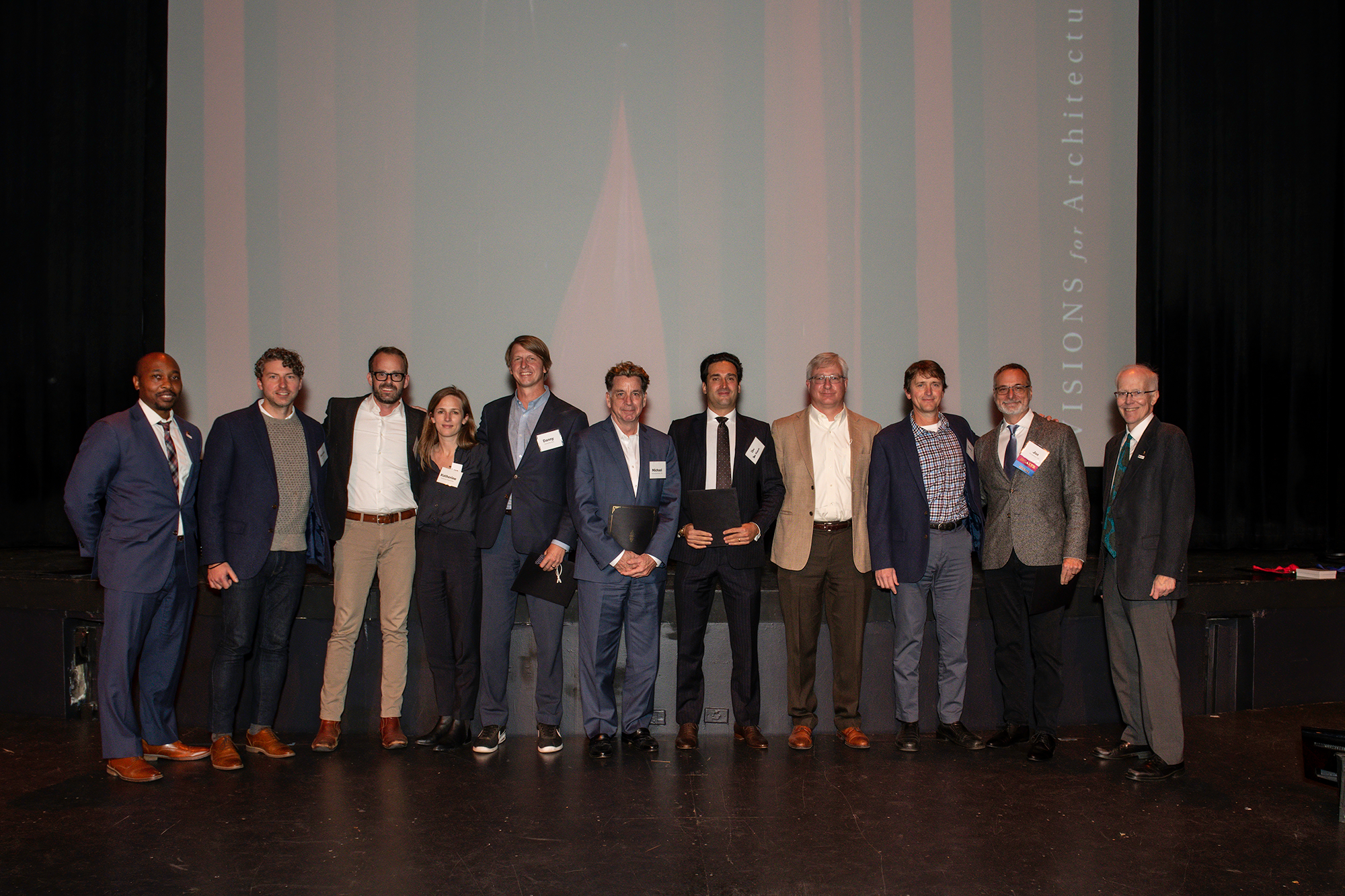
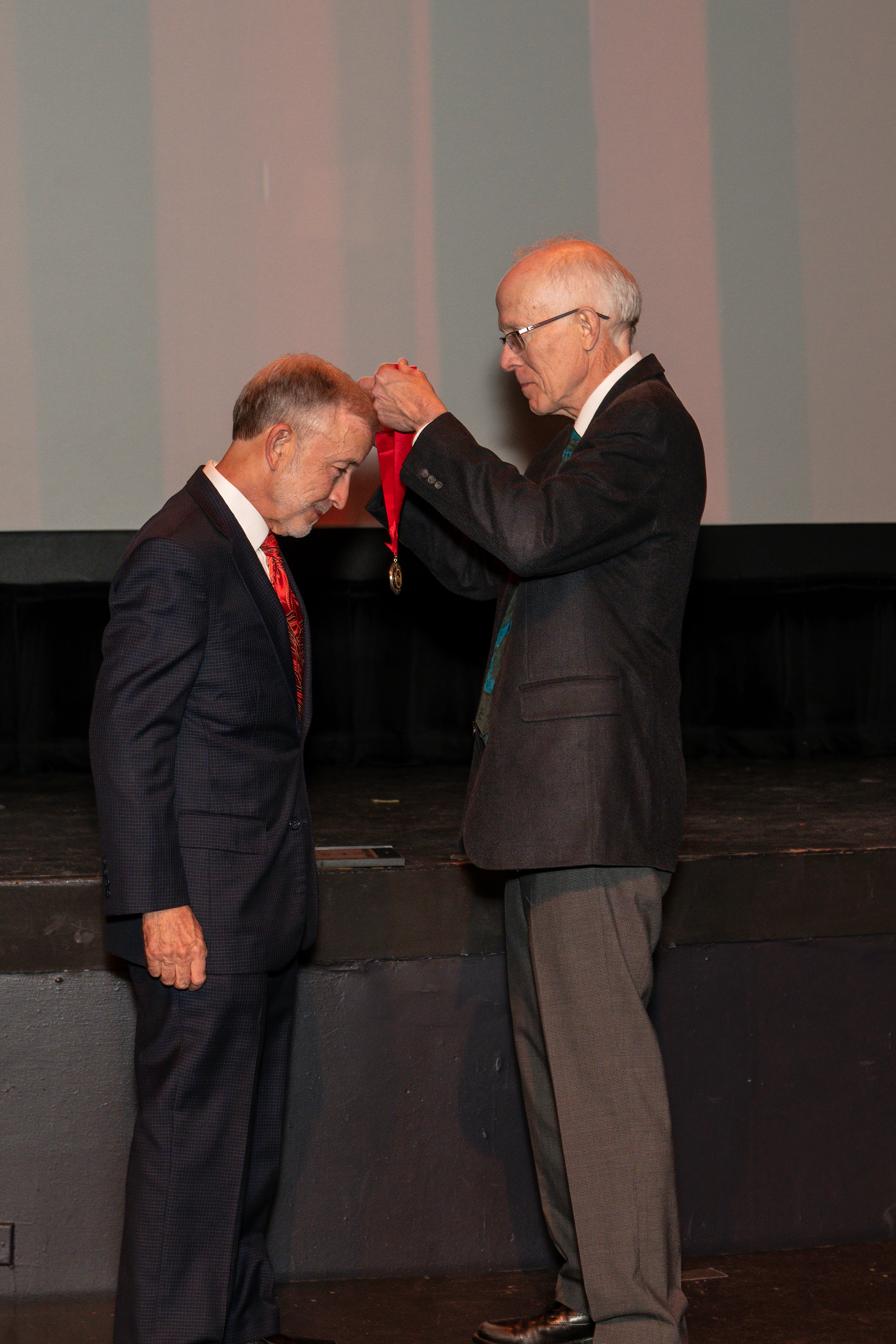
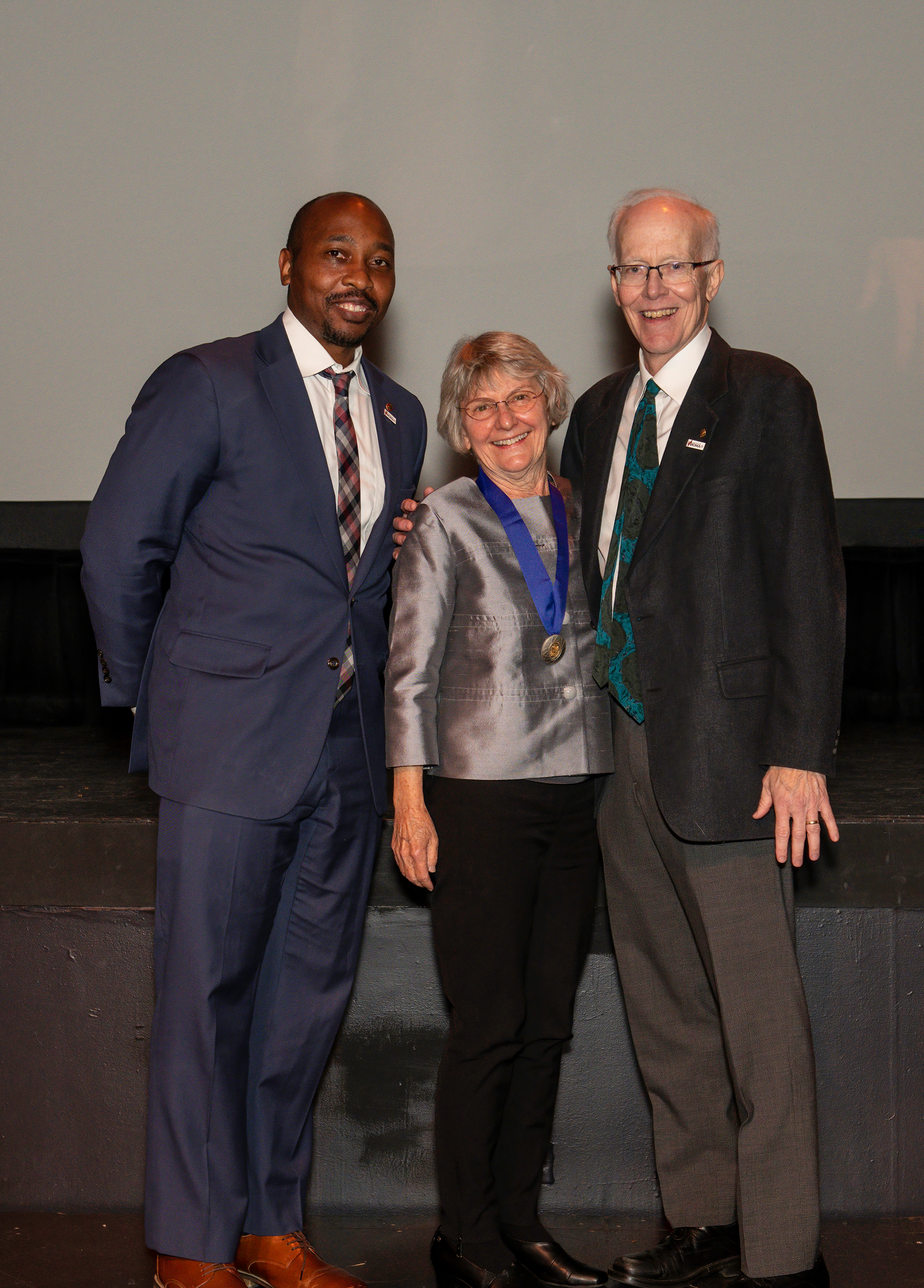
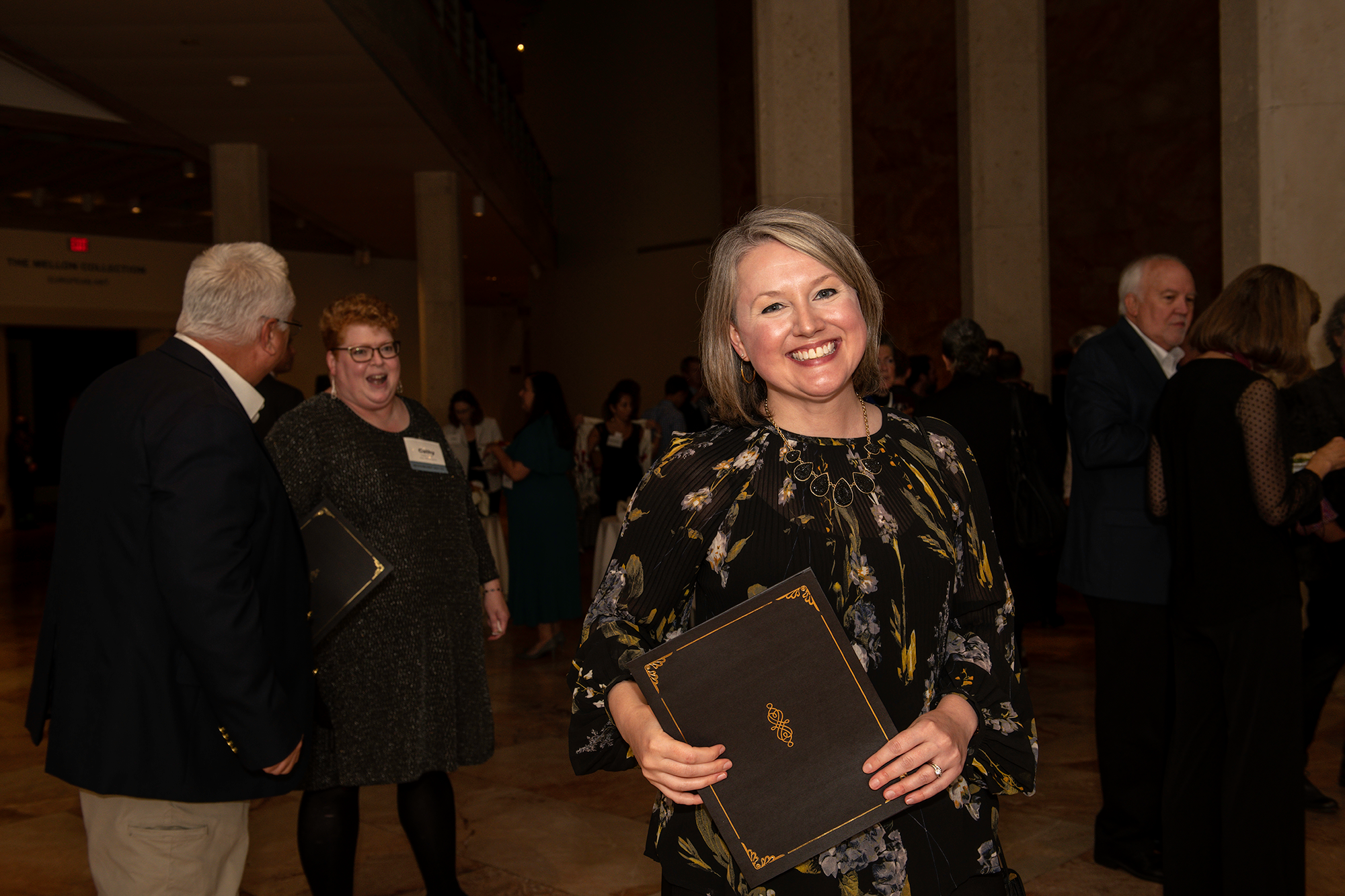
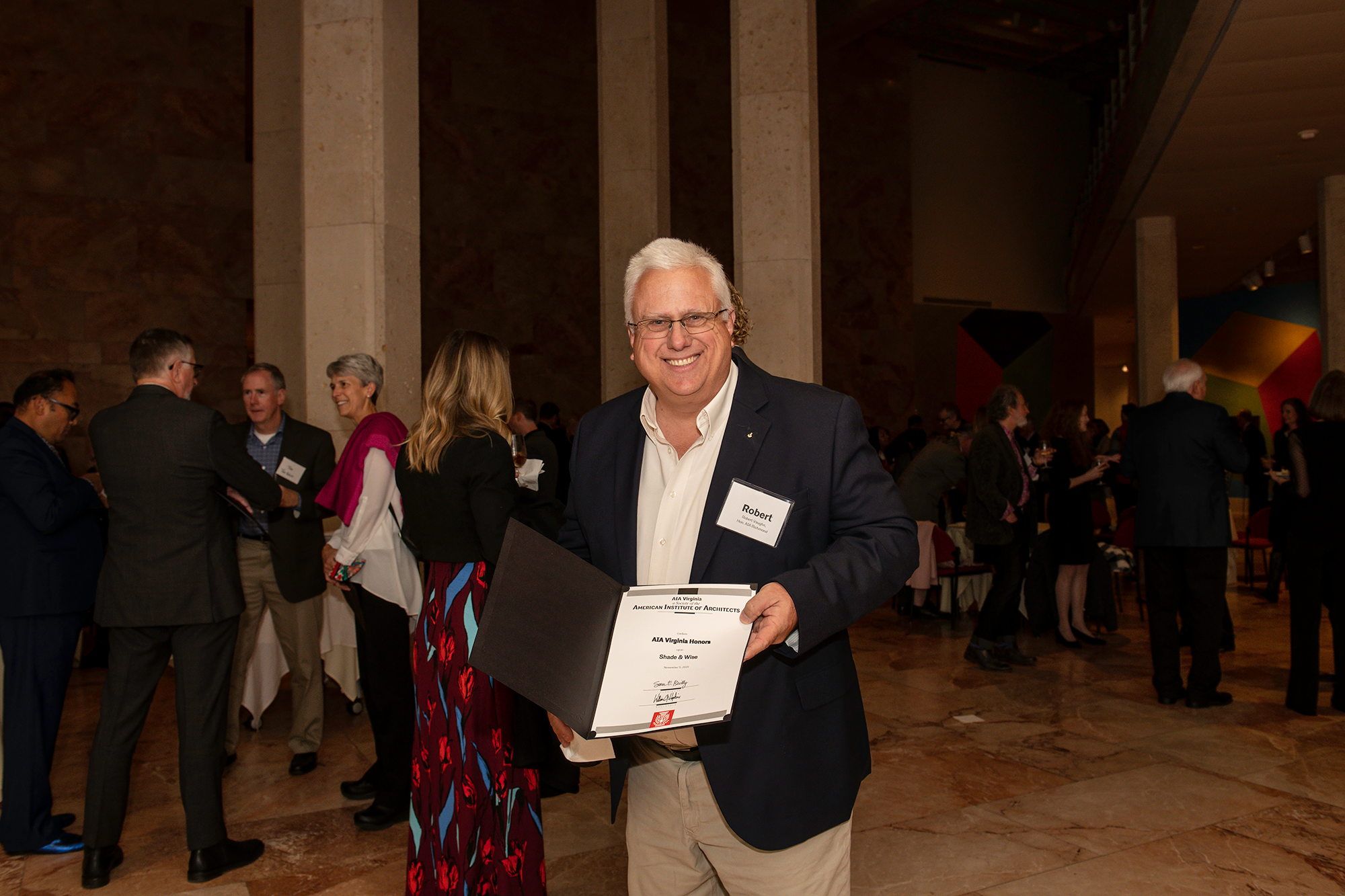
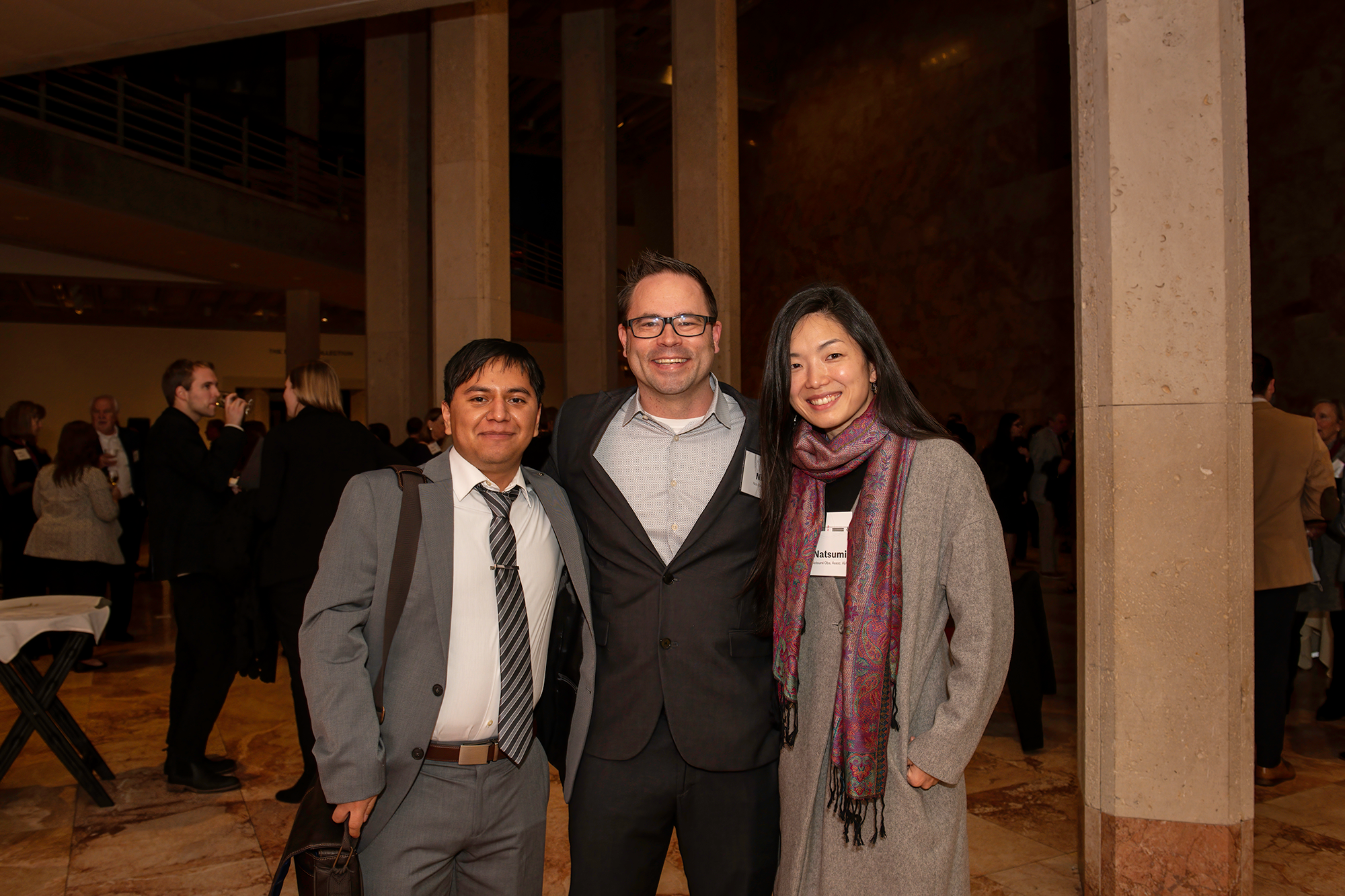
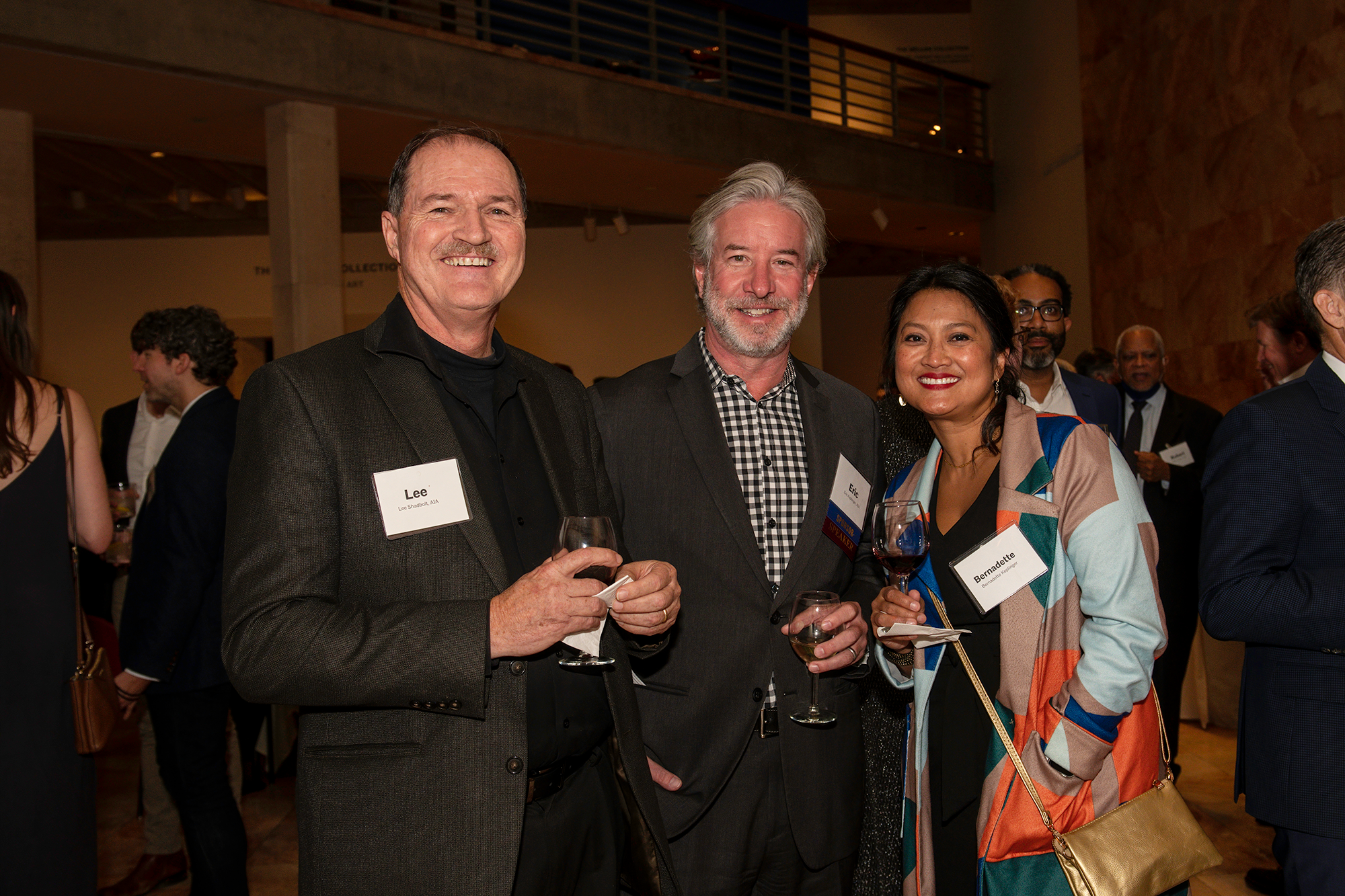
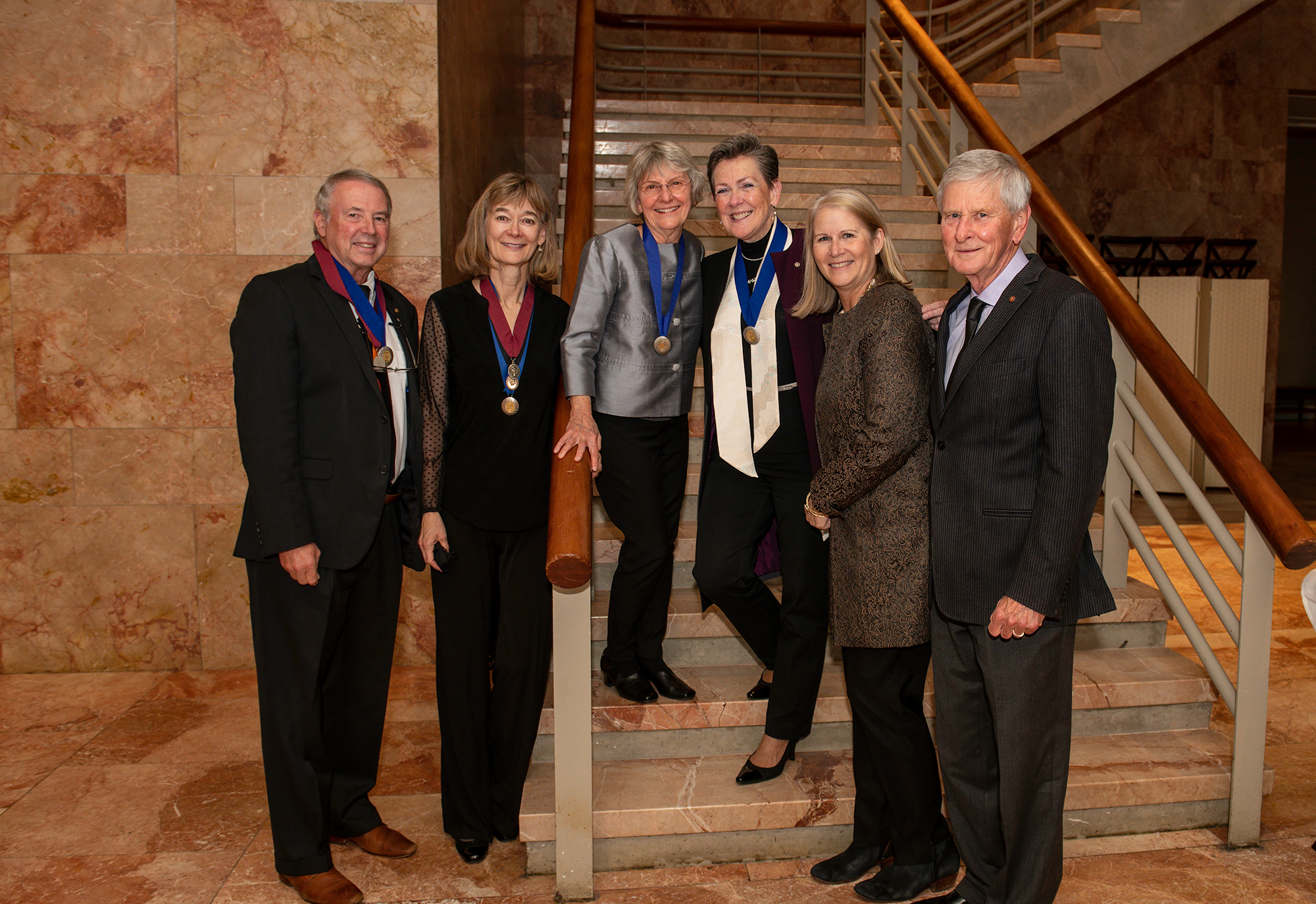
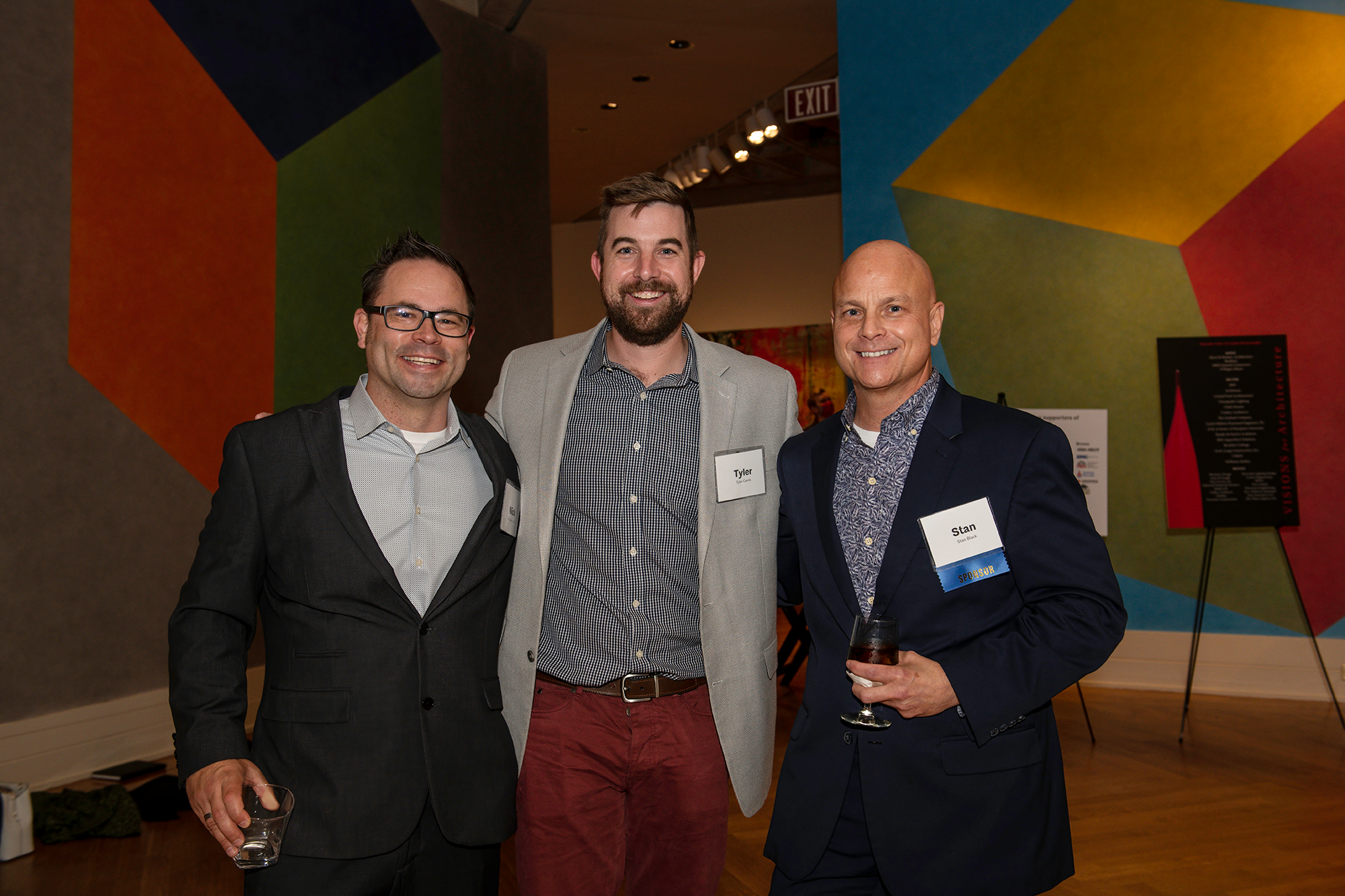
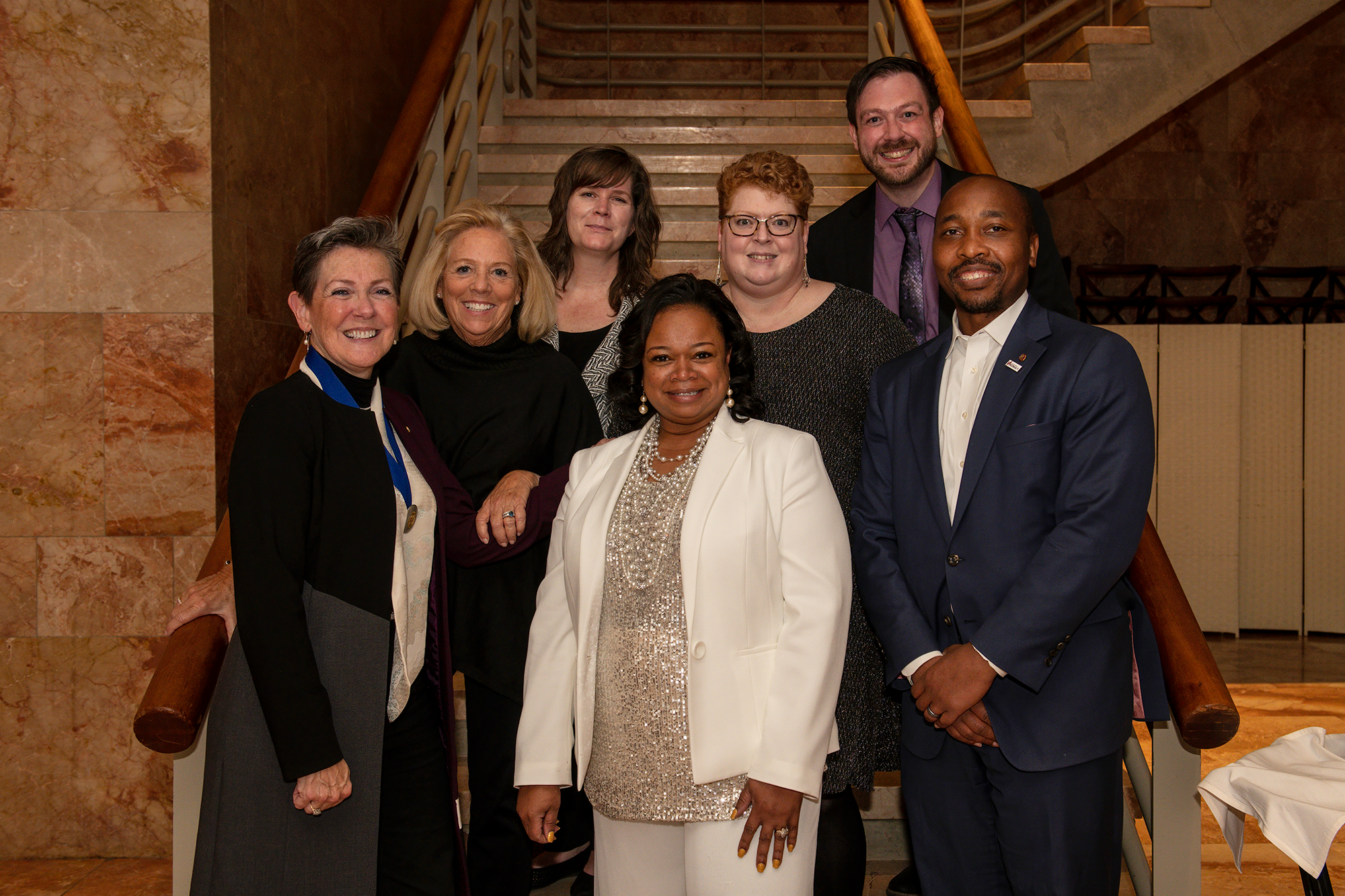
The profession came together on November 2, 2023, at the Hippodrome in Richmond to celebrate exceptional individuals, projects, and firms. Photos by Karen Taylor Davis.
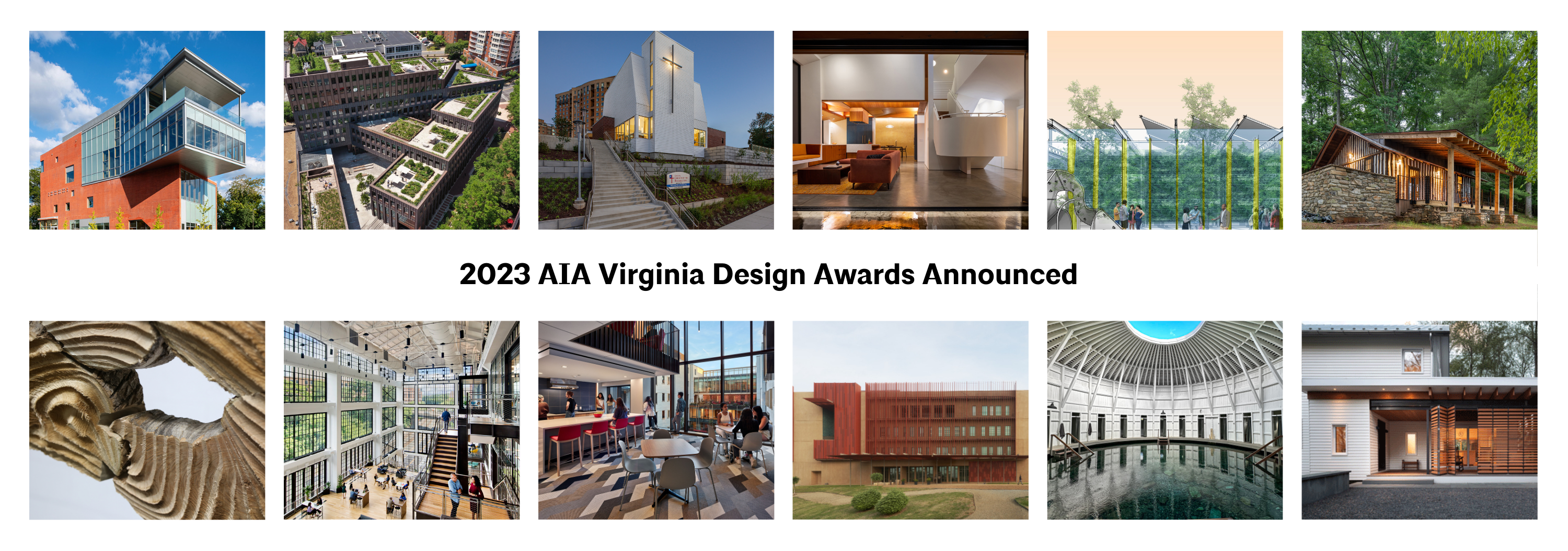
AIA Virginia is pleased to announce the 2023 Design Awards. These honors celebrate projects no older than seven years that contribute to the built environment and are clear examples of thoughtful, engaging design. Within each of the award categories, consideration was given to sustainability, affordability, social impact, innovation, durability, addressing the natural and built context, and meeting the specific needs of the client.
From a field of 144 entries, only 14 were selected by the jury for recognition. These few projects stood above the rest as particularly notable. Awards of Merit are presented to those projects worthy of recognition and an Award of Honor is reserved for those projects deemed by the jury to be truly exceptional. Consideration is given to aesthetics, social impact, innovation, context, performance, and stewardship of the natural environment — with particular emphasis on the Framework for Design Excellence.
About the Jury A committee of esteemed architects chaired by Ray Calabro, FAIA, judged the entries for AIA Virginia’s 2023 Awards for Excellence in Architecture. Joining Calabro on the jury are Jennifer Devlin-Herbert, FAIA; Omar Gandhi, FRAAC; and Karen Lu, AIA.
In the ADAPTIVE OR CONTINUED USE category
The work of retrofitting, renovating, adapting, and remodeling existing buildings accounts for almost half of U.S. architecture billings. This award celebrates design interventions upon existing buildings that help achieve carbon reduction through creative reuse and adaptation.
Award of Honor
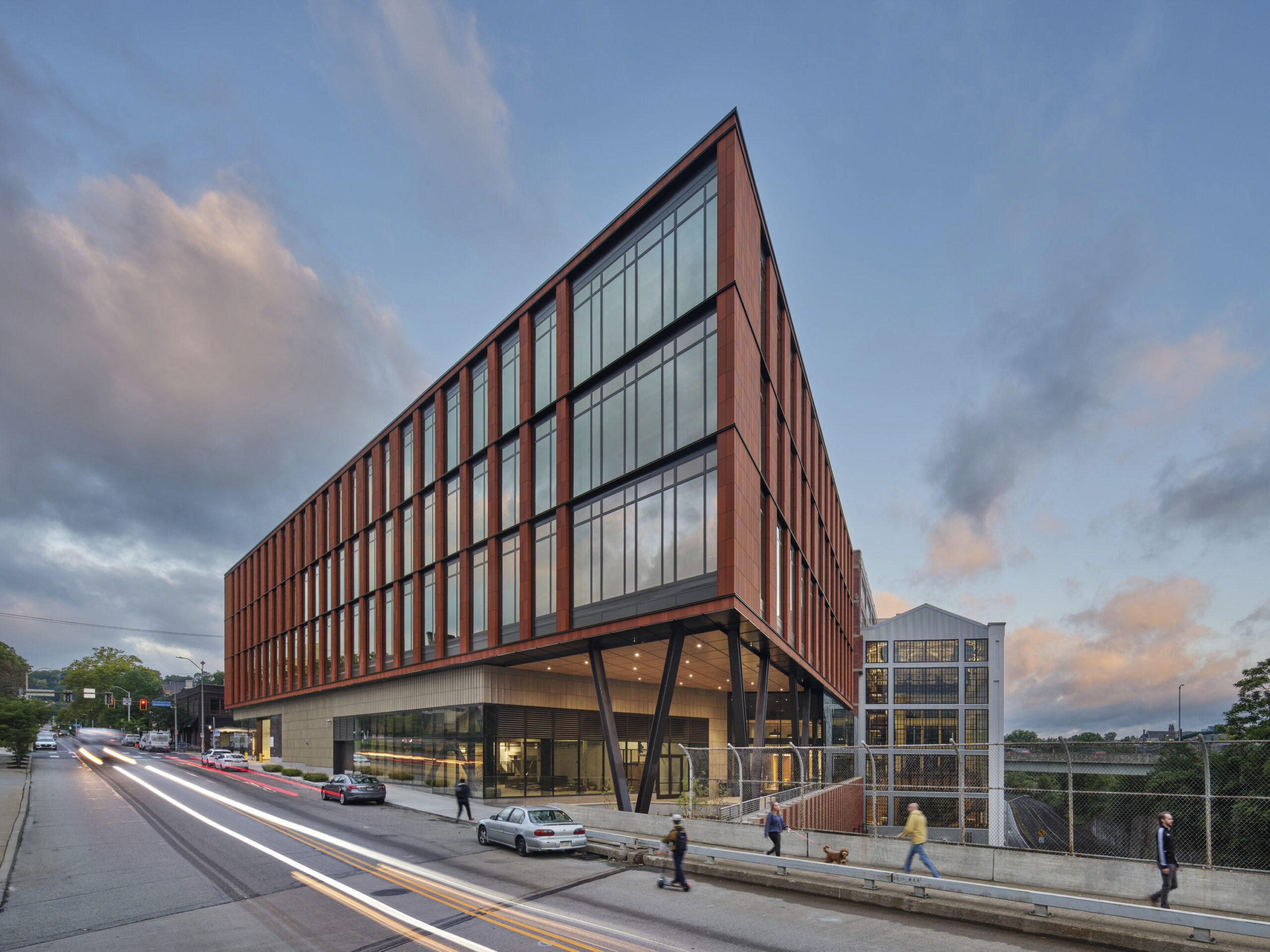
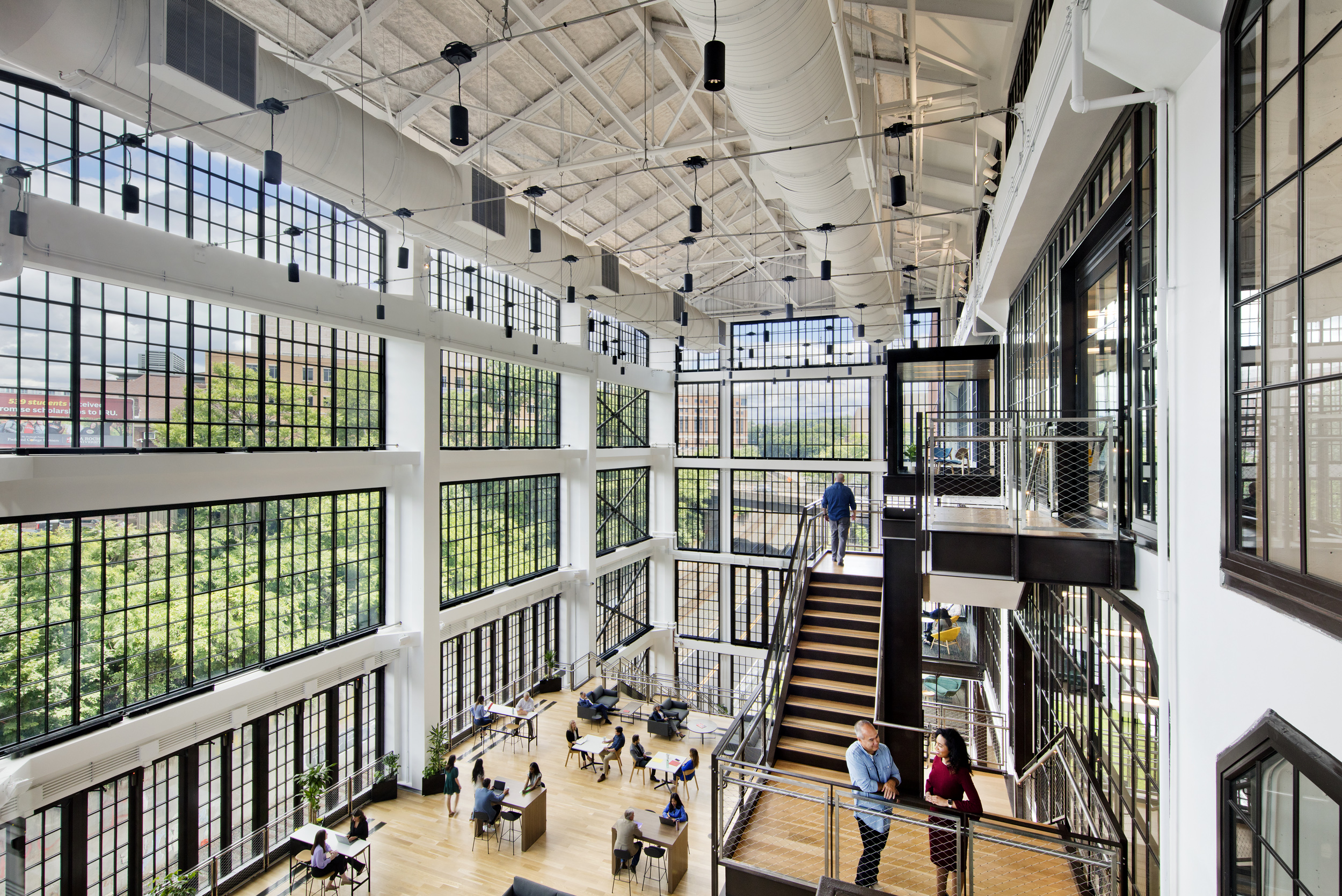
The Assembly (Pittsburgh, Pa.)
Images courtesy of ZGF Architects. Photos by Connie Zhou and Halkin Mason Photography.
Architecture Firm: ZGF Architects Owner: University of Pittsburgh General Contractor: Turner Construction Structural Engineer: Thornton Tomasetti MEP Engineer: Affiliated Engineers, Inc. Photographers: Connie Zhou and Halkin Mason Photography
Jury Comments: We appreciated the significant yet respectful transformation of the existing building, particularly the double-height glazed space. The adaptive reuse of the assembly bays into open, flexible spaces for research is great.
In the ARCHITECTURE category
The jury considers aesthetics, adherence to the client’s wishes, proven and projected building performance, and concept development during its deliberations.
Award of Honor
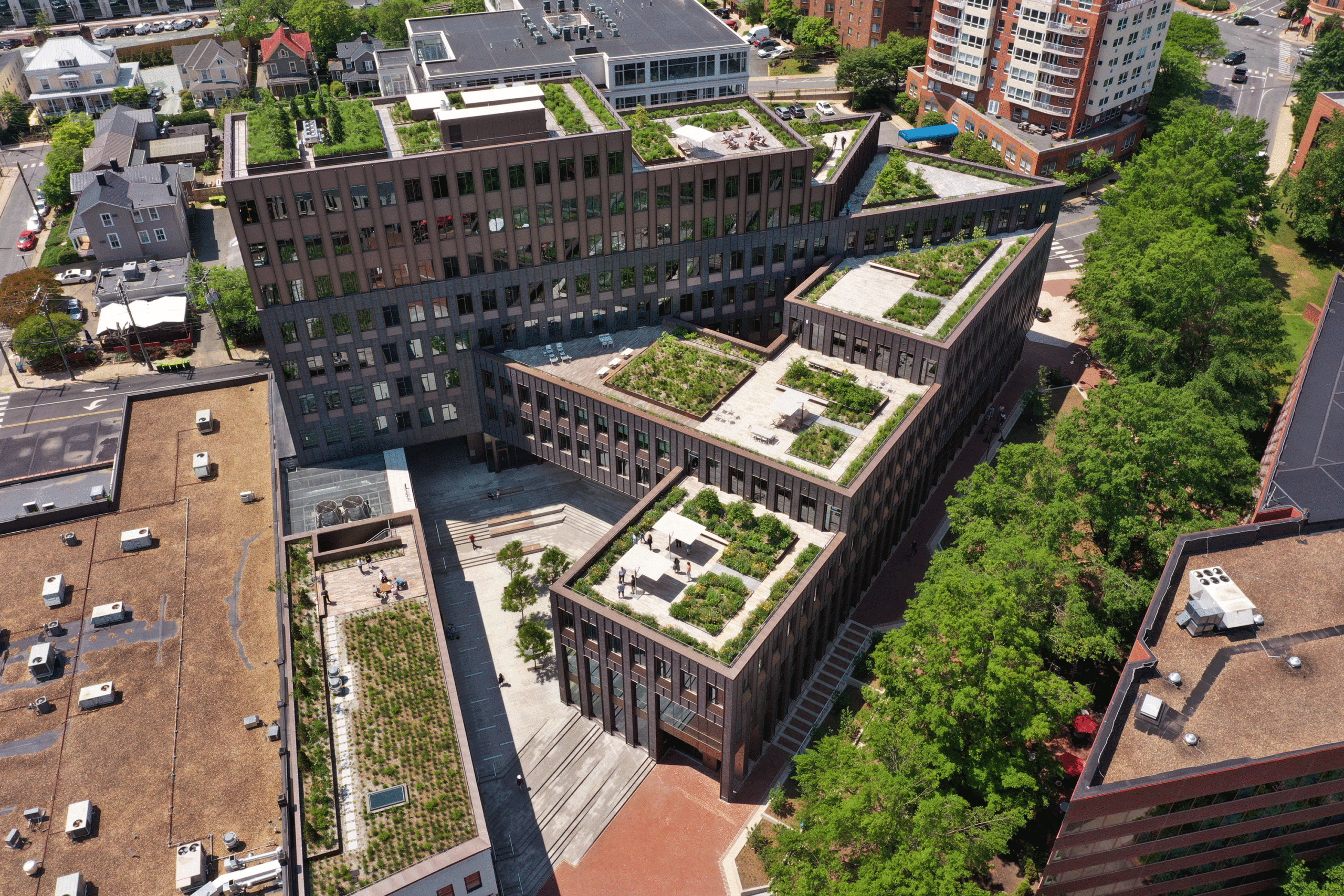
The Center of Developing Entrepreneurs (Charlottesville, Va.)
Images courtesy of Wolf Ackerman. Photos by Alan Karchmer.
Architecture Firm: WOLF ACKERMAN Associate Architect: EskewDumezRipple+ Owner: CSH Development General Contractor: Hourigan Group Photographer: Alan Karchmer
Jury Comments: We appreciated the attention to design at every level: a clever site response to the Halprin master plan, great massing strategies, and beautiful use of material and detailing at both interior and exterior. We applaud the integration of high sustainability goals/LEED Platinum.
Awards of Merit
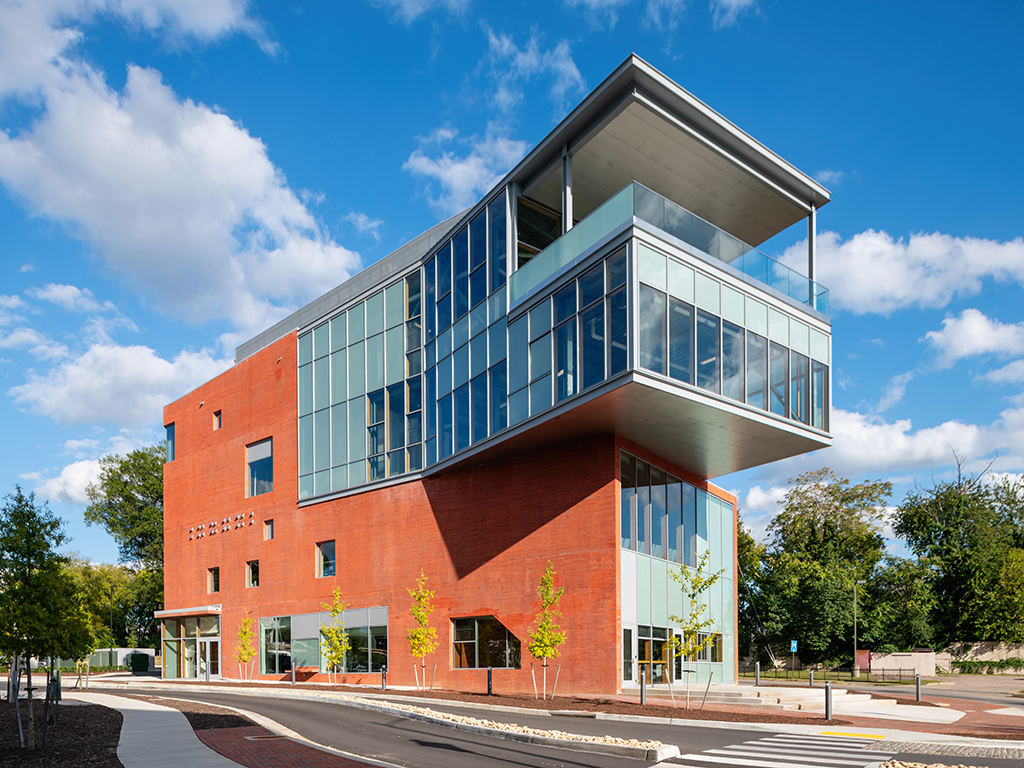
Church Hill North – The Kitchens at Reynolds (Richmond, Va.)
Images courtesy of Quinn Evans. Photos by Ansel Olsen.
Architecture Firm: Quinn Evans – Architect of Record O’Neill McVoy Architects – Design Architect Owner: Church Hill North Holdings LLC General Contractor: Hourigan Structural Engineer: Silman MEP Engineer: Valley Engineering Civil Engineer: Timmons Consultant: Clyde Construction Engineering Photographer: Ansel Olsen
Jury Comments: We admired the social program of this building and its response to serving the surrounding community. It has a strong diagrammatic response to the site, and we appreciated the bold forms and use of materials. It will be great to see how it performs after all spaces are inhabited.
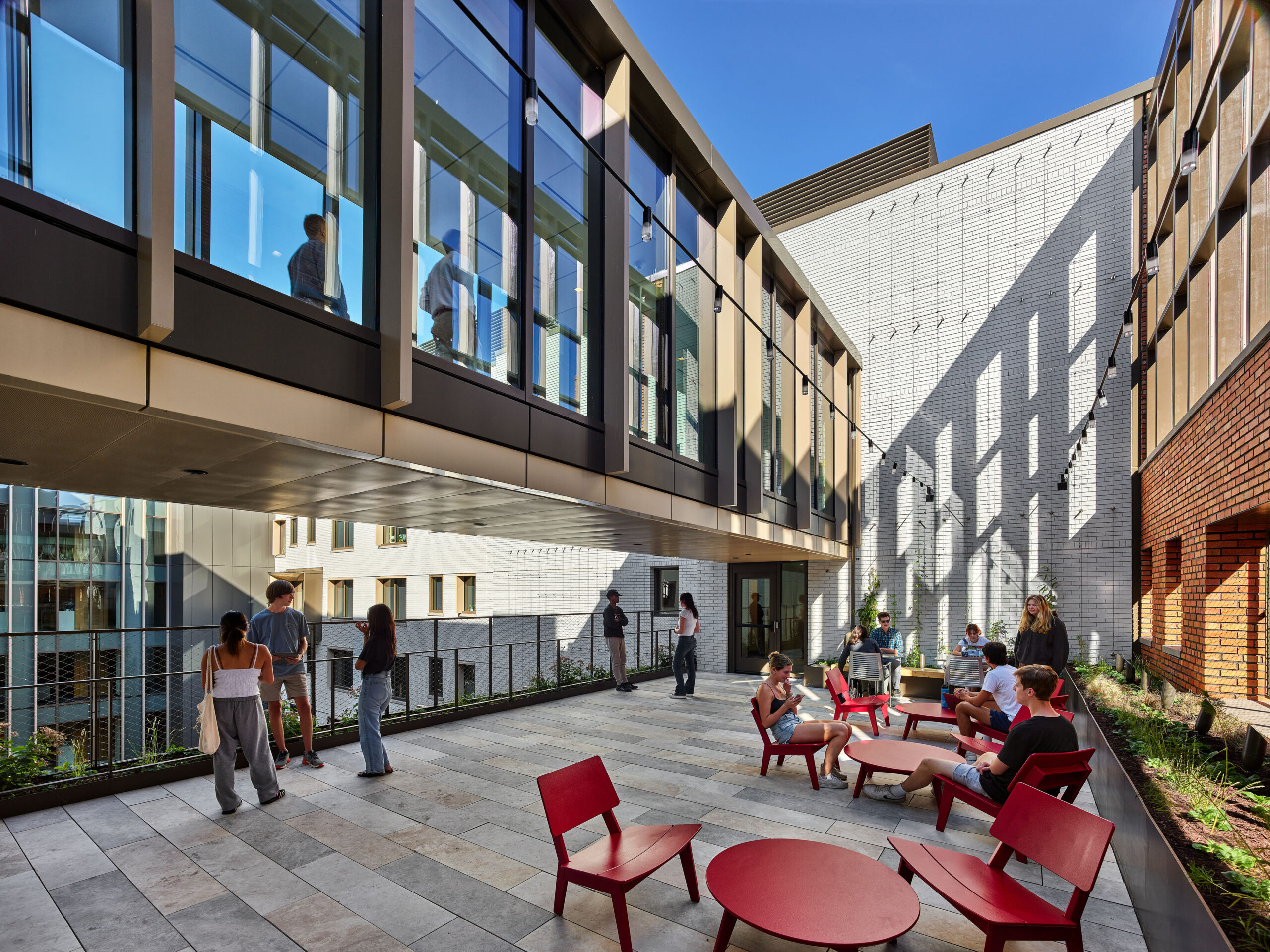
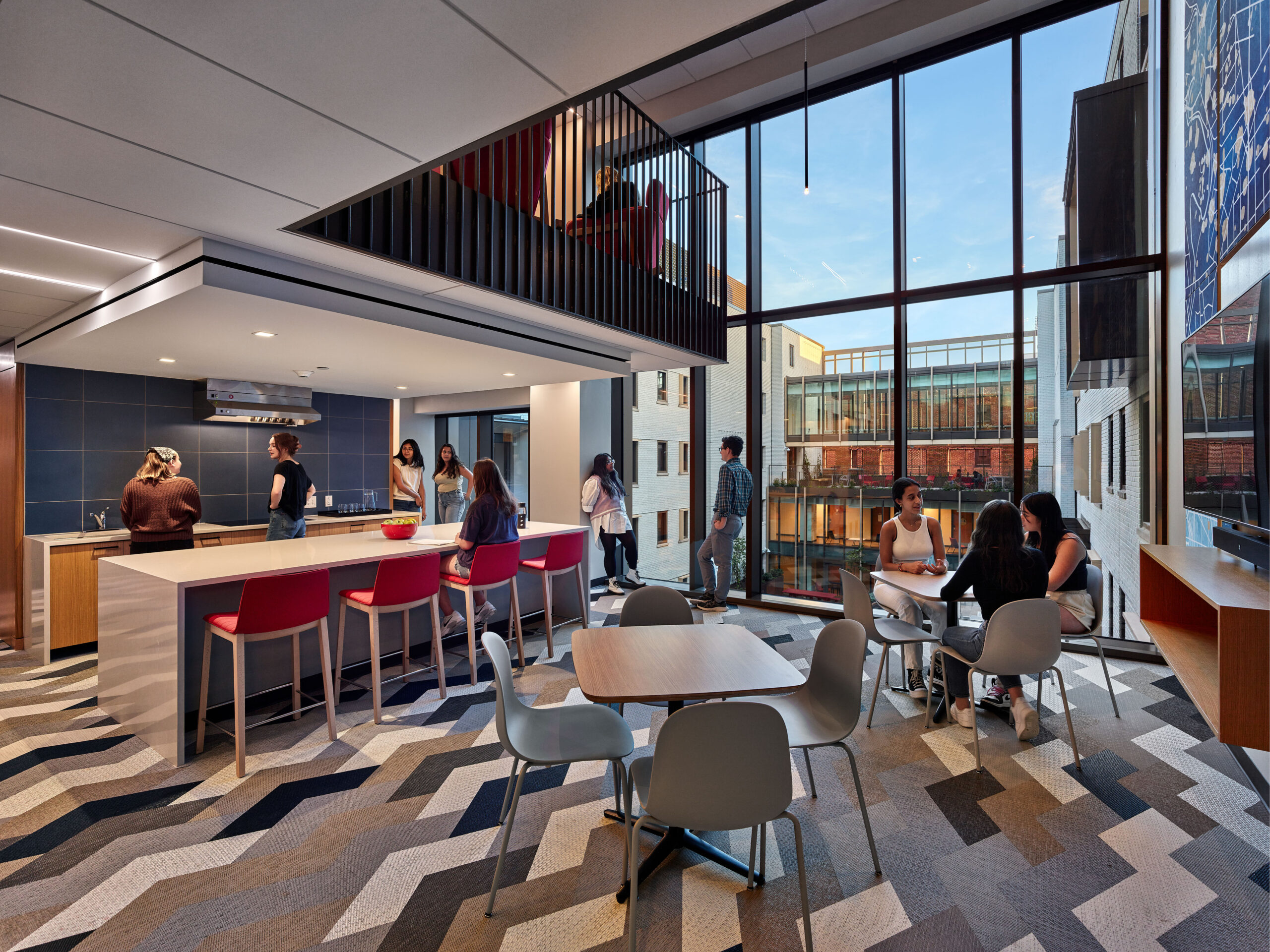
Thurston Hall Renovation (Washington, D.C.)
Images courtesy of VMDO Architects. Photos by Alan Karchmer.
Architecture Firm: VMDO Architects Owner: The George Washington University General Contractor: Clark Construction Photographer: Alan Karchmer
Jury Comments: A few simple moves result in a thoughtful yet dramatic renovation to maximize daylight and connection to the outdoors. This is a case study for adapting existing buildings, especially student housing, which is an important component of student wellness and building community on any campus.
In the HISTORIC PRESERVATION category
The historic preservation category focuses specifically on excellence in strategies, tactics, and technologies that advance the art, craft, and science of preserving historically significant buildings and sites. The jury takes into consideration adherence to local, state, and national criteria for historic preservation.
Awards of Merit
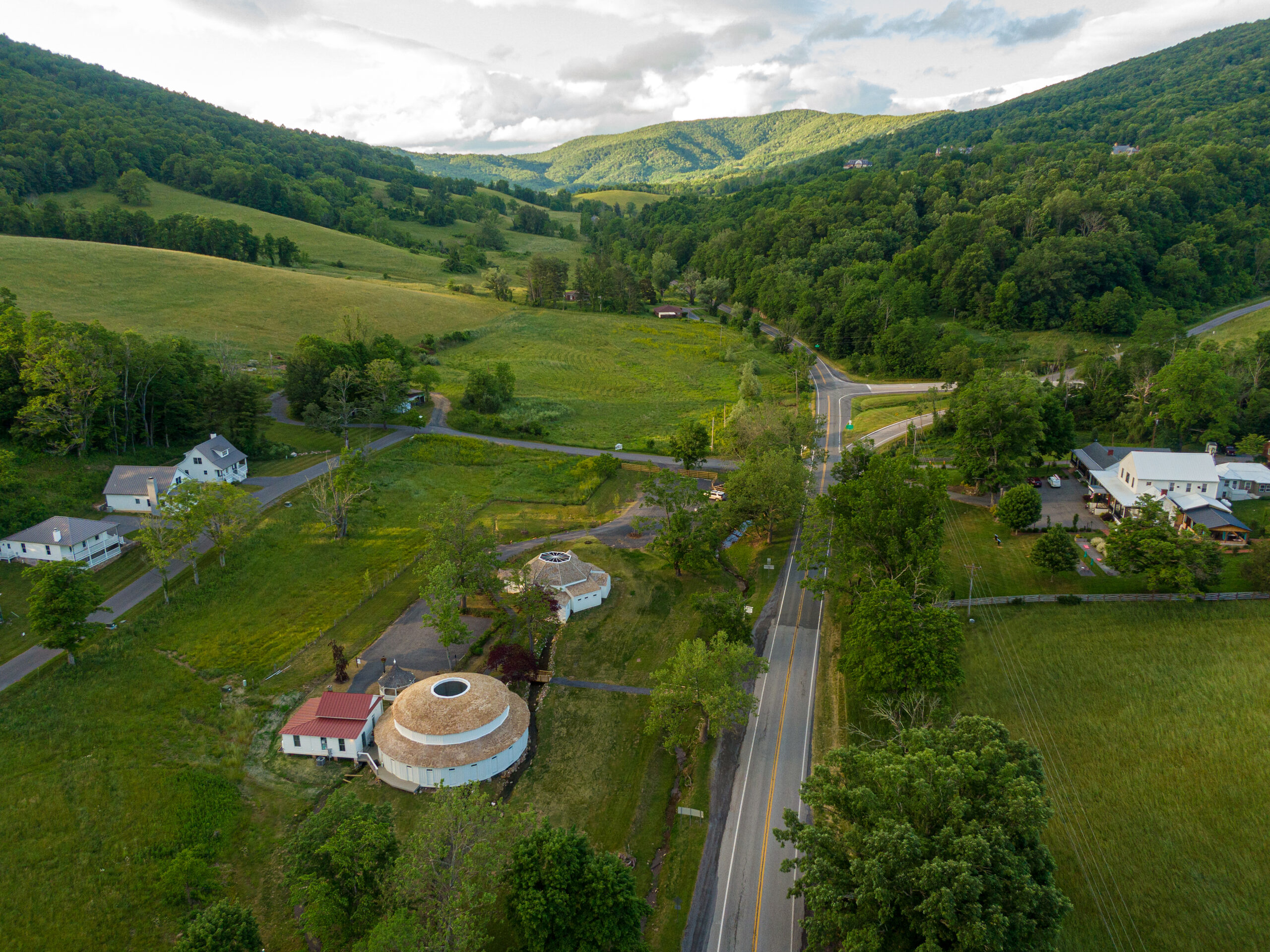
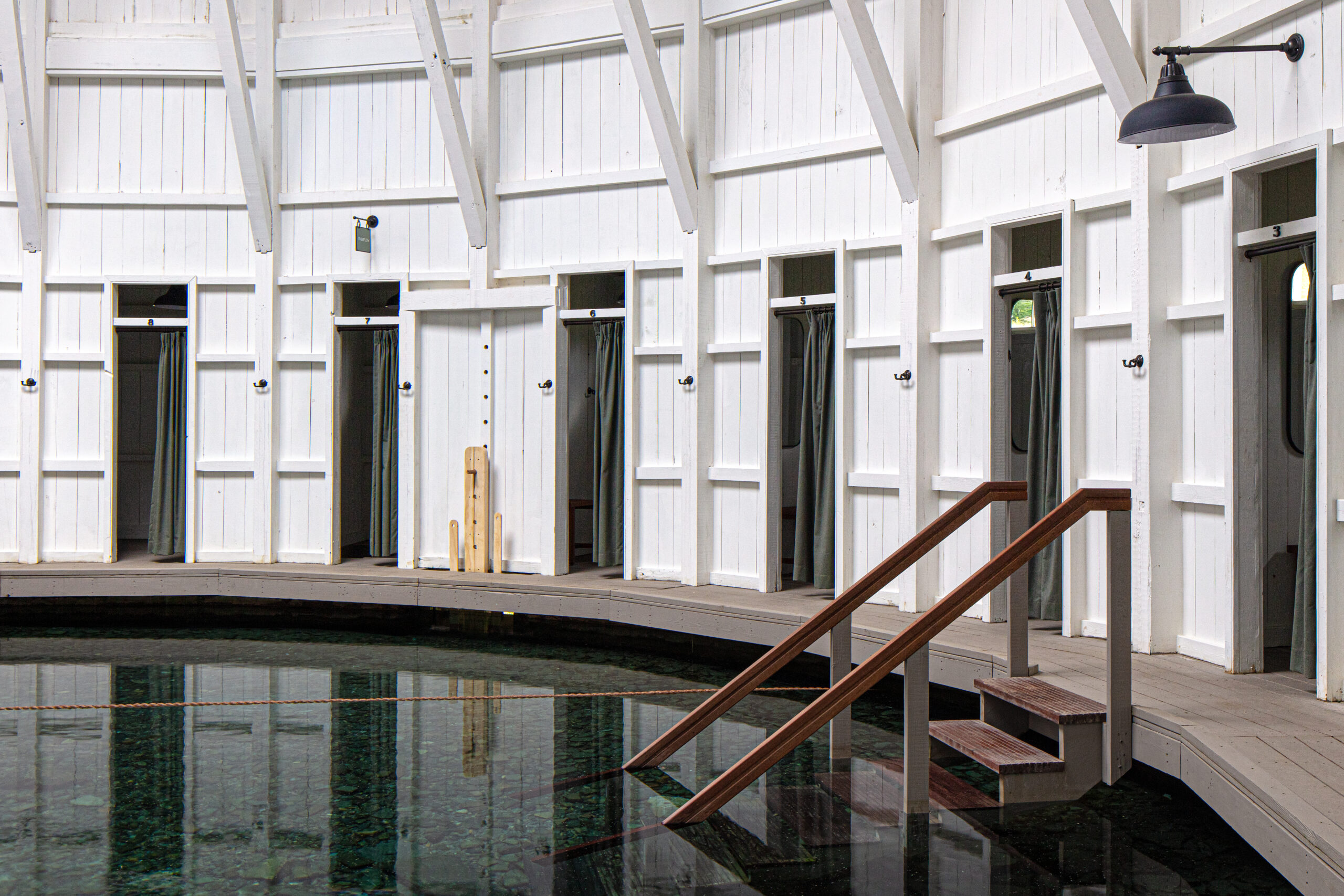
Warm Springs Pools (Warm Springs, Va.)
Images courtesy of 3North. Photos by Gordon Gregory.
Architecture Firm: 3North Owner: The Omni Homestead Resort General Contractor: Lionberger Construction Structural Engineer: 1200 Architectural Engineer, PLLC Photographer: Gordon Gregory
Jury Comments: We applaud this gentle restoration of beautiful 19th-century wood bathing structures. The elegance comes from the restraint and what they chose to restore rather than reimagine. Appreciated the clarity of the submission and the photos of the project history.
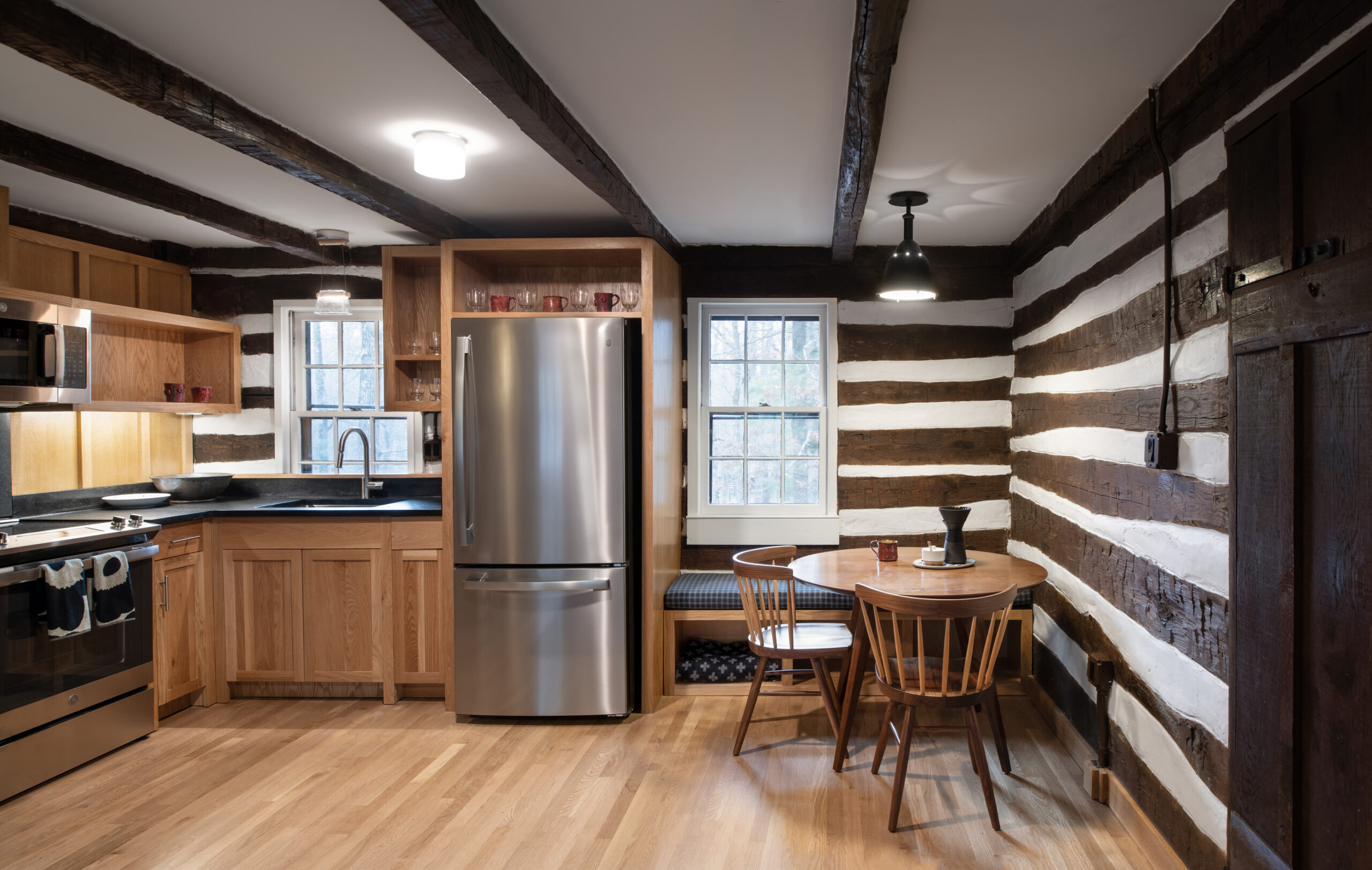
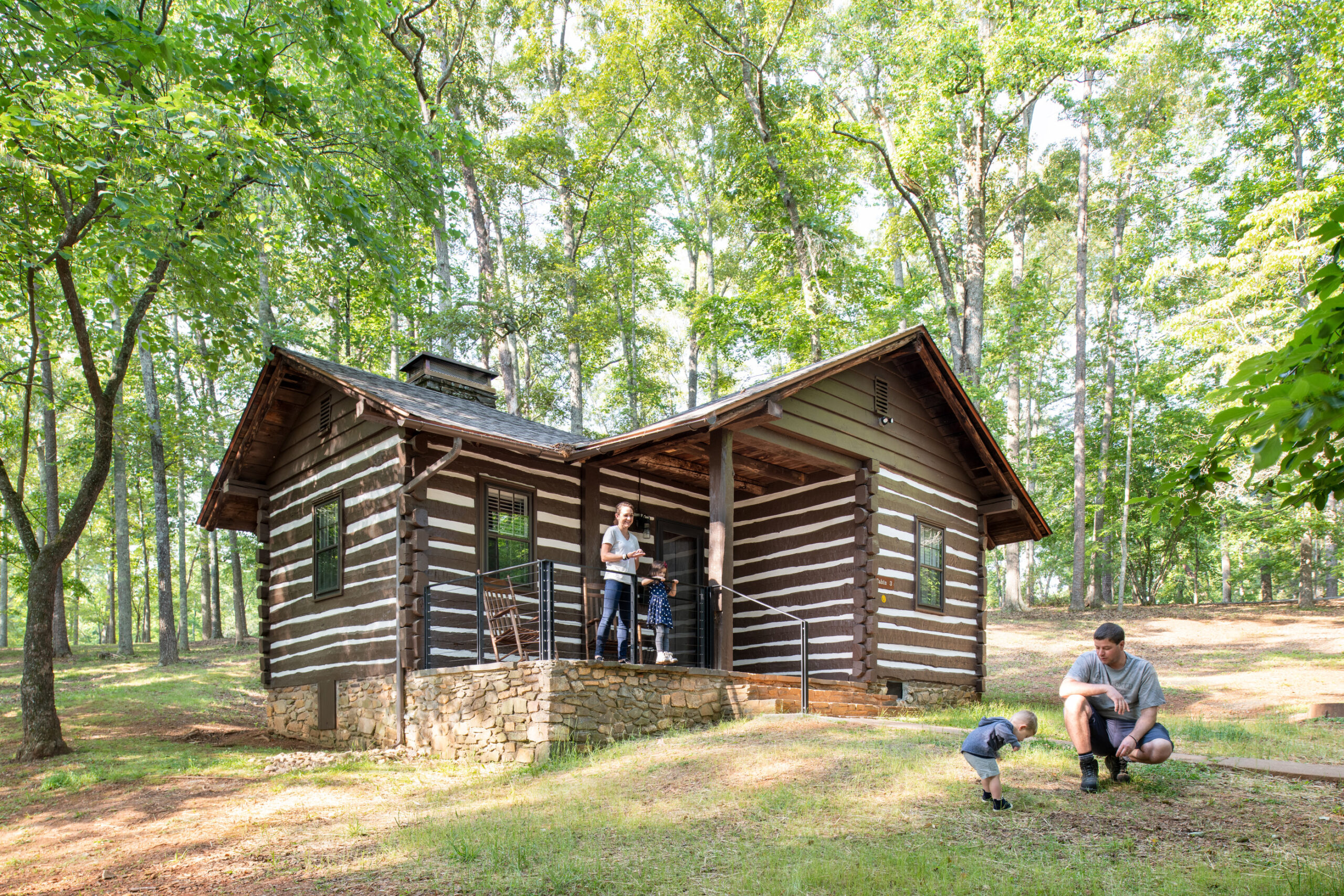
Renovation of Historic Camping Cabins, Douthat State Park and Fairy Stone State Park
Images courtesy of PMA Architecture. Photos by Yuzhu Zheng and Dave Chance Photography.
Architecture Firm: PMA Architecture Consulting Architect: Stemann | Pease Architecture Owner: Virginia Department of Conservation and Recreation General Contractor: Thor Construction LLC Photographers: Yuzhu Zheng and Dave Chance Photography
Jury Comments: This project honors the existing historic cabins in a thoughtful way. We appreciated the accessibility story, the highly crafted additions, and treating these modest buildings with a gentle touch.
In the INTERIOR DESIGN category
Interior design projects are judged on mastery of composition, functionality, material and color palettes, and well-integrated adherence to the highest levels of accessibility, health and safety, environmental, and occupant-comfort considerations, standards, and regulations.
Honorable Mention
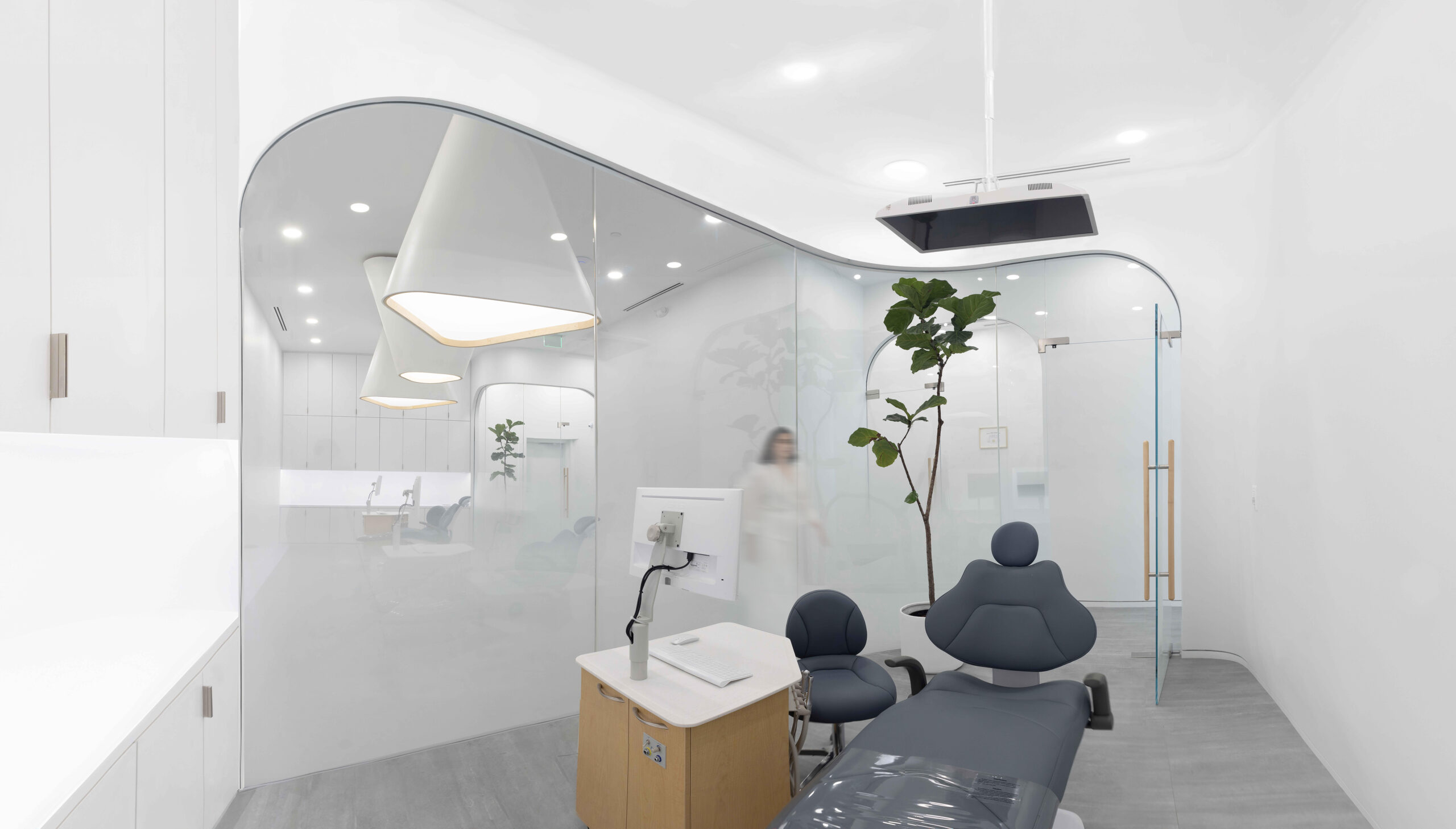
Symphony Orthodontics (Bristow, Va.)
Images courtesy of OLI Architecture PLLC. Photos by Susuan Stripling.
Architecture Firm: OLI Architecture PLLC Architect of Record: Aurora Architects LLC Owner: Dr. Zahra Heidari General Contractor: Liberty Group LLC Millworkers: Hachi Collections, LLC and Epic Enterprises Inc. Photographers: Susuan Stripling and Cameron Davidson
Jury Comments: We appreciated the commitment of both client and designer to crafting an immersive environment. Appreciate the floor plan and a series of minimal but highly refined and crafted spaces.
In the RESIDENTIAL DESIGN category
Aesthetic appeal and functionality are two long-established criteria for home design, as are affordability and resource efficiency. The jury looks at each submission in its totality toward meeting those goals.
Awards of Merit
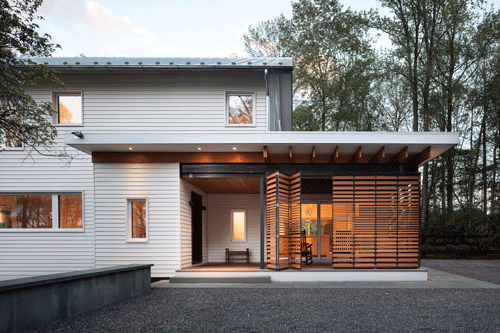
Foal House and Studio (Charlottesville)
Images courtesy of Gehrung Graham LLC. Photos by Virginia Hamrick.
Architecture Firm: Gehrung Graham LLC Owner: Audrey & Mark Graham General Contractor: Jobes Builders (phase 1) and Promethean Homes (phase 2) Lighting Design: MSLD Landscape Architecture: JCLA Studio Photographer: Virginia Hamrick
Jury Comments: We applaud this project’s commitment to Passive House design. It is one of the few residential projects to actually provide EUI data and the commitment to sustainability is noteworthy.
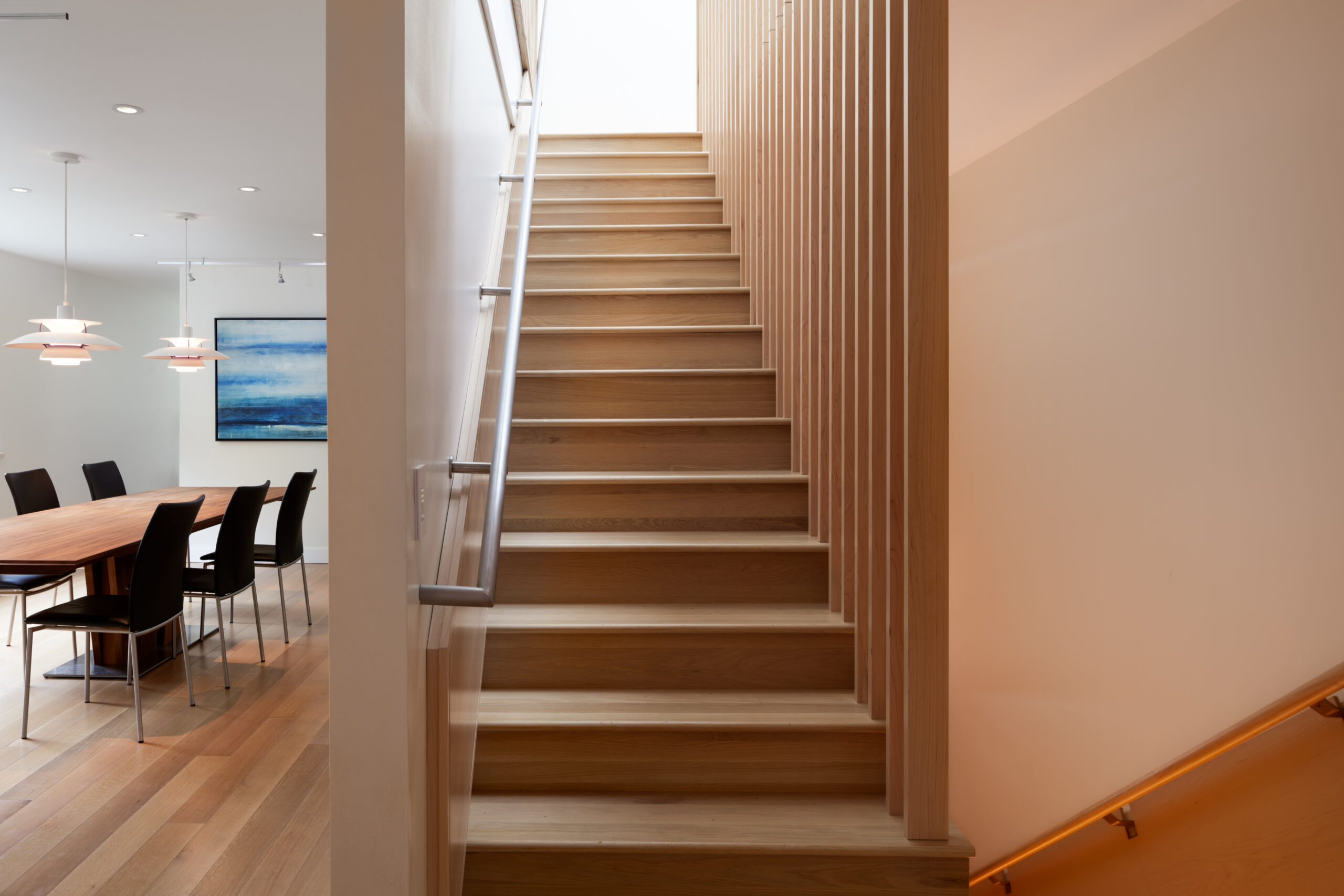
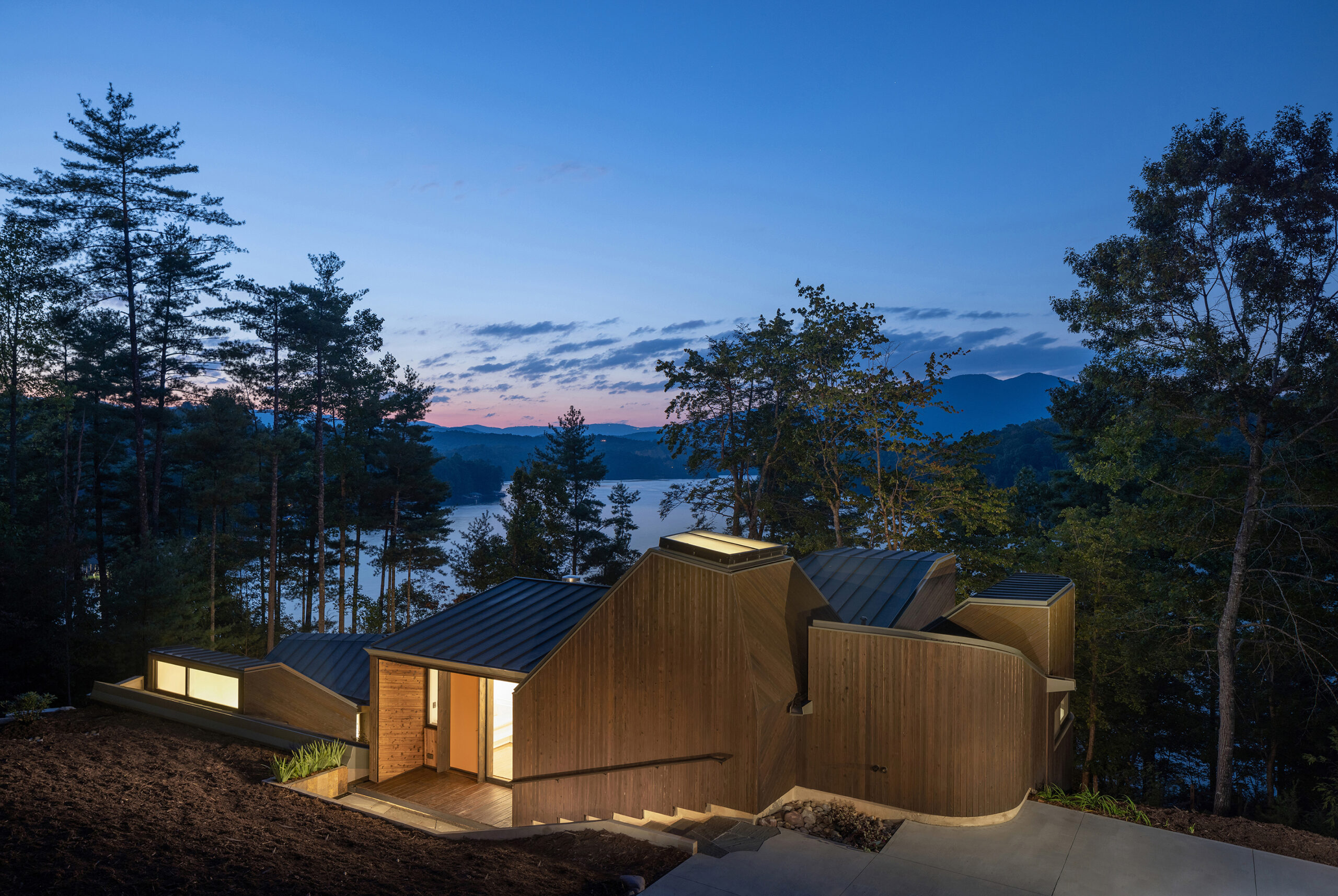
Nebo House (Nebo, N.C.)
Images courtesy of Fuller/Overby Architecture. Photos by Paul Warchol.
Architecture Firm: Fuller/Overby Architecture Owner: Katherine Overby Contractor: Cottonwood Development Structural Engineer: Nat Oppenheimer, Silman Mechanical Engineer: Mark Cambria, Fusion Systems Photographer: Paul Warchol
Jury Comments: We liked the unusual forms and the way the house engages with the steep terrain. Despite the modest scale (2600 SF), the interiors are dramatic spaces filled with light. We appreciate the inventive floor plan.
In the SMALL PROJECTS category
Design excellence can be achieved, no matter the size or scope of a project. These awards celebrate projects with modest budgets that have a substantial impact. Small Project Awards are given in three categories, offering opportunities for recognition to a wide range of project sizes and budgets. All projects must demonstrate design achievement, including how the project fits into its environment and how the project connects to the Framework for Design Excellence.
Projects under 5,000 Square Feet
Award of Honor
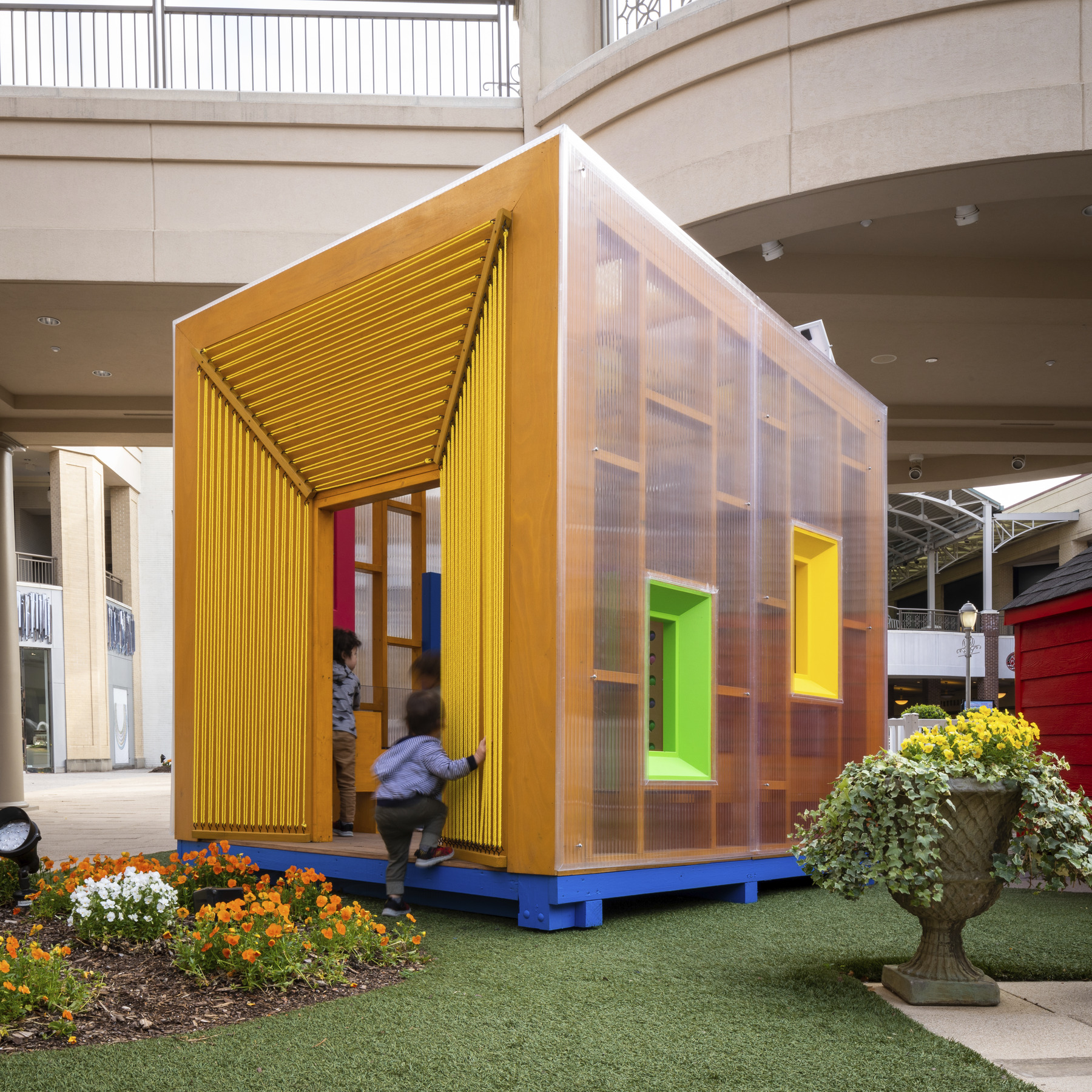
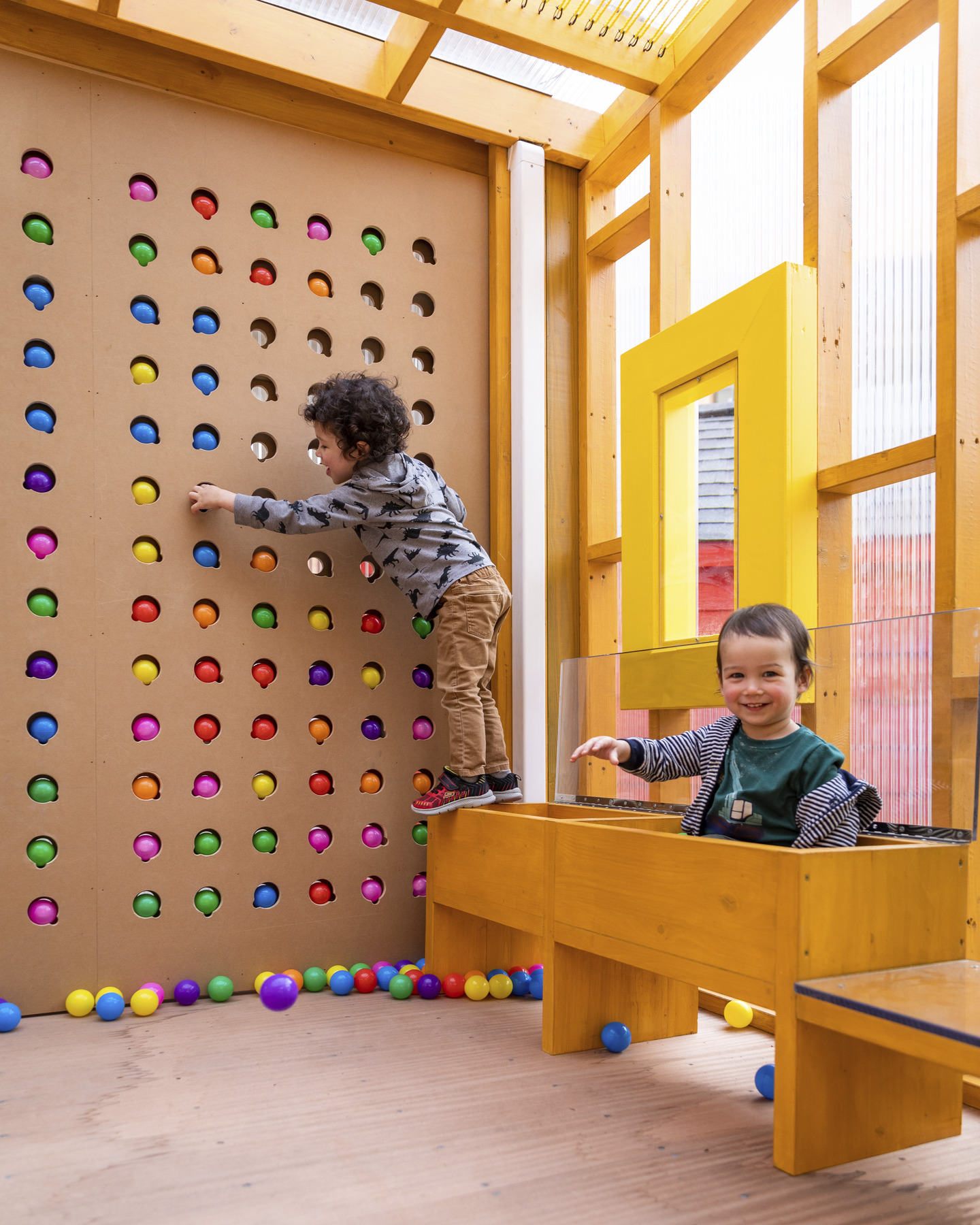
CASA Playhouse/Play Factory (Richmond)
Photos by Hanbury.
Architecture Firm: Hanbury Owner: Henrico CASA Contractor: DPR Construction Photographer: Hanbury
Jury Comments: We loved the sense of playfulness that pervades every aspect of this modest project. And we appreciated the use of modest, reclaimed/donated materials to achieve a visual richness.
Award of Merit
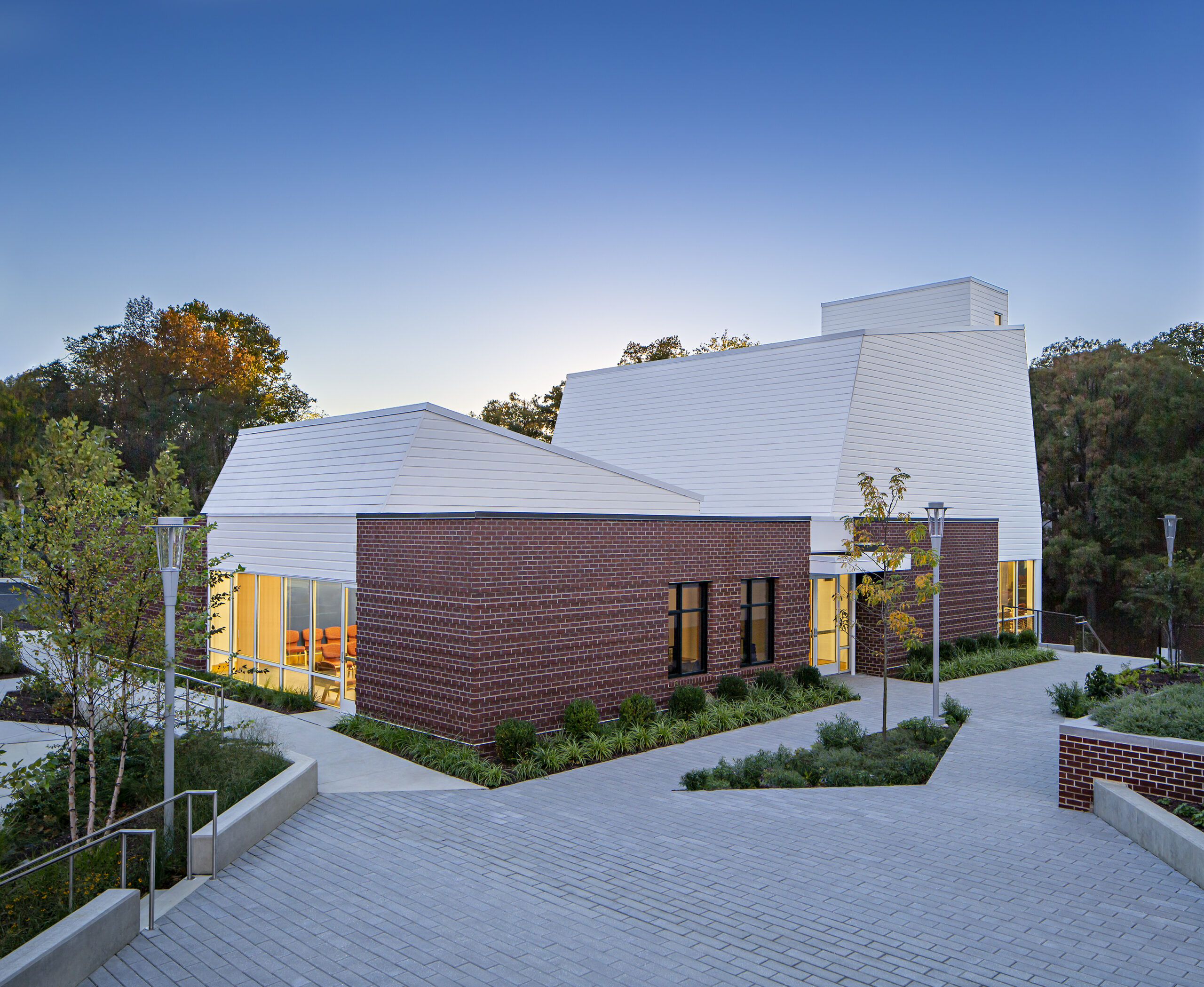
Episcopal Church of the Resurrection (Alexandria)
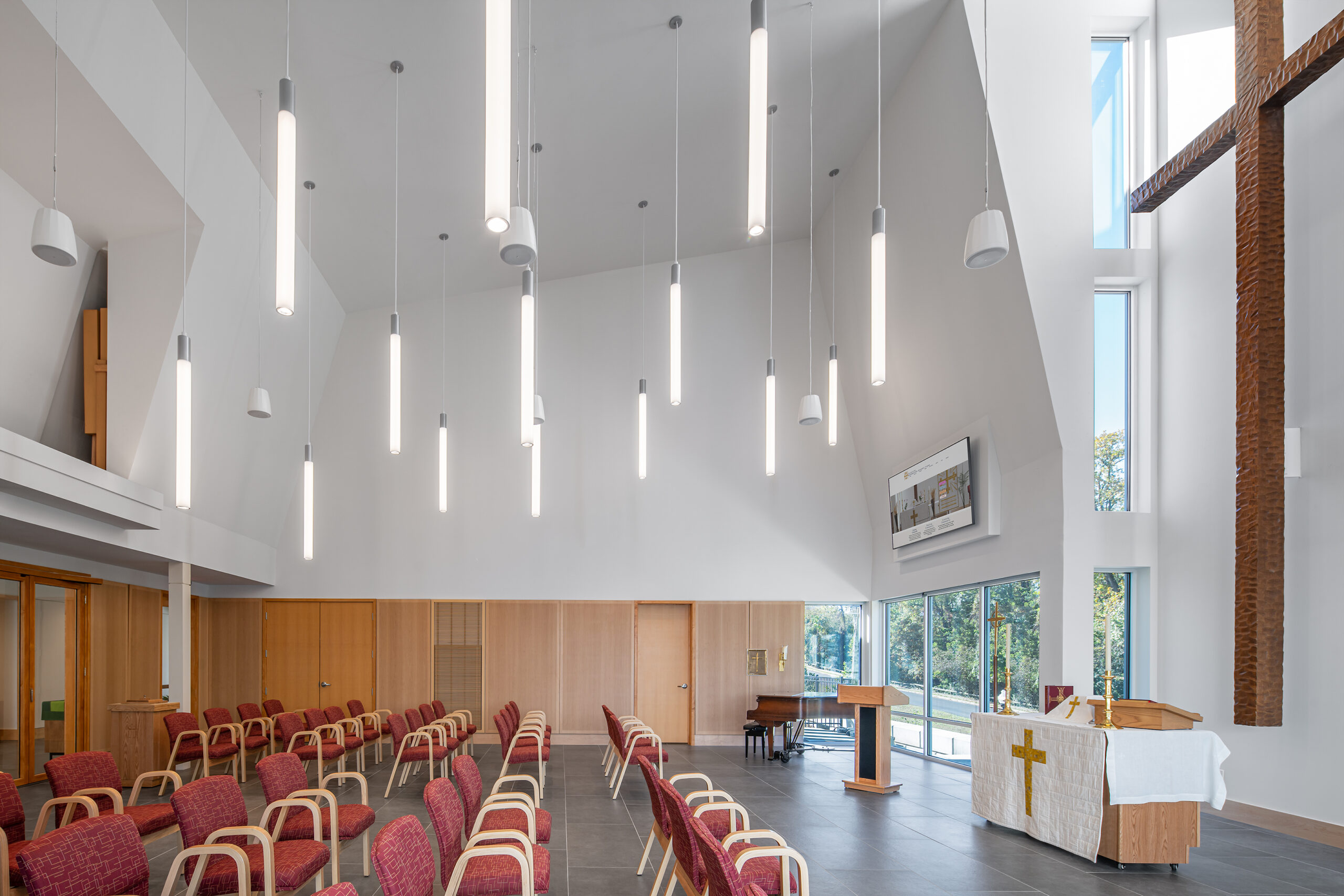
Images courtesy of Cunningham Quill Architects. Photos by Allen Russ Photography, LLC.
Architecture Firm: Cunningham Quill Architects Owner: Church of the Resurrection Contractor: Dominion Construction Group Landscape Architect: Campion Hruby Landscape Architects Civil Engineer: Walter L. Phillips, Inc. Structural Engineer: Ehlert Bryan Consulting Structural Engineers MEP Engineer: Interface Engineering, Inc. Lighting Design: MCLA Architectural Lighting Design
Jury Comments: The jury appreciated this project’s focus on developing a sacred space within modest means. The resulting interior space is filled with light and is sensitively positioned on the site.
Projects up to $150,000
Honorable Mention
Tangential Timber (temporary pavilion reinstalled at multiple sites)
Images courtesy of After Architecture, LLC. Photos by After Architecture, LLC.
Architecture Firm: After Architecture, LLC & University of Virginia Before Building Laboratory Owner: University of Virginia Before Building Laboratory Fabrication Team: Sonja Bergquist, Sophie Depret-Guillaume, Cecily Farrell, Abbey Partika, Russell Petro, Emily Ploppert, Jonathan (Yianni) Spears, Jolie Talha, Annabelle Woodcock Photographer: After Architecture
Jury Comments: The jury recognized the proposed use of offcut/waste material into an inventive structural system. This type of thinking/research could be applied to many areas of the building profession.
In the CONTEXTUAL DESIGN category
The awards for contextual design are chosen based on outstanding architecture that perceptibly reflects the history, culture, and physical environment of the place in which it stands and that, in turn, contributes to the function, beauty, and meaning of its larger context.
Award of Honor
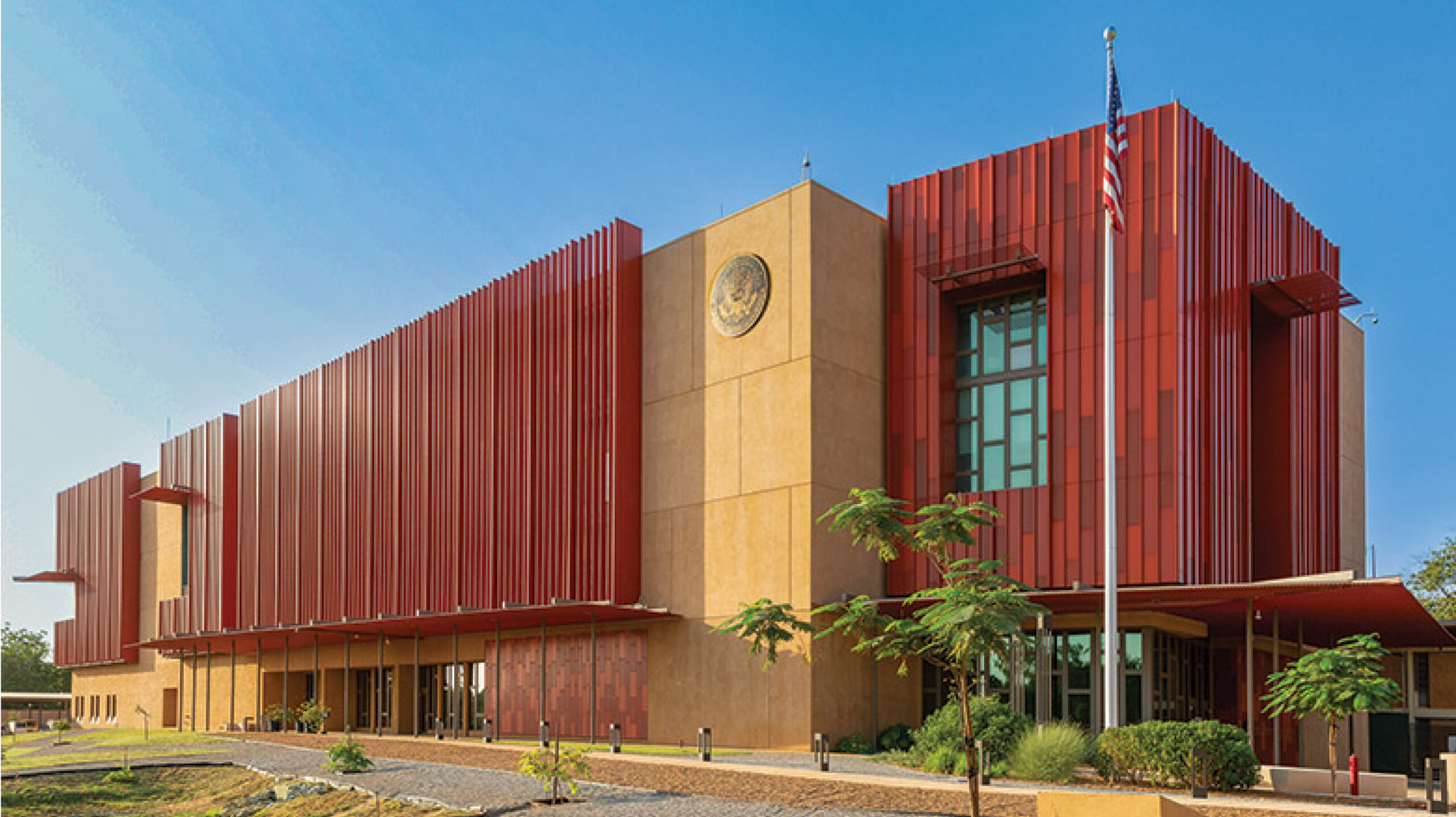
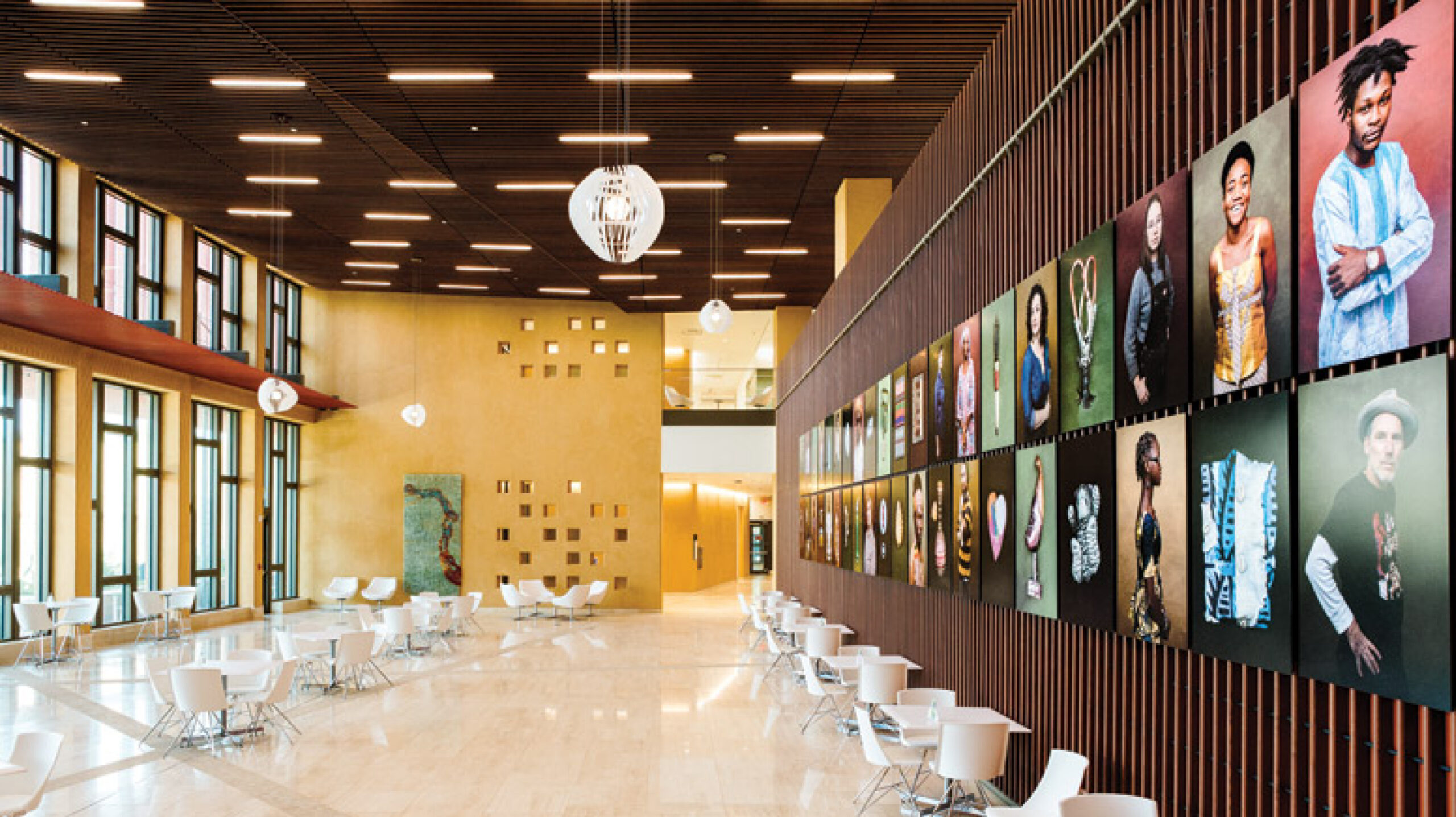
U.S. Embassy Campus Niamey (Niamey, Niger)
Images courtesy of Page Southerland Page, Inc. Photos by Amber Renee Design and Kevin Scott.
Architecture Firm/Architect of Record: Page Southerland Page, Inc. Design Architect: Miller Hull Partnership Owner: U.S. Department of State Contractor: BL Harbert International, LLC Geotechnical Engineer: Schnabel Engineering Civil Engineer: KPFF Consulting Engineers MEP Engineer: Mason & Hanger Structural Engineer: Ehlert Bryan Consulting Structural Engineers Blast Engineer: Weidlinger Associates, Inc. Photographers: Amber Renee Design and Kevin Scott
Jury Comments: The jury appreciated the sensitive response of this building to its climate and cultural context. We particularly liked the use of locally sourced materials and the way texture and color are woven into the scheme.
In the UNBUILT WORK category
Unbuilt work was considered, as long as it was commissioned by a client as opposed to hypothetical work completed in the mode of research or academic training.
Honorable Mention
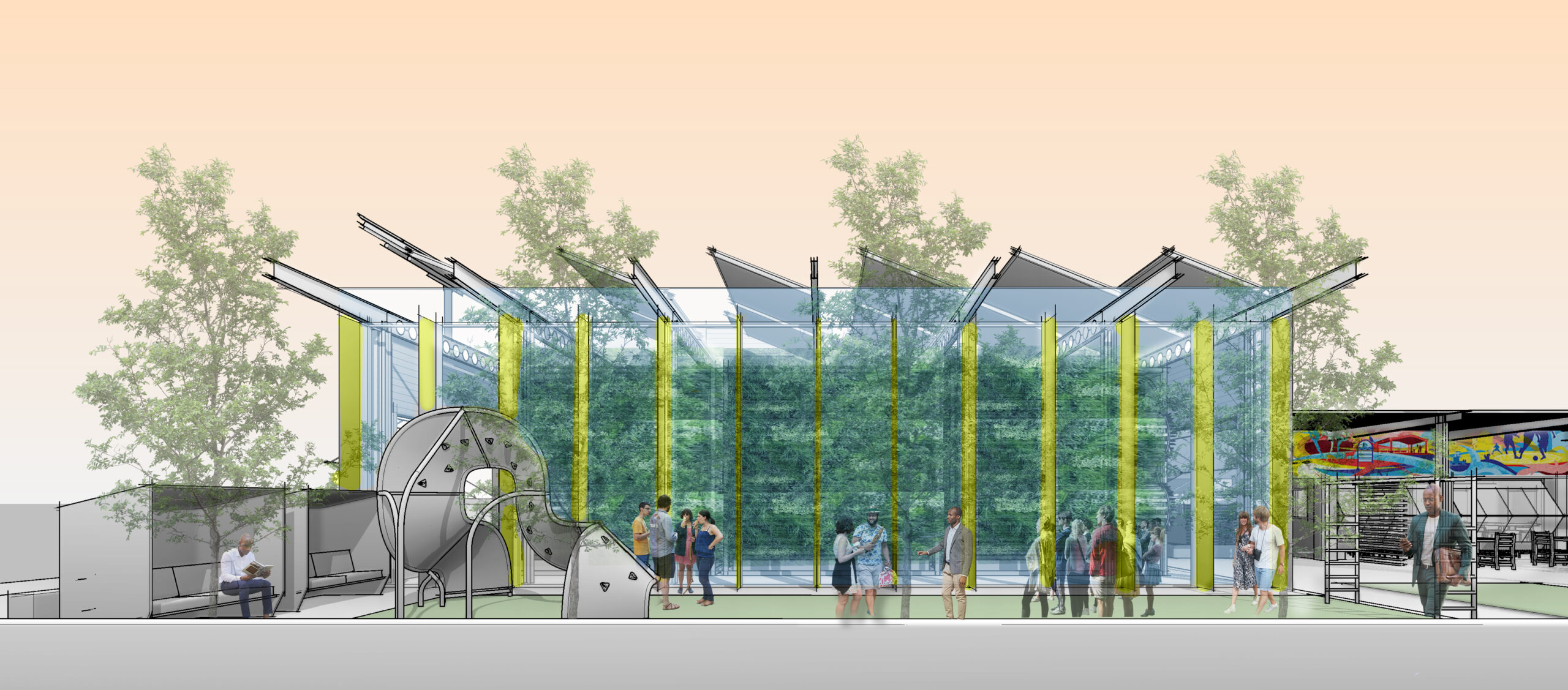
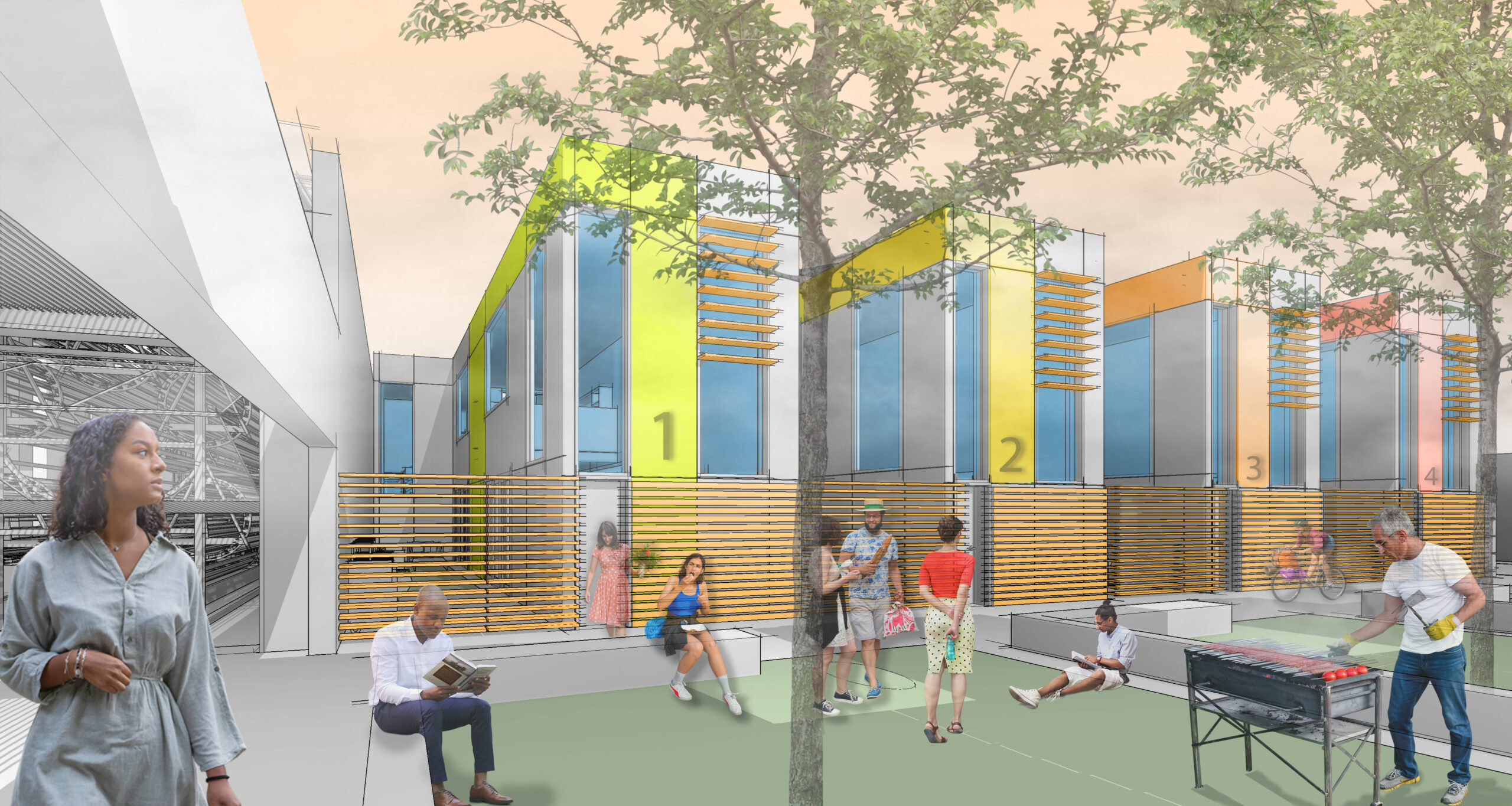
ReGen LA (Los Angeles)
Images courtesy of Tomas Eliaeson.
Designer: Tomas Eliaeson
Jury Comments: We acknowledge the aspirational qualities of the project, which are evident at many levels. Planning principles and sustainability strategies are woven together, demonstrating the need for this type of thinking at all scales of development.
Visions for Architecture, created in 1998, is AIA Virginia’s annual Honors and Awards gala.
Visions celebrates the achievements of those whose work makes especially strong contributions to society and celebrates the recipients of AIA Virginia’s Honors Awards and the Awards for Excellence in Architecture.
Visions for Architecture 2023 will be held on Thursday, November 2nd at the Hippodrome in Richmond starting at 6:30 p.m.
Visions is now a more casual cocktail party with passed food instead of a seated dinner. Tickets can be purchased with or without your Architecture Exchange Registration here>> and are $125 each.
To support this event by becoming a sponsor, contact Jody Cranford at jcranford@aiava.org (800) 818-0289.
A committee of esteemed architects chaired by Ray Calabro, FAIA, will judge the entries for AIA Virginia’s 2023 Awards for Excellence in Architecture. Joining Calabro on the jury are Jennifer Devlin-Herbert, FAIA; Omar Gandhi, FRAAC; and Karen Lu, AIA. These annual awardsrecognize outstanding design, built and unbuilt, from the past seven years. Also known as the Design Awards, the program is open to all categories of building as well as interiors projects. The awards program is currently open for submissions. Each entry will be judged on how successful the project is in meeting its individual requirements. Consideration is given to aesthetics, social impact, innovation, context, performance, and stewardship of the natural environment — with particular emphasis on the Framework for Design Excellence. Deadline for entries is5 p.m. on June 28, 2023.
About Ray Calabro, FAIA
Calabro is a principal of the Pennsylvania firm Bohlin Cywinski Jackson. Educated at Virginia Tech (B. Arch., 1994), he began his career there as a lecturer in the College of Architecture and Urban Studies. Since joining Bohlin Cywinski Jackson in 1995, Ray’s project experience spans academic, cultural, commercial and residential projects in the continental U.S. and Canada. In 2014, he was elevated to the College of Fellows.
About Jennifer Devlin-Herbert, FAIA
Devlin-Herbert, of San Francisco’s EHDD, was the firm’s first woman partner, and is now its first woman CEO. She is a distinguished design leader for evolving trends in learning environments across multiple project types, from educational spaces to science centers and libraries. Throughout a career spanning 30 years, her rich portfolio includes projects that reflect an unwavering commitment to her clients. Her work has been recognized with a National AIA Honor Award for Design.
About Omar Gandhi, FRAAC
Gandhi is the Principal of Omar Gandhi Architects, a Canadian architectural practice with small teams in both Halifax and Toronto. He was chosen as one of the Architectural League of New York’s ‘Emerging Voices’ of 2016 and in 2018 was appointed the Louis I. Kahn Visiting Assistant Professorship in Architectural Design at the Yale School of Architecture. Gandhi was made a Fellow of the Royal Architectural Association of Canada in 2022.
About Karen Lu, AIA, NOMA
Lu is an Associate Principal at Snow Kreilich Architects in Minneapolis. Her commitment to design excellence and to positively impacting future generations of architecture professionals and global citizens is evident in her professional work and service to the AIA and her community. She is currently the AIA Strategic Council Minnesota Representative and a board adviser to MSP NOMA.
Entries to the 2023 Design Awards program are now being accepted. AIA Virginia’s Awards for Excellence in Architecture (also known as the Design Awards) recognize outstanding design, built and unbuilt, from the past seven years. The program is juried by a team of esteemed practitioners from outside of the region.
Each entry will be judged on how successful the project is in meeting its individual requirements. Consideration is given to aesthetics, social impact, innovation, context, performance, and stewardship of the natural environment — with particular emphasis on the Framework for Design Excellence.
Each entry must include a completed Framework for Design Excellence Project Information Form as page one of their submission. Note: Entrants should not feel obligated to respond to every measure within the Framework — only those that apply to the project being submitted. It is understood that every project is different and may not respond to each measure within the Framework. The jury will consider each design holistically and within context.
No specific number of awards is set, and the program is open to all categories of building as well as interiors projects. The location of projects is not restricted, but any built works submitted for consideration must have been completed on or after Jan. 1, 2016. Enter online.
Entries are due by 5 p.m. on June 28, 2023.Note: You should be prepared to submit your concealed ID and project submission upon entry.
Entry fees
AIA VirginiaMembers: $190 for the first project $160 for each additional project The Small Projects Category has a reduced entry fee of $100 Note: The entrant must be a member of AIA Virginia to be eligible to receive the member discount. The submitting AIA Virginia member must be a contributor to the design team.
Non-members of the AIAVA (must have an office located in Virginia): $245 for the first project $220 for each additional project The Small Projects Category has a reduced entry fee of $200
Developed by members of the AIA, the Framework for Design Excellence, represents the defining principles of good design in the 21st century. It’s intended to be accessible and relevant for every architect, every client, and every project — regardless of size, typology, or aspiration.
The 10 measures that make up the Framework are intended to inspire progress toward a zero-carbon, equitable, resilient, and healthy built environment. They represent standards of excellence as defined by members of the AIA. These measures align with the AIA’s core values which are collectively defined by members across the country.
The completed Framework for Design Excellence Project Information Form is required and shall be page 1 of each submission. The remaining 6 pages of each submission may be designed and defined by the entrant.
Use the Project Narrative section to describe how the design aligns with the Framework for Design Excellence. Entrants are encouraged to address all applicable measures.
We recognize every project is different and may not respond to every measure within the Framework. The jury will consider the design holistically and within context.
Data may not be available for some metrics on the form, or the client may prefer to keep certain metrics confidential. If this is the case, space is provided on the form to provide an explanation.
Entrants are encouraged to call out extraordinary responses to specific measures in the remaining 6 pages of their submission as well.
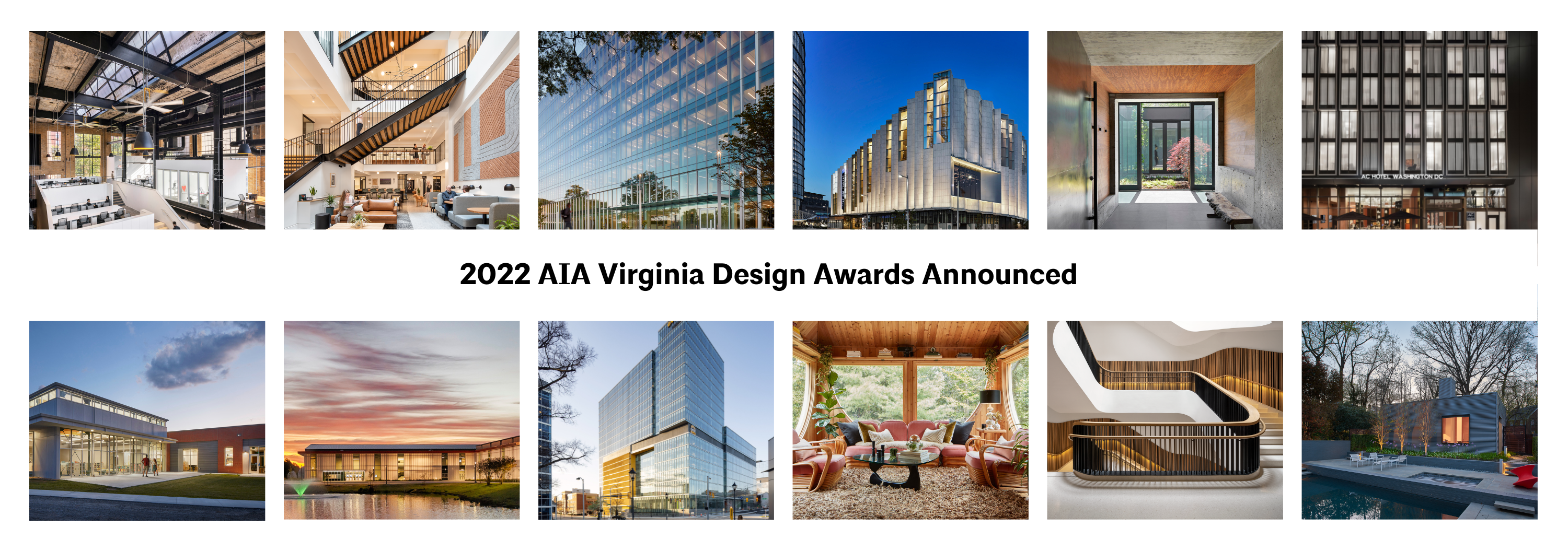
AIA Virginia is pleased to announce the 2022 Design Awards. These honors celebrate projects no older than seven years that contribute to the built environment and are clear examples of thoughtful, engaging design. Within each of the award categories, consideration was given to sustainability, affordability, social impact, innovation, durability, addressing the natural and built context, and meeting the specific needs of the client.
From a field of 155 entries, only 16 were selected by the jury for recognition. These few projects stood above the rest as particularly notable. Awards of Merit are presented to those project worthy of recognition and an Award of Honor is reserved for those projects deemed by the jury to be truly exceptional. Consideration is given to aesthetics, social impact, innovation, context, performance, and stewardship of the natural environment — with particular emphasis on the Framework for Design Excellence.
The work of retrofitting, renovating, adapting, and remodeling existing buildings accounts for almost half of U.S. architecture billings. This award celebrates design interventions upon existing buildings that help achieve carbon reduction through creative reuse and adaptation.
Award of Honor
Arts and Letters Creative Co. (Richmond, Va.)
Image courtesy of ARCHITECTUREFIRM. Photos by James Ewing, James Ewing Photography.
Architecture Firm: ARCHITECTUREFIRM Owner: Arts & Letters Creative Co. General Contractor: DPR Construction Structural Engineer: Engineering Solutions MEP Engineer: AKF Group LLC Photographers: Kate Thompson, Palindrome Creative Co. and James Ewing, James Ewing Photography
Jury Comments: This creative workplace displayed a clear attitude toward reuse. The simple, white objects are juxtaposed against the raw, patinated, existing container — allowing you to understand both in a new way. It’s a clear and well-executed renovation strategy that simultaneously preserves and repurposes the building for its next life.
Award of Merit
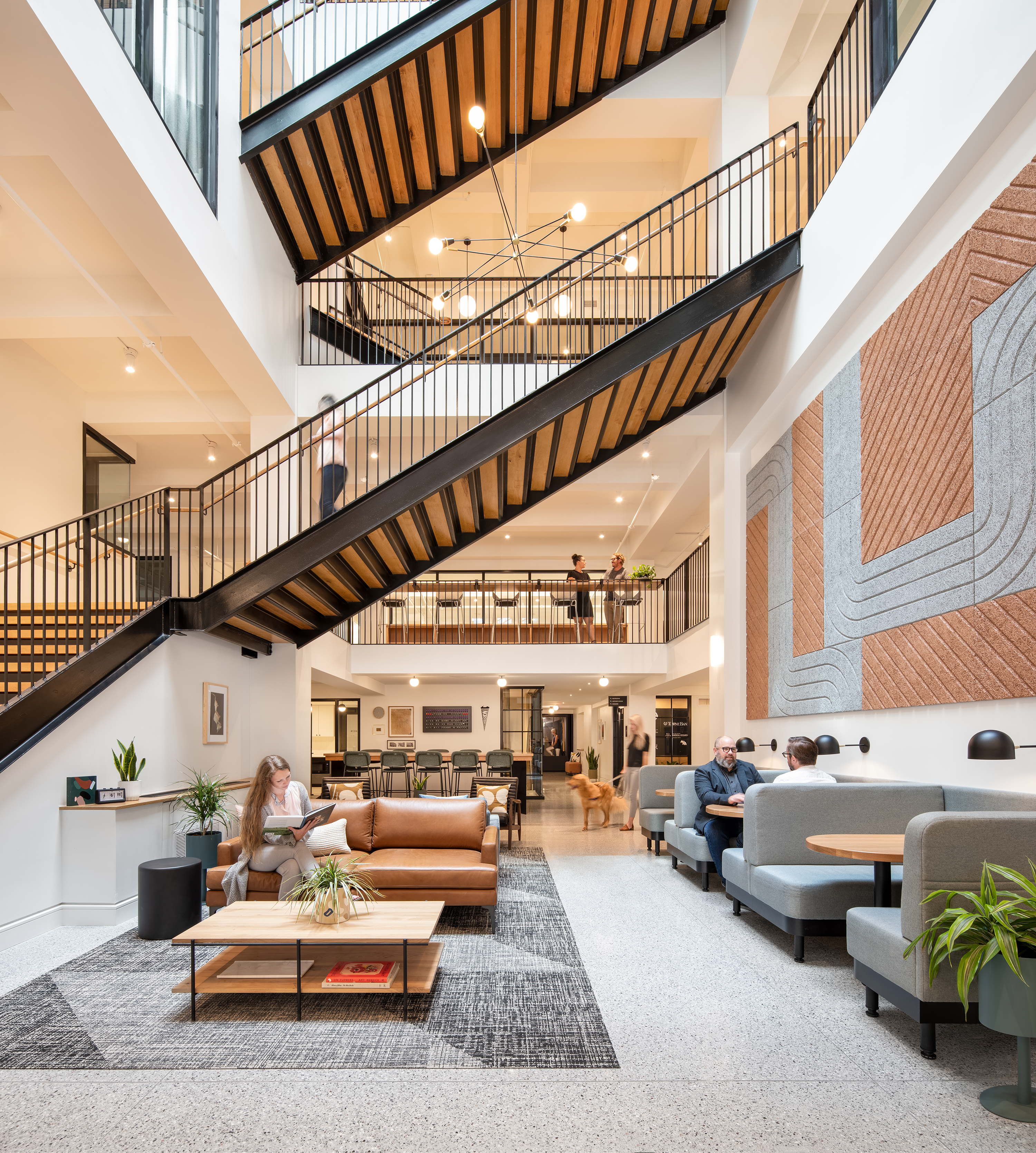
Assembly (Norfolk, Va.)
Images courtesy WPA. Photos by Yuzhu Zheng Photography.
Architecture Firm: Work Program Architects (WPA) Owner: Assembly (Drew Ungvarsky) General Contractor: Clancy & Theys Construction Company Interior Design: Campfire+Co. Photographer: Yuzhu Zheng Photography
Jury Comments: This coworking facility is organized around a new, open stairway that provides connection between a variety of work settings created on all levels of the historic building. The procession up and through the building is celebrated, while simple, light-filled interiors breathe new life into a former department store.
In the ARCHITECTURE category
The jury considers aesthetics, adherence to the client wishes, proven and projected building performance, and concept development during its deliberations.
Awards of Honor
Arthur J. Altmeyer Social Security Administration Building (Woodlawn, Md.)
Image courtesy of HGA. Photos by Kendall McCaugherty.
Architect of Record: HGA Design Architect: Snow Kreilich Architects Owner: General Services Administration General Contractor: Hensel Phelps Façade Consultant: Studio NYL Landscape Architect: OLIN Civil Engineer: Sorba Engineering Structural Engineering: Woods Peacock and HGA Structural Mechanical Engineer: HGA Mechanical Electrical Engineer: HGA Electrical Fire Protection Engineer: Summit Fire Protection Acoustics/AV/Building Security: Polysonics Blast & Site Security: Hinman Cost Estimating: Toscano Clements Taylor (TCT) LEED Consultant: Sustainable Design Consulting, LLC Enclosure Commissioning: WDP & Associates: Photographer: Kendall McCaugherty, Hall Merrick McCaugherty Photographers
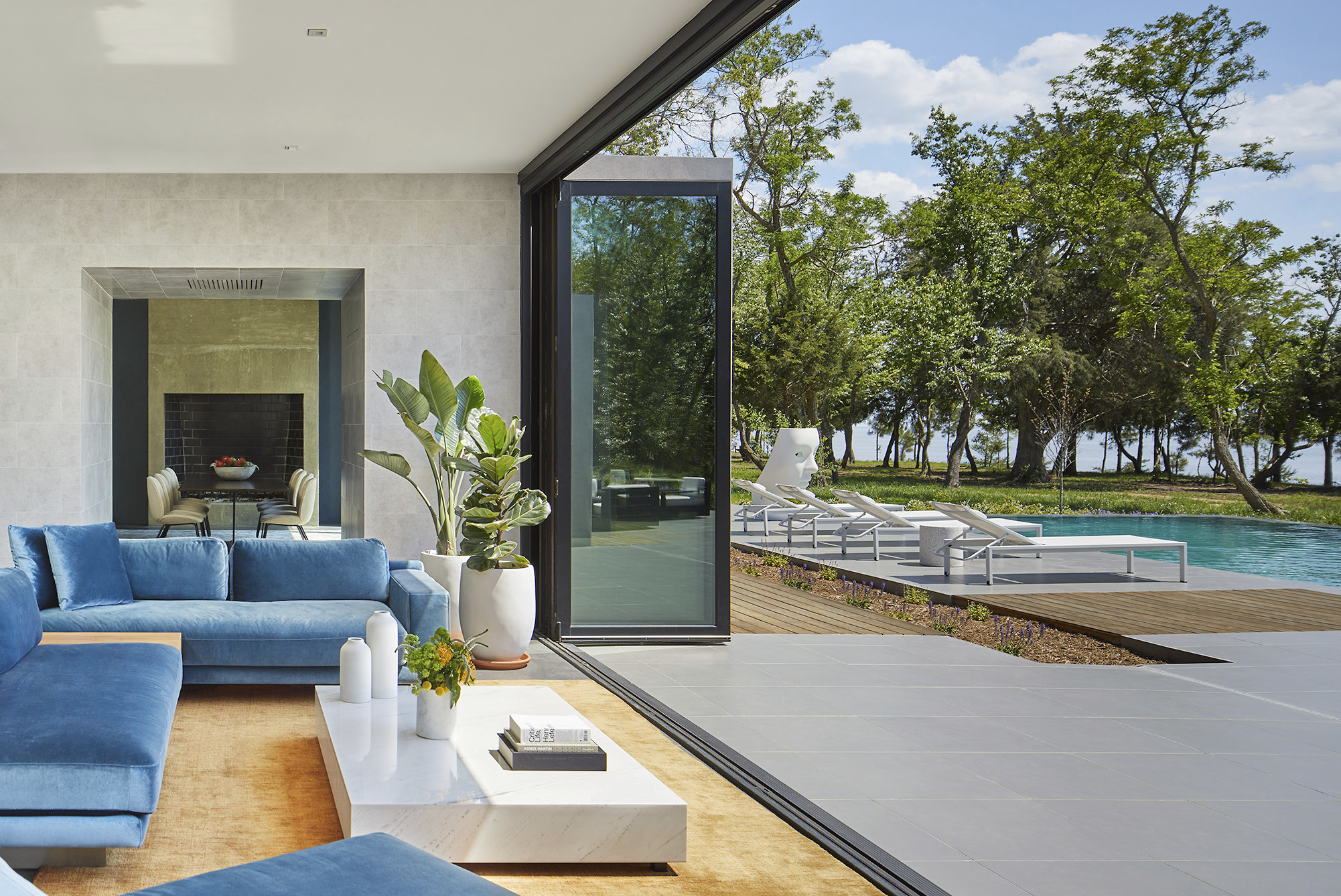
Jury Comments: A remarkable transformation of an unremarkable government building into a 21st-century workplace. The curtainwall system is well considered, beautifully detailed, and reductive — creating wonderful daylit spaces out of what was previously a warren of dark anonymous hallways. The exterior expression is subtle but engaging, creating a gradation when seen from the distance, and experienced as a slow and engaging change when approached on foot.
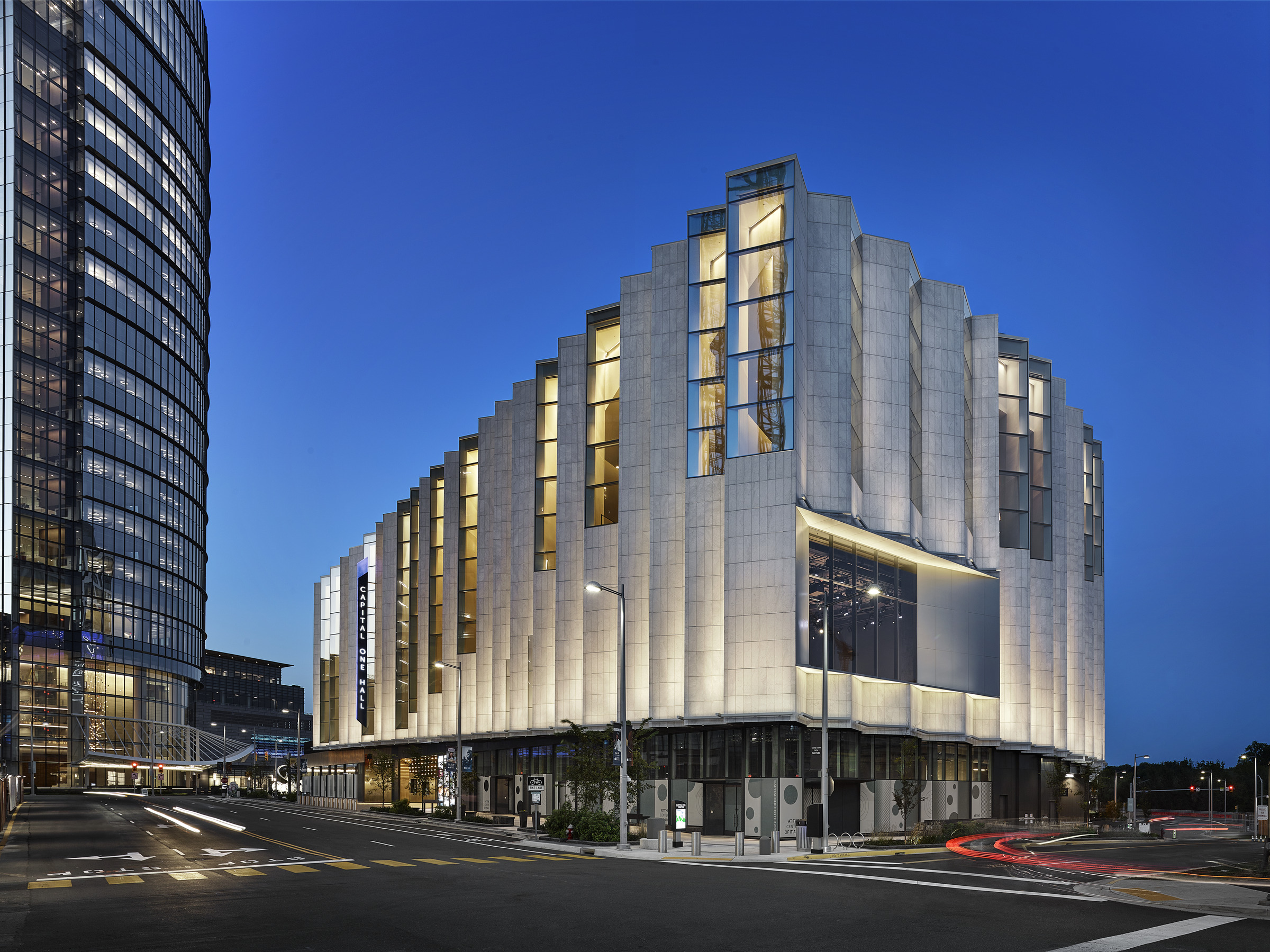
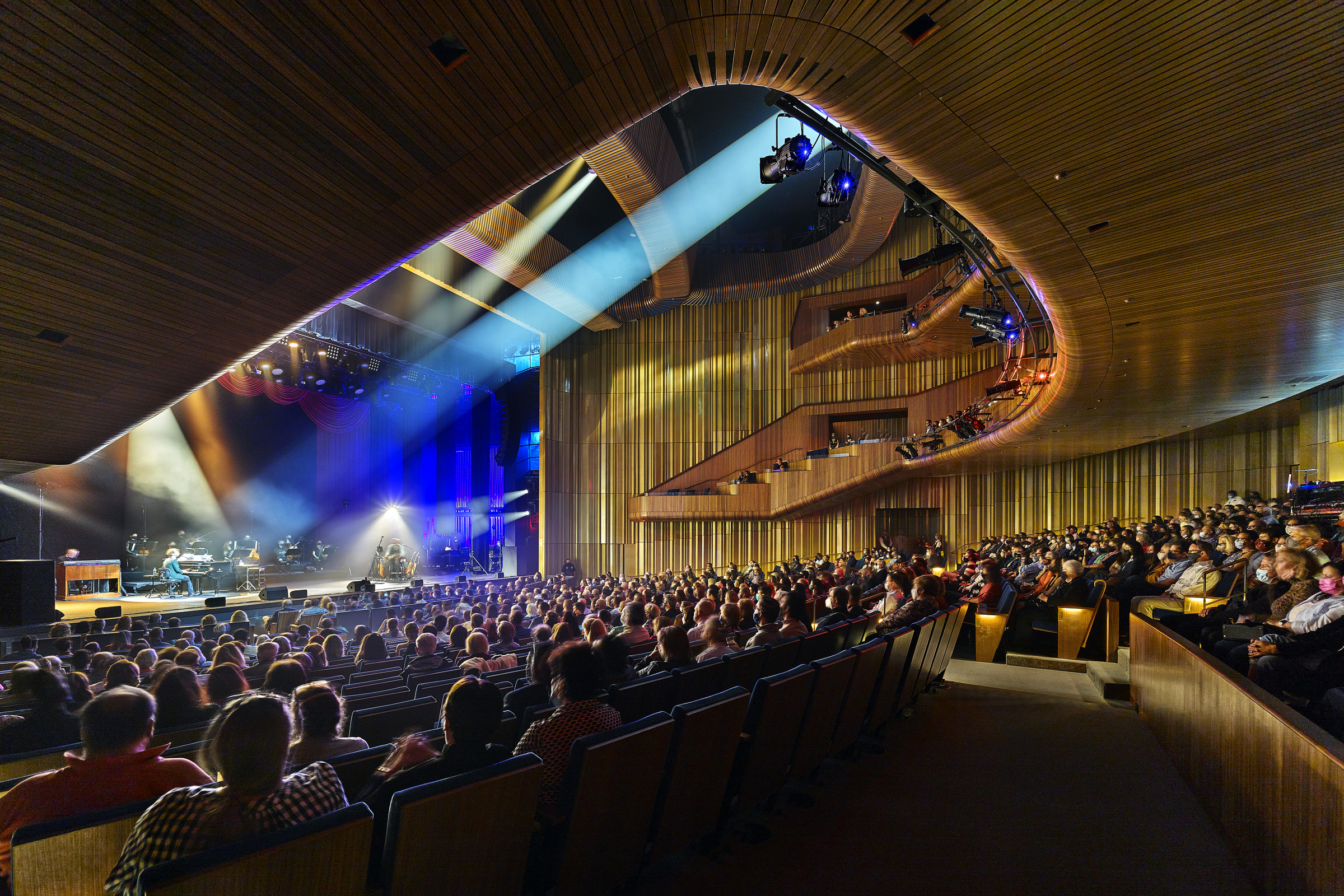
Architecture Firm: HGA Owner: Capital One Financial (Barry Mark, Representative) General Contractor: The Whiting-Turner Contracting Company Photographer: Alan Karchmer
Jury Comments: A sophisticated performing arts facility inserted into a complex urban site. The public spaces and the “house” are warm and wonderfully detailed. The limited material palette provides cohesiveness to what is a very large building. The powerful pleated façade begets a striking reciprocal interior ceiling that together act as a counterpoint to the refined wood and steel jewel box that is the theater. The public rooftop park and garden are a wonderful bonus gift to the city.
R|refuge (Leonardtown, Md.)
Images courtesy of Page/. Photos by Anice Hoachlander.
Architecture Firm: Page/ Owner: withheld General Contractor: J. Johnson Enterprises Inc. Structural Engineer: Springpoint Structural Civil Engineer: Soltesz Photographer: Anice Hoachlander, StudioHDP
Jury Comments: This private residence reveals a clear, processional experience in which the remarkable waterfront view is gradually revealed to the visitor. The integration of the home into the landscape is impressive and extends the generative logic into the site. The sequence of the plan and site is tightly woven with the ecological program. Each design decision seems to be multivalent, performing multiple duties with minimal wasted effort. The material palette is restrained and durable without feeling cold, and the material choices help reinforce the clarity of the plan and the sustainability goals of the project.
Awards of Merit
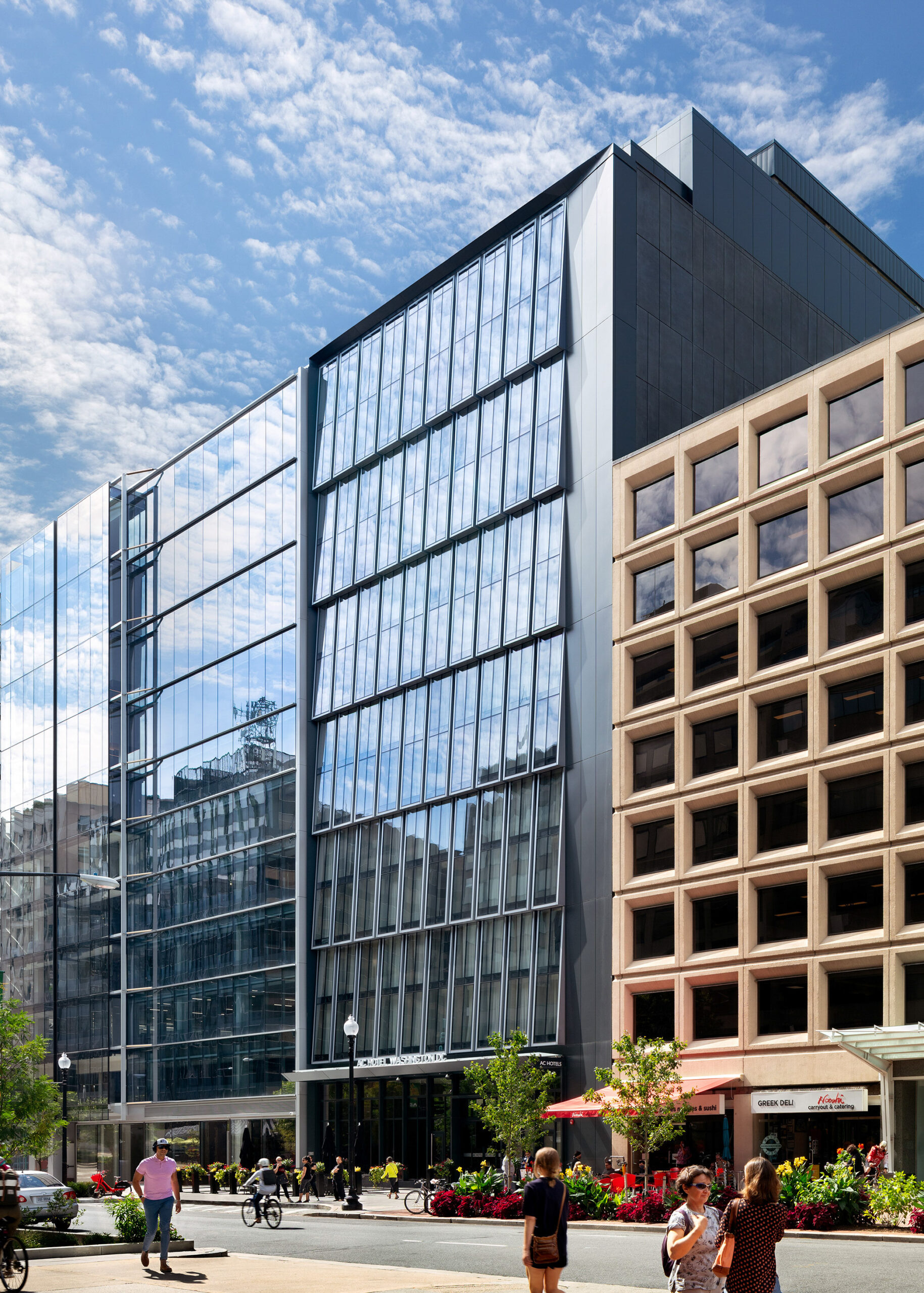
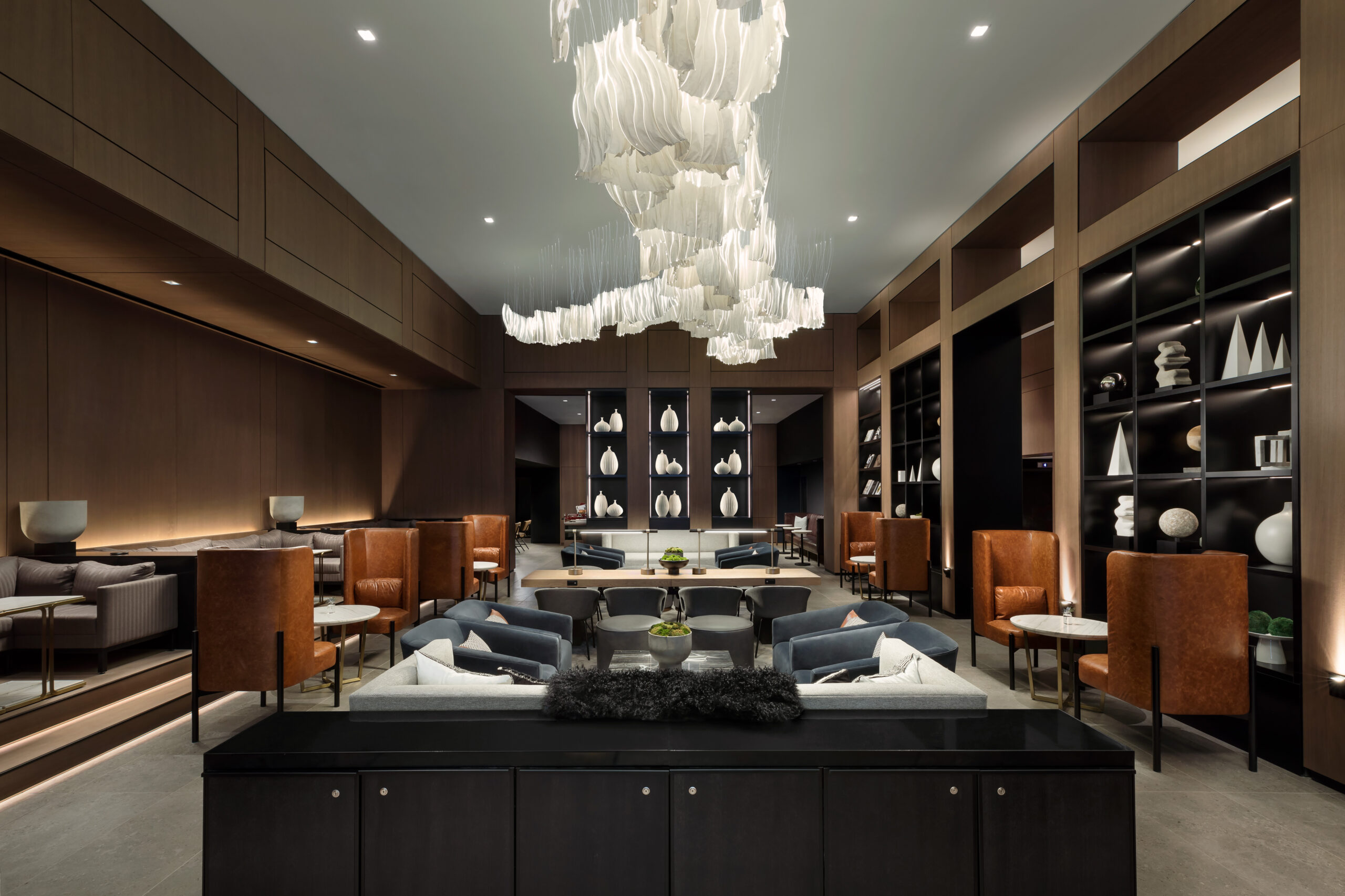
AC Hotel by Marriott (Washington, D.C.)
Images courtesy of WDG Architecture. Photos by Joseph Romeo Photography.
Architecture Firm: WDG Architecture Owner: OTO Development General Contractor: Lend Lease (US) Construction, Inc. Photographer: Joseph Romeo Photography
Jury Comments: This urban infill project uses an ingenious unitized enclosure system to activate the street wall and mediate between two disparate neighboring buildings. The result is something at home on the street but surprising and engaging. The emphasis on single window units subtly telegraphs the interior program to the exterior.
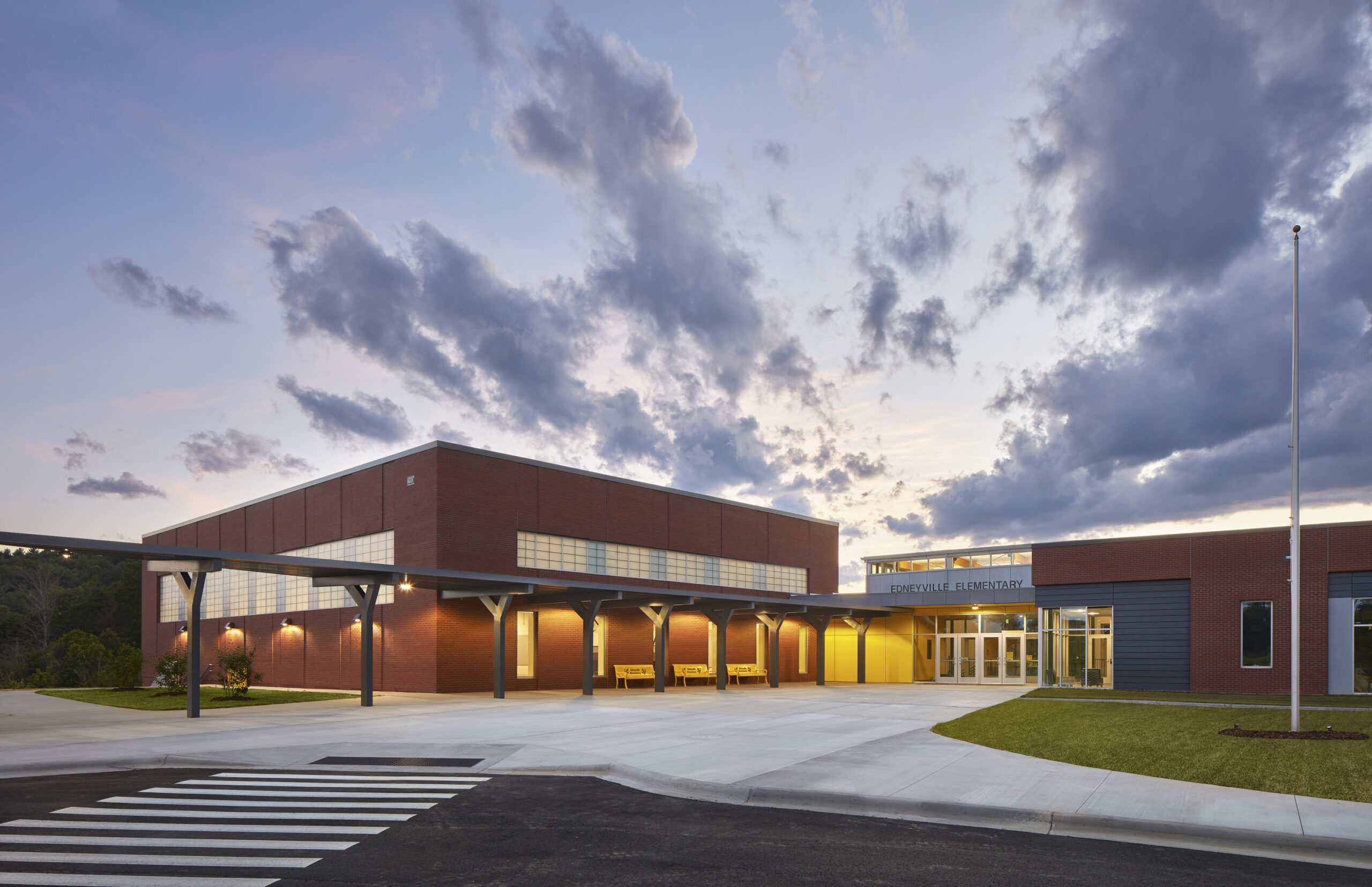
Edneyville Elementary School (Hendersonville, N.C.)
Images courtesy of Clark Nexsen, Photos by Mark Herboth.
Architecture Firm: Clark Nexsen Owner: Henderson County (John Mitchell, Representative) General Contractor: Beverly-Grant Inc. / Barnhill Civil Engineering: WGLA Engineering, PLLC Landscape Engineering: Siteworks Studios Structural Engineering: Kloesel Engineering, PA Interior Design: Division 12 Design Studio Photographer: Mark Herboth, Mark Herboth Photography
Jury Comments: This elementary school is simple and direct – inserting a splash of color without being patronizing. The clear, well-organized plan makes good use of the site, creating a variety of inviting learning environments at many scales. It harvests natural light from multiple sources in nearly every space, both direct and borrowed. The building’s performance is particularly commendable.
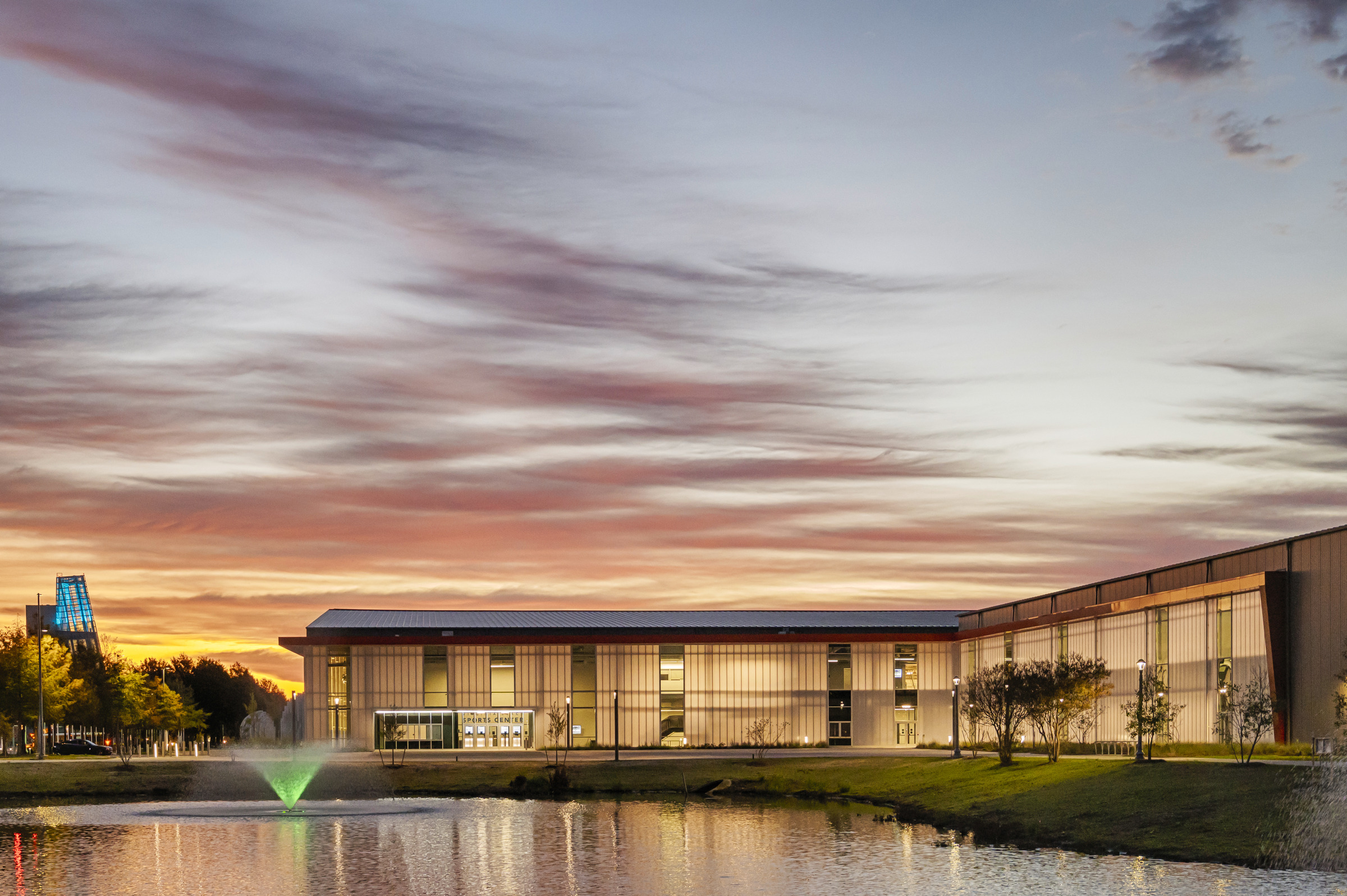
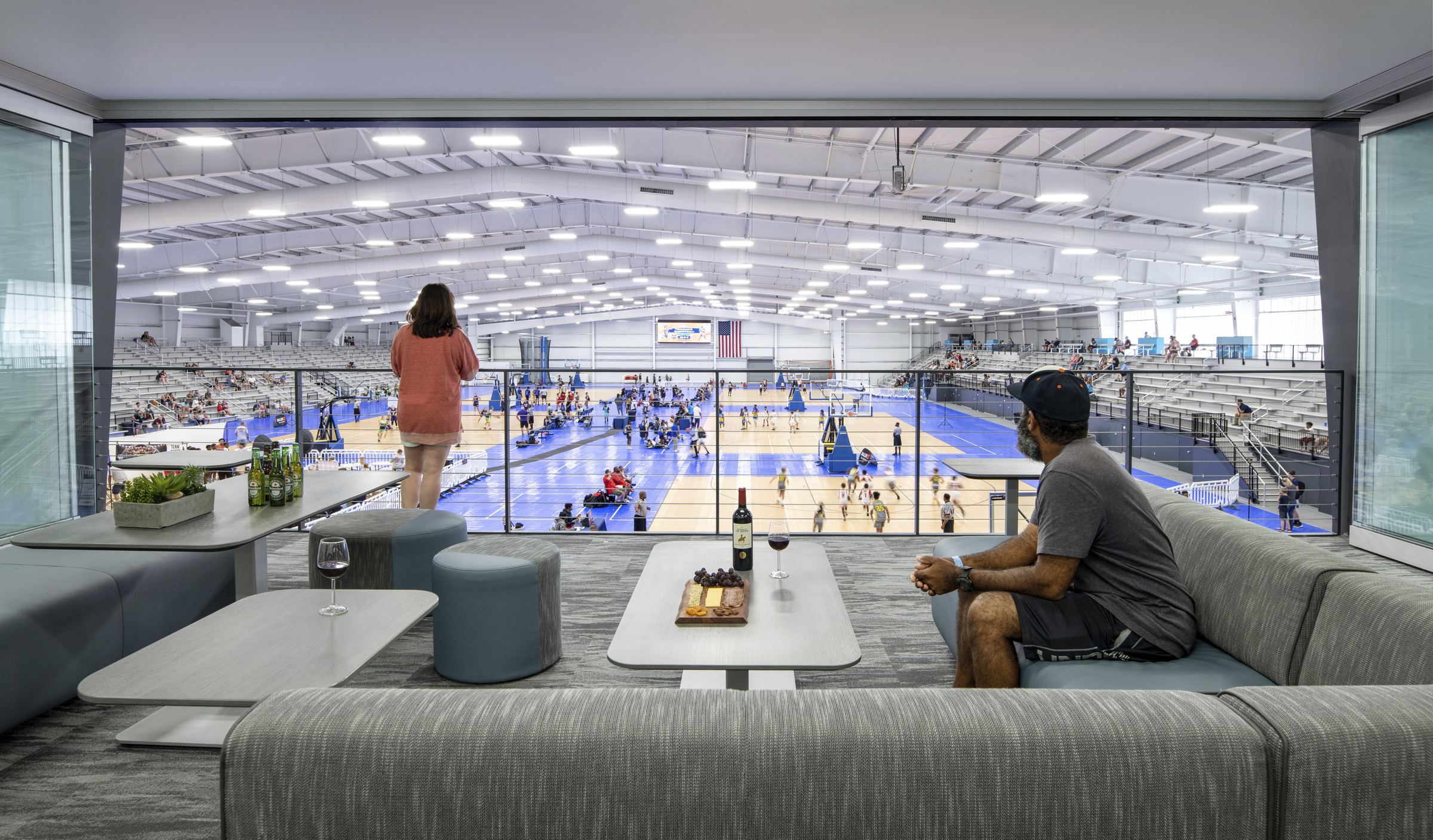
Virginia Beach Sports Center (Virginia Beach, Va.)
Photo by Dave Chance Photography.Photo by Yuzhu Zheng Photography.Images courtesy of Hanbury
Architecture Firm: Hanbury and Clark Nexsen Owner: City of Virginia Beach Public Works (Tom Nicholas, PE, Representative) General Contractor: MEB General Contractors Photographers: Dave Chance, Dave Chance Photography and Yuzhu Zheng Photography
Jury Comments: This very simple, direct, rigid-frame building creates a set of large, open, daylit recreation spaces. The spaces and framed views make theater of the activities taking place every day. The design “moves” are limited but focused. The result is maximum effect with very limited means.
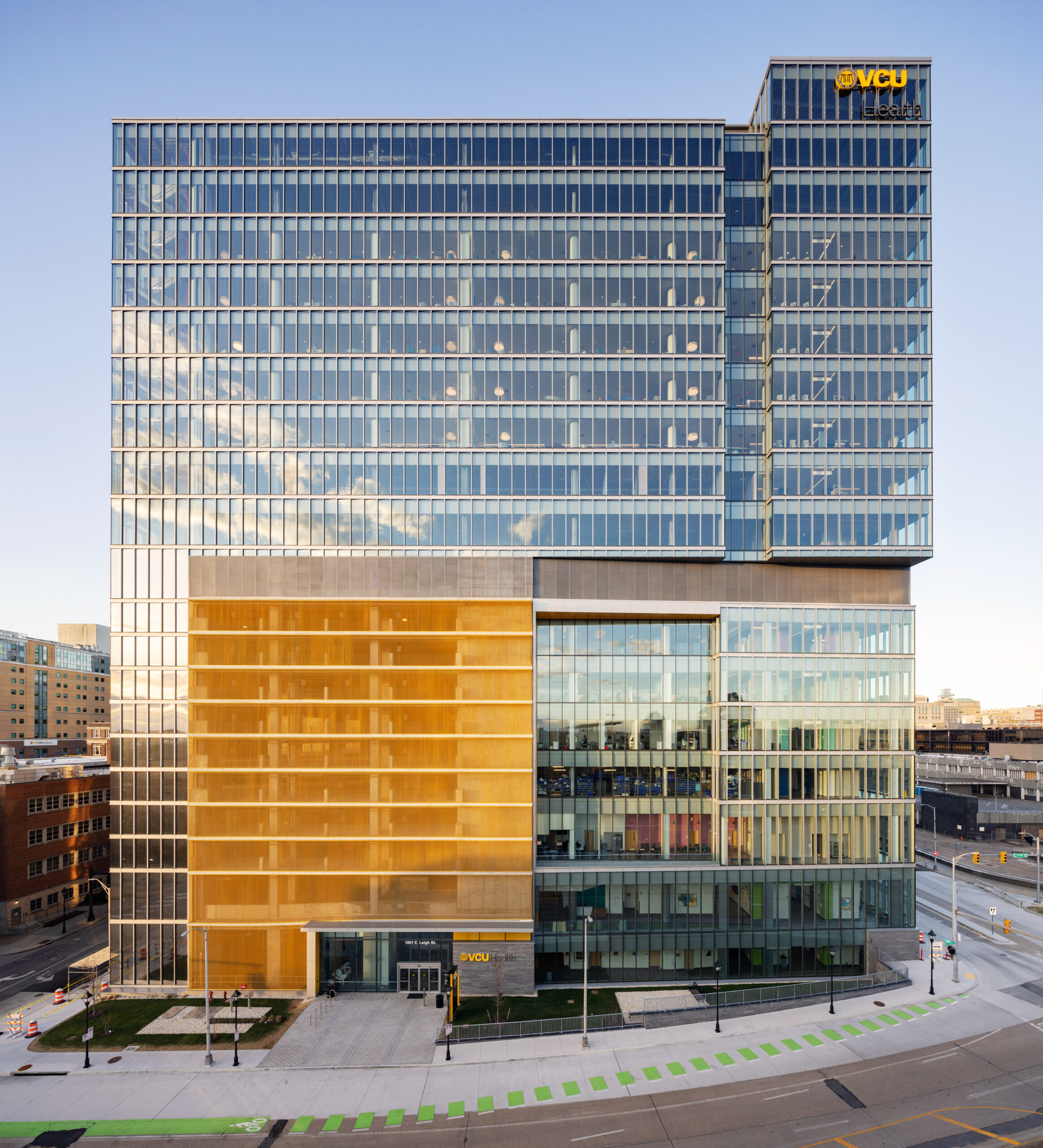
Architecture Firm: HDR Owner: Virginia Commonwealth University Health System (Shirley Gibson, Representative) General Contractor: Hourigan Structural Engineering (parking/envelope): Walter P Moore MEP Engineer: WSP Civil Engineer: Draper Aden Assoc. Curtain Wall: Ventana Photographer: Dan Schwalm, HDR and Quentin Penn-Hollar, QPH Photo, LLC
Jury Comments: This large, programmatically complex building utilizes very simple variations in the curtainwall to express the individual program elements. These create subtle but engaging differences in the surface qualities without fracturing the character of the shape. The limited palette of materials and well-proportioned composition create a cohesive form at home in its context. The golden mesh is a comprehensive design move that accomplishes multiple goals. It covers the garage, defines and makes a grand entry, and creates a surprising ethereal surface quality.
In the HISTORIC PRESERVATION category
The historic preservation category focuses specifically on excellence in strategies, tactics, and technologies that advance the art, craft, and science of preserving historically significant buildings and sites. The jury takes into consideration adherence to local, state, and national criteria for historic preservation.
Award of Honor
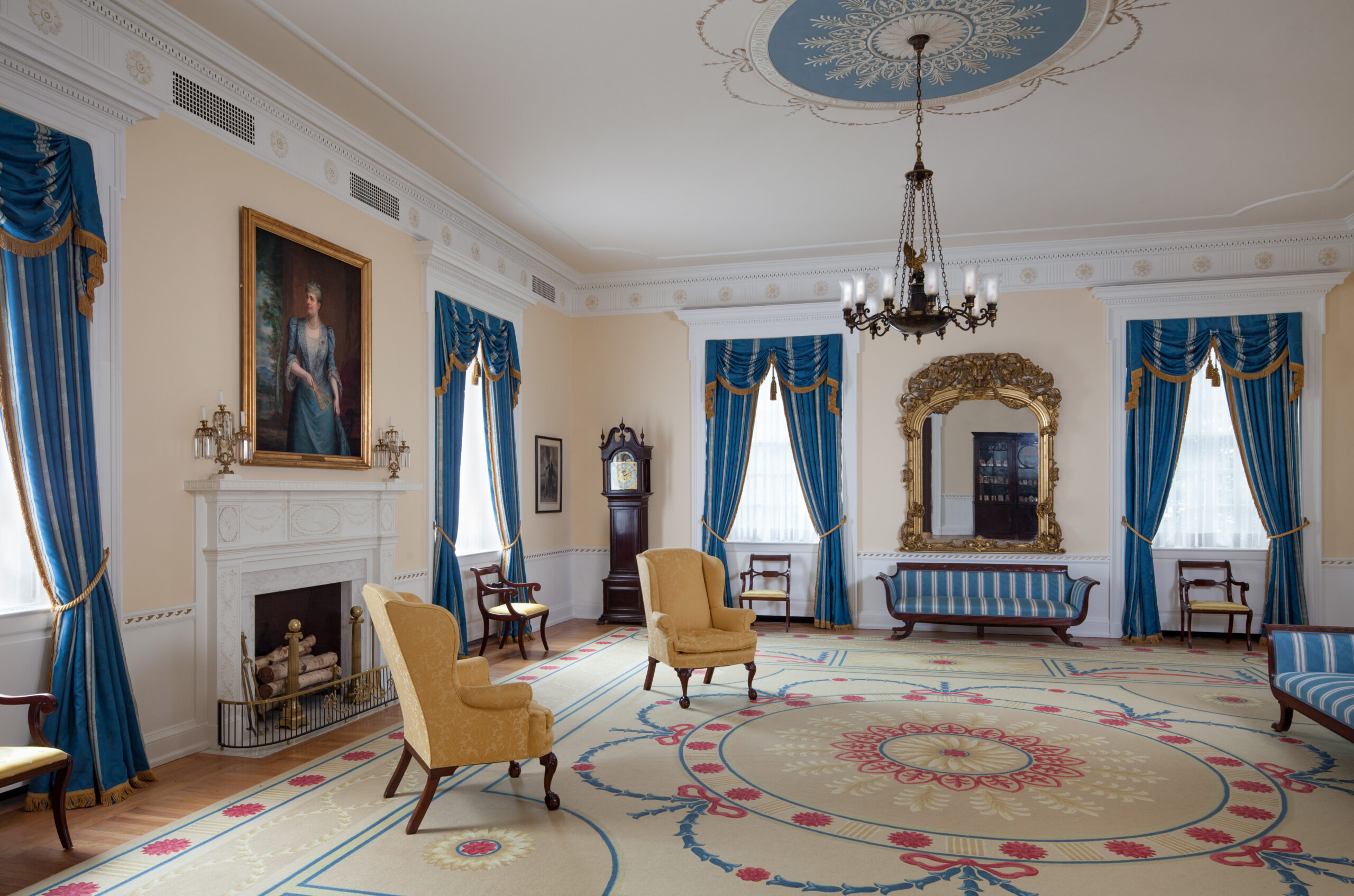
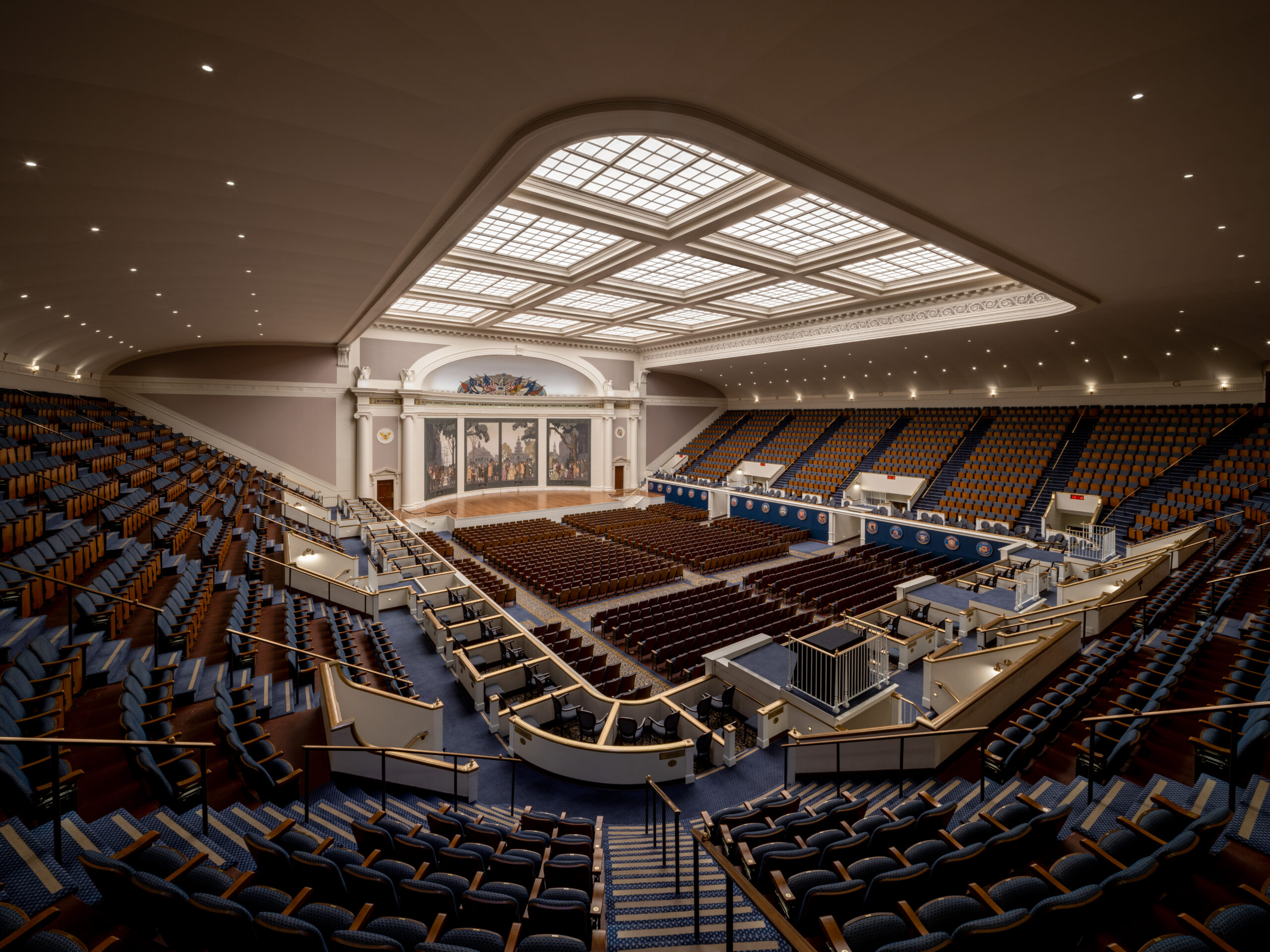
Daughters of the American Revolution Constitution Hall (Washington, D.C.)
Images courtesy Quinn Evans. Photos by Ron Blunt Photography.
Architecture Firm: Quinn Evans Owner: Daughters of the American Revolution (Stephen Nordholt, Representative) General Contractor: Christman Company MEP Engineering: Greenman Pedersen Inc. and Loring Consulting Engineers Historic Paint Finishes Specialist: Artifex Ltd. Structural Engineer: 1200 Architectural Engineers Theatrical Lighting and Theater Planning: Schuler Shook Lighting Design (Phase 1): Gary Steffy Lighting Design Acoustical Consulting: Jaffee Holden Life Safety Engineering: GHD Photographer: Ron Blunt Photography
Jury Comments: This restoration of a large historic meeting space seamlessly integrates lighting and mechanical systems to preserve the building and create a modern meeting venue. The historic spaces are brought back to “like-new” condition with a lighting strategy that transforms them into something entirely new.
Award of Merit
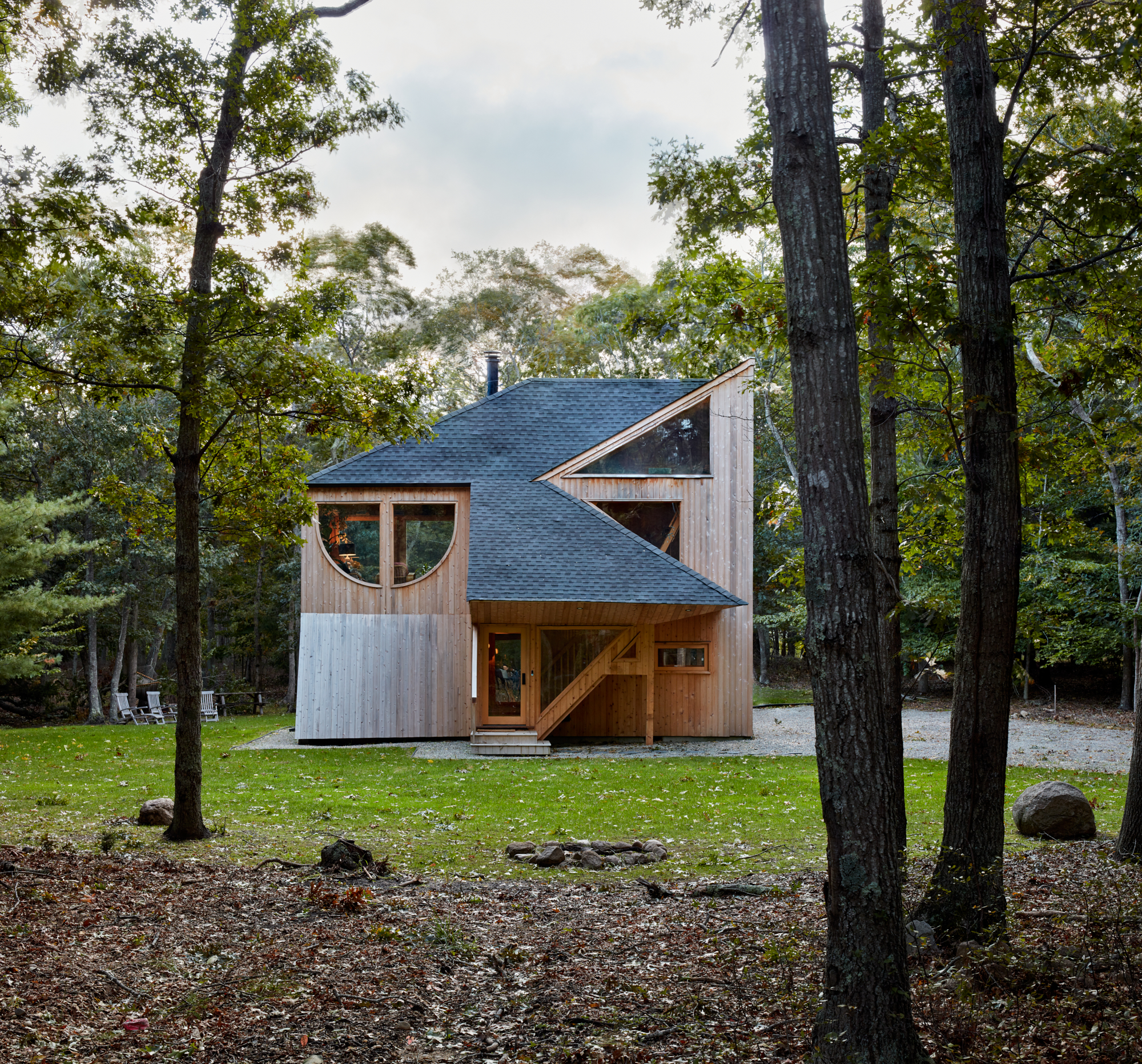
Antler House Restoration (East Hampton, N.Y.)
Images courtesy of Two Street Studio. Photos by Ashok Sinha.
Architecture Firm: Two Street Studio Owners: Chris Fisher and Blair Moritz Contractor: CCI Construction Consultants Interior Designer: Logan Killen Interiors + Blair Moritz Photographer: Ashok Sinha
Jury Comments: A truly quirky and weird home had been stripped of its character by decades of ill-fated “improvements.” This restoration returns the home’s “hippie-coolness” in a very unapologetic fashion and creates a sympathetic addition. The interiors are consistent with the spirit of the home.
In the INTERIOR DESIGN category
Interior design projects are judged on mastery of composition, functionality, material and color palettes, and well-integrated adherence to the highest levels of accessibility, health and safety, environmental, and occupant-comfort considerations, standards, and regulations.
Award of Honor
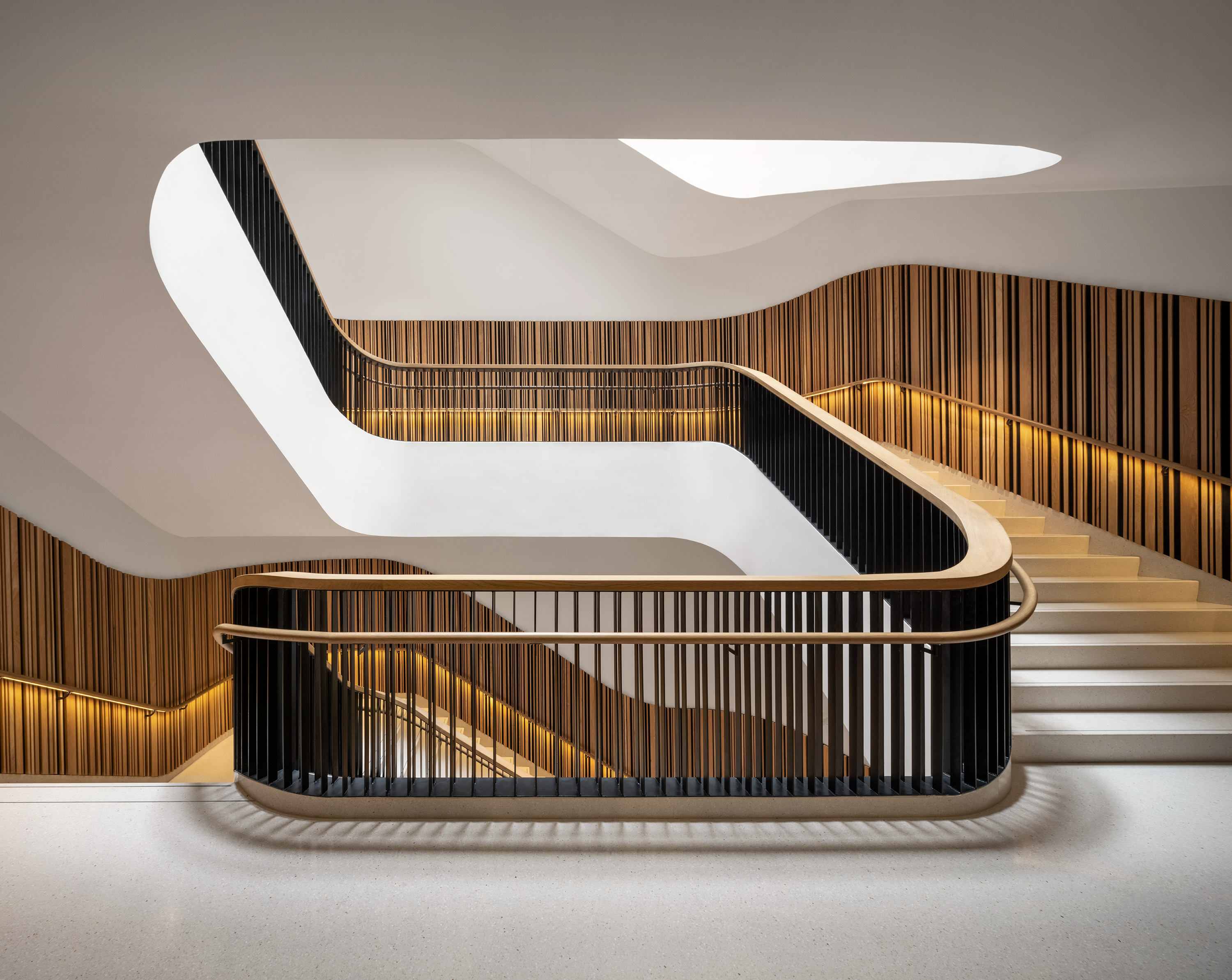
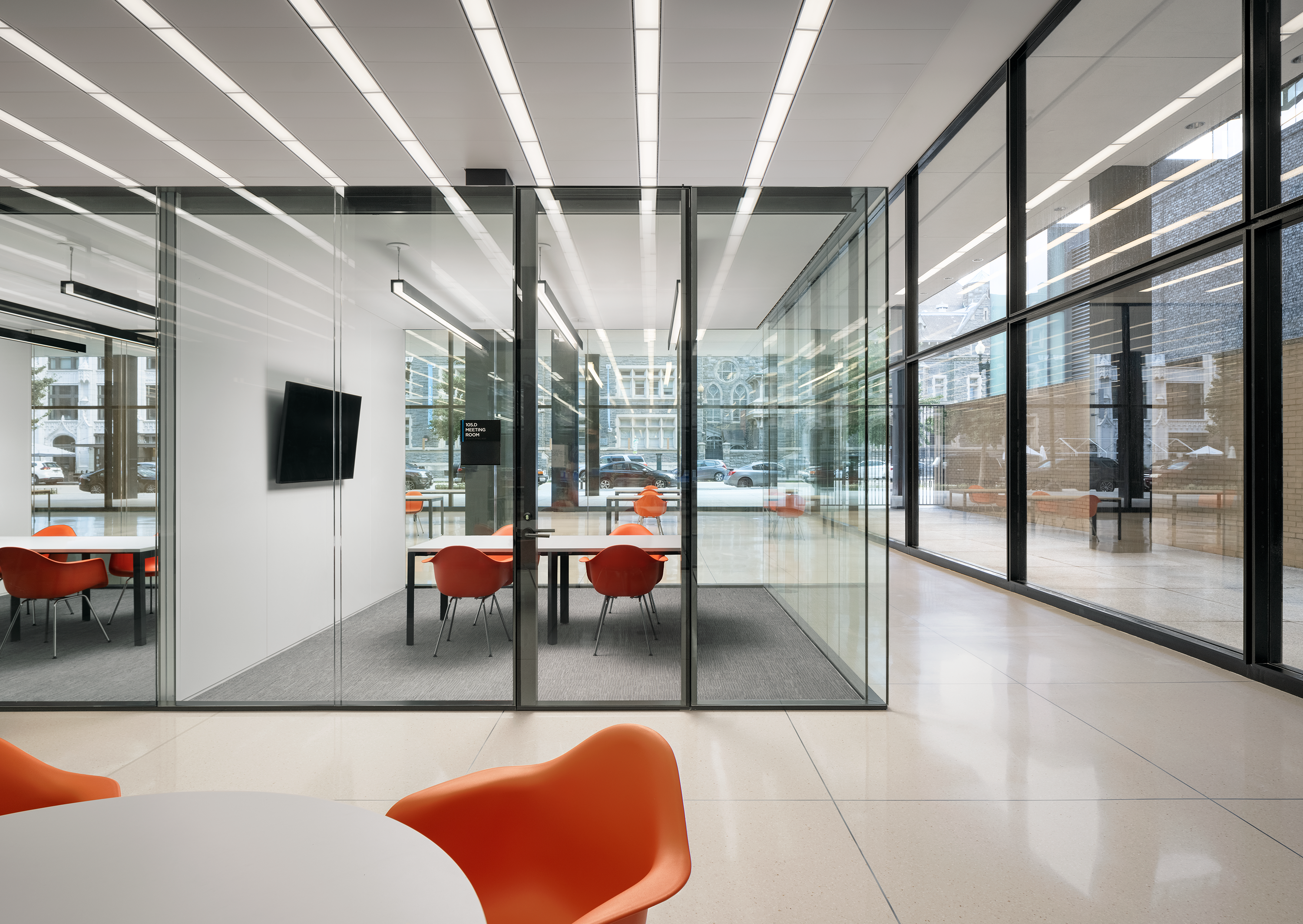
Martin Luther King, Jr. Memorial Library (Washington, D.C.)
Images courtesy of OTJ Architects. Photos by Trent Bell.
Executive Architect: OTJ Architects Design Architect: Mecanoo Owner: District of Columbia Public Library General Contractor: Smoot Construction and Gilbane Building Company Photographer: Trent Bell and Robert Benson Photography
Jury Comments: This interior reconsiders the Miesian masterpiece. The design identifies the existing building’s strengths and weaknesses and takes it into the present and the future. The addition of the sinuous stairs is a bold celebration of the inhabitants and a subtle criticism of the existing structure. Some of the original lighting and material strategies are maintained and extended to link the new
Award of Merit
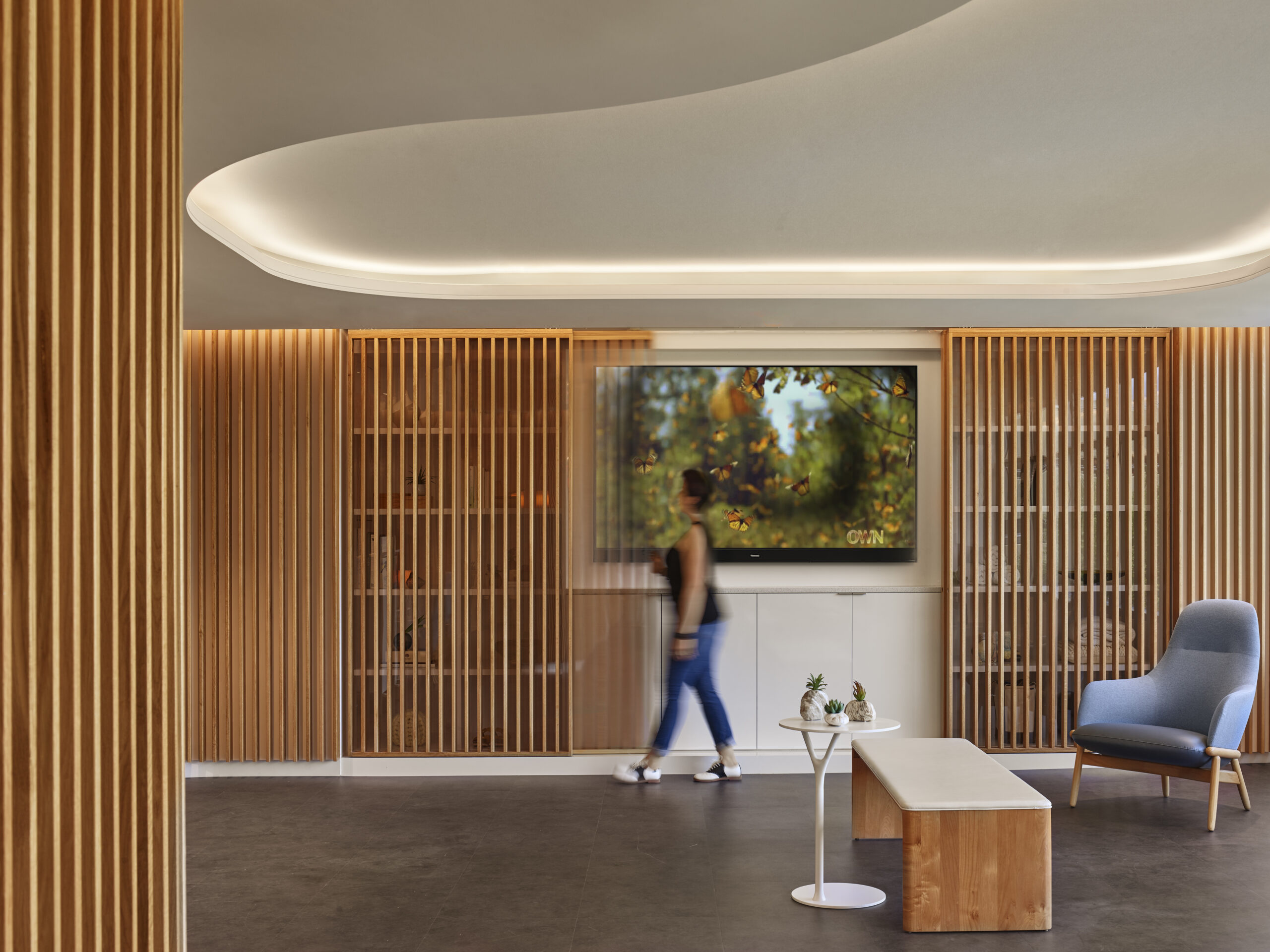
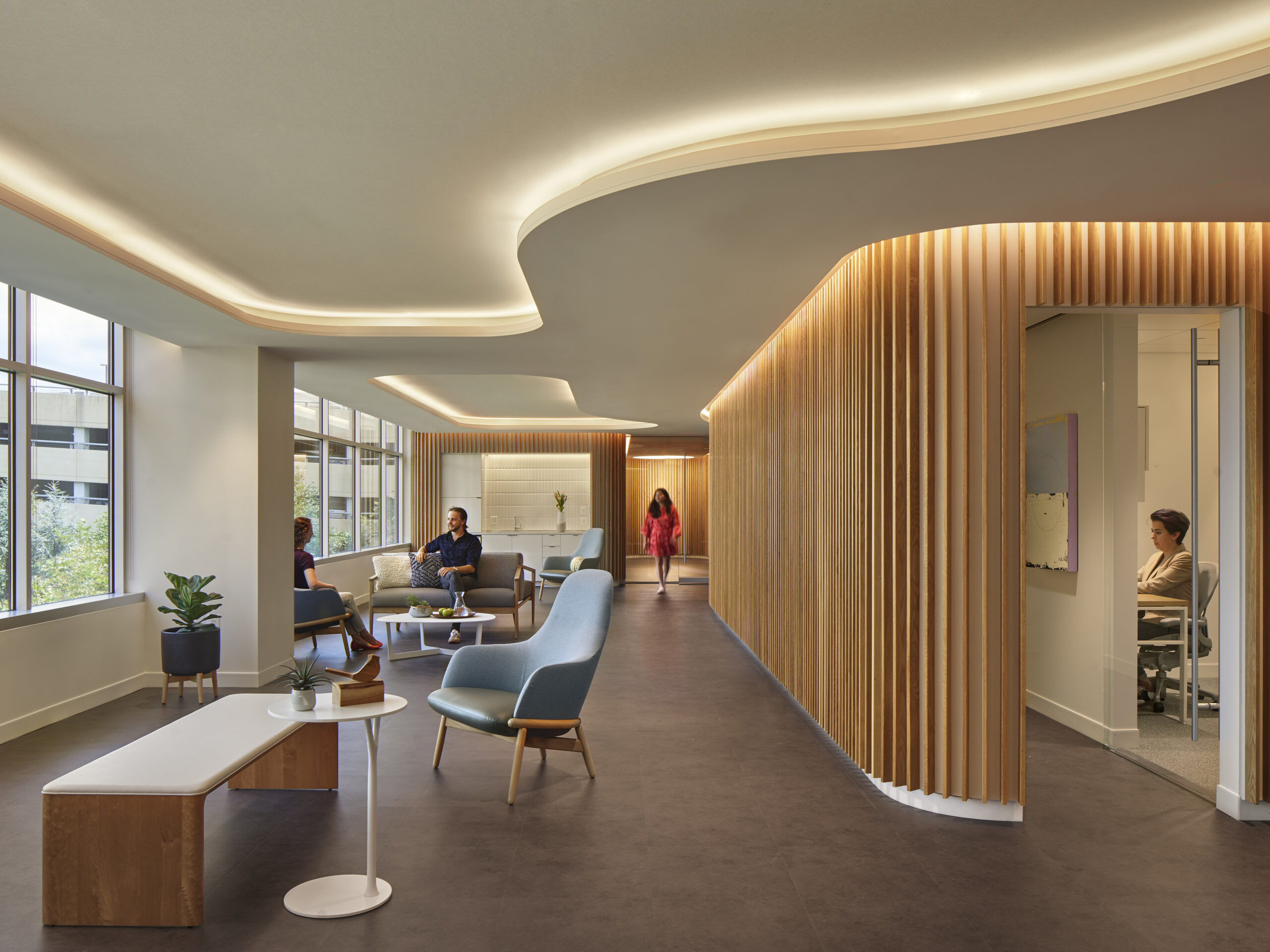
Bill Richards Center for Healing (Rockville, Md.)
Images courtesy of Gensler. Photos by Halkin Mason Photography.
Architecture Firm: Gensler Owner: Shady Grove Adventist Hospital Foundation General Contractor: Deerfield Construction Group, Inc. Photographer: Halkin Mason Photography
Jury Comments: This small, flexible interior accomplishes a lot by employing a limited set of tactics. The serpentine wood wall ties the interior together, shapes the public procession, and functionally screens equipment and clutter. Simple ceiling manipulations further subdivide the space and the use of indirect lighting gives a sense of breadth.
In the RESIDENTIAL DESIGN category
Aesthetic appeal and functionality are two long-established criteria for home design, as are affordability and resource efficiency. The jury looks at each submission in its totality toward meeting those goals.
Award of Honor
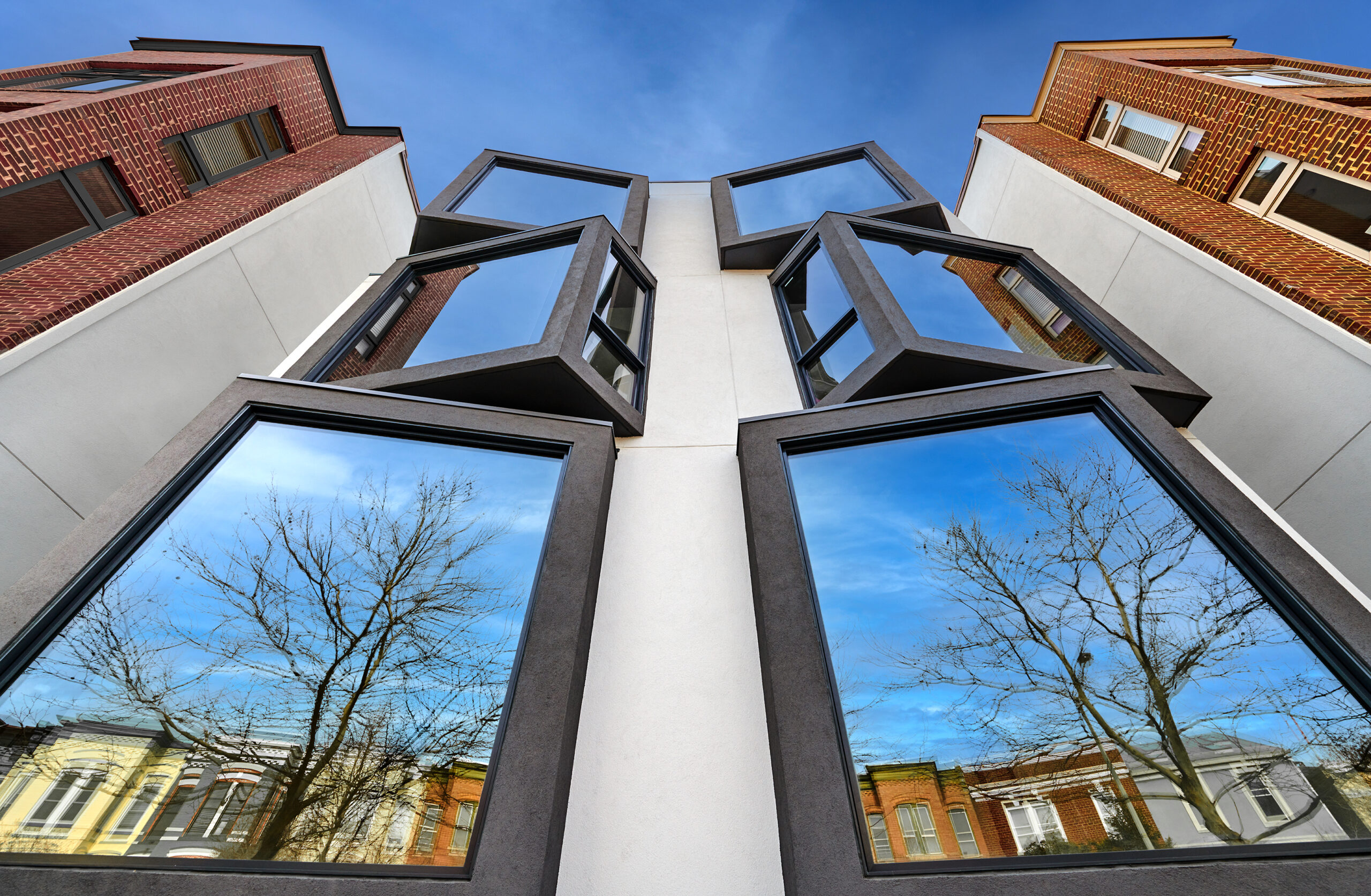
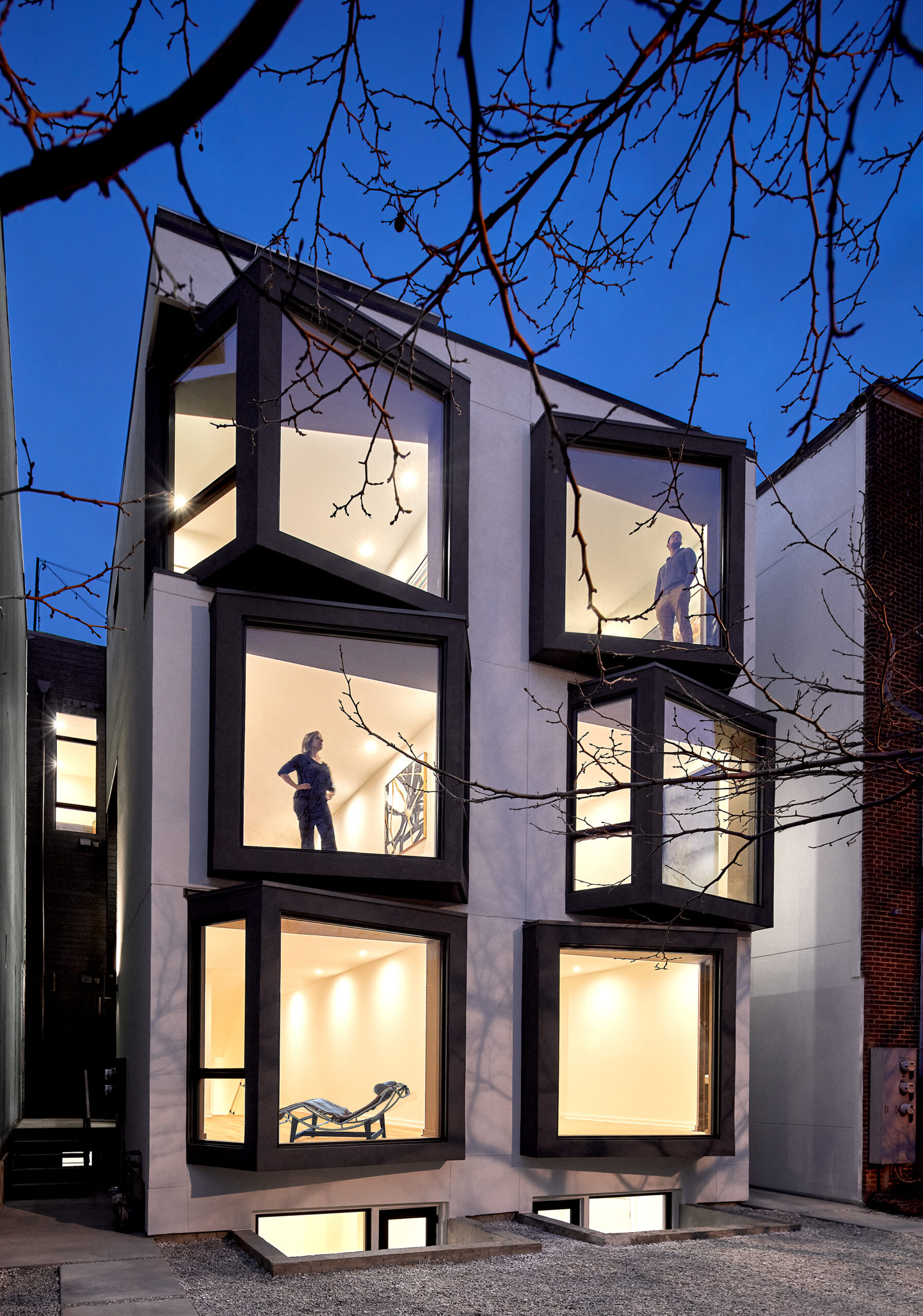
StoryBoard (Washington, D.C.)
Images courtesy of KUBE architecture. Photos by Anice Hoachlander.
Architecture Firm: KUBE architecture Owner: Warmington Oppenheim Development General Contractor: Warmington Oppenheim Development Photographer: Anice Hoachlander
Jury Comments: This urban infill project ingeniously reinterprets the bay window to create a truly unique expression – at once sympathetic and new. The decision to recess the entries on both sides allows the façade to be disconnected from its neighbors, while clearly continuing the street wall. The new bay windows can be occupied, adding character to the interior spaces, and framing exterior views.
In the SMALL PROJECTS category
Design excellence can be achieved, no matter the size or scope of a project. These awards celebrate projects with modest budgets that have a substantial impact. Small Project Awards are given in three categories, offering opportunities for recognition to a wide range of project sizes and budgets. All projects must demonstrate design achievement, including how the project fits into its environment and how the project connects to the Framework for Design Excellence.
Award of Honor
Heirloom Farm Studio (location withheld)
Photos courtesy of Bushman Dreyfus Architects. Photos by Virginia Hamrick Photography.
Architecture Firm: Bushman Dreyfus Architects Owner: withheld Owner’s Design Representative: Ivy Naté General Contractor: Element Construction Photographer: Virginia Hamrick Photography
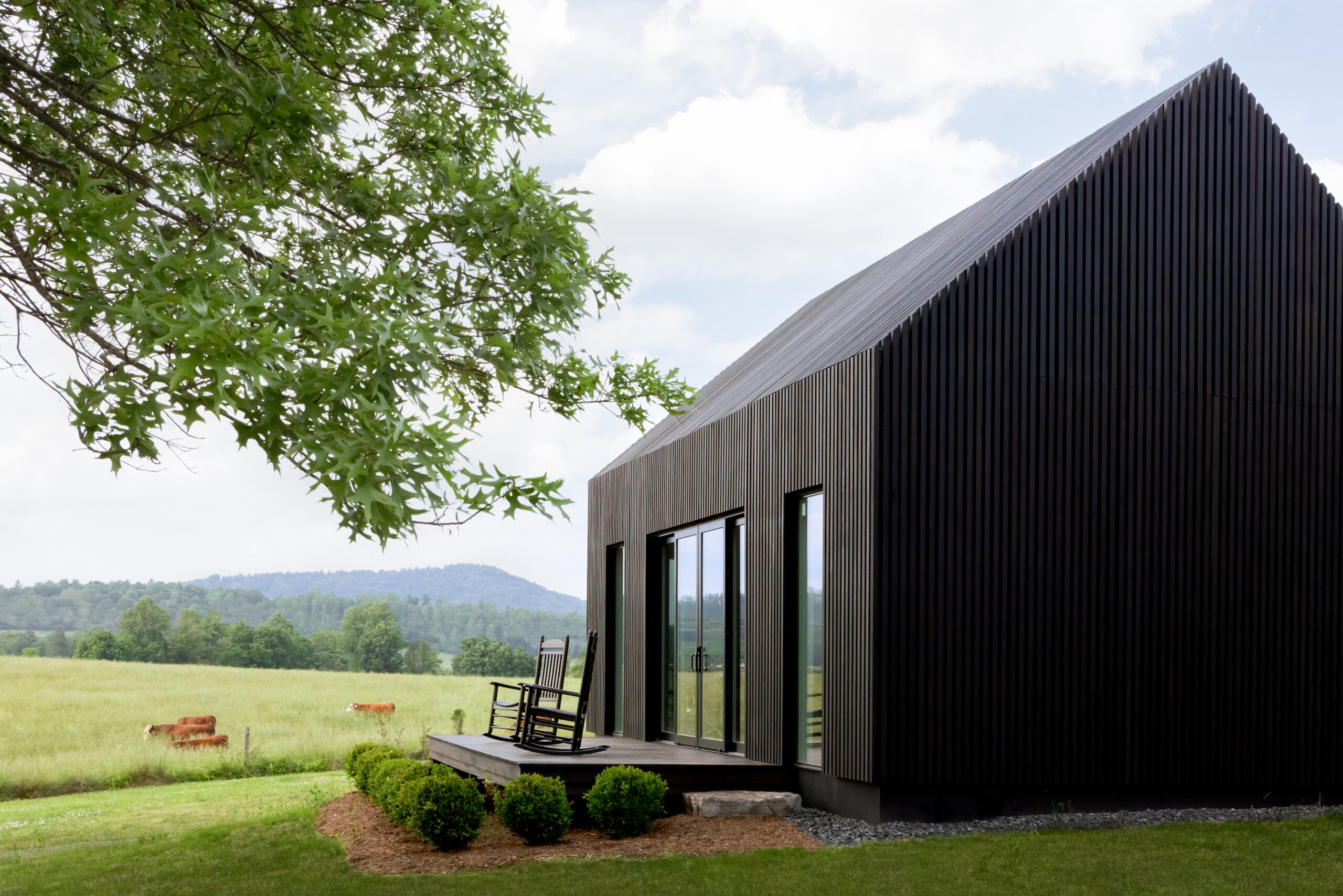
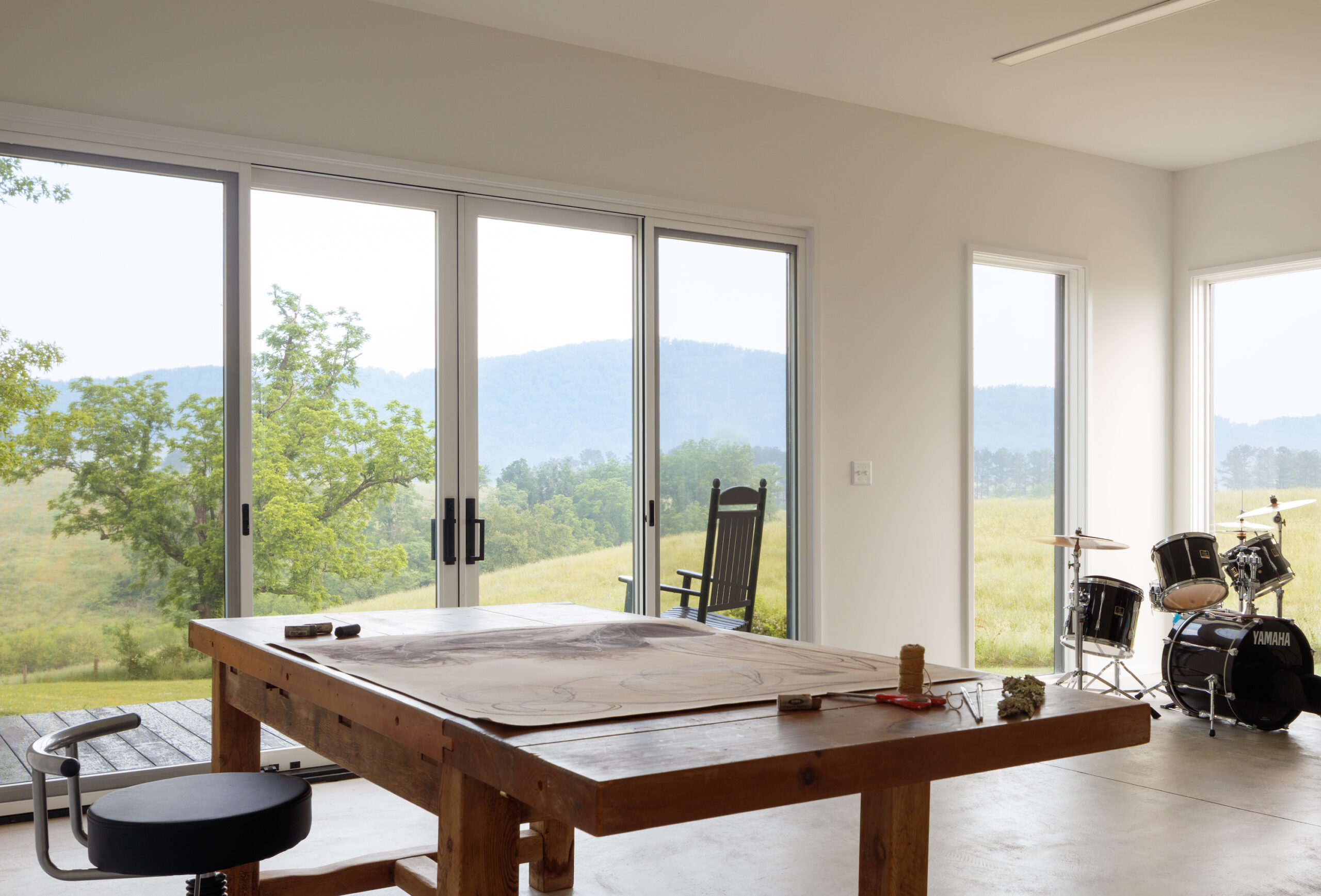
Jury Comments: This simple, almost archetypal structure is clad in a dark wooden exterior clearly juxtaposed against both the minimal white interior and the surrounding landscape. All the design decisions are focused and disciplined, resulting in something simultaneously abstract and familiar. A well-proportioned and beautifully crafted piece of work at home in the shadows beneath the tree line.
Award of Merit
Studio 6420 (location withheld)
Images courtesy of Robert M. Gurney, FAIA, Architect. Photos by Anice Hoachlander.
Architecture Firm: Robert M. Gurney, FAIA, Architect Owner: withheld General Contractor: Peterson & Collins, Inc. Interior Design: Baron Gurney Interiors Landscape Architect: Campion Hruby Landscape Architects Photographer: Anice Hoachlander
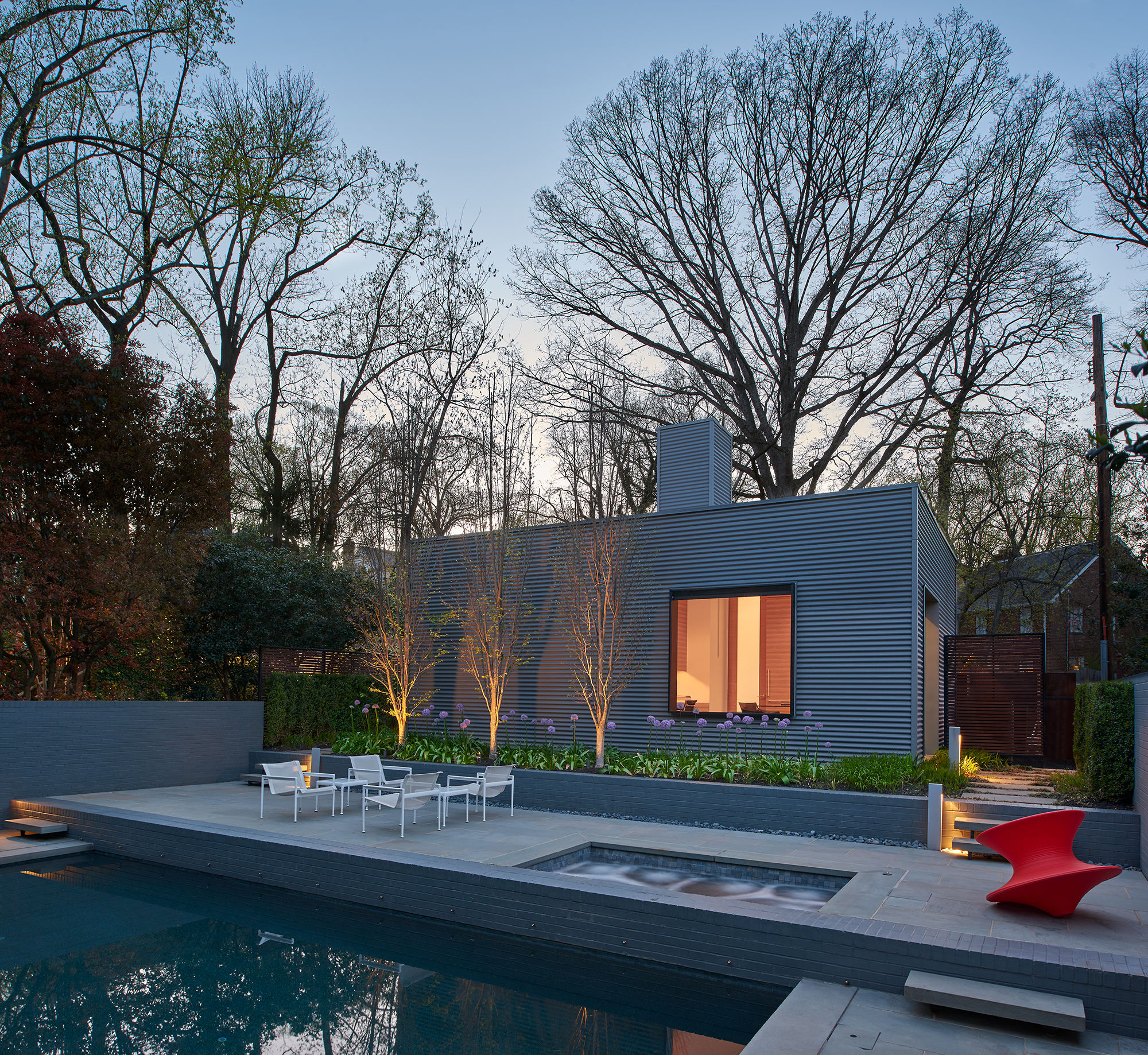
Jury Comments: This small studio space and landscape employ a restrained set of tactics to shape both the exterior and interior space. A common material palette ties the composition together. The car in the garage is likely more expensive than the garage that contains it – but equally as beautiful. A straightforward, well-detailed example of complex simplicity.
The Design Awards recognize outstanding design, built and unbuilt, from the past eight years. The location of projects is not restricted, but any built works submitted for consideration must have been completed after January 1, 2015. The entry deadline is June 28, 2022.
Each entry will be judged on how successful the project is in meeting its individual requirements. Consideration is given to aesthetics, social impact, innovation, context, performance, and stewardship of the natural environment — with particular emphasis on the Framework for Design Excellence.
Anne Marie Duvall Decker, FAIA, with her partner, Roy Decker, FAIA, founded Duvall Decker in Jackson, Mississippi — a place defined by both palpable need and engaging culture. The firm is a diverse and expanded practice, employing planning, development, design, and building care to promote the quality of the built environment and the health and well-being of its inhabitants. Duvall Decker delivers design excellence and promotes social, economic, and environmental quality, no matter the scope, type, budget, or scale of the project.
Anne Marie pursues a meaningful public architecture that elevates the individual human experience. She has designed award-winning public schools, affordable housing, state institutions, libraries, and university buildings that embrace their physical surrounds and cultural traditions with innovation and invention. She is the leader in the studio, fostering design quality, detailing building construction, making exemplary construction documents, and finding ways to be efficient and have joy in the work.
Anne Marie Duvall Decker, FAIA, received a Bachelor of Architecture degree from Mississippi State University. She is a recognized contributor to the advancement of the profession. She has served as a board member and past President of AIA Mississippi and as a trustee and past Chair of the AIA Trust. Anne Marie is often invited to share the firm’s work and her experience as a lecturer, critic, teacher, and design juror, most recently serving as Visiting Professor of Practice at the University of Tennessee College of Architecture and Design. She has served on the jury for the 2018 AIA Institute Honor Awards for Architecture and as a selection committee member for the Architectural League of New York’s American Roundtable initiative. Most recently, she serves the U.S. Department of State Bureau of Overseas Buildings Operations as an Industry Advisory Group Peer.
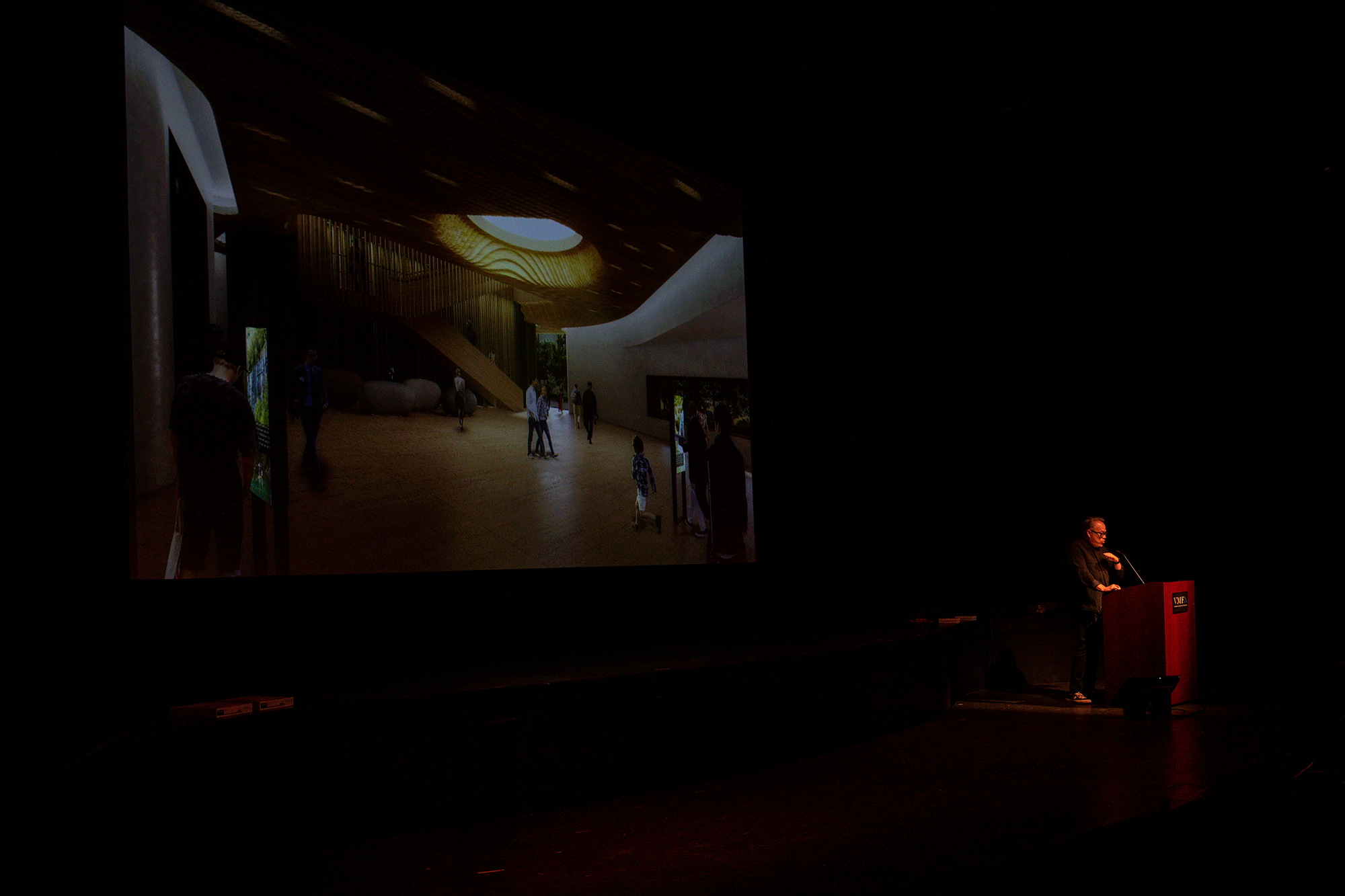
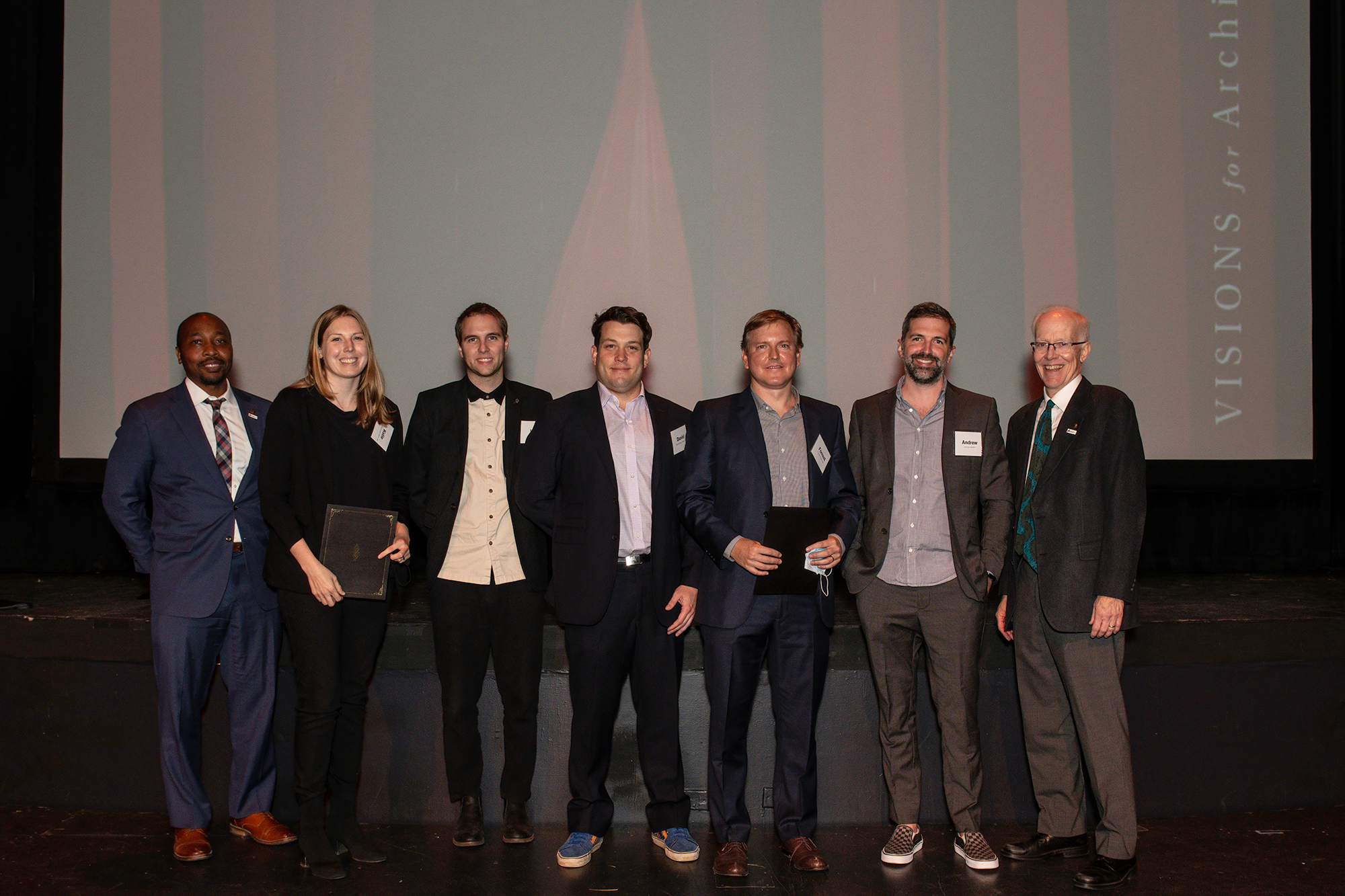
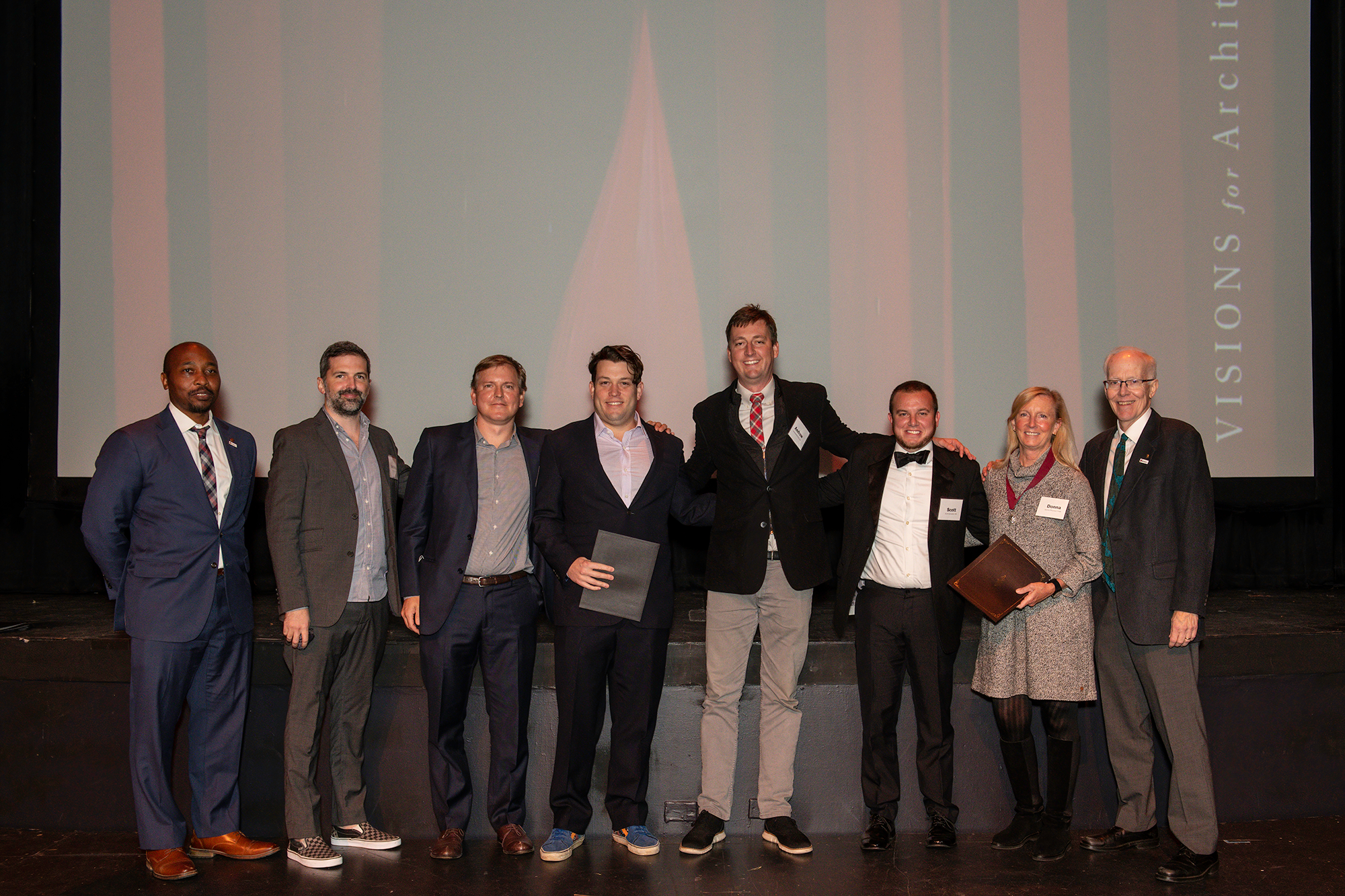
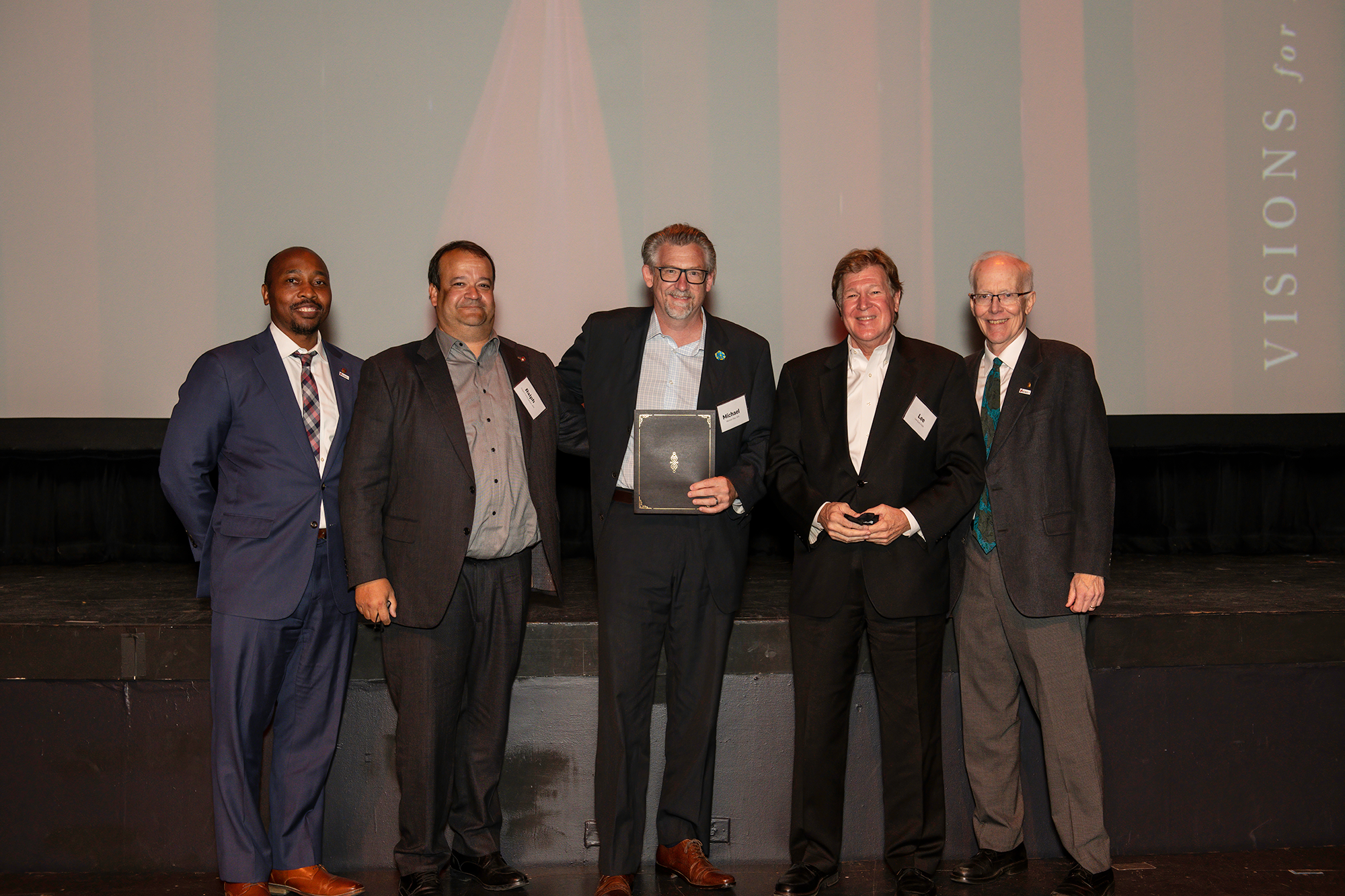
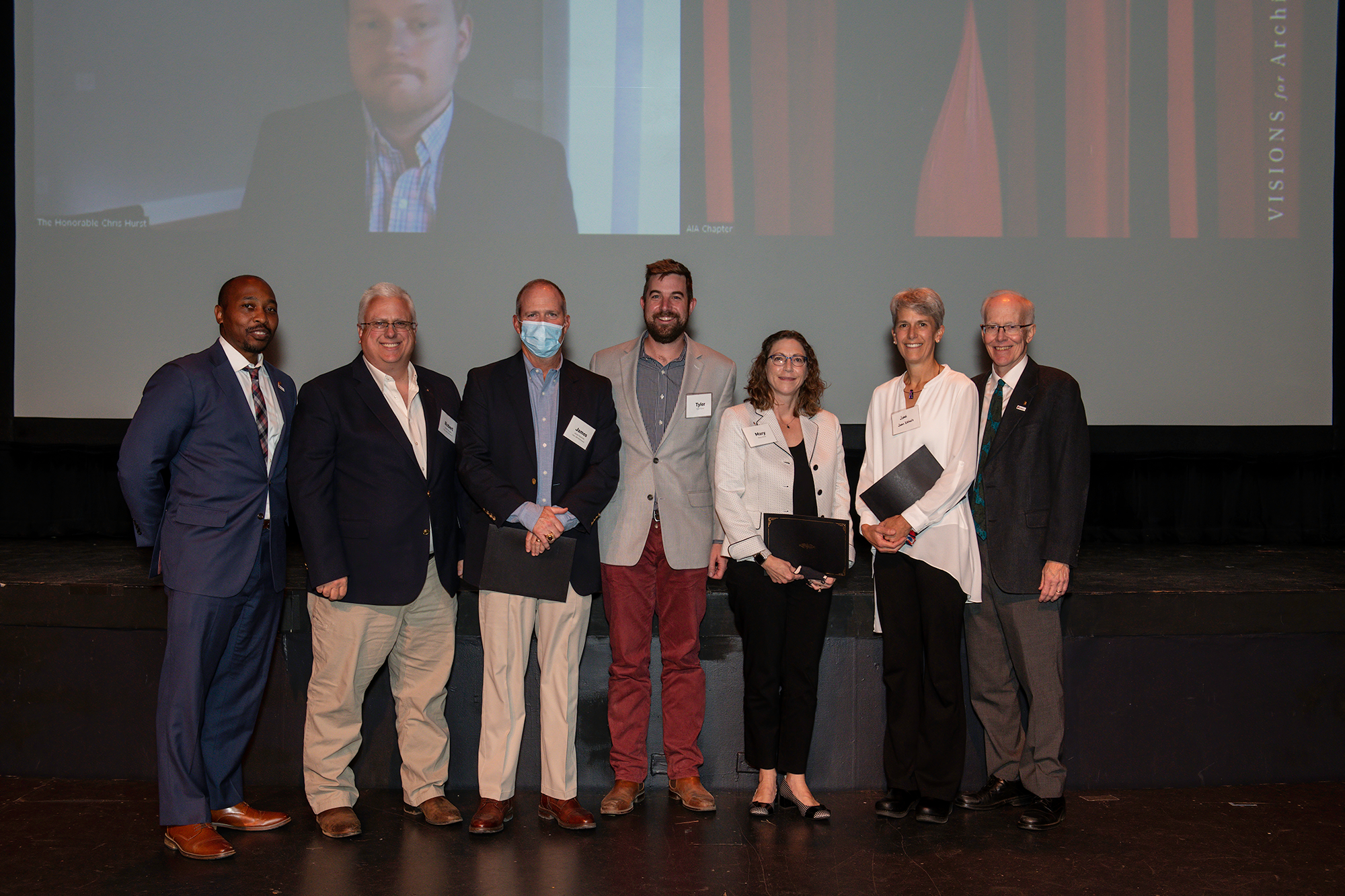
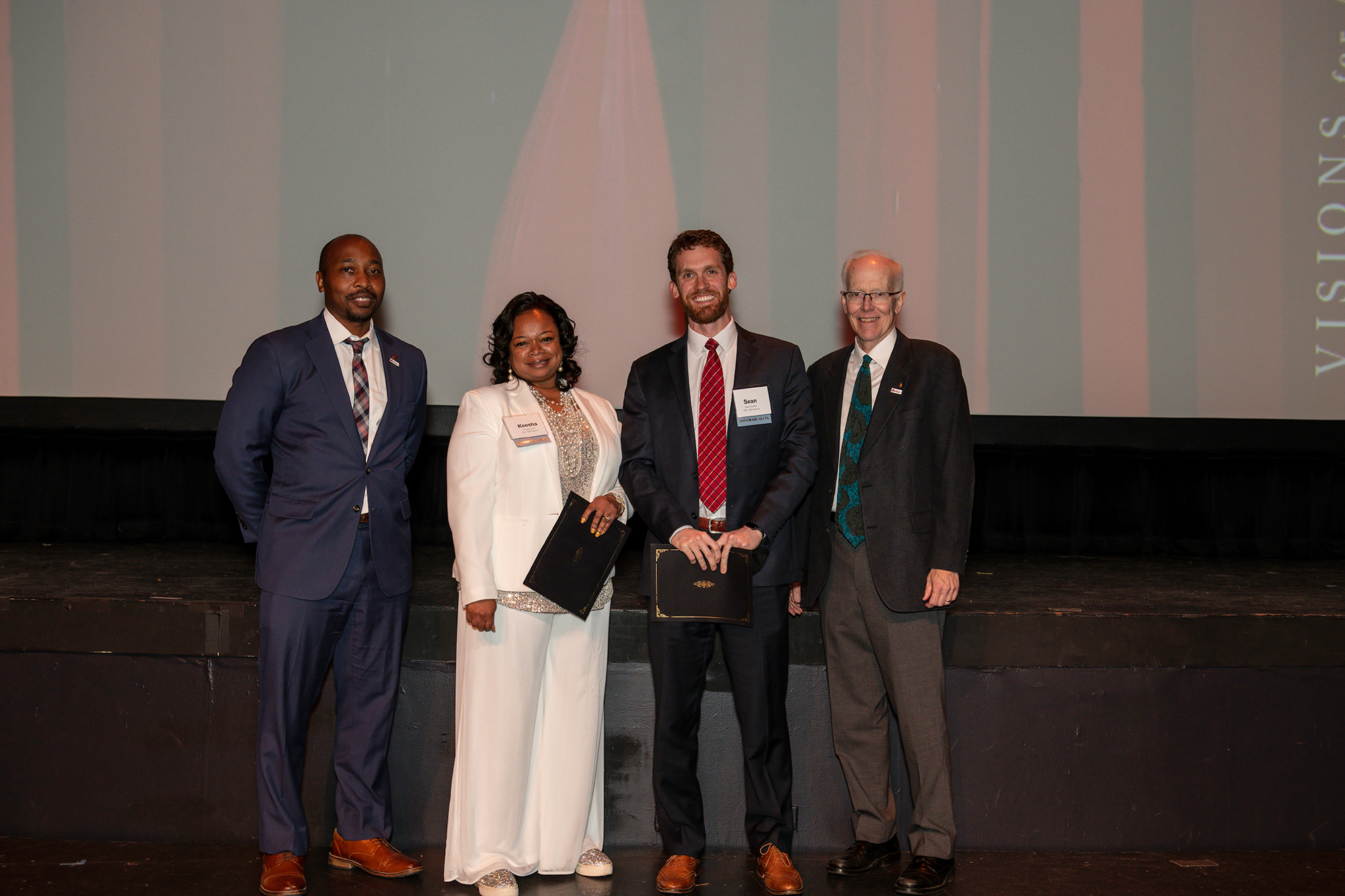
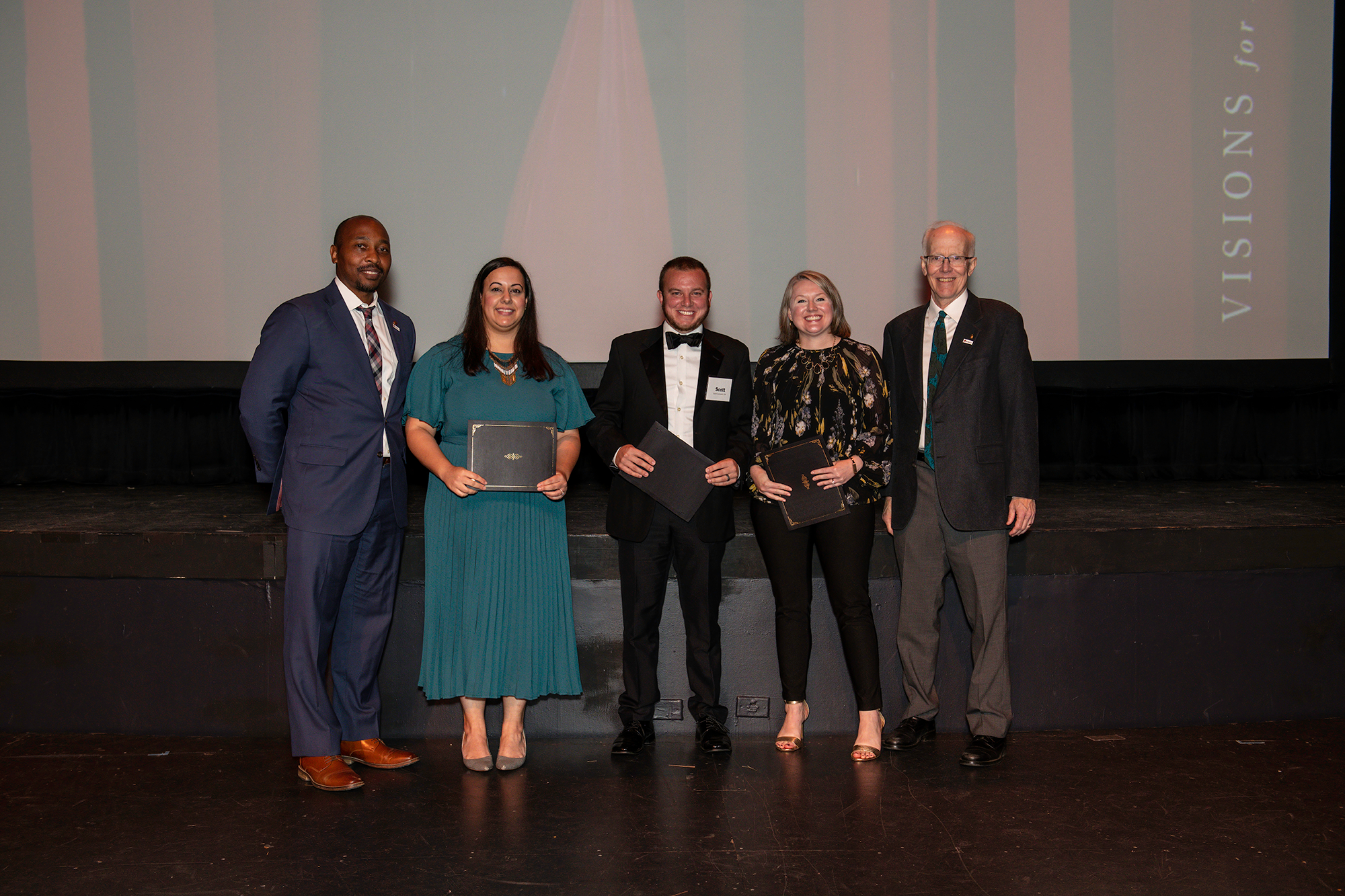
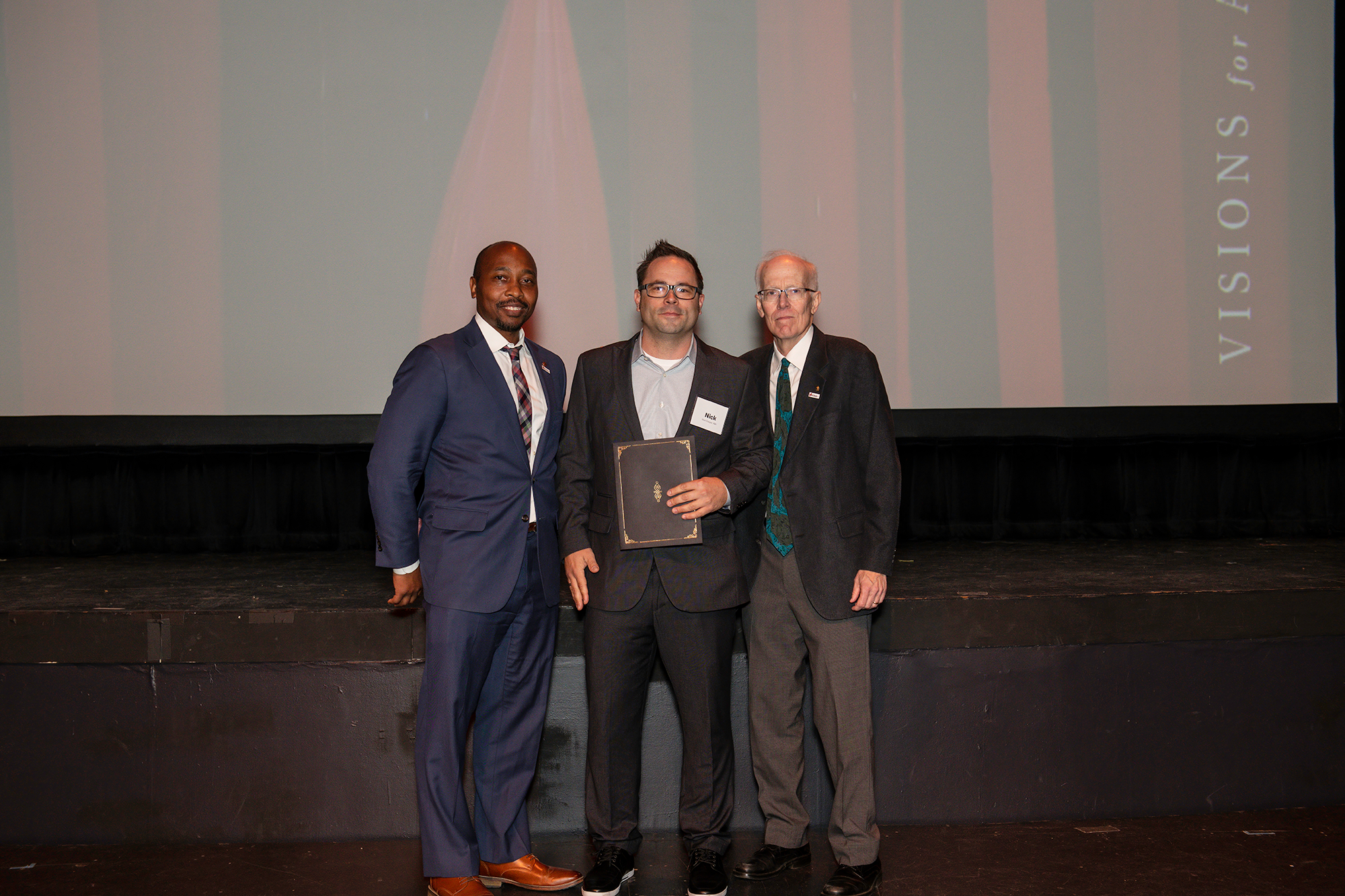
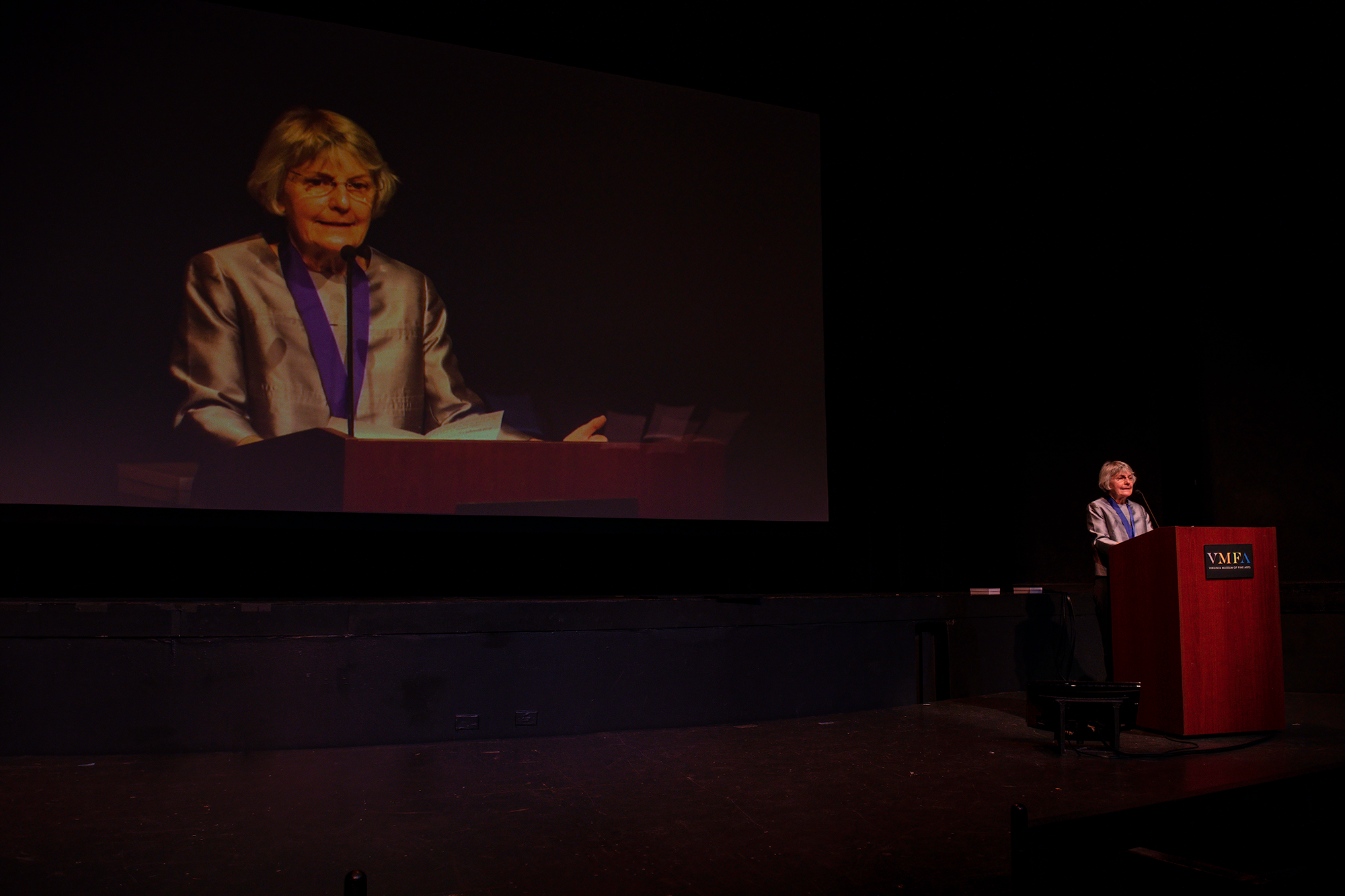
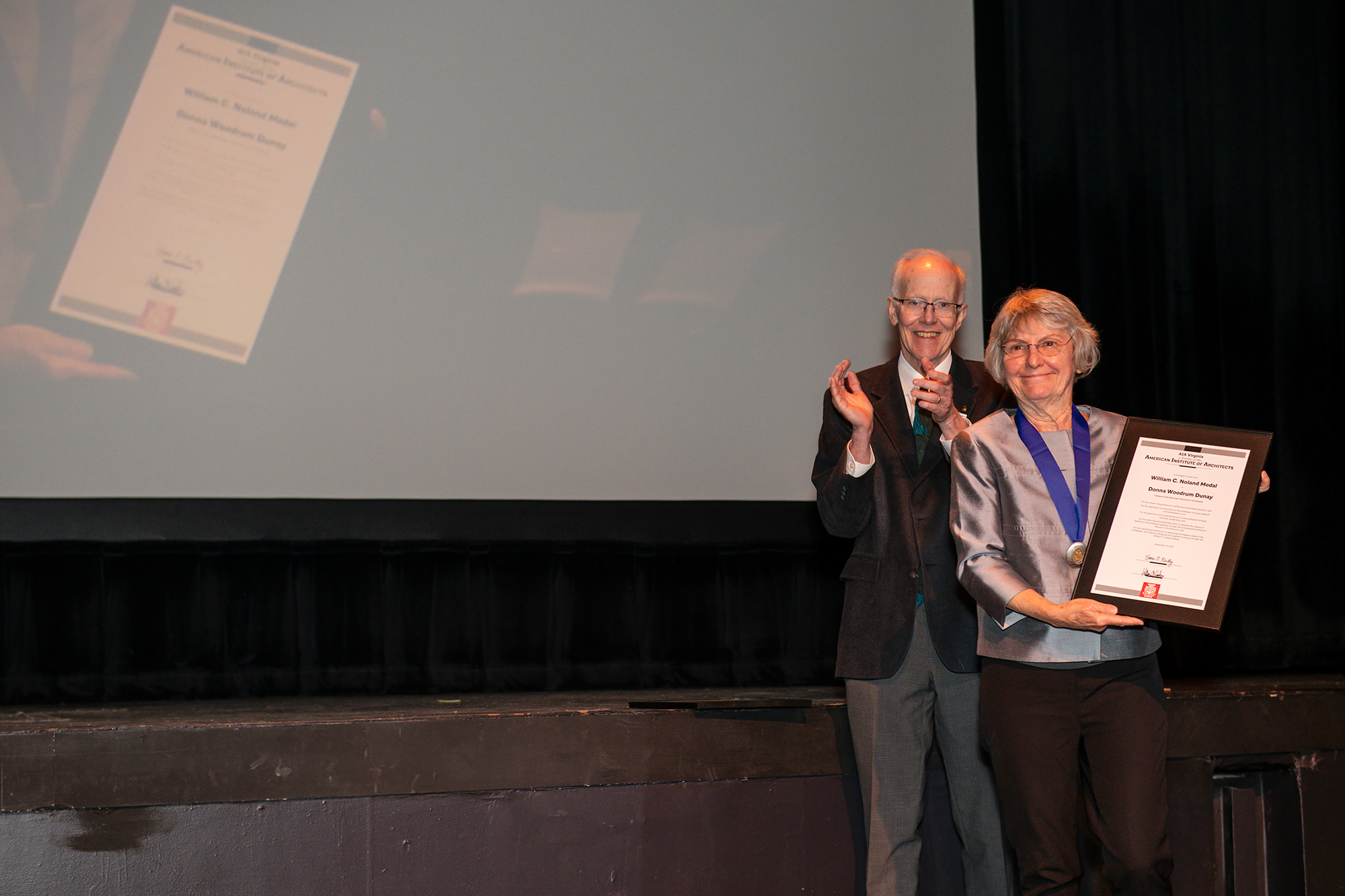
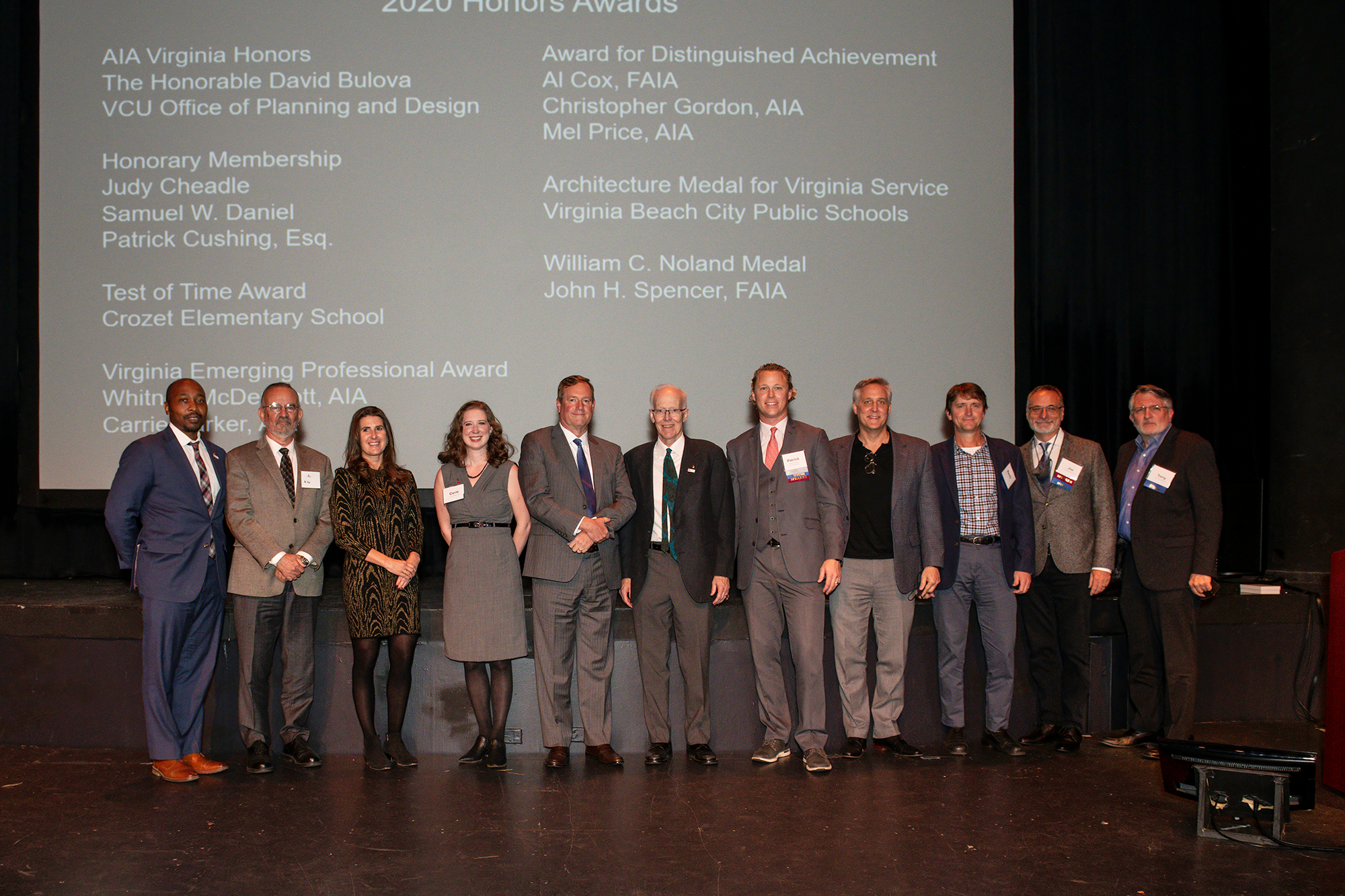
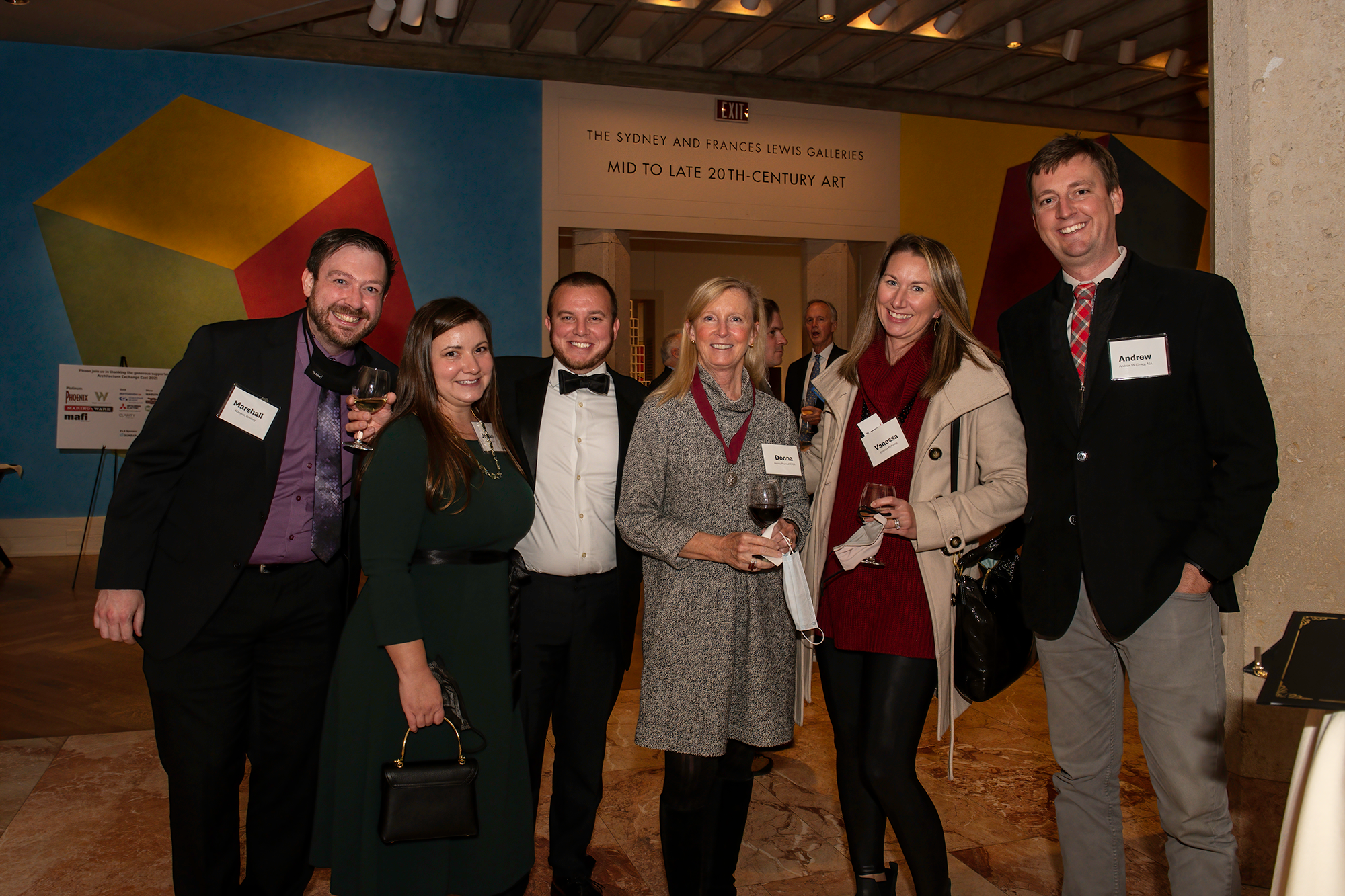
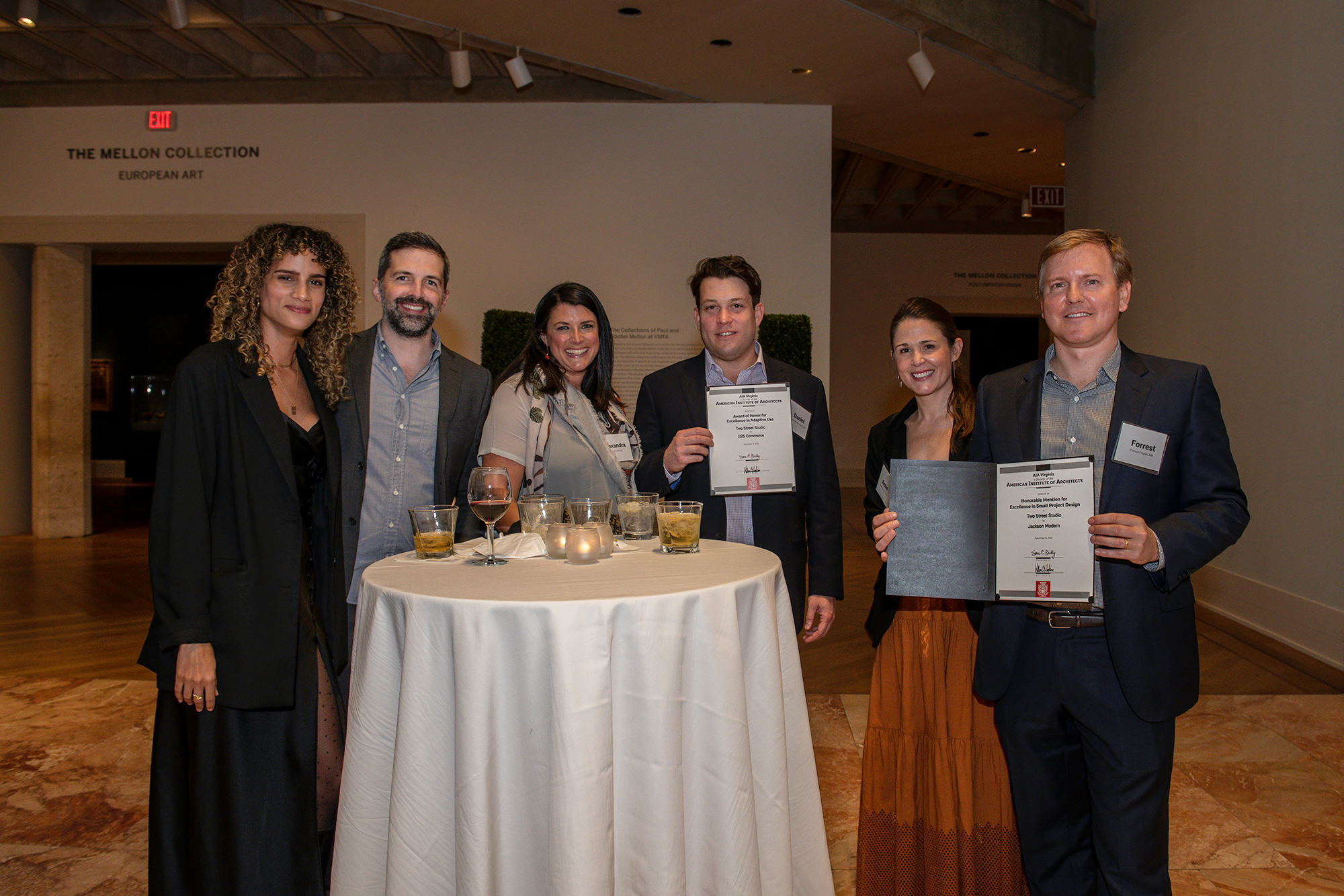
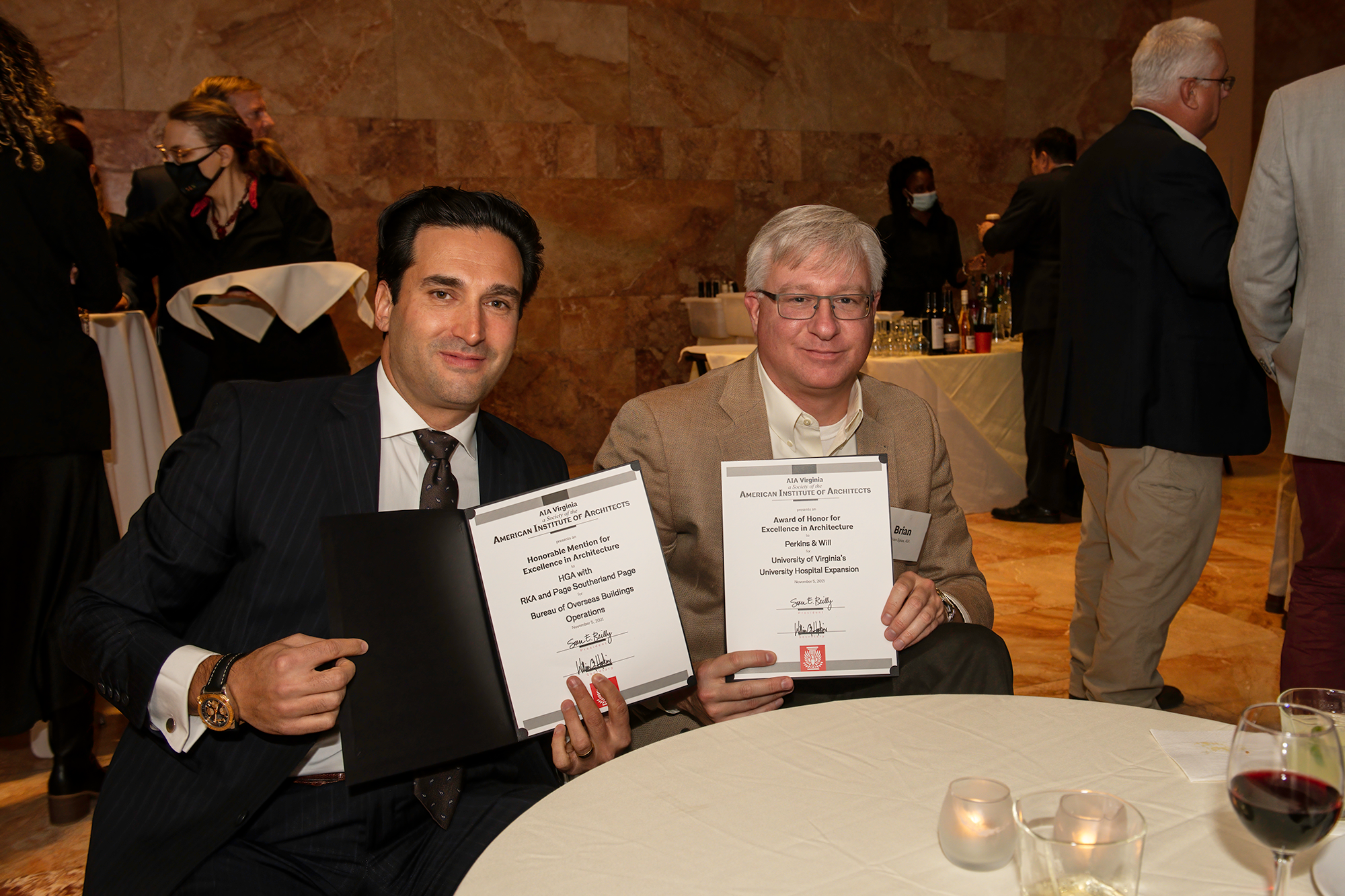
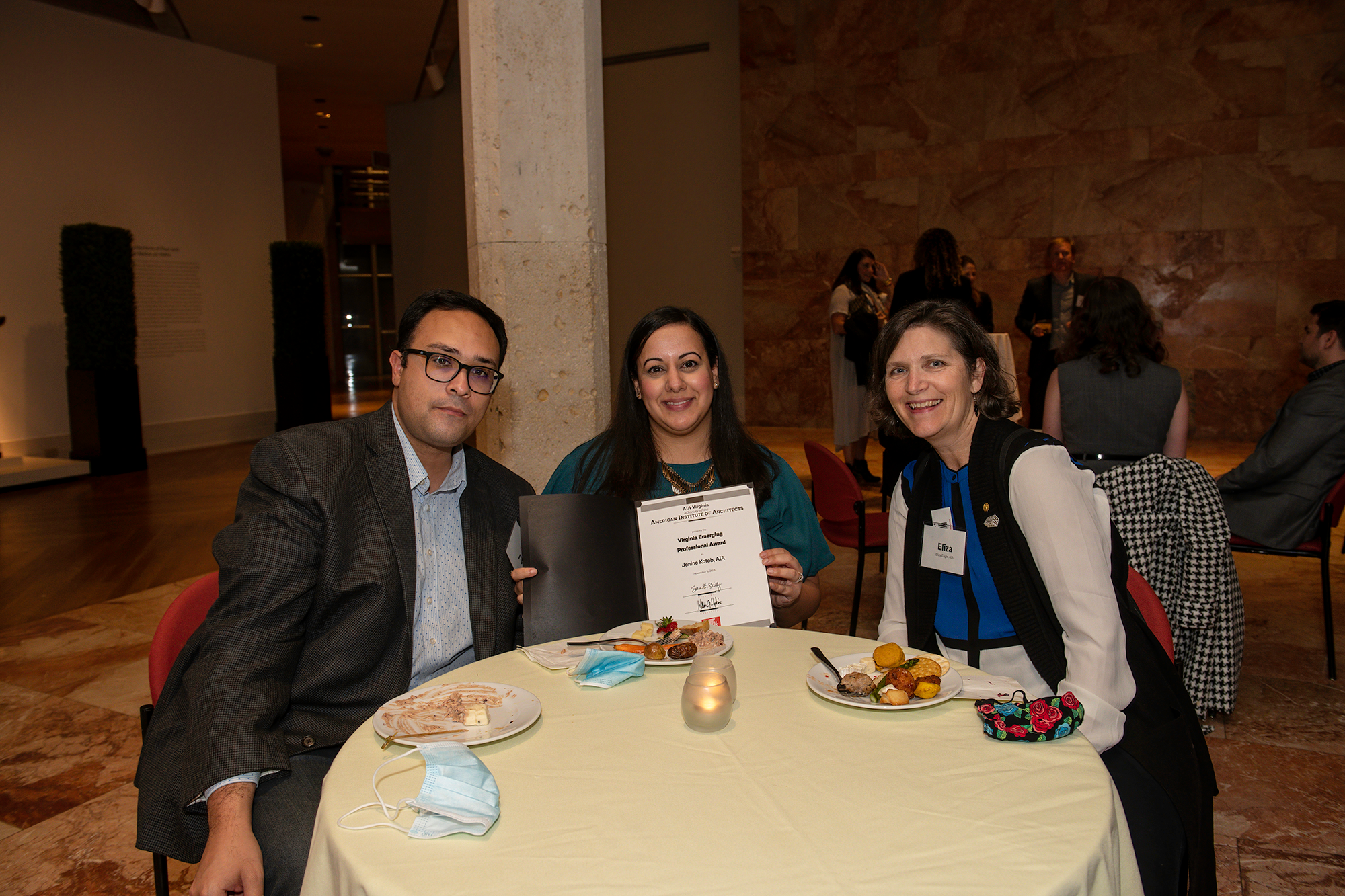
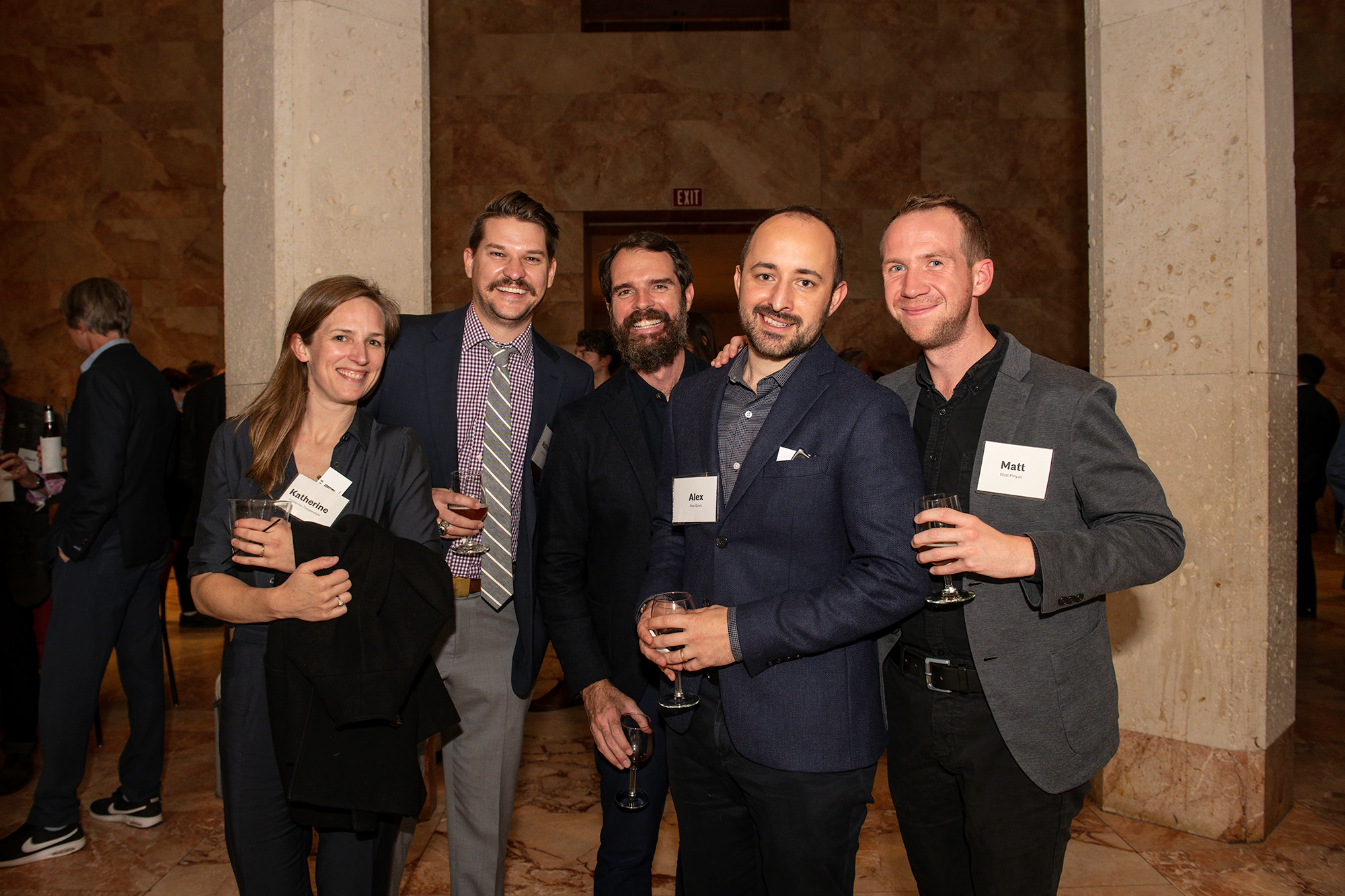
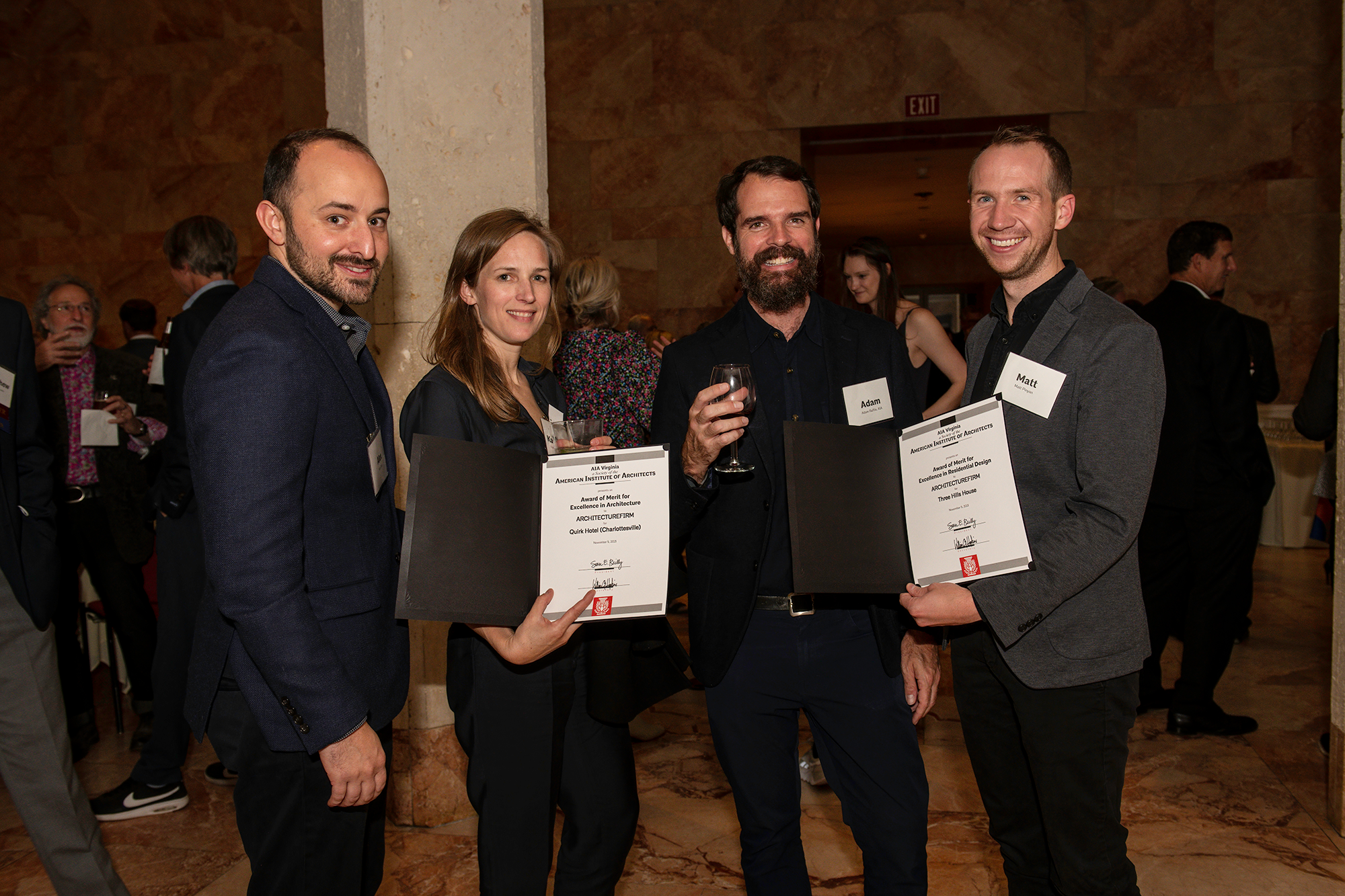
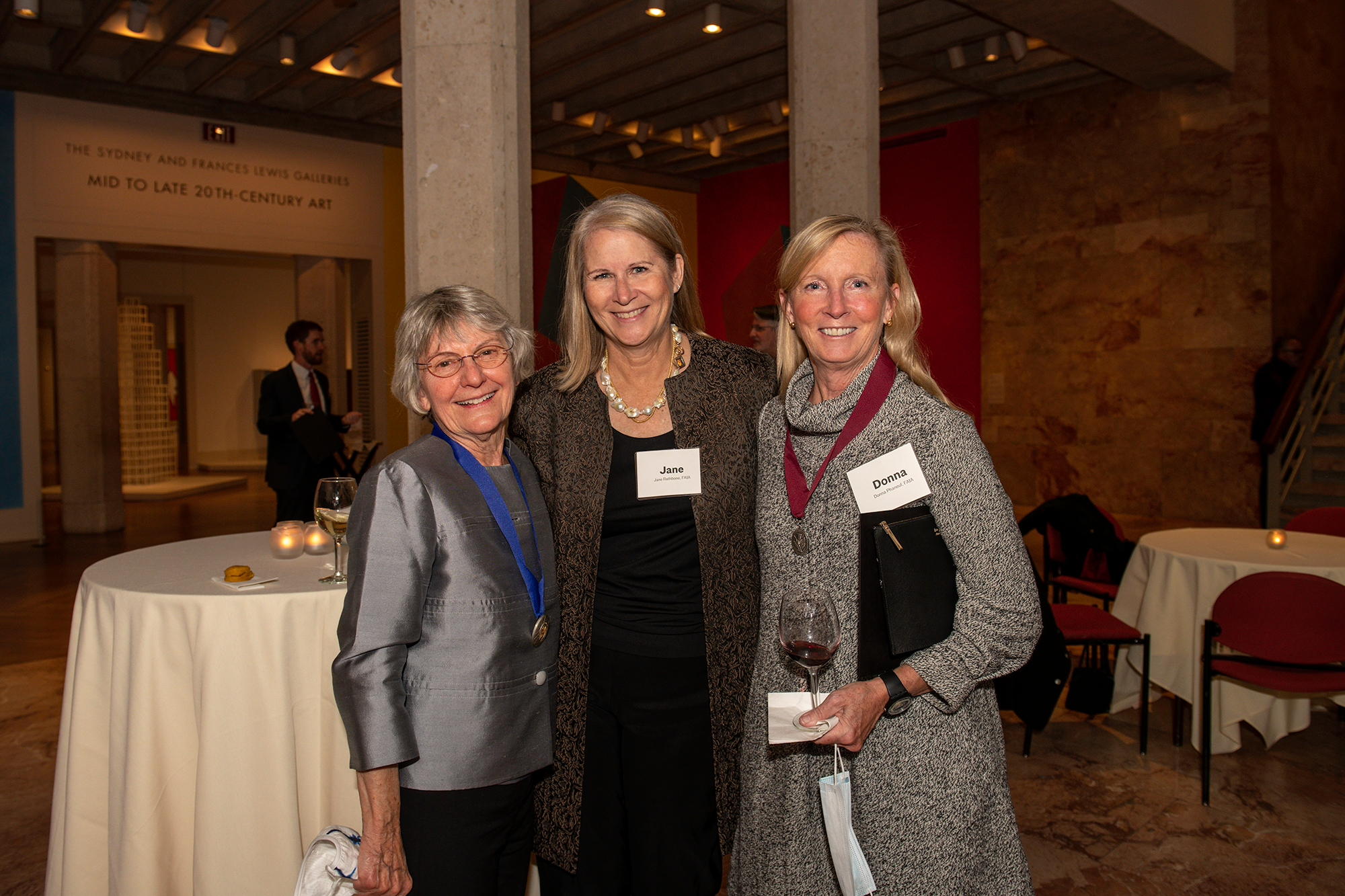
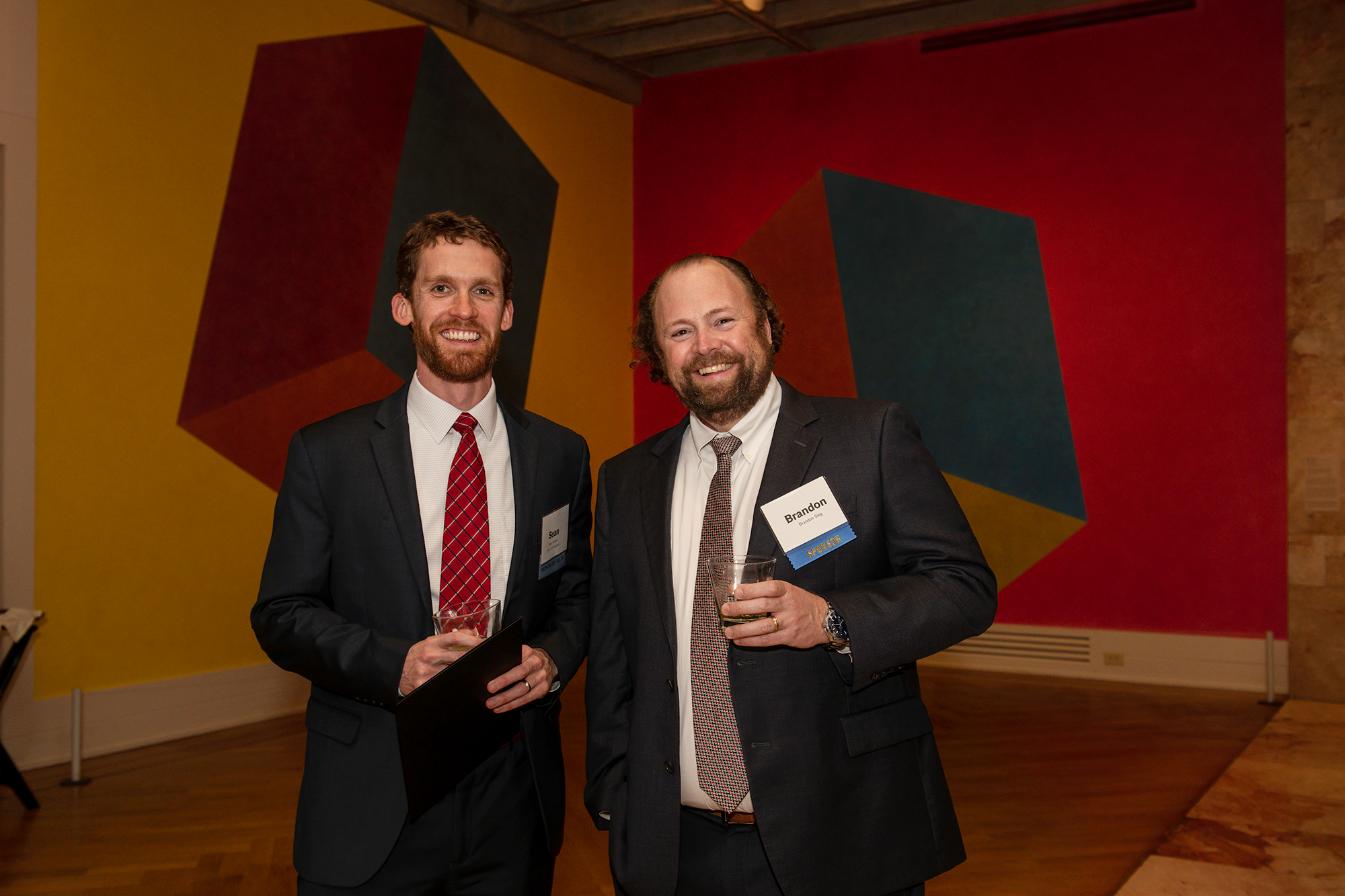
The profession came together for the first time in nearly two years at Visions for Architecture on Nov. 5, 2021 to hear a talk by 2020 AIA Gold Medal winner Marlon Blackwell, FAIA and to celebrate the AIA Virginia Honors Awards and Design Awards. Photos by Yuzhu Zheng.
Marlon Blackwell, FAIA
Small Projects Awards
Adaptive or Continued Use Awards
Historic Preservation Award
Contextual Design Award
Residential Design Awards
Unbuilt Work Awards
Architecture Awards
Presidential Citation
Test of Time Award
AIA Virginia Honors
Honorary Membership
Virginia Emerging Professional Awards
Award for Distinguished Achievement
Architecture Medal for Virginia Service
William C. Noland Medal
2020 Honors Awards Recipients
Visions for Architecture 2021 was generously sponsored by the following: