2026 AIA Virginia Prize Jury Announced

Over the weekend of the 30 January – 2 February students at Hampton University, the University of Virginia, Virginia Tech (both in Blacksburg and at the Washington-Alexandria Architecture Center/the WAAC), William & Mary, and James Madison University participated in the 2026 AIA Virginia Prize competition. Faculty at James Madison University developed a brief for a site in Bridgewater, Virginia and challenged students to imagine a “third space”; a central space that brings people together in new ways, supports creative activity, and strengthens the rhythms of everyday life.

The students have completed their work and the submissions have been delivered for consideration by an impressive jury. Jury Chair James (Jim) Cutler, FAIA, is joined by Bruce Anderson, AIA, Ed Weinstein, FAIA, and Marlon Blackwell, FAIA.

About the Jury

James Cutler, FAIA

James Cutler, FAIA is one of the last students of the Louis Kahn Studio at University of Pennsylvania who is actively practicing architecture. Many of his design philosophies he learned in studio are reflected throughout his work. His designs are based upon a deep understanding of the land, materials, program and institution. He surveys each piece of land at the onset of every project which allows him to reflect its essence and spirit in the design work. Some of Jim’s most recognized projects have been a single family home built across an old logging pond in Newberg, Oregon, a residential compound for Bill Gates in Medina, Washington as well as the Edith Green Wendell Wyatt Federal Building remodel in Portland, Oregon which was awarded the “Best Tall Building in an Urban Context in the Western Hemisphere” by the Council of Tall Buildings. As the founder of Cutler Anderson Architects, this small 10-person firm is currently designing residential and mixed-use projects in Maine, Vermont, New York, Pennsylvania, North Carolina, California, Washington, Oregon and Singapore.


Marlon Blackwell, FAIA

Marlon Blackwell, FAIA together with his partner in life and work, Ati Blackwell, AIA, ASID lead the internationally recognized practice Marlon Blackwell Architects. Their work has received recognition with significant publication and more than 200 design awards including the 2016 Cooper Hewitt National Design Award in Architecture and the 2025 Mies Crown Hall Americas Prize. Working between the universal language of architecture and the particulars of place, they have cultivated a studio recognized for its formal clarity, contextual depth, and architectural integrity. In 2020, Marlon was honored with the Gold Medal from the American Institute of Architects for his enduring impact on the theory and practice of architecture. He’s a lifetime member of the American Academy of Arts and Letters and an inductee of the American Academy of Arts and Science. Equally respected as an educator, he served as the E. Fay Jones Distinguished Professor at the Fay Jones School of Architecture and Design at the University of Arkansas where he taught for over 30 years. Most recently, he was the Louis I. Kahn Visiting Professor at Yale University for the Fall of 2025. A monograph of their recent work, titled “Radical Practice”, was published in 2022 by Princeton Architectural Press. 


Ed Weinstein, FAIA

Ed Weinstein, FAIA is an award-winning architect who has practiced in Seattle for over 50 years. A Principal and founder of Weinstein A+U, Ed has assisted a broad array of clients in solving complex problems, leading to unique design solutions that meet the specific needs of each project. Ed is recognized as one of our region’s leading designers. His firm has received more than 80 Seattle Chapter, Northwest and Pacific Region, and National AIA Design Awards. He has been invited to serve on numerous design juries throughout the country including the 2000 National AIA Honor Awards Jury. He is a Fellow of the American Institute of Architects (1993) and was awarded the 2011 AIA Seattle Medal of Honor for lifetime design achievements.


Bruce Anderson, AIA

Bruce Anderson, AIA has been a Principal at Cutler Anderson Architects on Bainbridge Island, Washington since 2001. Along with partner, James Cutler, their unobtrusive style preserves the land while incorporating form, function and esthetics into a building’s design and placement. He holds a Master of Architecture and Bachelor of Arts degree from the University of Washington and is a registered architect in the states of Washington, Utah, Vermont and Kentucky. Bruce is known for his design skills, but also has extensive experience in project management and regulatory issues. From 1996 – 1998, Bruce served as Chair of the Bainbridge Island Planning Commission. Additionally, while serving as President of the Bainbridge Island Land Trust, he was instrumental in decisions pertaining to acquisitions of vacant land for not only the Land Trust, but also for the Bainbridge Island Park District. Throughout his tenure Bruce has taught architecture courses for the University of Washington and served as a design critic and juror for several design competitions throughout the country.

Designing the Future: Introducing James Madison University’s Architectural Design Program 

Harrisonburg, VA — James Madison University’s Architectural Design (ARCD) program is steadily emerging as a distinctive presence within Virginia’s architectural education landscape. Housed in the School of Art, Design and Art History, ARCD offers a pre-professional Bachelor of Fine Arts (BFA) in Architectural Design grounded in studio culture, liberal arts inquiry, and environmental responsibility. The program evolved out of interior design around 10 years ago and is now one of the fastest growing majors at JMU. 

ARCD’s curriculum reflects the evolving demands of the discipline. The program positions architecture as both a cultural and material practice. Students complete a four-year, studio-centered curriculum supported by coursework in architectural history and theory, materials and methods,digital representation and professional design practice. The sequence emphasizes design as a disciplined process of investigation—through drawing, modeling, material study, and site-based research.Recently the program has offered courses in environmental systems, structures, resilience and advanced digital representation.

“Architecture is both a cultural and environmental act,” says Professor Jori Erdman, architect and Associate Director of the School of Art, Design and Art History. “At JMU, we encourage our students to see design as a process of engagement—with people, materials, places, and ideas. We aim to prepare them not only for graduate study and licensure, but also for thoughtful, responsible work in the world.”

The studio-based curriculum encourages hands-on exploration and interdisciplinary collaboration. Students often work across disciplines, participating in research projects with faculty from engineering, environmental science, history, and community engagement. In recent years, ARCD students have contributed to projects focused on coastal resilience in the Chesapeake Bay, design-build projects on campus, and environmental investigations in downtown Staunton. Faculty and students alike are active in broader disciplinary conversations through organizations like AIA Virginia, the Association of Collegiate Schools of Architecture, American Institute of Architecture Students and National Organization of Minority Architecture Students.

The program has been participating in the AIA VA Virginia Prize over the last 3 years, including authoring this year’s brief for a Third Space in Bridgewater, Virginia. Faculty members Nick Brinen, AIA, and Jori Erdman, AIA, serve on the AIA VA Design Committee and Outreach Advisory Committee respectively. 

One of the distinctive features of the program is its close-knit studio culture. Faculty members are practicing architects, researchers, and educators who mentor students through intensive feedback and individualized instruction. The program’s structure culminates in a capstone design project in the senior year, where students develop an individually conceived architectural proposal grounded in site, program, and research.

Graduates of ARCD pursue a range of paths. Many continue their education in NAAB-accredited Master of Architecture programs at institutions including the University of Virginia, Virginia Tech, Harvard, Yale, the University of Michigan, the University of Pennsylvania, Washington University in St. Louis, and the Rhode Island School of Design. Others enter architecture and related design fields, bringing with them a foundation in critical inquiry, environmental thinking, and material exploration. 

2020 graduate Caitlin Morgan has been working in the field since she graduated, including service on the AIA VA Board of Directors and the AIA National Associates Committee. She notes, “Since graduating from JMU, I’ve seen first-hand how closely the ARCD program is working with industry leaders to prepare students for our evolving challenges. Our studios’ adaptive program nurtures conversations that have strengthened our alumni network and speaks volumes about how JMU is reframing architectural education.”

As architectural education continues to evolve across the Commonwealth, JMU’s ARCD program contributes a studio-driven, research-oriented BFA model rooted in the liberal arts tradition. With its strong emphasis on critical inquiry and social engagement, the program equips students with the skills and sensibilities needed to navigate—and shape—the complex built environments of today and tomorrow.

AIA Virginia members are invited to mentor, hire, and collaborate with JMU’s ARCD students, faculty, and graduates. Their broad education—grounded in thinking through making—has prepared them to contribute thoughtfully and critically to the architectural profession.

Contact:

Professor Jori Erdman, AIA, Program Coordinator and Associate Director
JMU School of Art, Design and Art History
Architectural Design Program
erdmanja@jmu.edu 

2026 AIA Virginia Prize

The AIA Virginia Prize is a design charrette that engages students at all of the architecture programs in Virginia.  Conducted simultaneously at each institution, students are given the competition program Friday at 5 p.m. They work over the weekend to create a board presenting their design solution by 9 a.m. the following Monday.  The competition is intended to promote collaboration between the profession, students and professors in Virginia.

The first round of submissions is juried at the university level and up to 10 finalists from each school will be sent to be juried at the state level.

The 2026 competition takes place over the January 30 weekend. Faculty at James Madison University are finalizing the brief. The challenge brief will be posted to this page at 5 p.m. on Friday, January 30 and submissions are due to the school at 9 a.m. on Monday, February 2.

If you would like to make a donation to the AIA Virginia Prize, please click here. All donations are tax-deductible.

We wish the participating students a pleasant outing and look forward to considering and celebrating their proposals.

Using Technology to Implement Meaningful Design in K-12 Schools

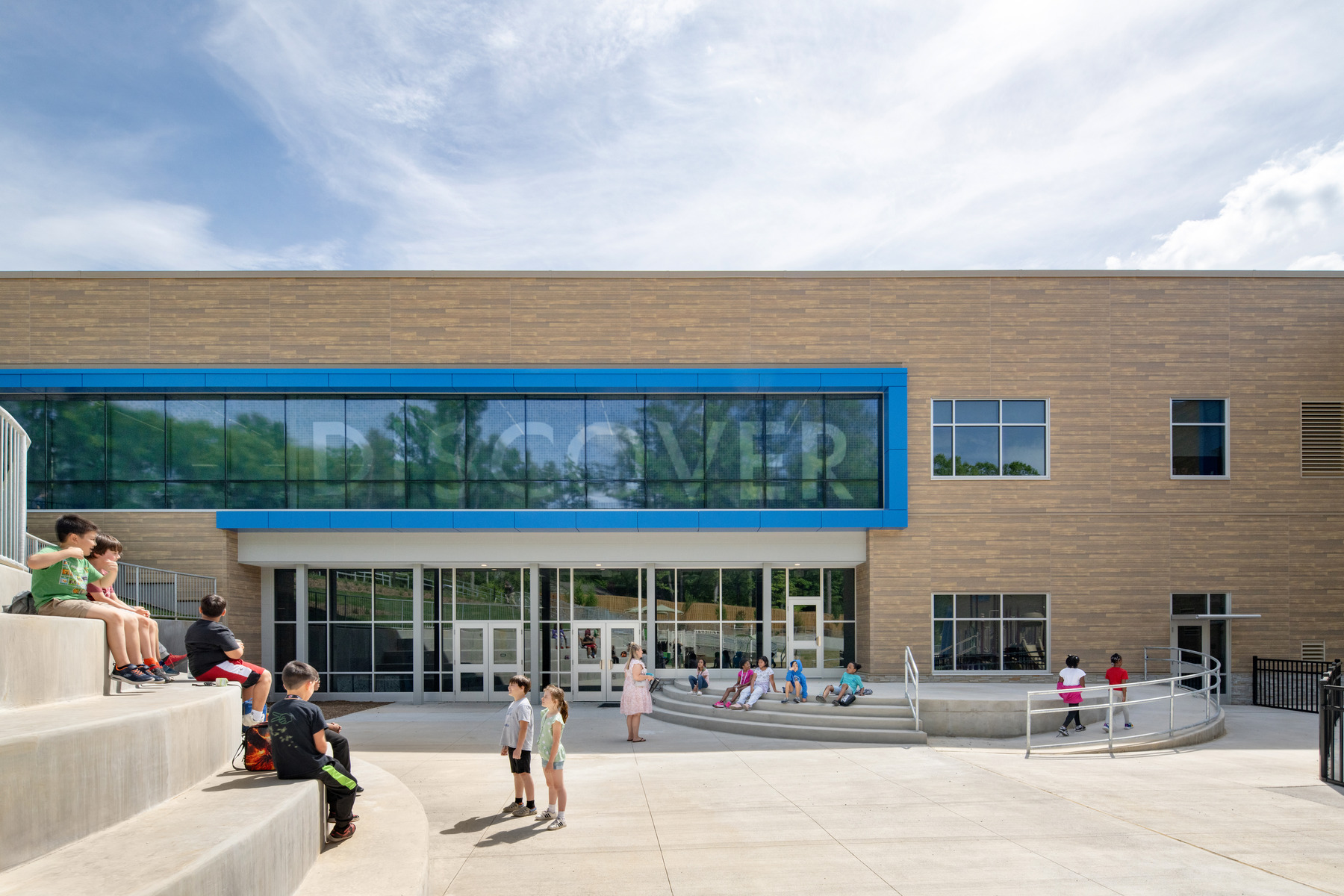
Back to school marks more than just the end of summer; it’s an opportunity for students to step into environments that spark curiosity and possibility. The sense of discovery felt when starting a new school year is powerful because it does not stop at the physical space. When students encounter a thoughtfully designed environment, it invites them to imagine, question, and create in ways they might not have before. Every detail, from the openness of a learning commons to the energy of shared spaces encourages them to see learning not as a task but as an adventure, where students can uncover new strengths, passions, and ideas within themselves. By designing schools that ignite creativity and support exploration, we create more than classrooms – we create experiences that help students discover who they are and what they can achieve.  

In the article below, Clark Nexsen demonstrates how they use technology and computational design to create new opportunities for design in their K-12 studio.”

https://www.clarknexsen.com/using-technology-to-implement-meaningful-design-in-k-12-schools/

AIA Virginia Architecture Month Trivia – Win up to $75

Join AIA Virginia for virtual Architecture Month Trivia on Wednesday, April 23 from 12:00-1:00pm on Zoom for three rounds of Architecture trivia:

1. Name that Virginia Main Street ($25 Amazon gift card winner)
2. Virginia History ($25 Amazon gift card winner)
3. Name that Virginia Architect ($25 Amazon gift card winner)

Join Here on April 23>>
*Please make sure to have your cell phone accessible to participate on the trivia platform.

Thank you to our event sponsor, Kawneer and trivia platform, Kahoot!

Resiliency Week 2024

Resiliency is the ability to quickly recover from disruption. But, how quickly can our buildings and systems bounce back from natural or man-made disasters? Can our infrastructure rapidly adapt to changing environmental, social, and economic conditions? 

Join AIA Virginia from 12:00-1:00 pm each day from April 22 to April 26 for an exploration of resiliency in the built environment and discover why investing in resilient solutions can help protect us all.

Schedule:

4/22: Luisa Black Ellis with Elizabeth River Project – The Ryan Resilience Lab: Accessible, Resilient Design – 1 AIA LU pending

4/23: Lindsay Brugger with Urban Land Institute – The Business Case for Resilience – 1 AIA LU pending

4/24: Paul Robinson with RISE – Architectural Adaptation and Risk Transfer: Making buildings safer and protection more affordable – 1 AIA LU pending

4/25: Lewis Lawrence with Middle Peninsula Planning District Commission – Flooding is Changing the “Landscape”= New $ Opportunities – 1 AIA LU pending

4/26: Troy Hartley with Virginia Sea Grant – Finding Innovative Climate Solutions: Knowledge Integration through Resilience Design – 1 AIA LU pending


AIA Member – $15
Non-member – $20
Students – FREE

Taking Design Online: K-12 Outreach

As Virginia’s students, educators, and parents are working (and sometimes struggling) to adapt to a new online learning environment, architects and firms have an unprecedented opportunity to serve as a resource to the community. Let’s do what architects do best and nimbly design a solution to deliver online STEAM and design-thinking programming – with the secondary benefit of introducing a generation of learners to the profession of architecture!

  • Do you currently offer outreach programming that could be adapted to deliver online?
  • Are you interested in volunteering to develop or deliver online lessons to students?
  • Would you be willing to participate in an “Ask an Architect” session online with students?

Let us know and AIA Virginia can help make connections with local educators, take registrations for courses, and facilitate communication and online delivery of courses.

Now is the time to build relationships with educators and students (and help out parents who are trying to keep children learning and engaged)!

K-12 Outreach Clearinghouse

AIA Virginia is also working to develop an online clearinghouse of existing programs. If you, your chapter, or your firm has a program that you’re willing to share, please let us know. We want to be the go-to place for Virginia’s educators and parents to discover opportunities and architecture programming for students.

We’ll organize the courses you share and make them available to other architects and educators. But, we don’t just want your courses – we want your stories! We would love to share your experiences on our communications platforms.

Community Dinners

In September, AIA Virginia will Unveil Groundbreaking Initiative to Connect Architects with Local Community Leaders over Dinner

I’ve seen the data.  I’ve read the survey results.  One major common thread is that, in general, Architects wish the public understood what they did and why they are of importance to society.  As a professional architect, I want that also. The knowledge and skills we possess through our unique education, experience, and training, position us to be a valuable resource to those who influence the quality of life in our respective communities.   In September, AIA Virginia will unveil a groundbreaking initiative that will help bridge that gap around the Commonwealth.

This initiative will be centered on a simple concept of bringing together architects and community influencers over a private catered dinner to discuss what community means to each individual.  Within the context of this conversation, we will discuss what we are most proud of in our community and what challenges are we working to overcome.  How can architects be a resource in overcoming these challenges?

Dinners will have no more than 20 invited individuals.  Of these invitees, six to eight will be architects who live or work in that hosting community.  The other seats will be reserved for local leaders who have influence over shaping the quality of life.  Positions that come to mind are the Mayor, School Superintendent, the individual overseeing Transportation, Housing, and so forth. 

We are proud to announce that the first dinner will be held in Richmond on September 10th at the home of Burt Pinnock, FAIA.  The attendance of Mayor Levar Stoney has been confirmed and we are working on inviting other local leaders.  This initiative is planned to continue for five years with the hope of hosting anywhere between 25 to 50 dinners during this time frame in all corners of Virginia.  Our hope is that this initiative is a seed project in which each of our local components will begin to host their own dinners to continue this dialogue. 

Meal after meal, we look forward to positioning our members to be a valuable resource for the community.

With service,
Corey Clayborne, AIA, MBA
Executive Vice President

Students Explore Architecture “From the Ground Up”

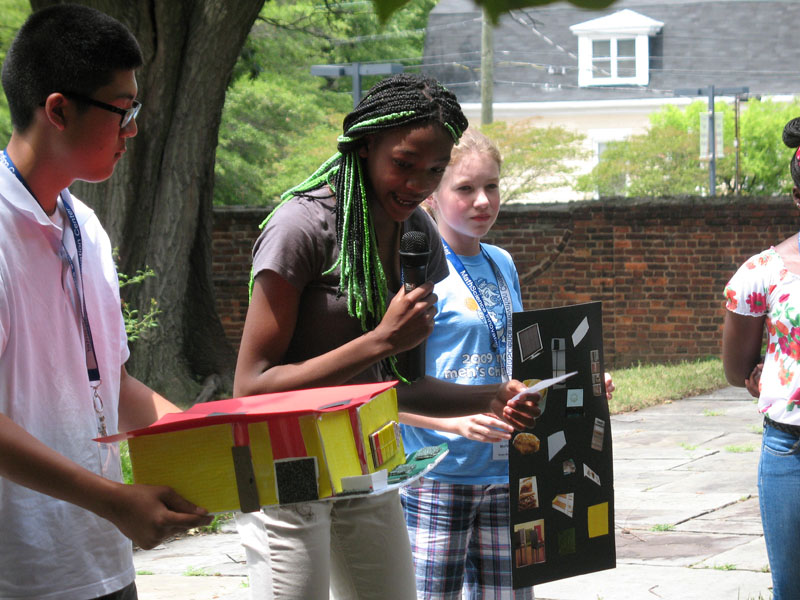
This July, the Virginia Center for Architecture was host to the Math Science Innovation Center’s Summer Regional Governor’s School program From the Ground Up. The program, aimed at middle school students, was a two-week exploration of the professions of architecture, planning, interior design and landscape architecture. Through hands-on activities, lectures, and visits to firms and sites — including the Virginia Museum of Fine Arts and Carlton Abbott’s striking sculptural installation at historic Pole Green — students learned about the language of architecture, investigated green design, and planned their own community from the ground up.

The program culminated with presentations by the students to an inspired audience of onlookers. The students, broken into groups responsible for the design of five different zones of their fictional community, presented models explaining their various design choices — including a roof-top community garden on the recreation center to the green features of the police department.

This marks the fifth year the Center has played host to the program.