Jury Announced for 2020 AIA Virginia Prize

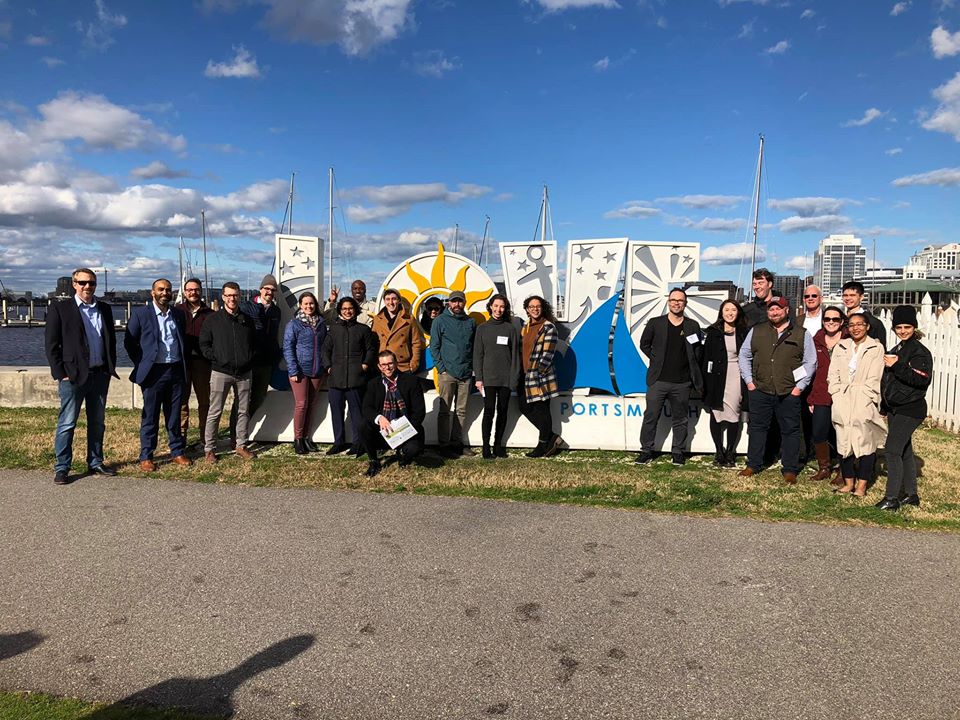
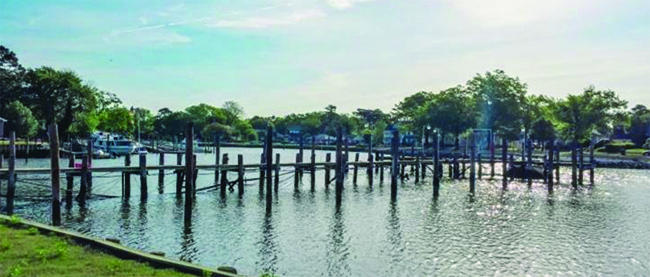
AIA Virginia is pleased to announce the jury for the 2020 AIA Virginia Prize. The competition — which took place over the weekend of Jan. 24–27 — challenged students to design an oyster hatchery in Norfolk. Students were asked to imagine sustainable solutions where humans and nature could gracefully coexist. [Read the full competition brief.]

Each school’s faculty reviews the submissions and sends up to 10 finalists to Richmond for final consideration by the jury.

Jury

Bob Moje, FAIA, founding partner, VMDO Architects | Jury Chair
Patrick Farley, AIA, owner, Patrick Farley Architect
Lynden Garland, AIA, project manager, Baskervill
Donna Phaneuf, FAIA, president and lead design principal, VIA Design Architects
Chuck Swartz, FAIA, principal, Reader & Swartz Architects

The Prize is expected to be awarded in April.

About the AIA Virginia Prize

Conducted simultaneously at Hampton University, University of Virginia, Virginia Tech, and the Washington-Alexandria Architecture Center, the competition is a design charrette that engages students at all of the accredited schools of architecture in Virginia. Students are given the competition program on a Friday afternoon at 5 p.m. They work over the weekend to create a design solution and submit it by 9 a.m. the following Monday. The top submission wins a $2,2500 prize, with $250 prizes to each “Best of School” honoree.

Launched in 1980, the competition is intended to promote collaboration between the profession, students, and professors in Virginia. Historically, the charrette has taken place in January, however over the last several years, the competition has been hosted in September to accommodate an ongoing scheduling conflict at one of the schools. Now that the conflict has been resolved, the Prize weekend has shifted back to the spring semester to better align with the demands of the academic calendar.

Development of the competition brief rotates between the four schools annually — the 2020 Prize challenge was developed by Hampton University.

2020 Student Design Competition Launched

The AIA Virginia Prize design competition kicks off the new semester by offering students the opportunity to win a $2,250 prize. Three additional $250 “Best of School” prizes will also be awarded. The competition is a design charrette that engages students at all of the accredited schools of architecture in Virginia. The 2020 AIA Virginia Prize, which challenged students to design an oyster hatchery in Norfolk, launched Friday, Jan. 24 at 5 p.m and ran through Monday, Jan.27 at 9 a.m. Read the complete prize brief.

Conducted simultaneously at Hampton University, University of Virginia, Virginia Tech, and the Washington-Alexandria Architecture Center, students work over the weekend to create a design solution. Each school’s faculty reviews the submissions and sends up to 10 finalists to AIA Virginia for judging.

Development of the competition brief rotates between the four schools annually — the 2020 Prize challenge was developed by Hampton University.

The competition was launched in 1980 and is intended to promote collaboration between the profession, students, and professors in Virginia. Watch for announcement about the winner in the coming months.

To learn about last year’s competition, check out the 2019 AIA Virginia Prize Announcement.

Interested in Architecture Tours?

We’ve received some great suggestions for multi-day architectural tours that offer the opportunity to earn learning units while exploring interesting and significant sites. We think they sound exciting, but we want to make sure you do too before exploring them further! Let us know by completing this 30-second survey.

Jefferson Pools and Homestead Tour
This multi-day event would involve overnight travel to the Omni Homestead Resort. Tour the newly restored Jefferson Pools (anticipated completion 2021) and get a behind-the-scenes look at the phased renovation of the resort. The program may include visits to other nearby sites.

Architectural Tour of Kentucky’s Bourbon Trail
The multi-day tour would involve overnight travel to destinations along Kentucky’s Bourbon Trail. Discover some of the unique challenges of distillery design and visit some of the architecturally significant stops along the trail.

(final programs may vary)

Your response is not an obligation to participate – we just want to see if enough members are interested before investing in further planning.

Have other programming ideas to share? Email your suggestions to Rhea George.

Class of 2020

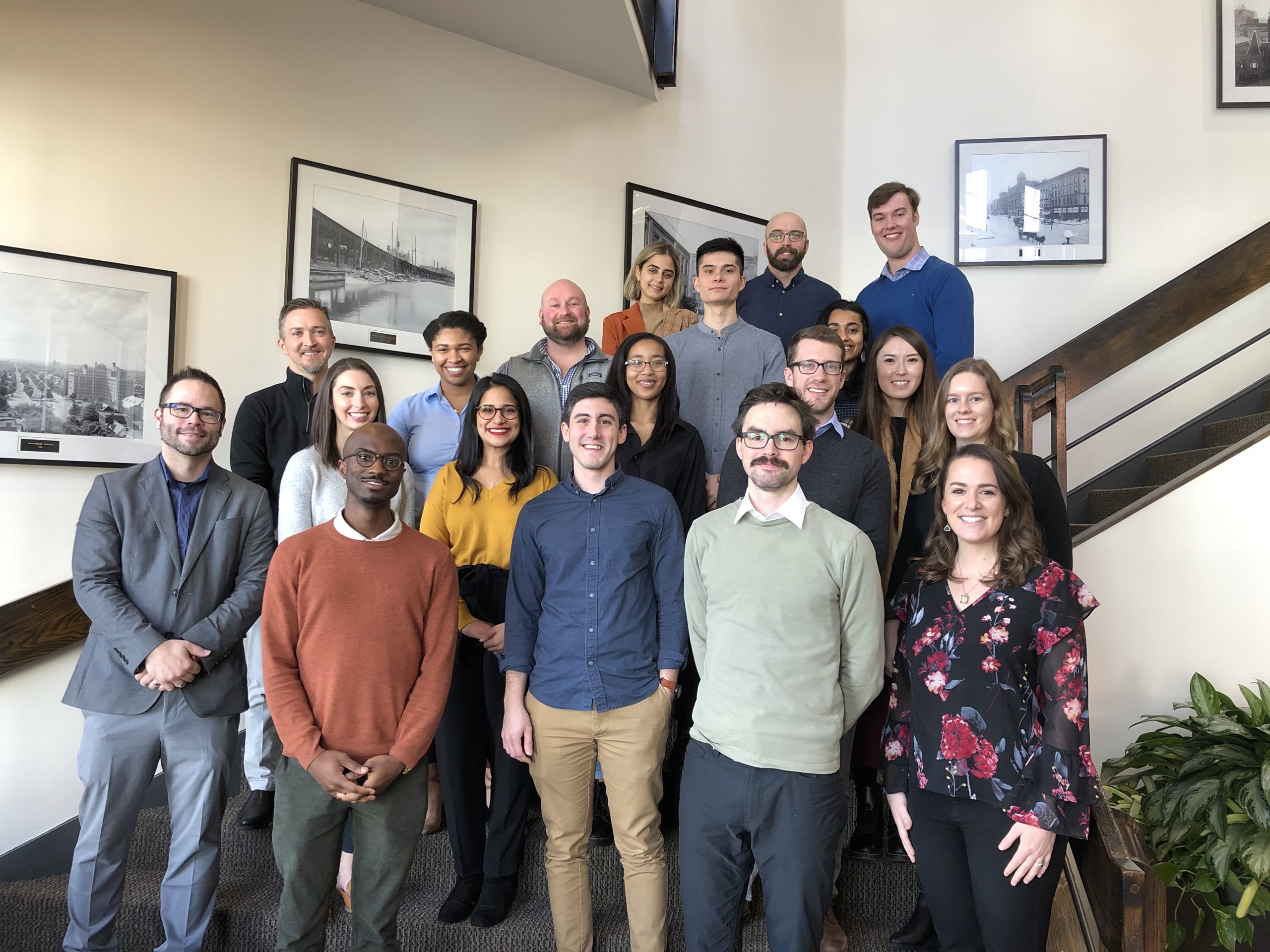
The 2020 Class of Emerging Leaders in Architecture includes:

Allison Powell, AIA
Amanda Ferzoco, Associate AIA
Ariana Arenius, AIAS
Catherine Hendrick, AIA
Chris Cheng, AIAS
Gabriela Orizondo, Associate AIA
Jacob Sherry, AIA
James Vidoni, Associate AIA
Kenneth Johnston, Associate AIA
Kristin Jones, Associate AIA
Matt Stevison, Associate AIA
Mert Kansu, Associate AIA
Michael Lawson, AIA
Paris Casey, AIAS
Randa Malkawi, AIAS
Zachary Robinson, Associate AIA

Also pictured are Interim Chair, Christopher Kehde, AIA, Vice-Chair, Nick Cooper, AIA, and ELA 2019 member Divya Nautiyal, Assoc. AIA.

Design Forum Explores Shadows, Craft and Materiality

Junichiro Tanizaki, in his book In Praise of Shadows writes, “In darkness, immutable tranquility holds sway.” Designers integrate this interplay of light, color, and shadow in the spaces they imagine — navigating the clarity that light brings alongside the ephemeral mystery of the shadows.

Inspired by this 73-page homage to “well-placed darkness,” the fourteenth biennial Virginia Design Forum: In Praise of Shadows embraces this theme through an exploration of craft and materiality.

The program takes place on Thursday, Nov. 5, 2020 and will be presented in collaboration with Architecture Exchange East as part of our FORESIGHT 2020 platform of programming.

Through a series of conversations, the Design Forum showcases the work of talented individuals whose shared craft extends beyond the calculated and strictly quantitative into more holistic practice — whose leading-edge preoccupation with light and shadow extends the diversity of approaches to how designers seek beauty through form, space, and materiality.

The work of the speakers embodies those essential connections.

About the Speakers
These thought leaders come from diverse cultural and professional contexts, yet their work shares the power and nuance of how architects and allied professionals shape form through light. Through engaging the continuum of dim to bright, these designers shape our experience.

Steven Holl, FAIA (Steven Holl Architects | New York, NY)
Steven Holl is widely recognized for his ability to blend space and light with great contextual sensitivity and to utilize the unique qualities of each project to create a concept-driven design. He specializes in seamlessly integrating new projects into contexts with particular cultural and historic importance.

Kirsten Murray, FAIA (Olson Kundig | Seattle, WA)
Throughout her 30-year tenure at Olson Kundig, Kirsten Murray has created buildings and spaces that strengthen and enrich communities. Long inspired by Scandinavian modernist traditions, her architecture emphasizes warmth, natural materiality, tactility and refinement. By translating the innate conditions of a site—its nature, culture, topography and history—into built form, Murray’s designs create new interpretations of place that remain relevant over time.

Herve Descottes (L’Observitoire International, New York, NY)
In 1993, Hervé Descottes co-founded the lighting design firm L’Observatoire International in New York City after eight years of design practice in Paris, France. Descottes creates the lighting concepts for all projects designed by L’Observatoire, and oversees project development through project completion. He has been recognized numerous times by the lighting design and architectural community.

David J. Lewis, AIA (LTL Architects, New York, NY)
David Lewis is founding principal of LTL Architects, a design intensive architecture firm founded in 1997 with Paul Lewis and Marc Tsurumaki, located in New York City. LTL Architects develops solutions that work within project constraints to inform the design trajectory, exploring opportunistic overlaps between space, program, form, budget, and materials.

The Design Forum is generously sponsored by:

Platinum
Clark Nexsen

Gold
AIA Richmond
Nydree Flooring
School of Architecture + Design at Virginia Tech
UVA School of Architecture
William & Mary, Art & Art History

Sterling
American Hydrotech, Inc.
Moseley Architects
Quinn Evans

Silver
Ascent Engineering Group, Inc.
Glo Windows and Doors
Hanbury
Lighting Environments
Reader & Swartz Architects

Bronze
AIA Northern Virginia
Dunbar Milby Williams Pittman & Vaughan
Gulf Seaboard General Contractors, Inc.
Pella Windows of Virginia
Pyrok, Inc.
Sustainable Design Consulting, LLC

Registration

Tickets sales will reopen when registration for Architecture Exchange East launches in September.

Earn up to 7 AIA/CES learning units.

Interested in becoming a sponsor? Contact Judy Cheadle.

Virginia’s Fire Safety and Prevention Codes

When buildings or structures, except exempt structures such as farm structures, are constructed in Virginia and when work is done on existing buildings and structures, the Virginia Uniform Statewide Building Code (USBC) ensures that a minimum level of safety is achieved. After the work is completed, the Virginia Statewide Fire Prevention Code (SFPC) ensures that the level of safety in those buildings and structures is maintained. The USBC regulates construction-related aspects of fire safety and the SFPC regulates certain maintenance and operational related aspects of fire safety in existing buildings and outdoors. Both regulations incorporate provisions of the International Fire Code (IFC), a national model code that contains a comprehensive set of fire safety regulations that was developed to be used as a stand-alone code in jurisdictions that do not have a building code, or to be used in conjunction with the International Building Code (IBC) in localities that utilize the IBC as their model building code. The IFC also contains fire prevention regulations related to operations and the maintenance of buildings, structures, and systems, that can be referenced in jurisdictions that have a fire prevention code.

In Virginia, the IBC is incorporated as part of the USBC for construction. The IBC references the IFC for requirements related to hazardous materials, spray finishing, high-piled combustible storage, tents, and several other items. Each time the IFC is referenced, those provisions of the IFC are incorporated as an enforceable part of the IBC, and since the IBC is incorporated as part of the USBC, those referenced provisions of the IFC are incorporated as part of the USBC. When enforcing the USBC, it is important to remember that any references to the IFC are just that, and are not a reference to the SFPC.

The SFPC in Virginia is applicable to certain operations and to the maintenance of buildings and structures after a certificate of occupancy is issued or the work regulated by the USBC is completed and approved. It also includes some regulations specific to items that are not regulated by the USBC, such as food trucks. The SFPC incorporates those portions of the IFC, not incorporated by the USBC, that are related only to operations and the maintenance of buildings, structures, equipment, activities, and systems. The administrative provisions of the SFPC state that any provisions of the model codes that relate to the scope of enforcement of the code are deleted and replaced by the administrative provisions of the SFPC. Since the scope of the SFPC does not include the design, construction or installation of buildings, structures, systems, equipment or fire protection systems, those provisions are not incorporated as part of the SFPC.

The Virginia SFPC was edited during the 2015 code update cycle to remove references to construction requirements brought in from the IFC, in an effort to eliminate confusion over what is enforceable in the SFPC and what is not.

Local governments in Virginia are required to enforce the USBC. Enforcement of the SFPC is at the option of the local governments. The State Fire Marshal’s Office has the authority to enforce the SFPC in those localities in which there is no local SFPC enforcement.

The USBC and SFPC contain enforcement procedures that must be used by the enforcing agency as well as provisions for administrative appeals to resolve disagreements that may occur between the enforcing agencies and an aggrieved party.

Submitted by the Virginia Department of Housing and Community Development

yafCON 2019 Announces Speakers

yafCON is pleased to announce the panelists for the 2019 micro-conference at Architecture Exchange East. This year’s theme is The Architect of the New Era: critical issues of the 21st century designer. The program is free with your ArchEx registration or you can simply register to attend the [yaf]CON micro-conference on Friday, Nov. 8 from 1:30-5 p.m.

The panel features four distinguished emerging professionals with experience within at least one these focus areas: socially-sensitive design, emerging technologies and data in design, sustainability and environmentally-conscious design, and equity, diversity and inclusion in the workplace.

Sydney Covey
Sustainable Solutions Manager, Structr Advisors, Virginia Beach

“Our industry plays a critical role in climate change and sea level rise. We have to shape our perspective to begin to think about how the building impacts both the occupant and the environment.”

Yiselle Santos Rivera
Director of Equity, Diversity, & Inclusion, HKS, Inc., Washington, DC

“We are the ones that ignite the fire. When we show there’s value in pursuing equity, diversity, and inclusion, we make sure that everyone is engaged in the conversation and accountable, there is no space for failure.”

Edward Becker
Professor of Architecture, Virginia Tech, Blacksburg

“Faced with the pressing global challenges of rapid urbanization and human-induced climate change, we should focus on the development and implementation of low-carbon construction.”

Pascale Sablan
Founder & Executive Director, Beyond the Built Environment, New York City

“We need to address the inequitable disparities in architecture by providing a holistic platform aimed to support numerous stages of the architecture pipeline.”

The yafCON team is looking to crowdsource questions for its engaging panel.

SUBMIT YOUR QUESTIONS HERE

Patricia Gruits with MASS Design Group to Speak at ArchEx 2019

AIA Virginia is pleased to announce that Patricia Gruits with the non-profit firm MASS Design Group will be a keynote speaker at Architecture Exchange East (ArchEx). In keeping with the theme of re:culture, she’ll share her approach to working with communities as well as the story behind the firm’s culture during the ArchEx General Session on Thursday, Nov. 7, 2019 in Richmond, Va.

About Patricia Gruits
Patricia Gruits is a Director with MASS Design Group leading both design and research projects in health, education, and equity. Since joining MASS in 2013, she has led the design of the Maternity Waiting Village in Malawi with the Malawi Ministry of Health, a series of primary schools in East Africa with the African Wildlife Foundation and the M2 Foundation, and is currently leading the development of an assessment tool to measure the impact of design and infrastructure investments.

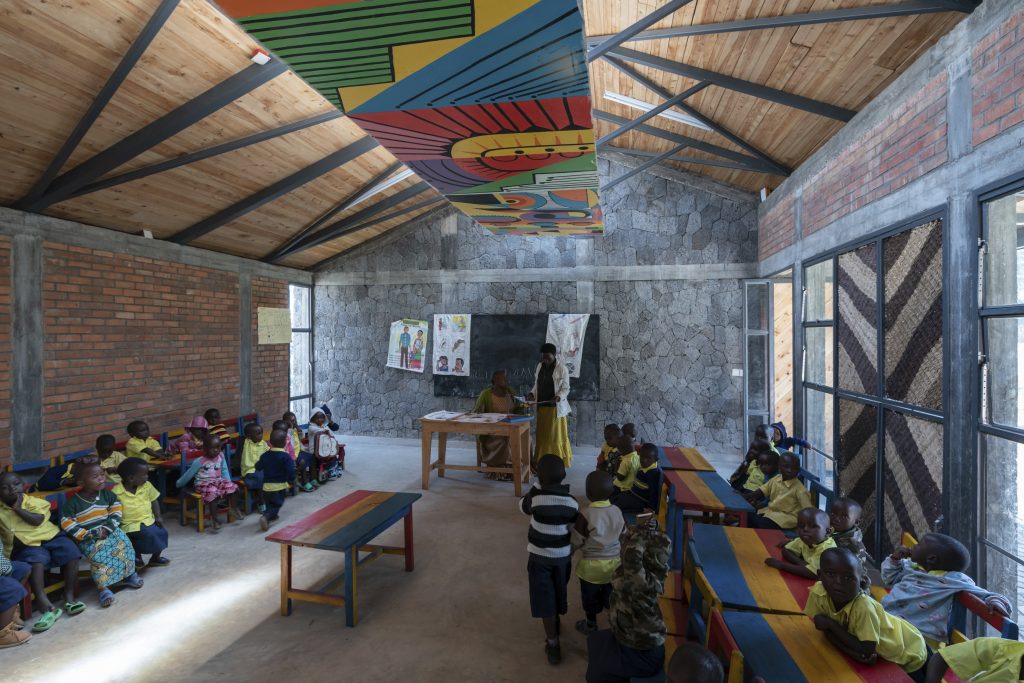
Ruhehe Primary School
The redesign of Ruhehe Primary School offers the first proof of concept for design interventions piloted by MASS Design Group at Mubuga Primary School in 2015. Photo by Iwan Baan.

Prior to joining MASS, Patricia worked with Kennedy & Violich Architecture in Boston and co-founded the global non-profit, Portable Light, which provides a portable and sustainable source of power and light to those in resource limited areas of the world. 

Her work has been featured in journals of architecture and design as well as on the BBC World News and the Discovery Channel. She has lectured at SCAD, RISD, Kunstfack University, Tufts University and BuildBoston and has taught design studios at Northeastern University and the Rhode Island School of Design. Patricia received her Bachelor of Science and Master of Architecture from the University of Michigan.

About MASS Design Group
The Boston-based MASS Design Group is organized as a 501(c)(3) non-profit to create a model of practice optimized to deliver maximum impact to their  partners and the communities they serve. They take on projects that are mission-aligned, that serve the public, and that their board of directors believes are worthy of consideration.

About Architecture Exchange East
ArchEx is AIA Virginia’s annual conference and expo. This year, it takes place at the Greater Richmond Convention Center from Nov. 6–8, 2019. The program is curated to bring together the brightest minds and most engaging speakers to explore the theme of culture.

Resiliency Week Events

Register for Commercial Property Assessed Clean Energy (C-PACE) Seminar and SAP Training Being Hosted During Resiliency Week

During the 2019 General Assembly, AIA Virginia was proud to endorse Senate Joint Resolution 277 which designates the first week of September as Resiliency Week.  For this inaugural occurrence, AIA Virginia will host two events: a Commercial Property Assessed Clean Energy (C-PACE) seminar in collaboration with the USGBC in Reston and a Safety Assessment Program Training in Richmond.  Please consider joining us for one or both of these events.


Sustainable Building through Commercial Property Assessed Clean Energy (C-PACE) in Northern Virginia

Develop more efficient, more competitive, and more valuable buildings with C-PACE financing for Existing Building retrofits and New Construction projects! This Lunch & Learn will demonstrate the value proposition from C-PACE to commercial real estate owners, developers, and service providers. Plus, the event will summarize the addressable market for C-PACE across the NOVA Region and provide the latest on progress toward C-PACE in several jurisdictions. Interest in C-PACE across NOVA is growing; this is one event you won’t want to miss!

Learning Objectives

  • List C-PACE (Commercial Property Assessed Clean Energy) financing benefits to building owners, developers, and service providers, and general eligibility requirements for existing building and new construction projects.
  • Describe how C-PACE financing impacts the economics and accessibility of energy efficiency, renewable energy, water conservation, stormwater management, and resiliency measures.
  • Discuss how to integrate C-PACE into client discussions and project proposals to improve building performance, sustainability, and competitiveness.
  • Describe the addressable market for C-PACE in existing buildings and new construction across NOVA today and one year out.

Agenda

  • 11:30 a.m.: Lunch & networking
  • 12:00-12:20 p.m. Panel 1: C-PACE Financing Value Proposition for Owners, Developers, and Service     Providers
  • 12:20-12:40 p.m. Panel 2: C-PACE Addressable Market in NOVA
  • 12:40-1:00 p.m. Q&A & networking

Panelists

Panel 1:  Scott Dicke, Sustainable Real Estate Solutions, Director of VA C-PACE Programs. Daron Coates, Thinkbox Group, Managing Director of Finding Opportunities

Panel 2:    Rich Dooley, Arlington County, Arlington C-PACE Program Manager. Dennis Cumbie, Loudoun County, Loudoun C-PACE Program Manager. Bill Eger, City of Alexandria, Energy Manager

Location:
DPR Construction
109 Sunset Hills Road
Suite 200
Reston, Virginia 20190

Date:  Monday, August 26, 2019
Time: 11:30 A.M. – 1:00 P.M.

  • 1 GBCI CE Hours + 1 AIA LU

Registration link:  https://cpacenova.eventbrite.com


SAP Training – Limited Seats Remaining

Registration is open for Safety Assessment Training on Sept. 6, 2019, in Richmond. Post-disaster Safety-Assessment Program (SAP) training provides architects, engineers, and building inspectors with the knowledge to provide evaluations of facilities and buildings in the aftermath of a disaster. Learn more.

At the end of this training, you will be able to:

  • Recognize the important role architects and associated building professionals play in disaster preparedness, response, and recovery.
  • Accurately conduct a post-disaster rapid building assessment and complete appropriate damage assessment forms.
  • Demonstrate understanding of the Applied Technology Council’s ATC-20 Post-earthquake Safety Evaluation of Buildings and ATC 45 Safety Evaluation of Buildings after Windstorms and Floods damage assessment procedures.
  • Earn a Cal-OES registration ID card.

Details

Date: Friday, Sept. 6, 2019
Time: 9 a.m.-4:30 p.m.
Location: Richmond, VA

Fee: $70 members; $175 non-members

Earn 6.5 learning units | HSW

Register today>>

Call for ArchEx 2019 Volunteers

We’re seeking a limited number of individuals to serve as volunteers at Architecture Exchange East 2019. In gratitude for your service, volunteers are invited to attend ArchEx for free on the day(s) you help out.

We are looking for volunteers who are capable of completing a number of different tasks throughout the conference. Volunteers are expected to commit to a minimum of one full day in order to receive the complimentary conference registration.

While we try to accommodate all requests, you’ll be assigned to positions where we have the need. (You must fulfill your entire commitment to receive complimentary conference registration.)

If you are interested, please complete the Volunteer Interest Form. We’ll be in touch later to confirm the details of your participation.