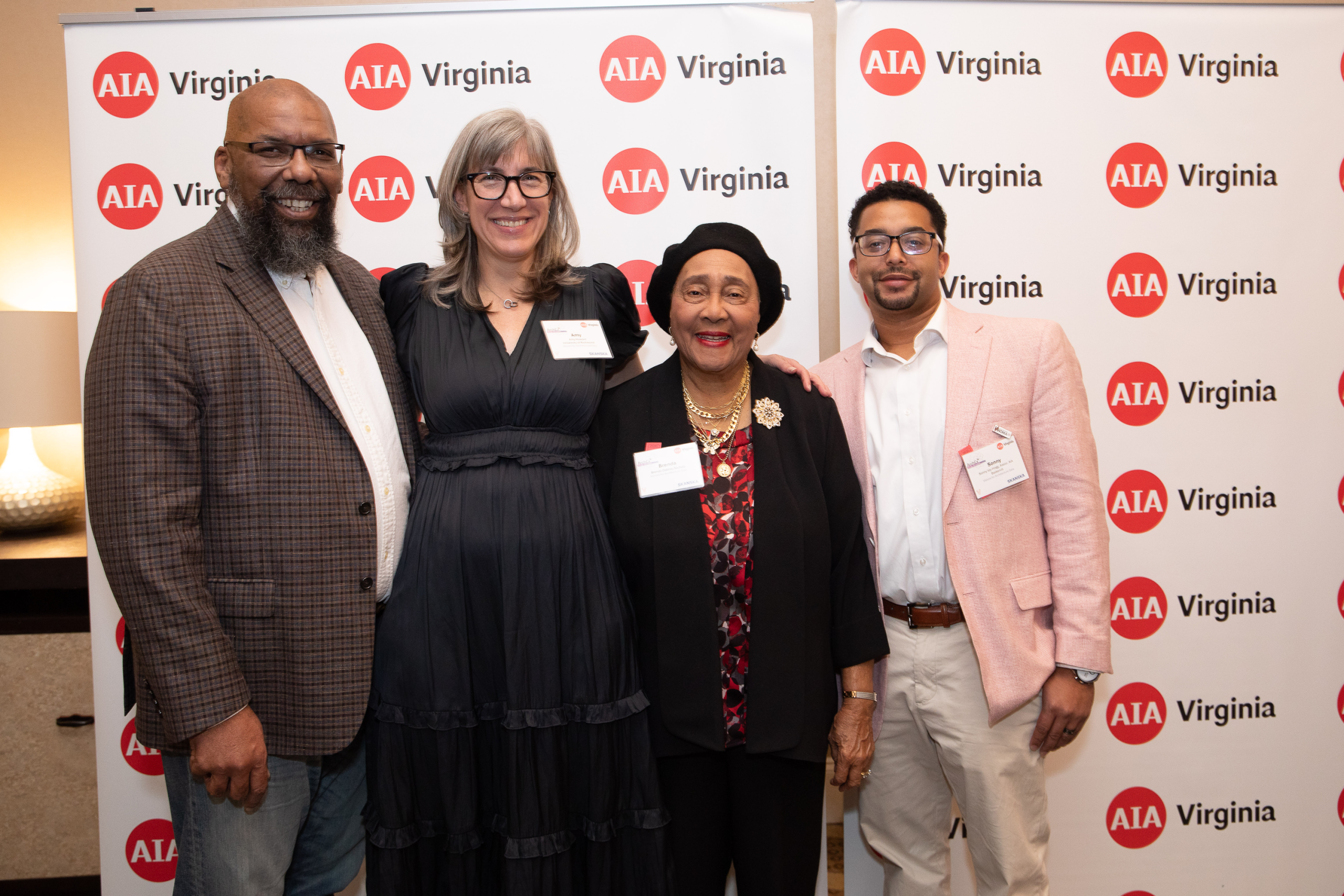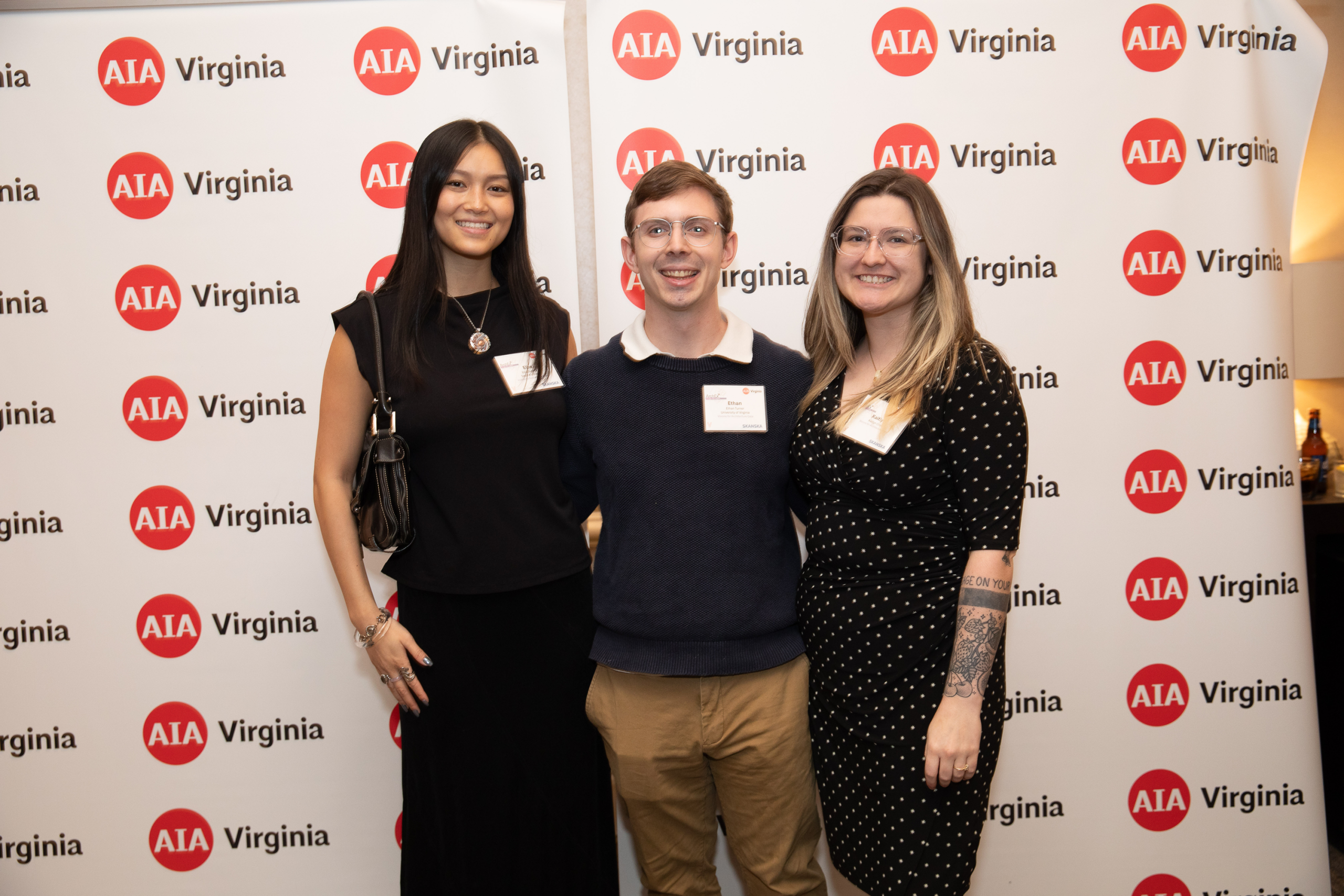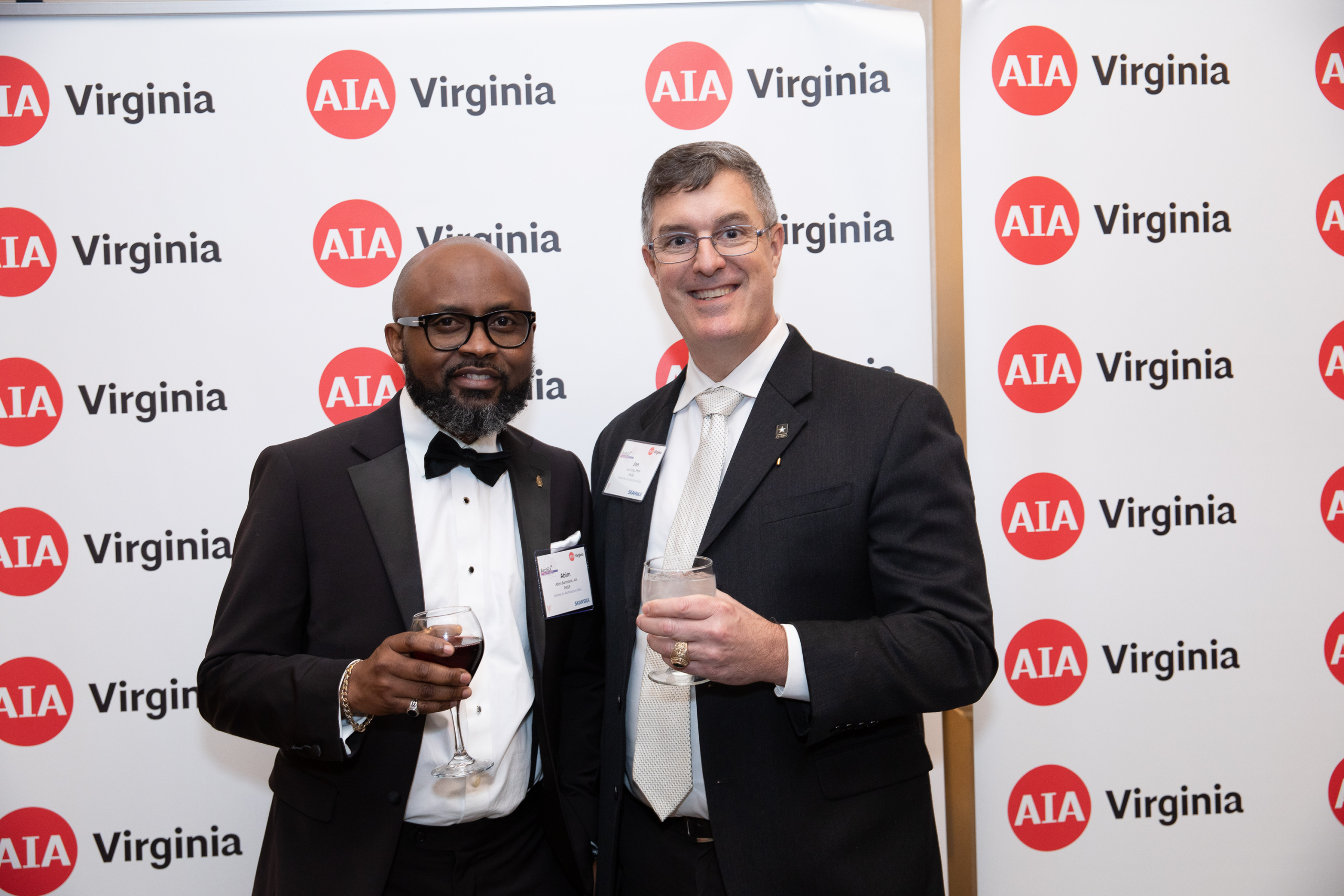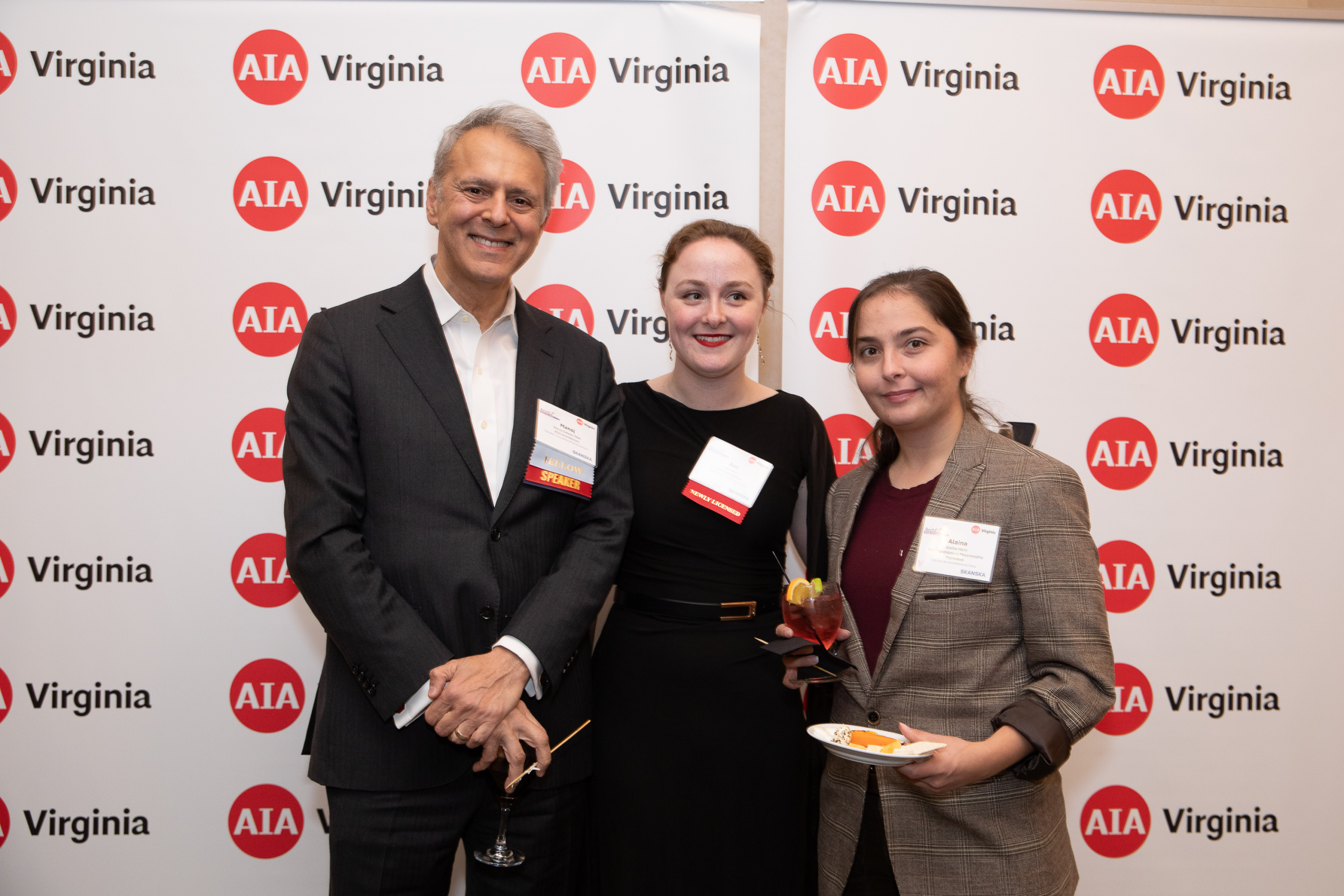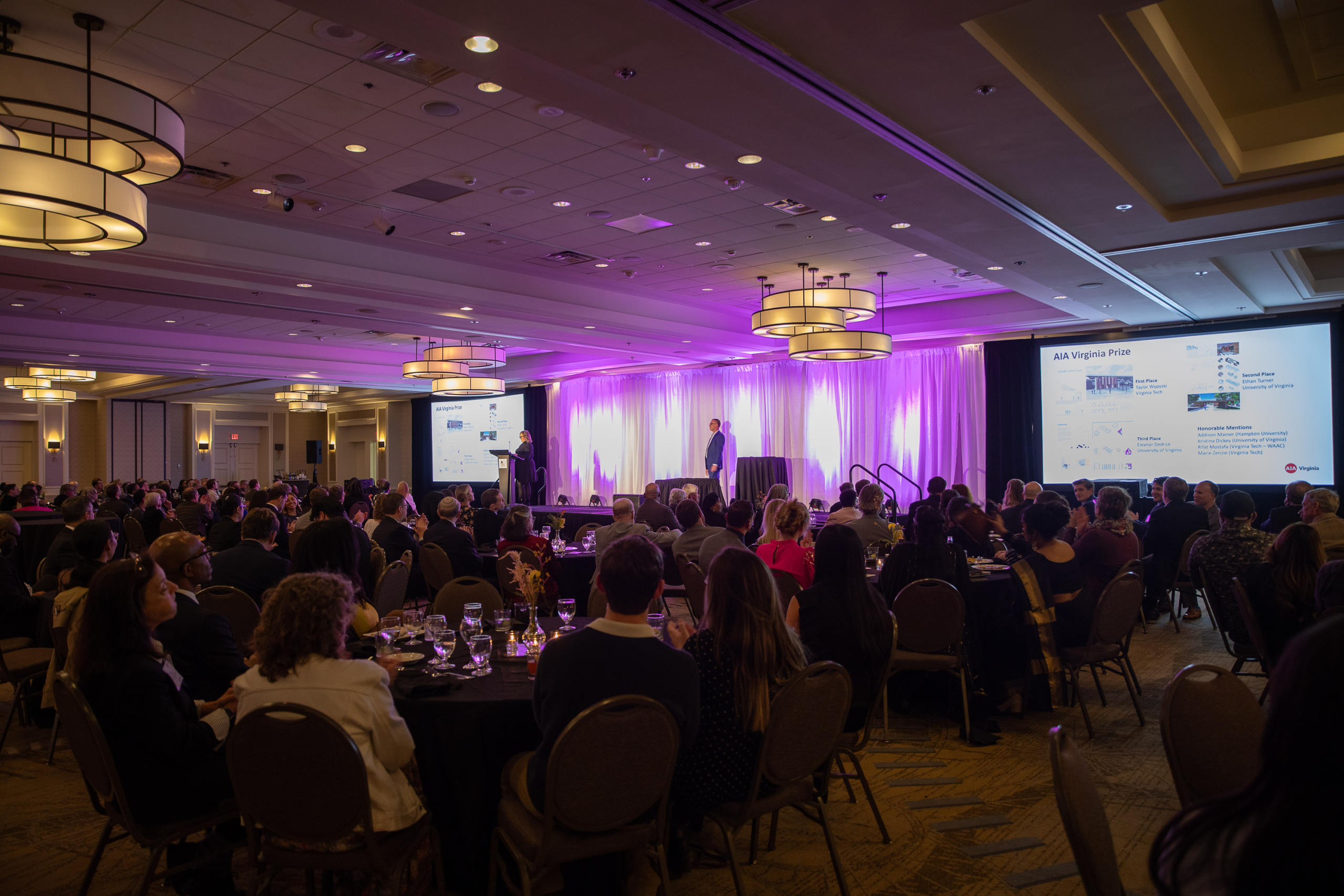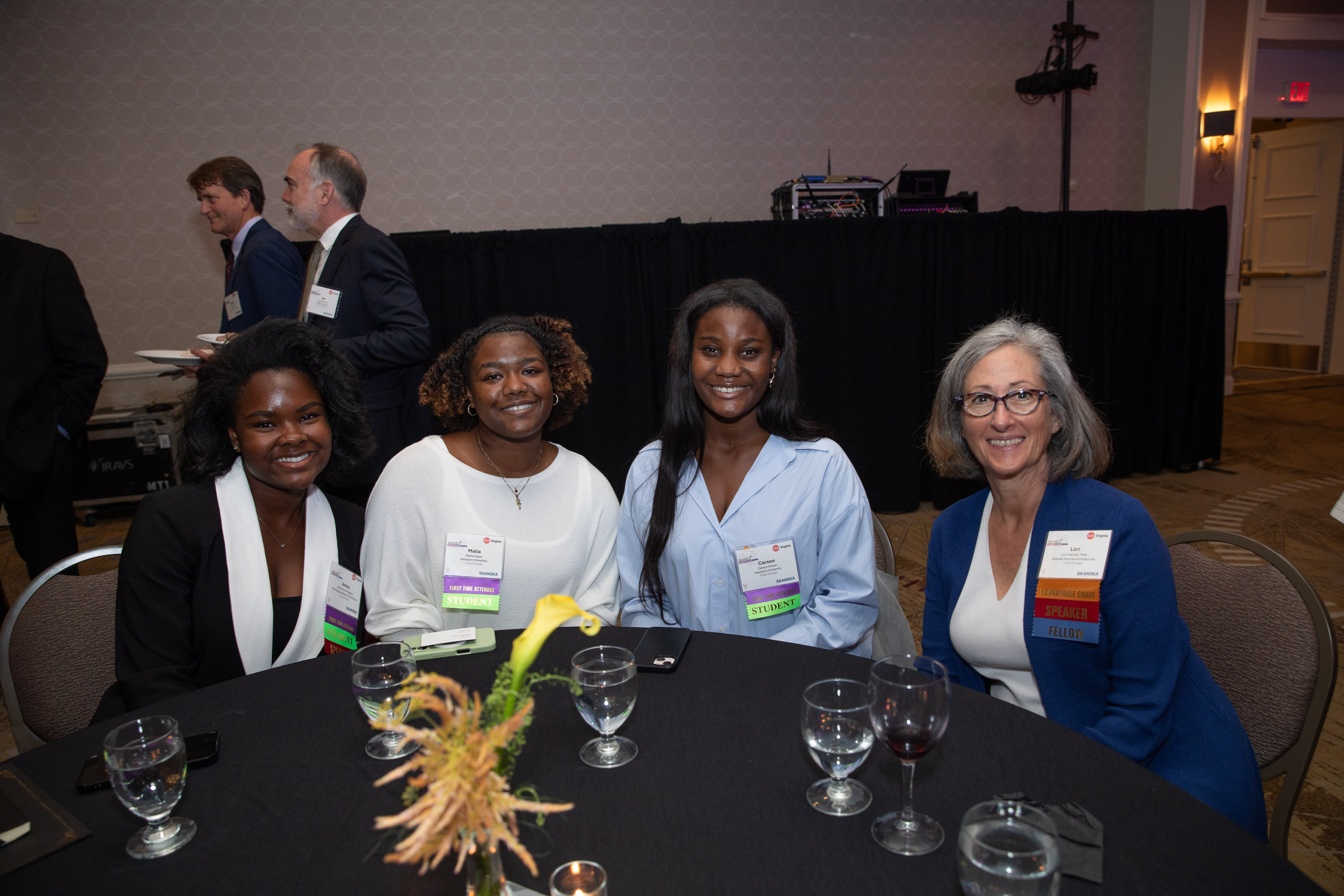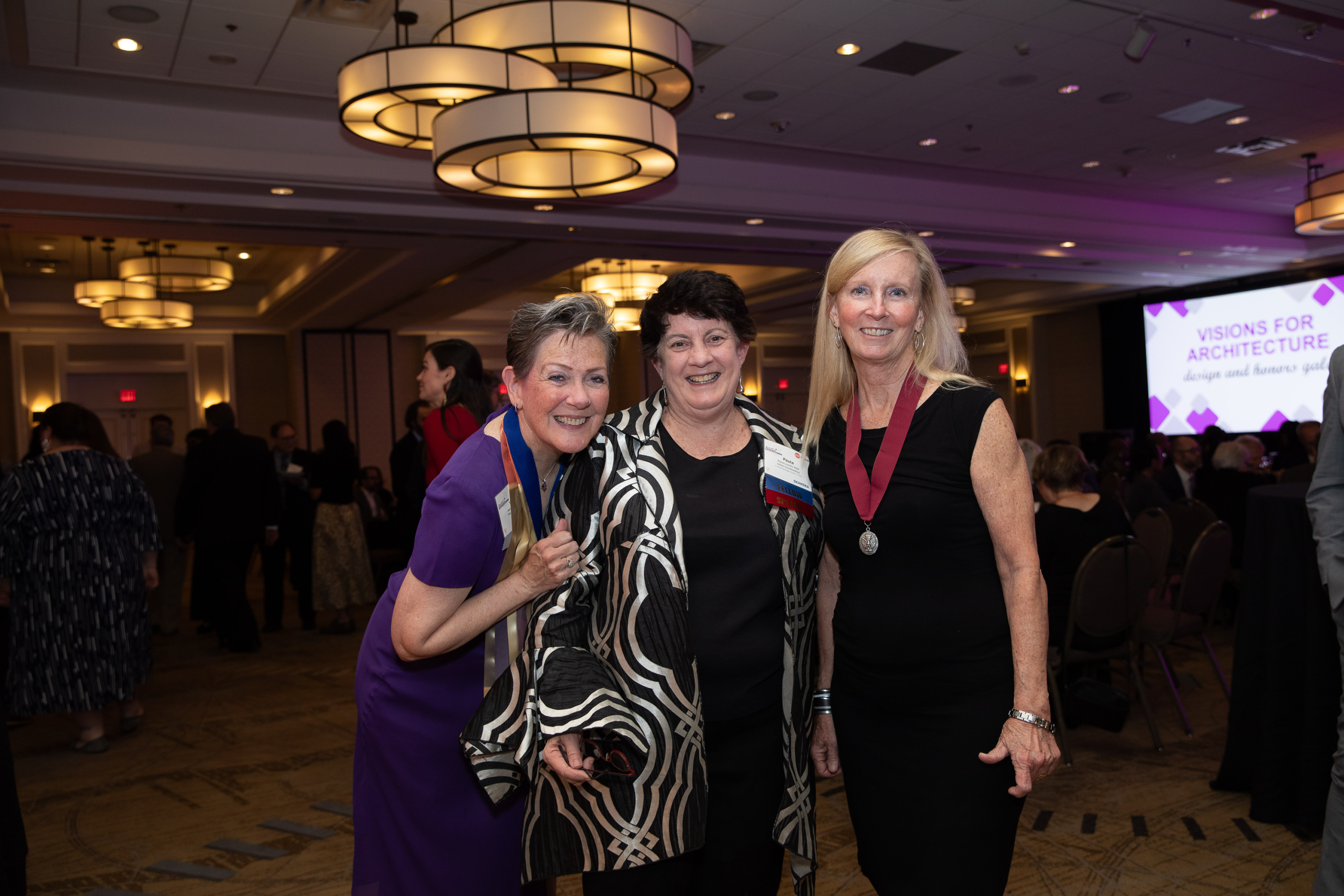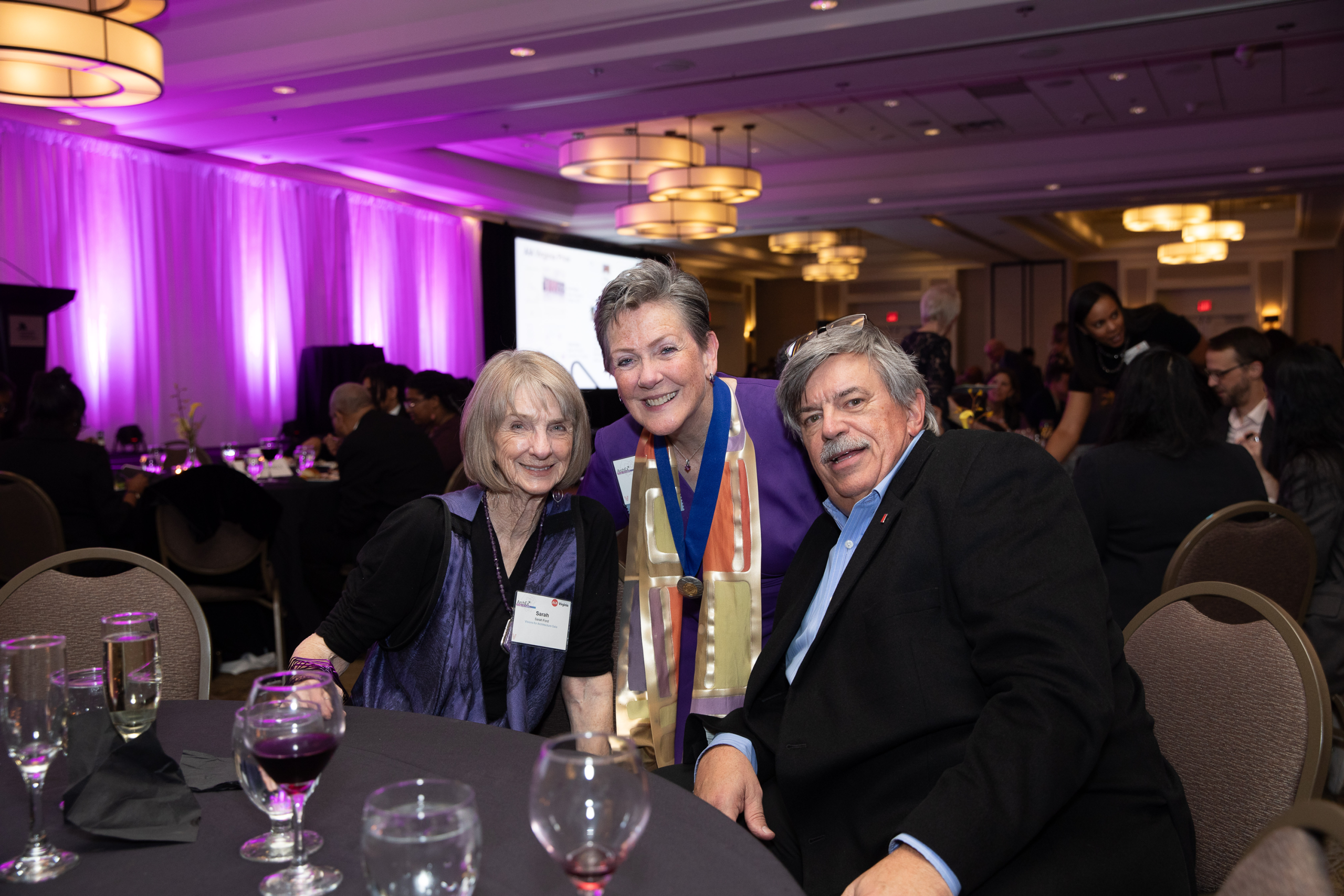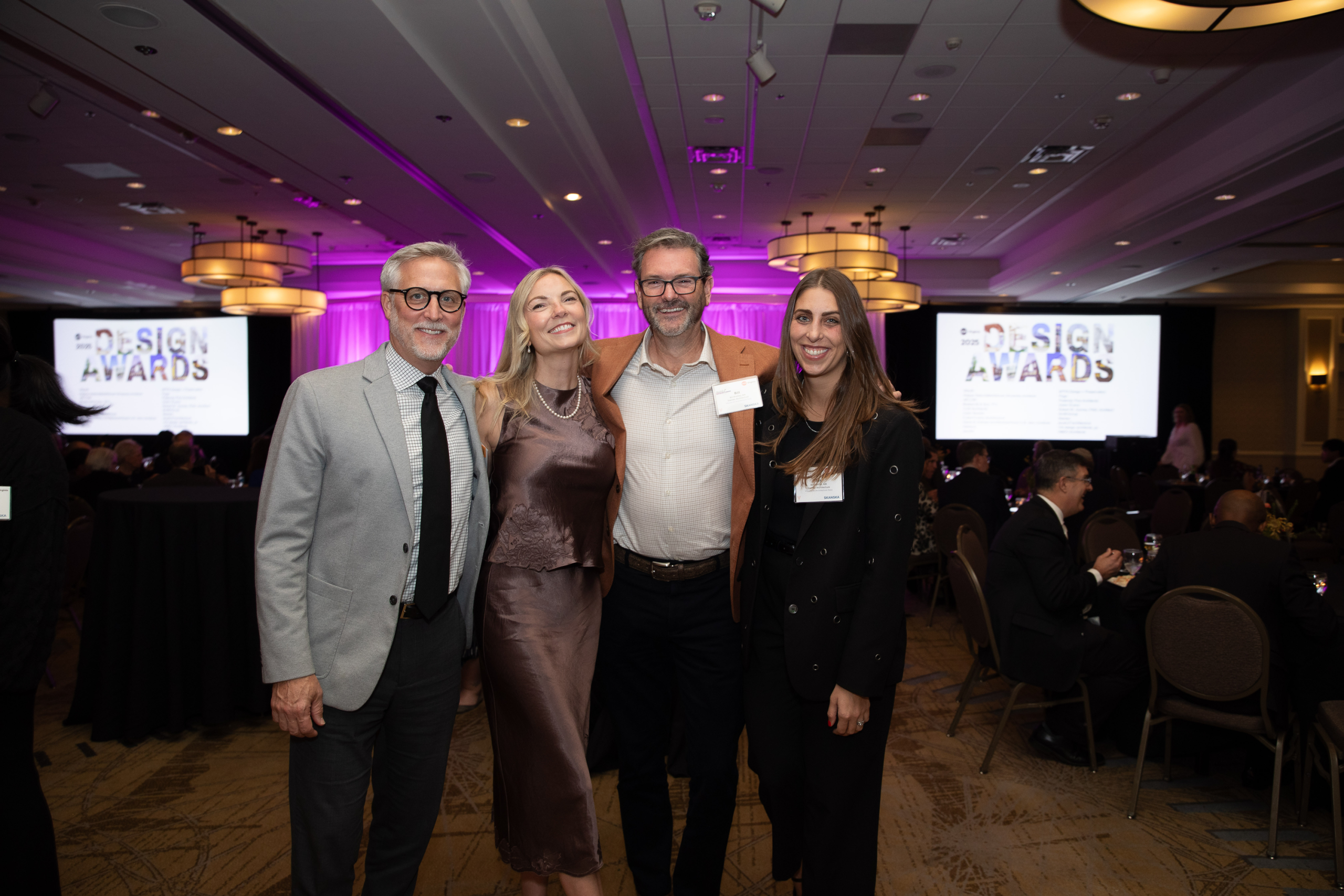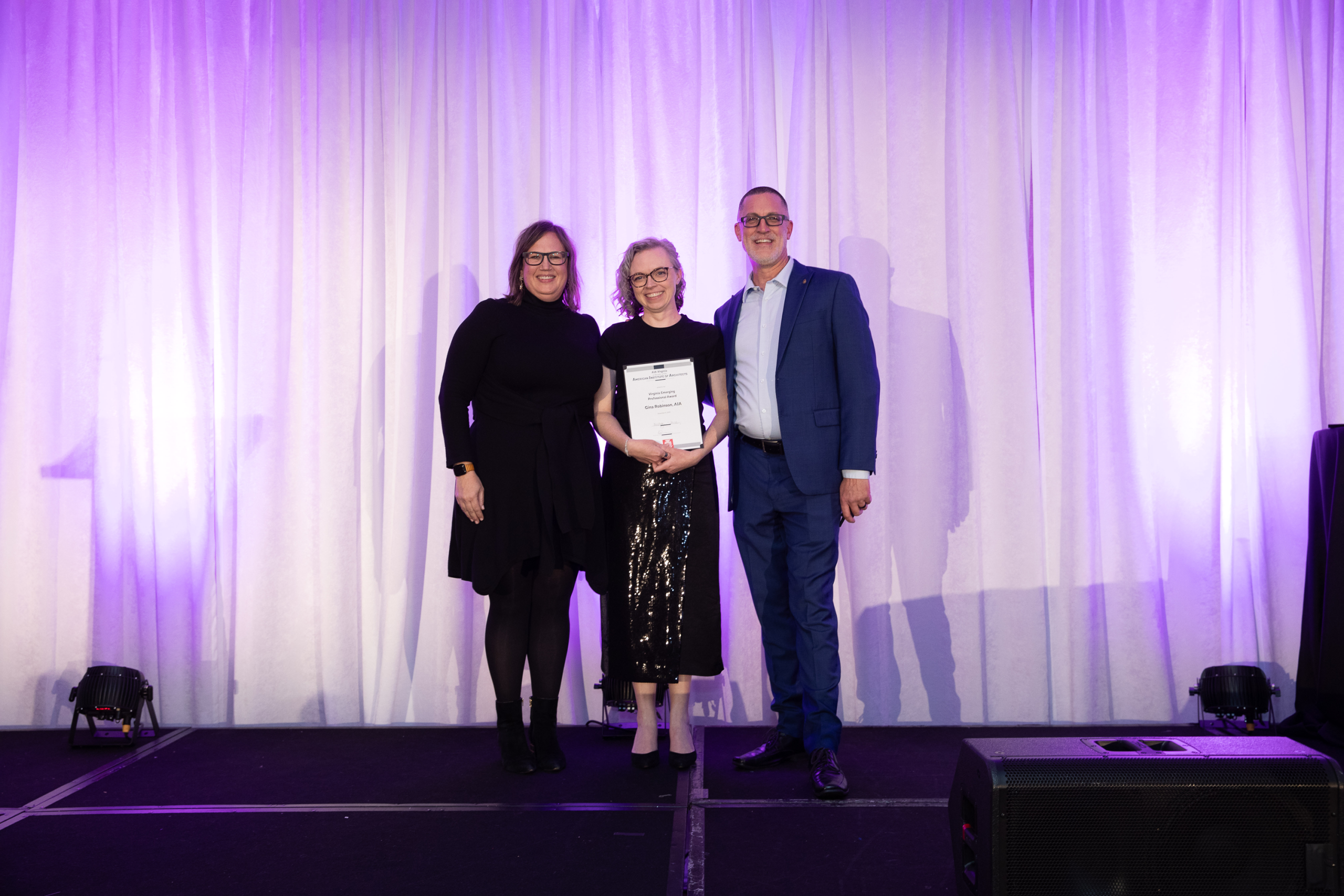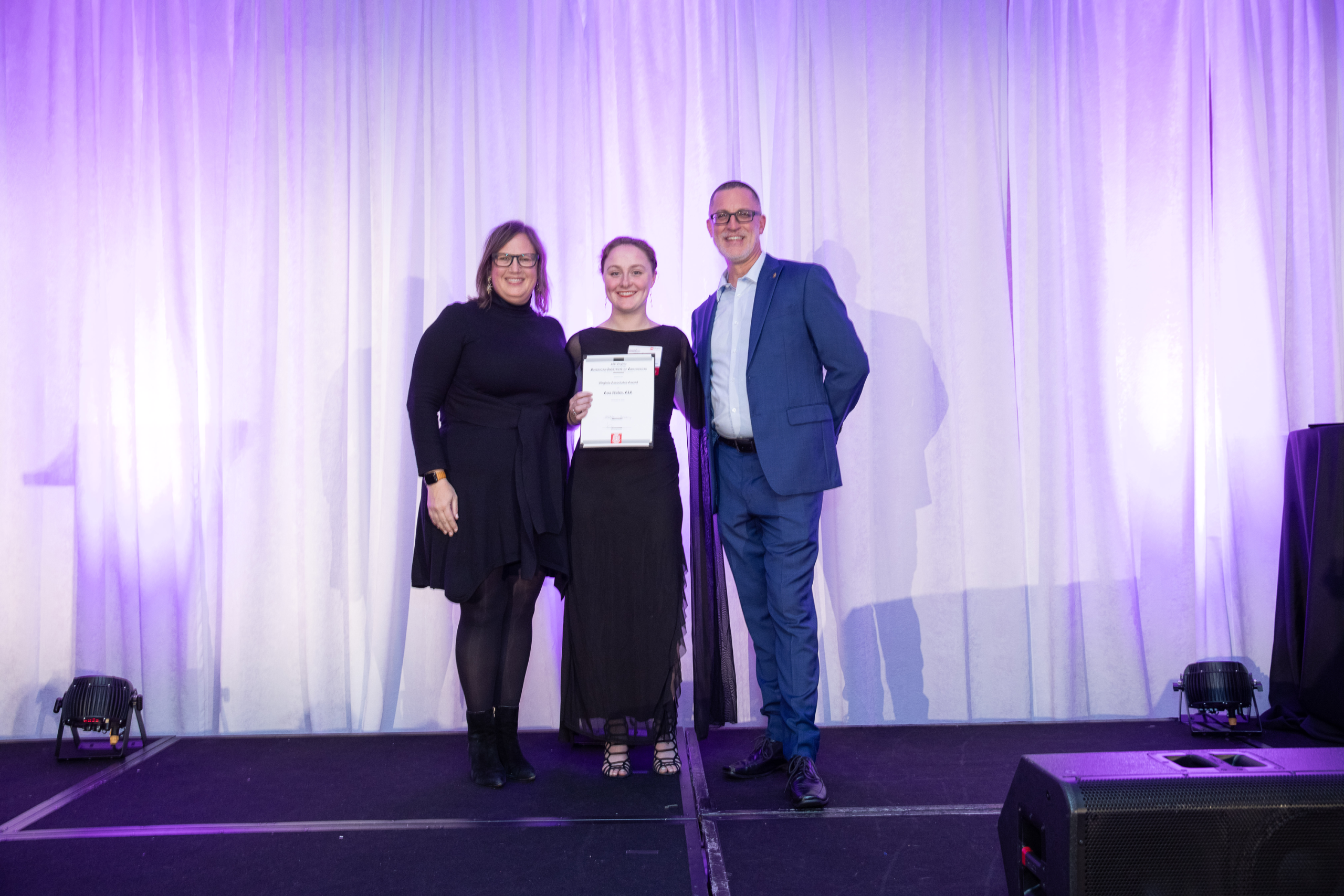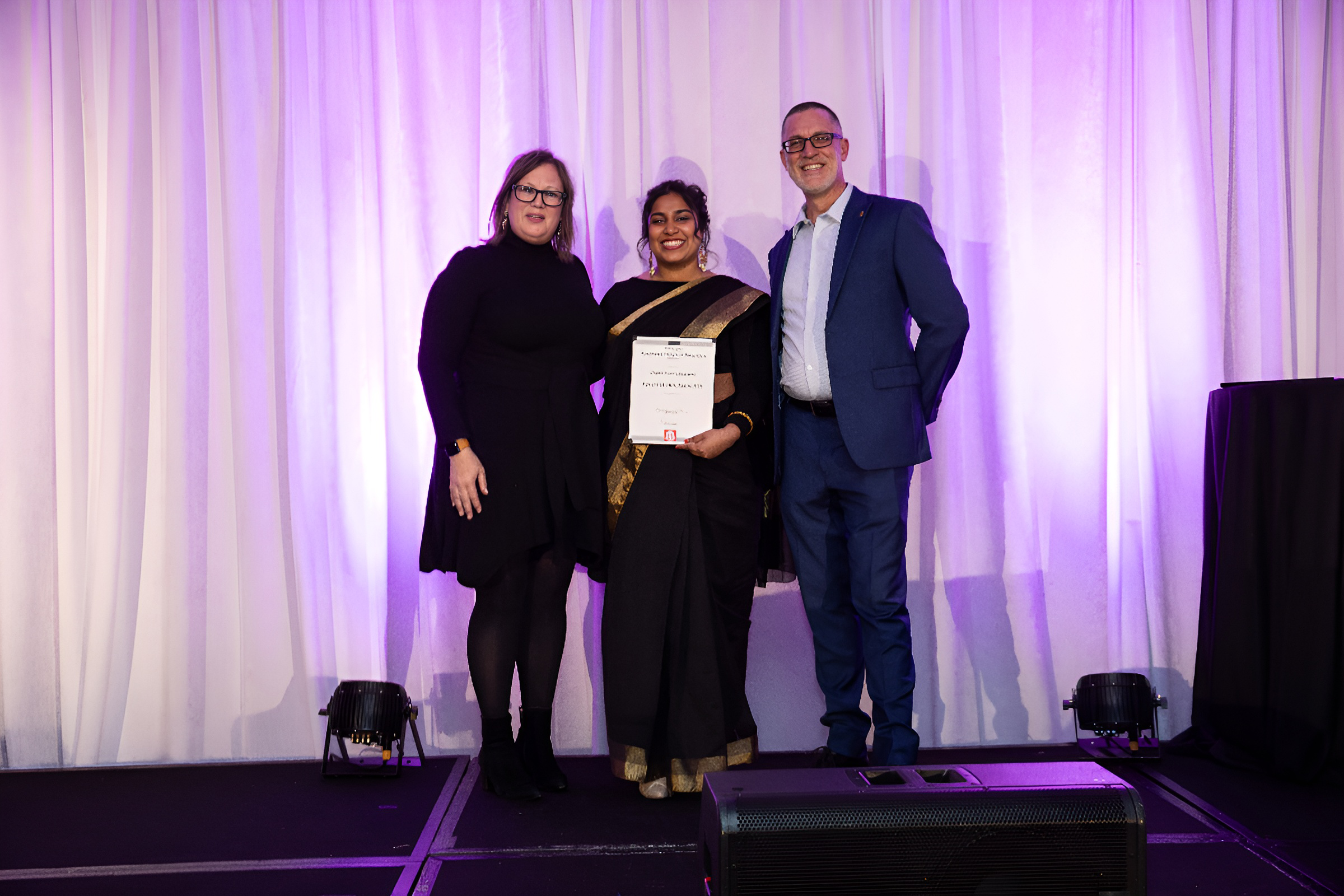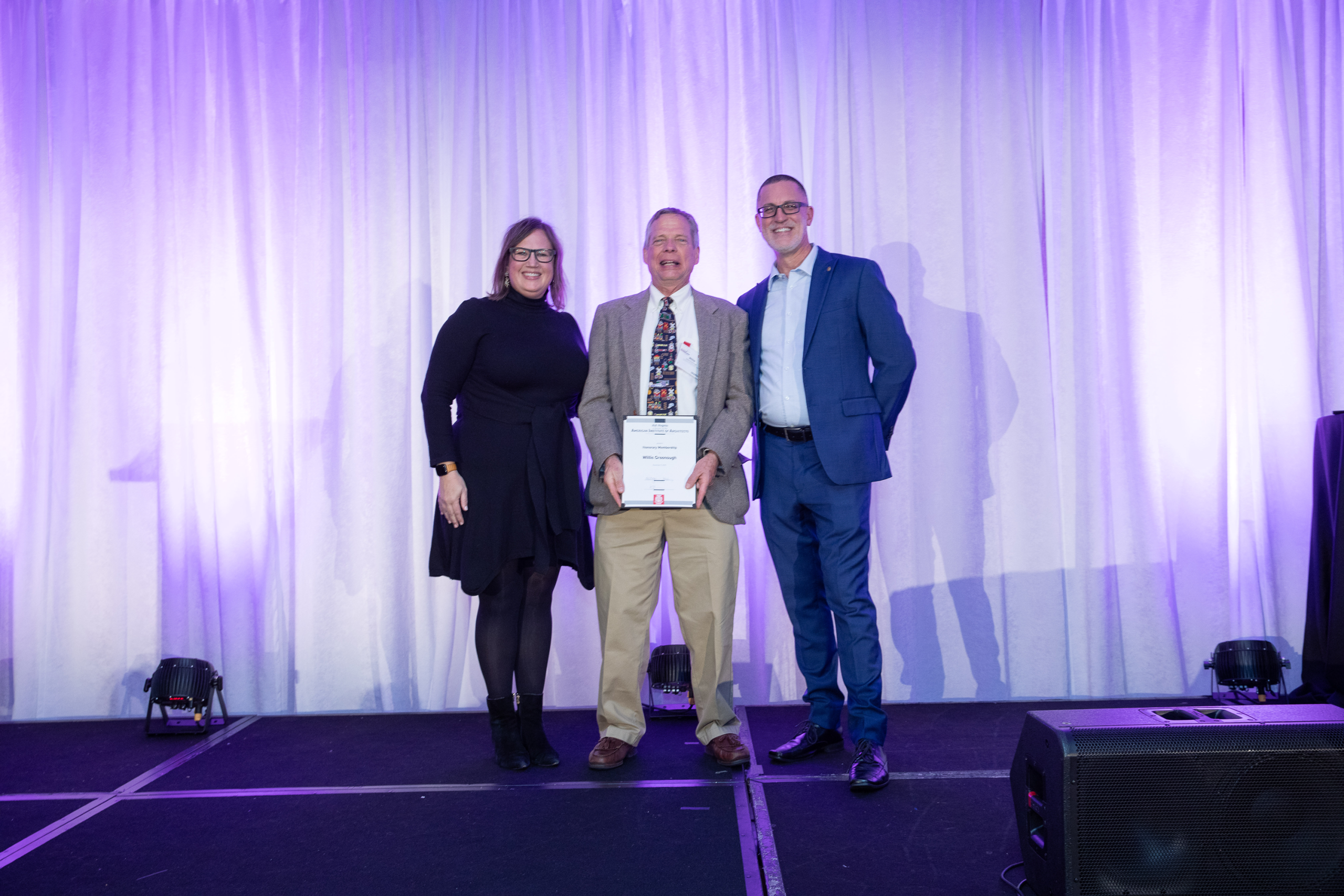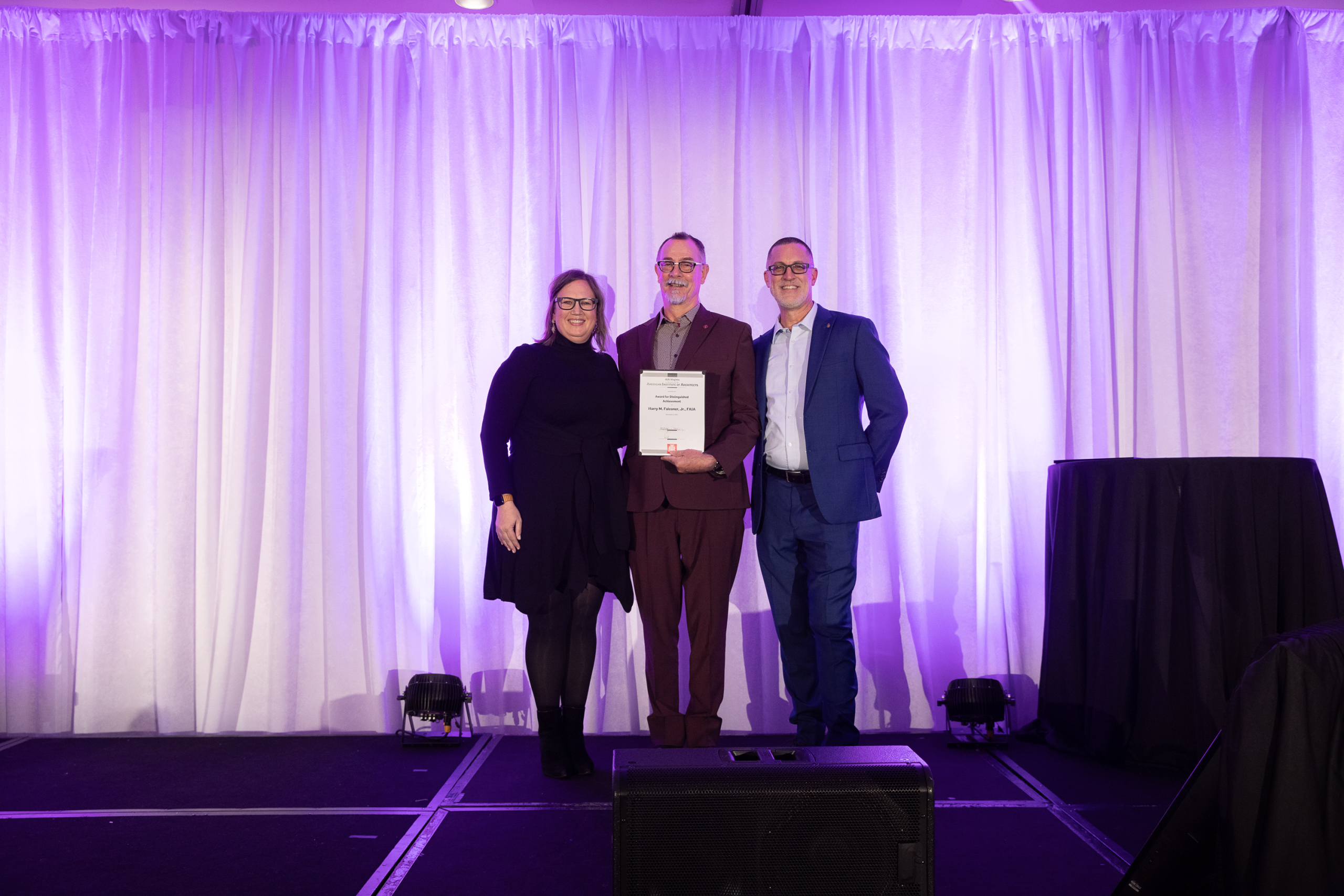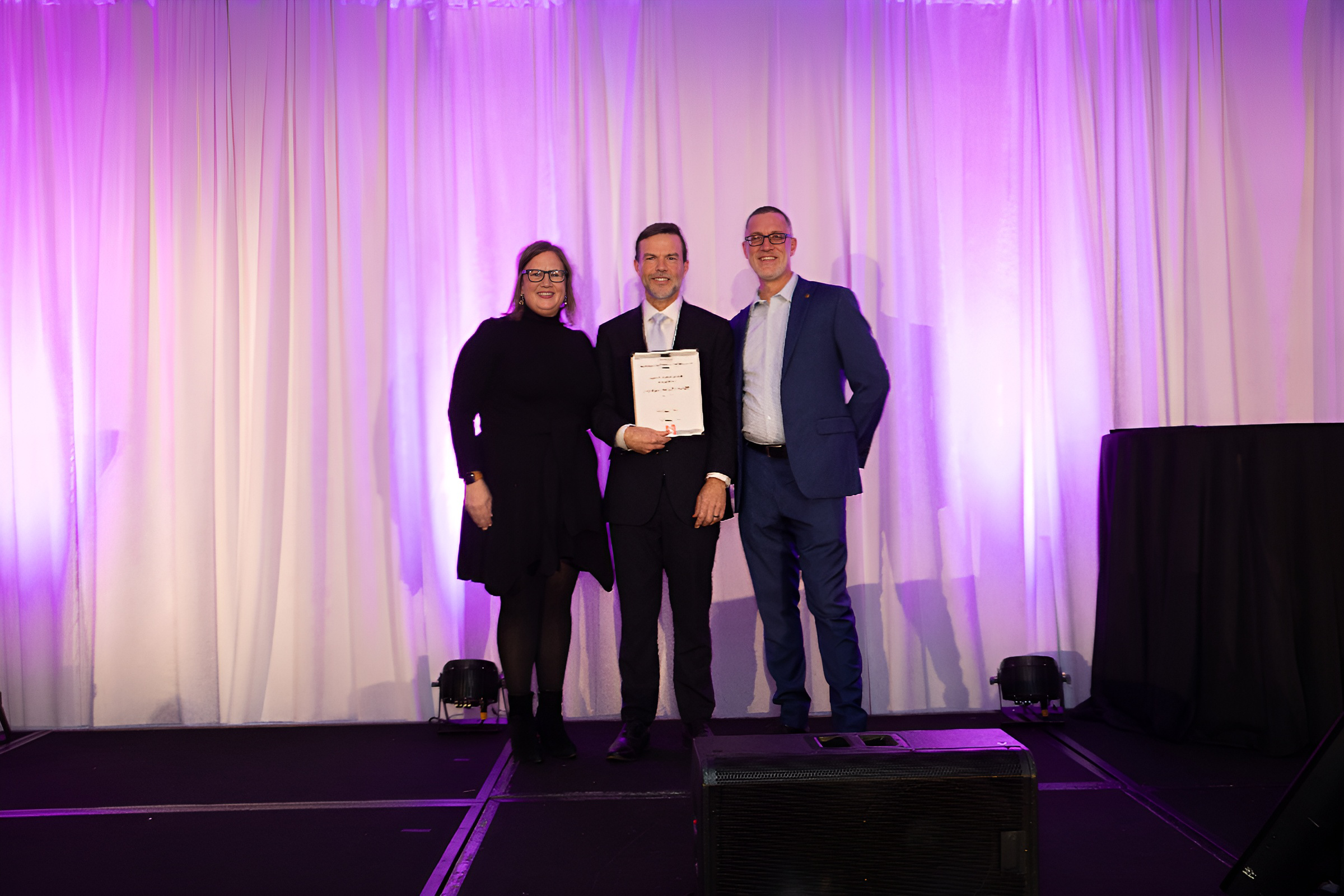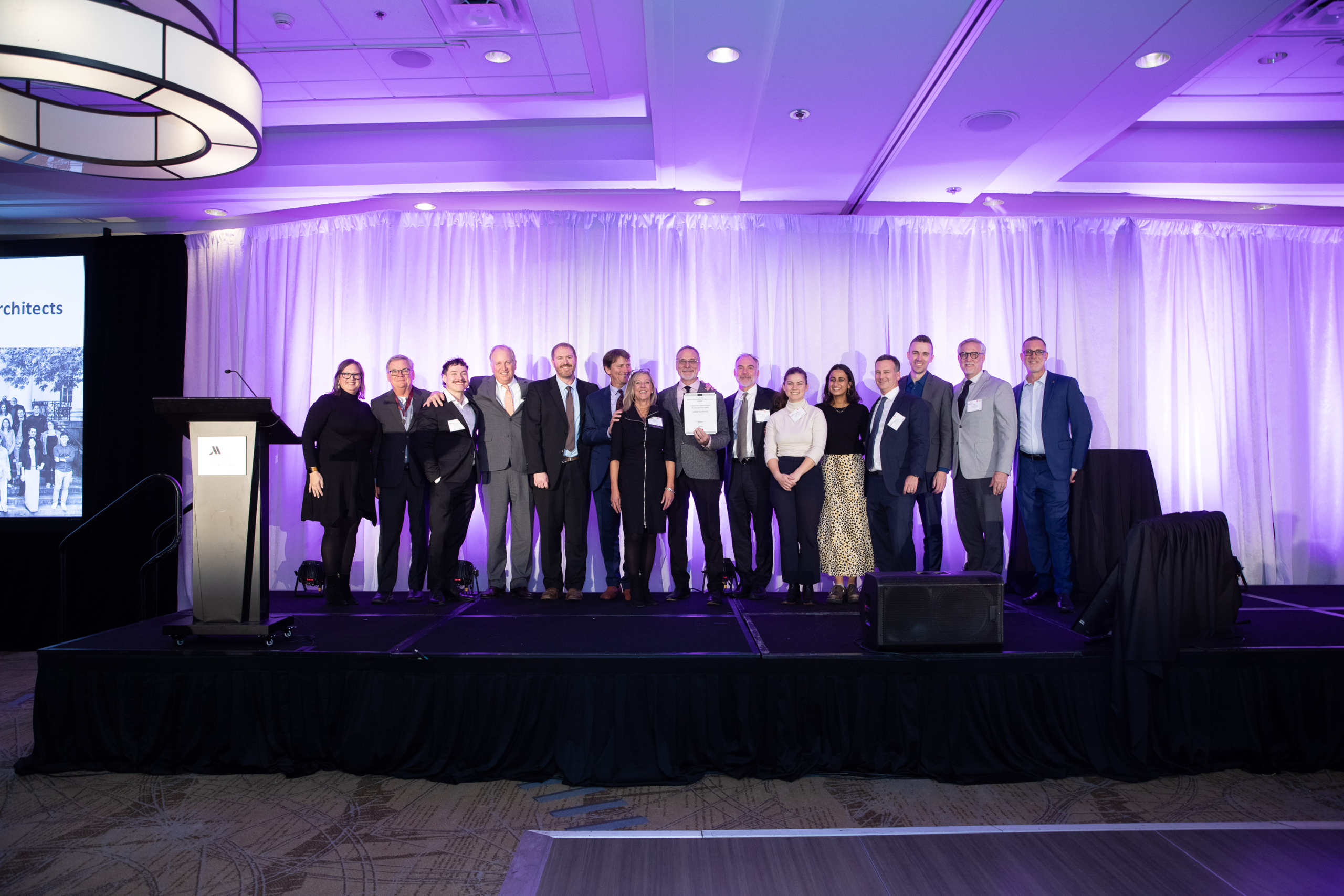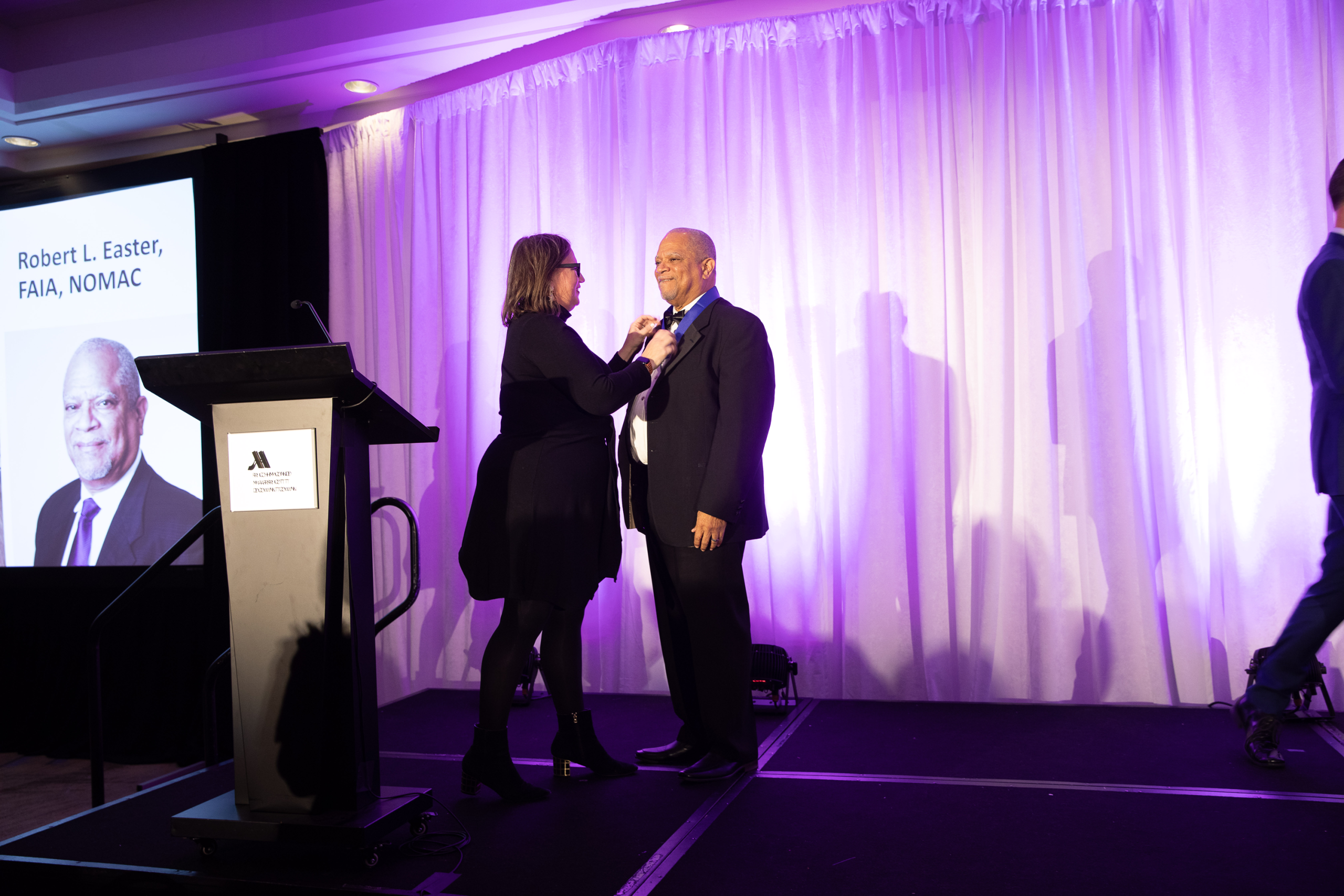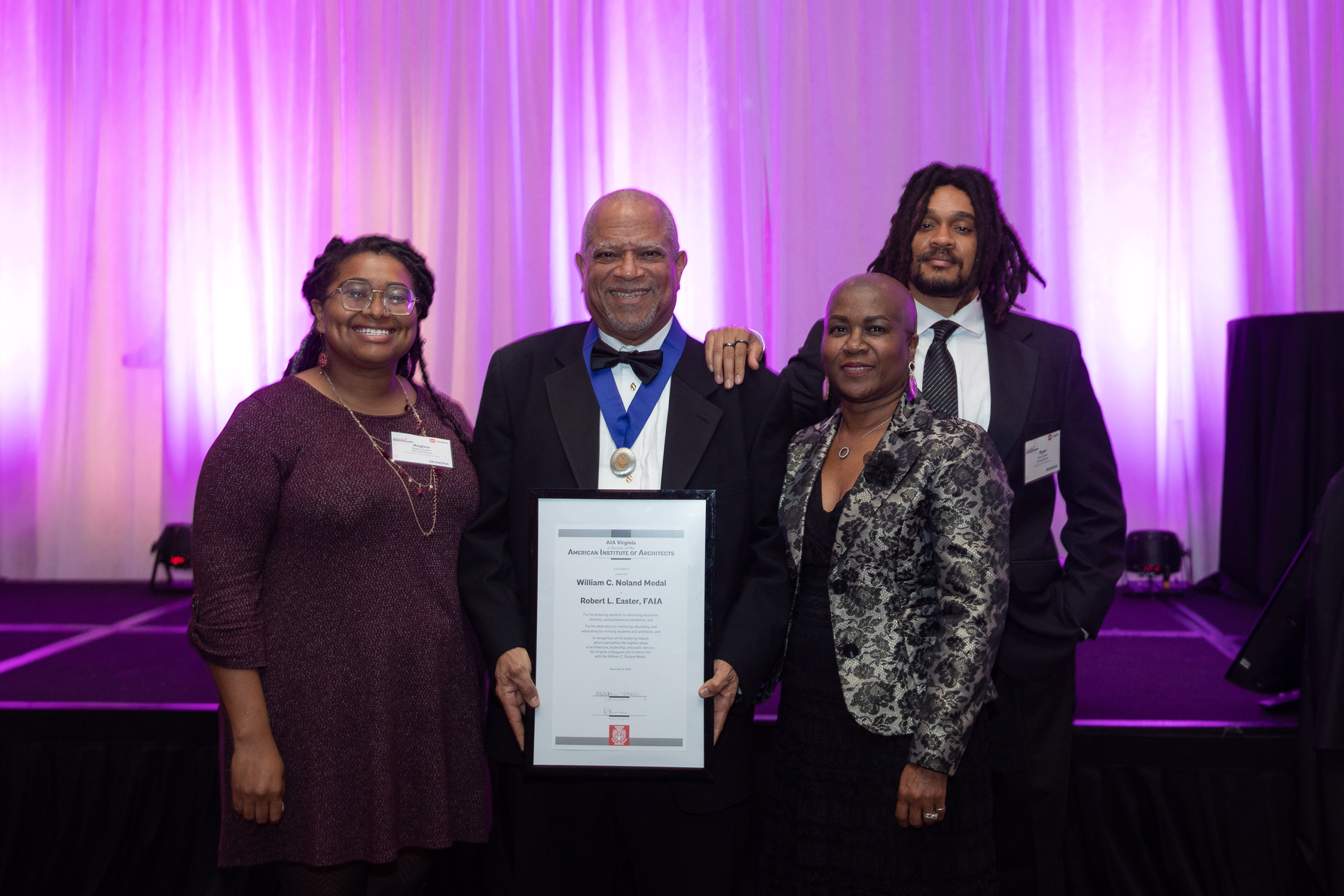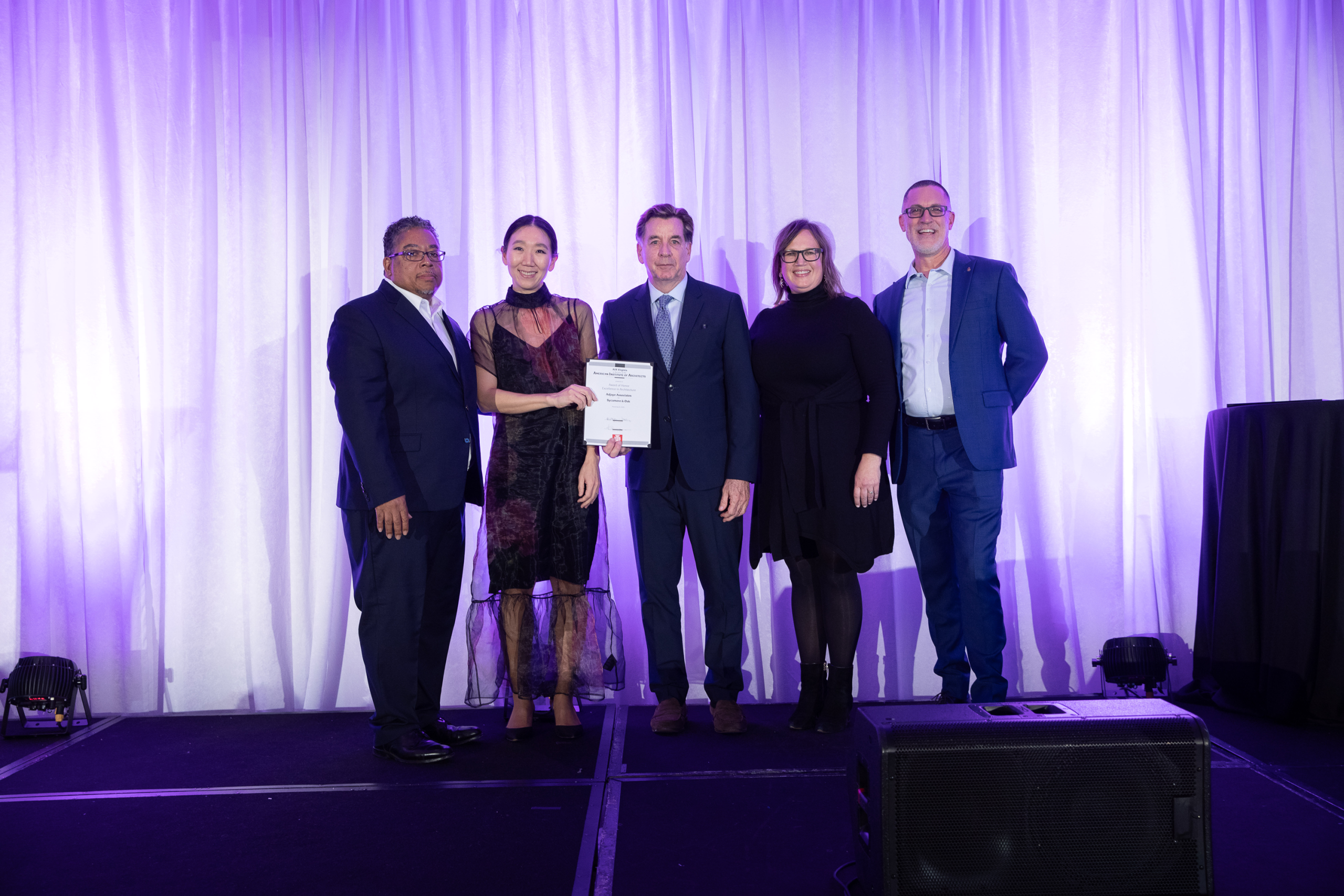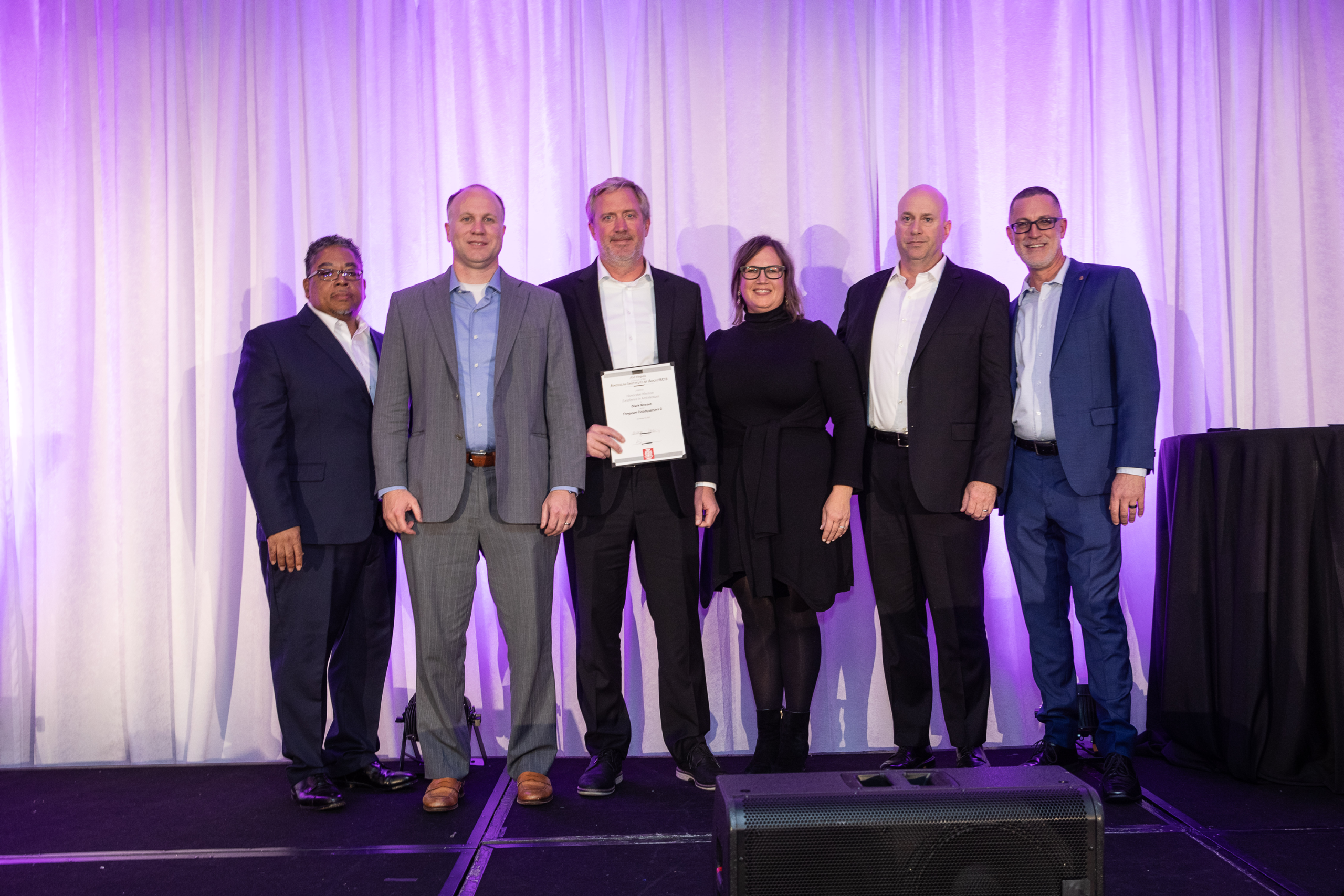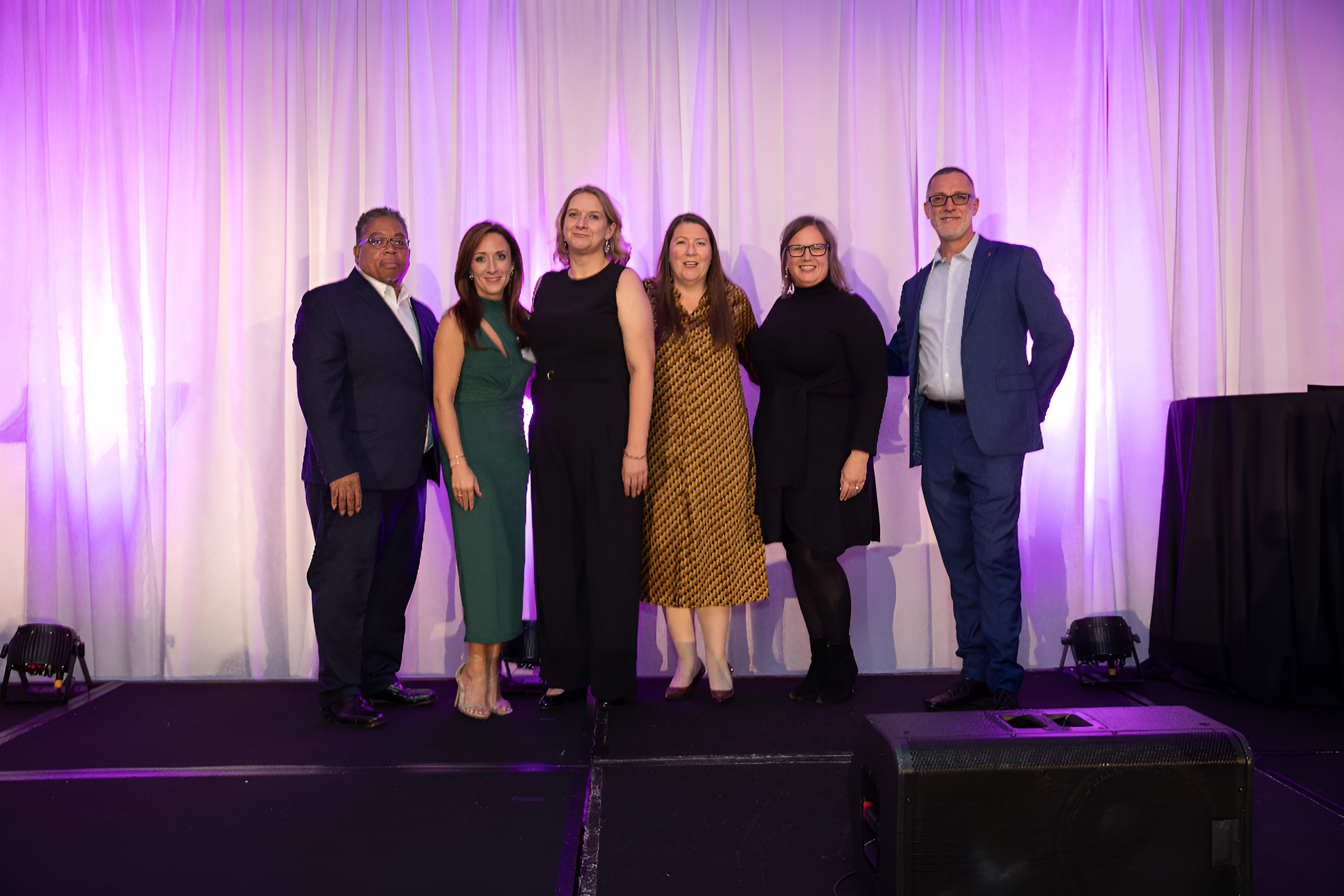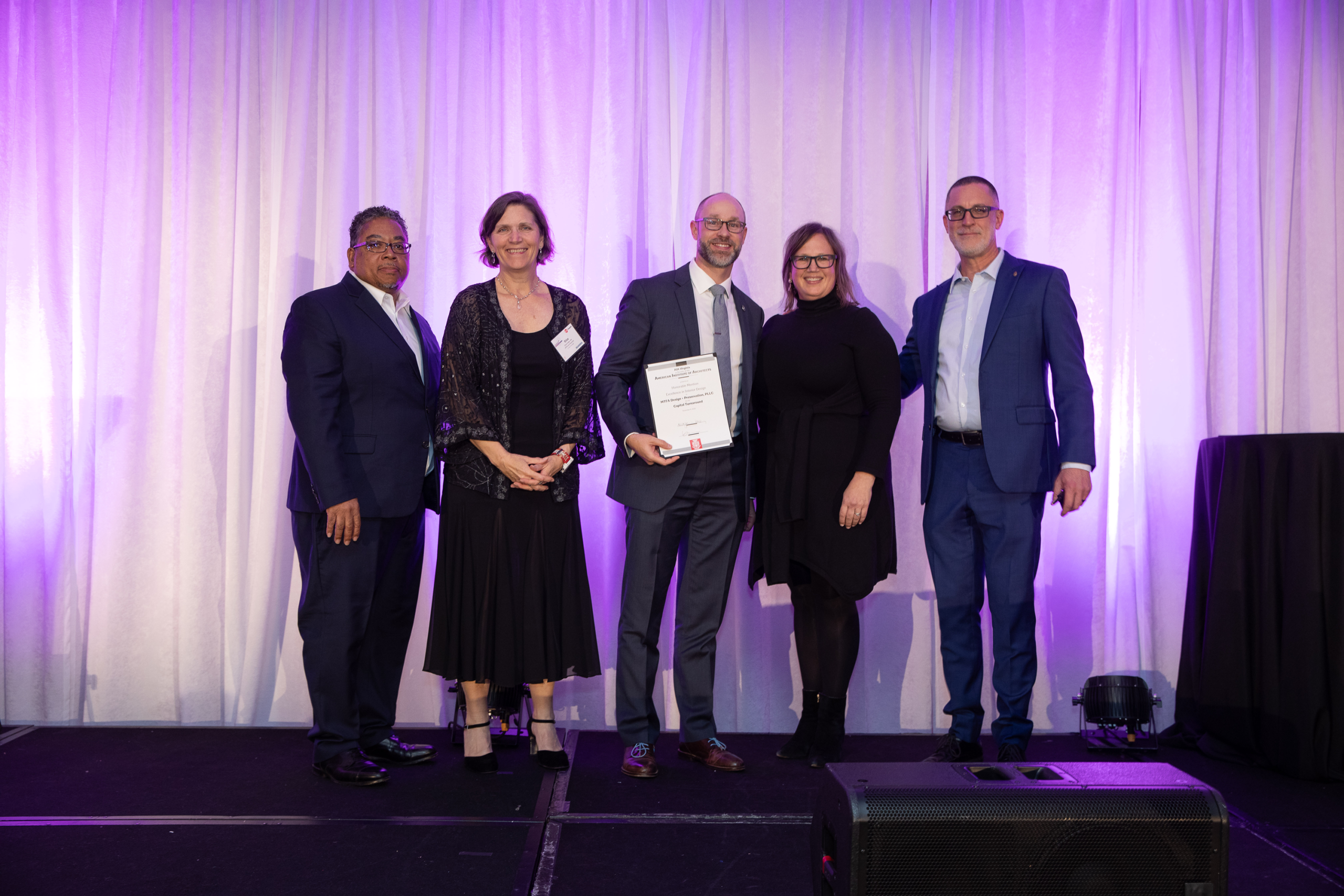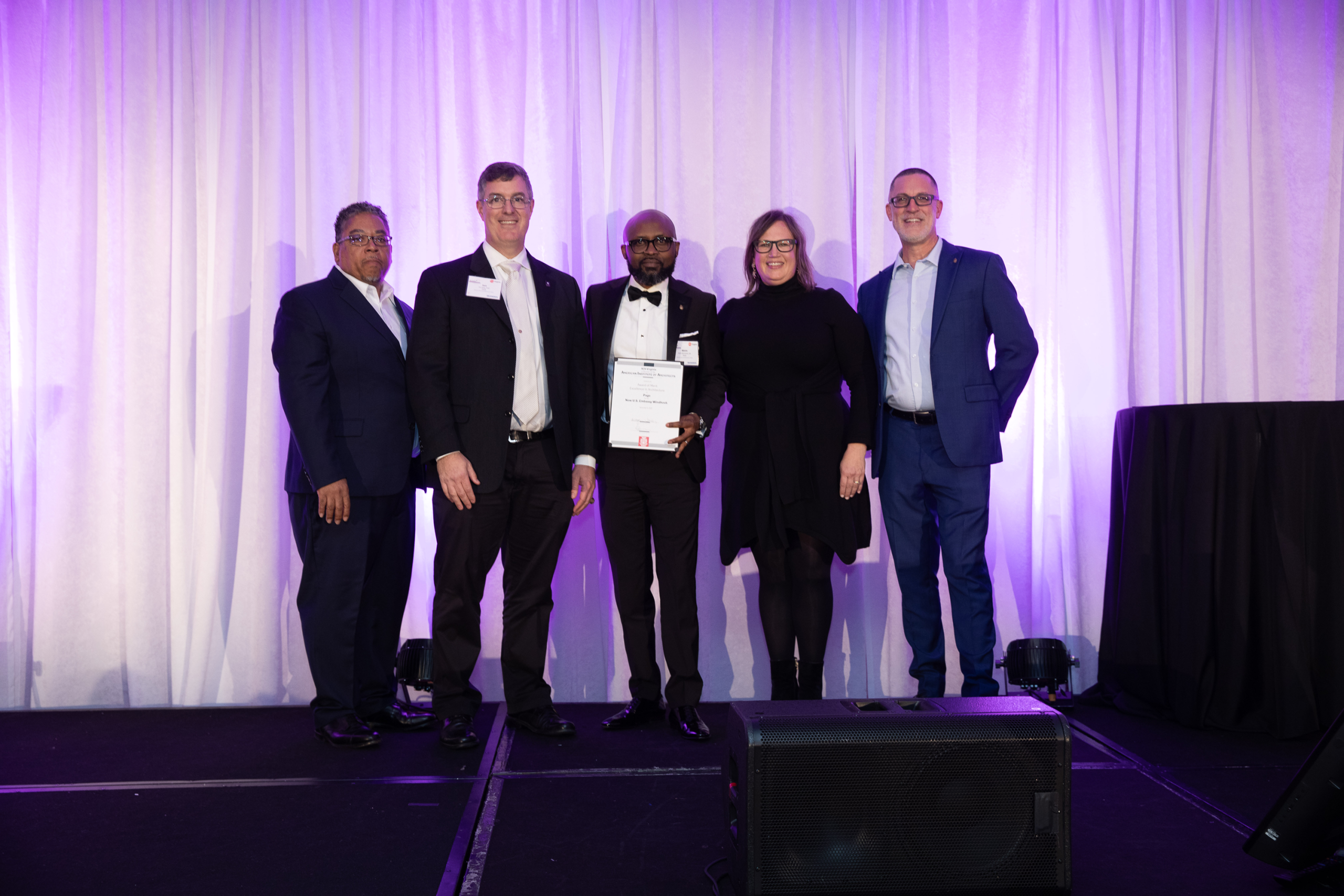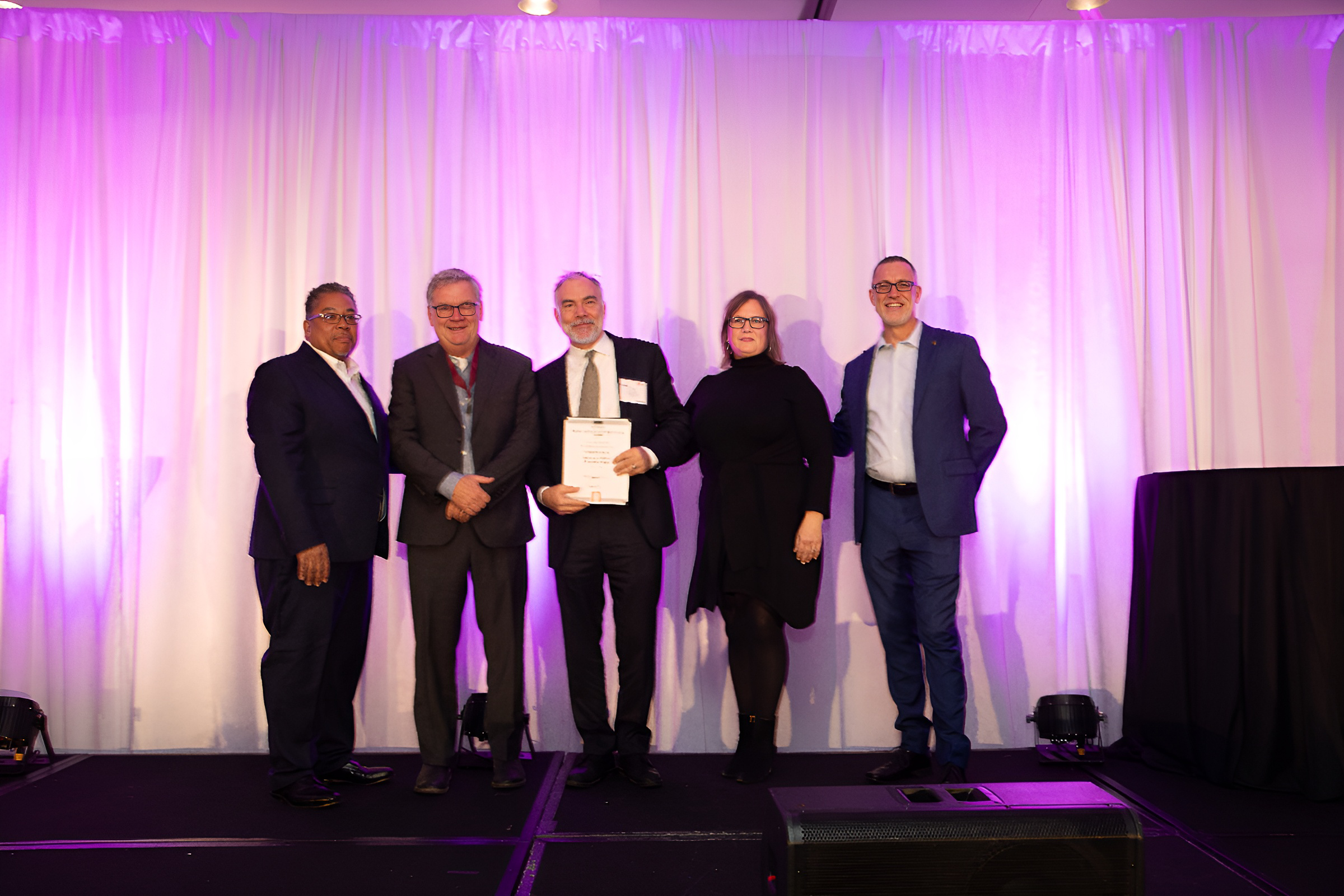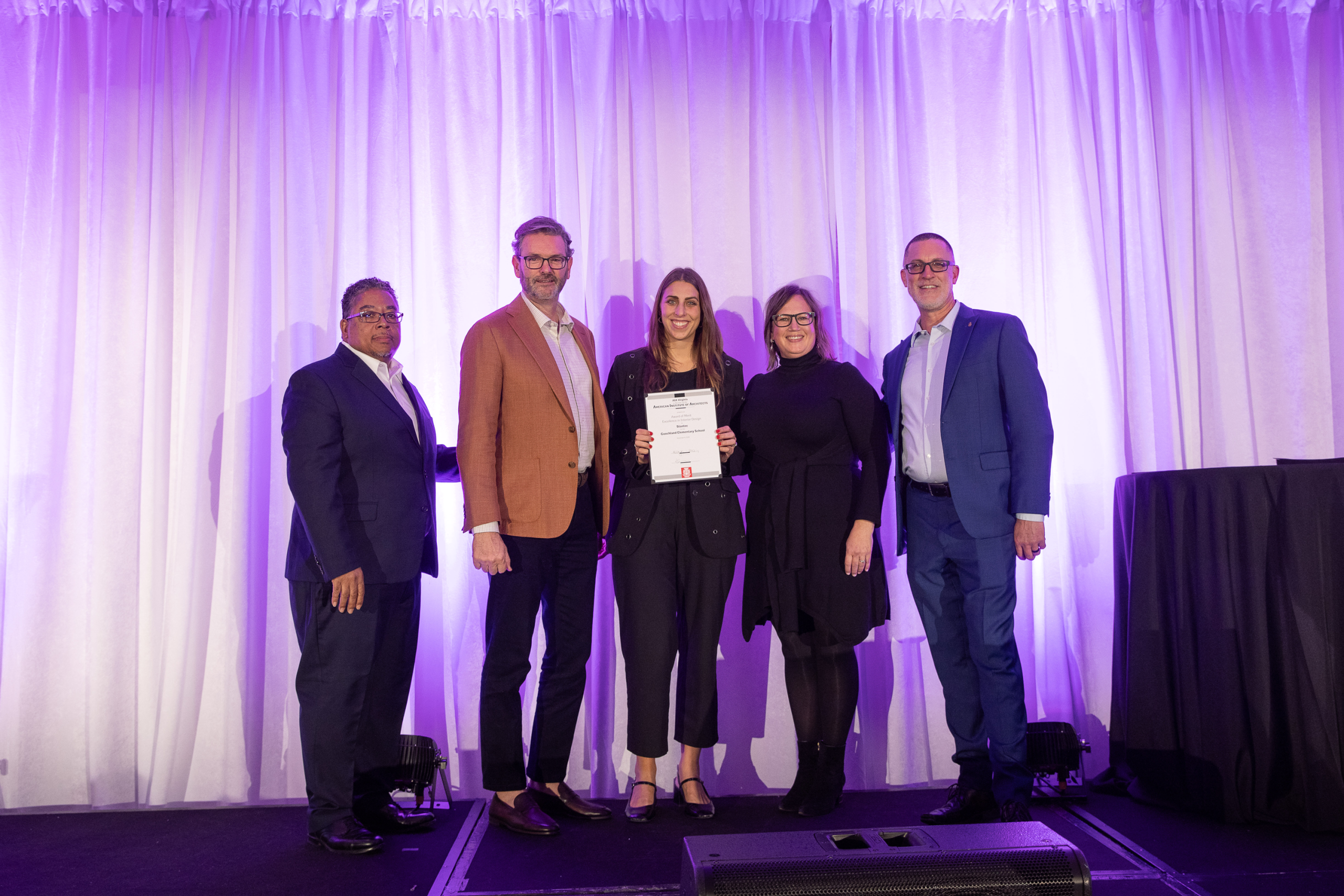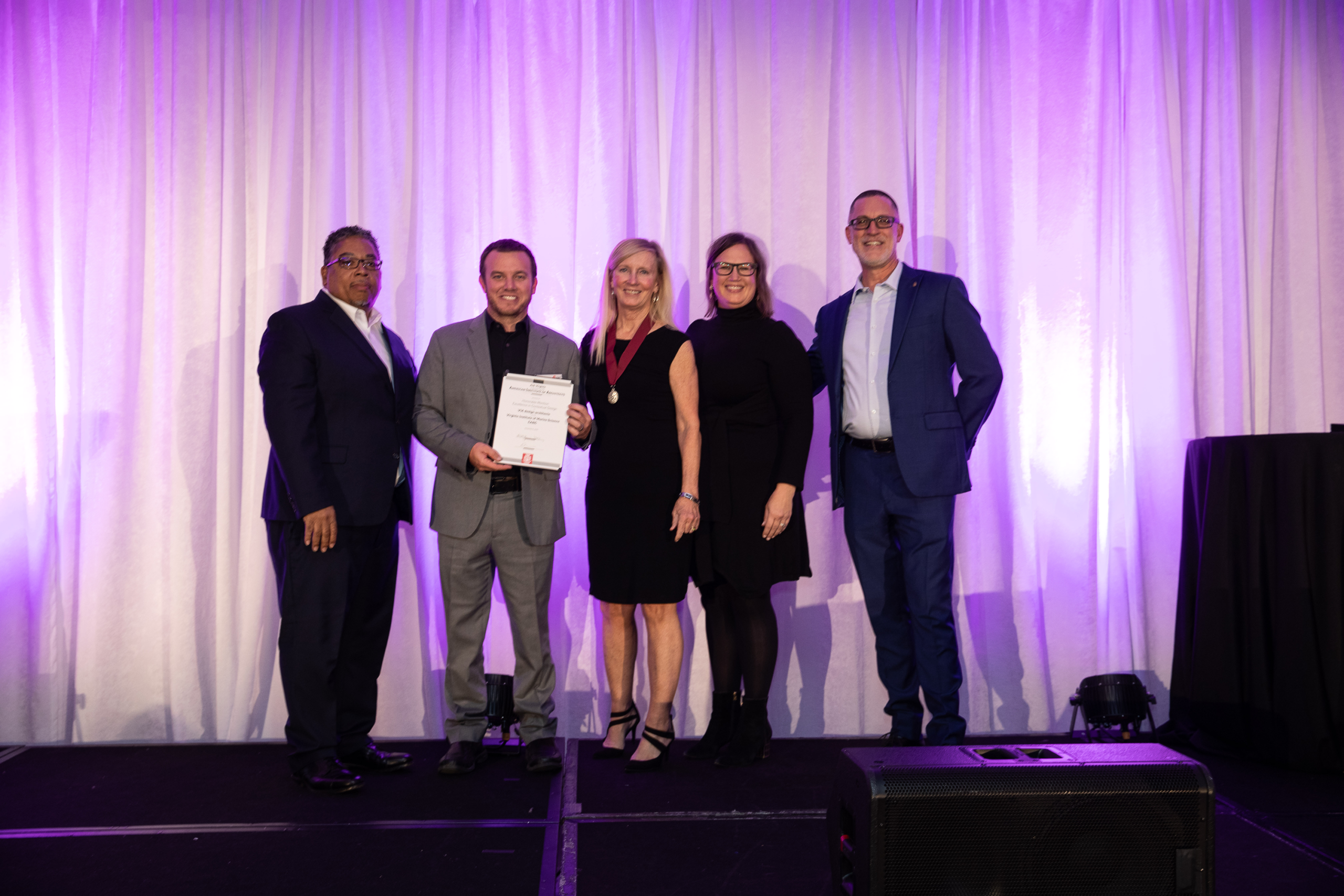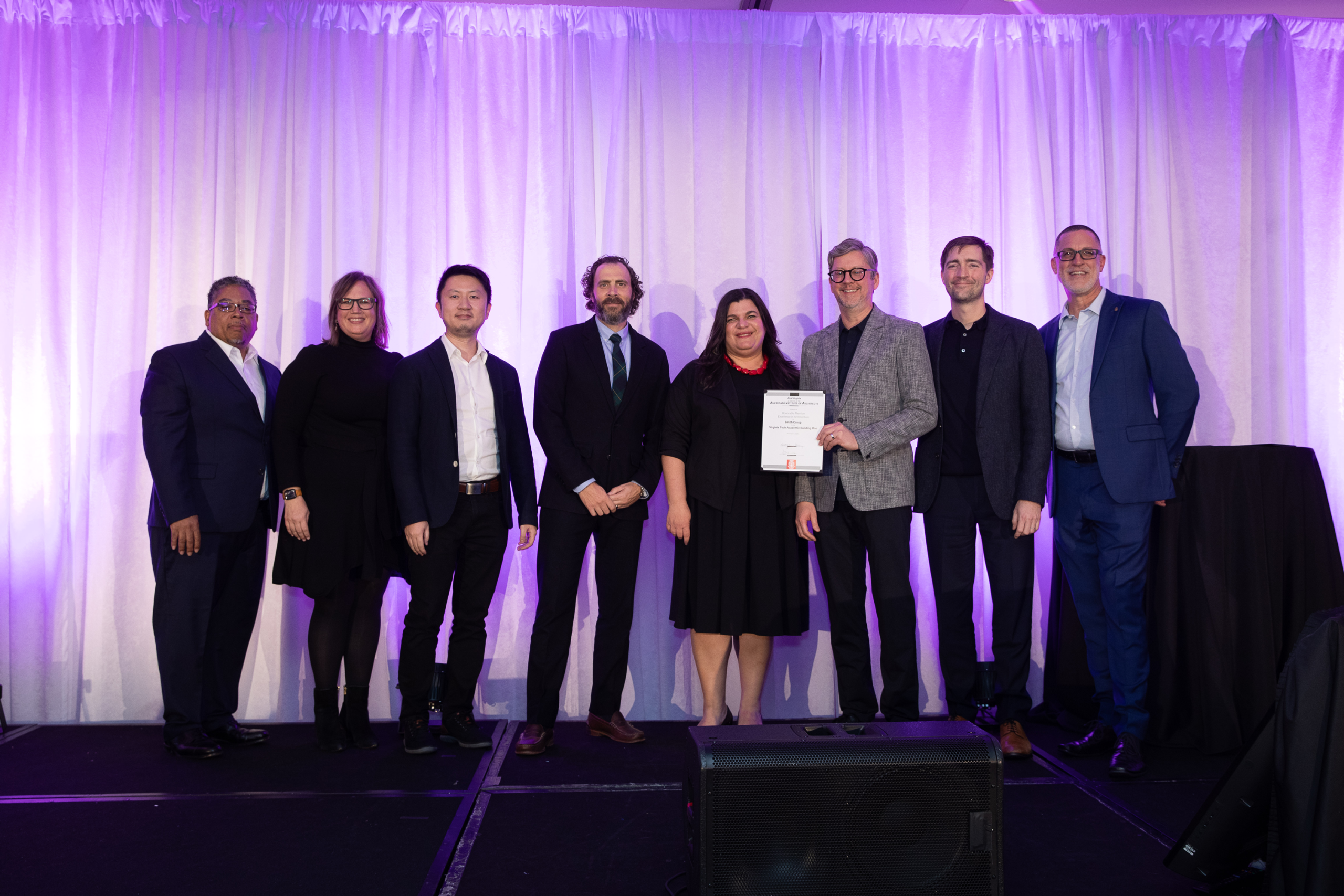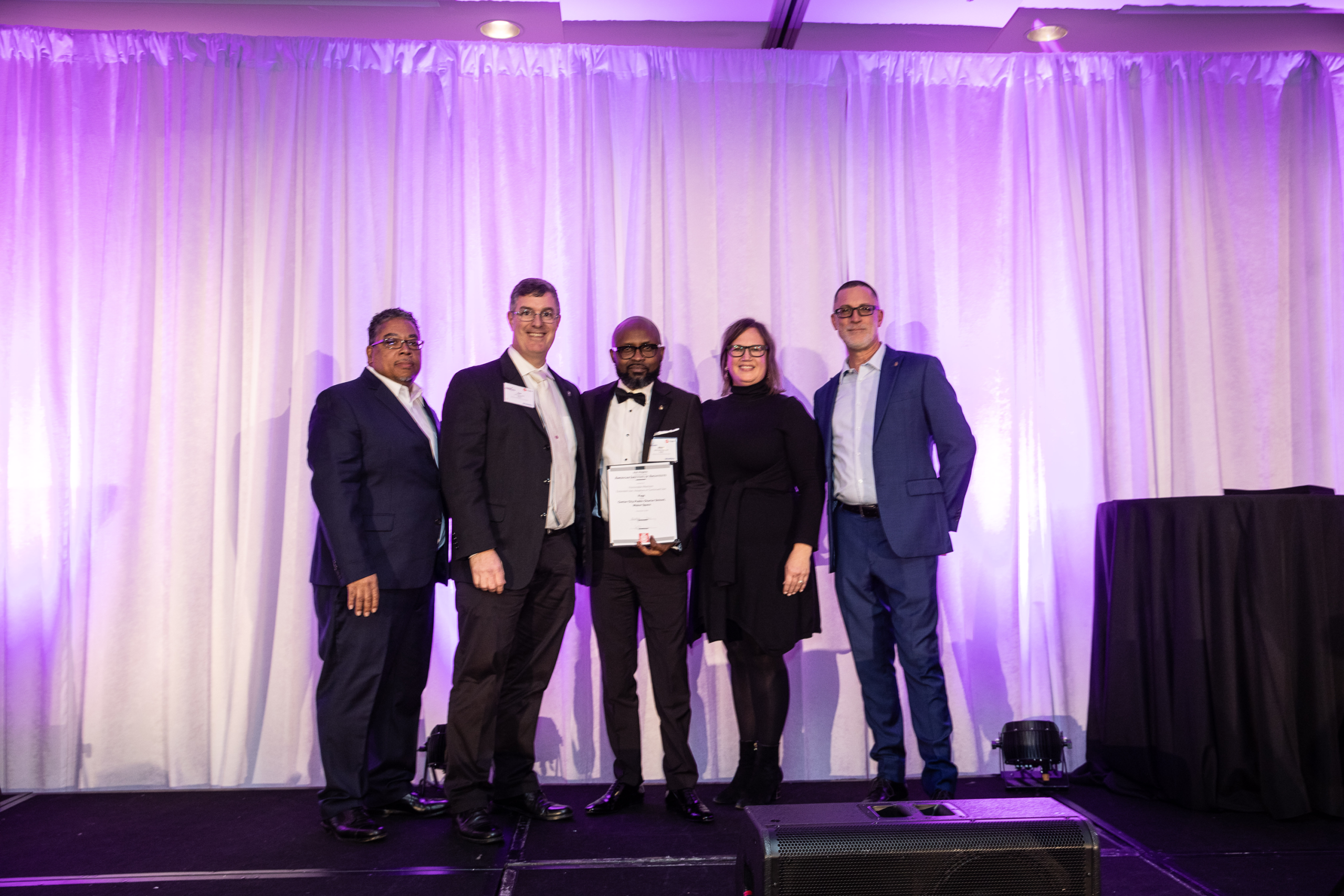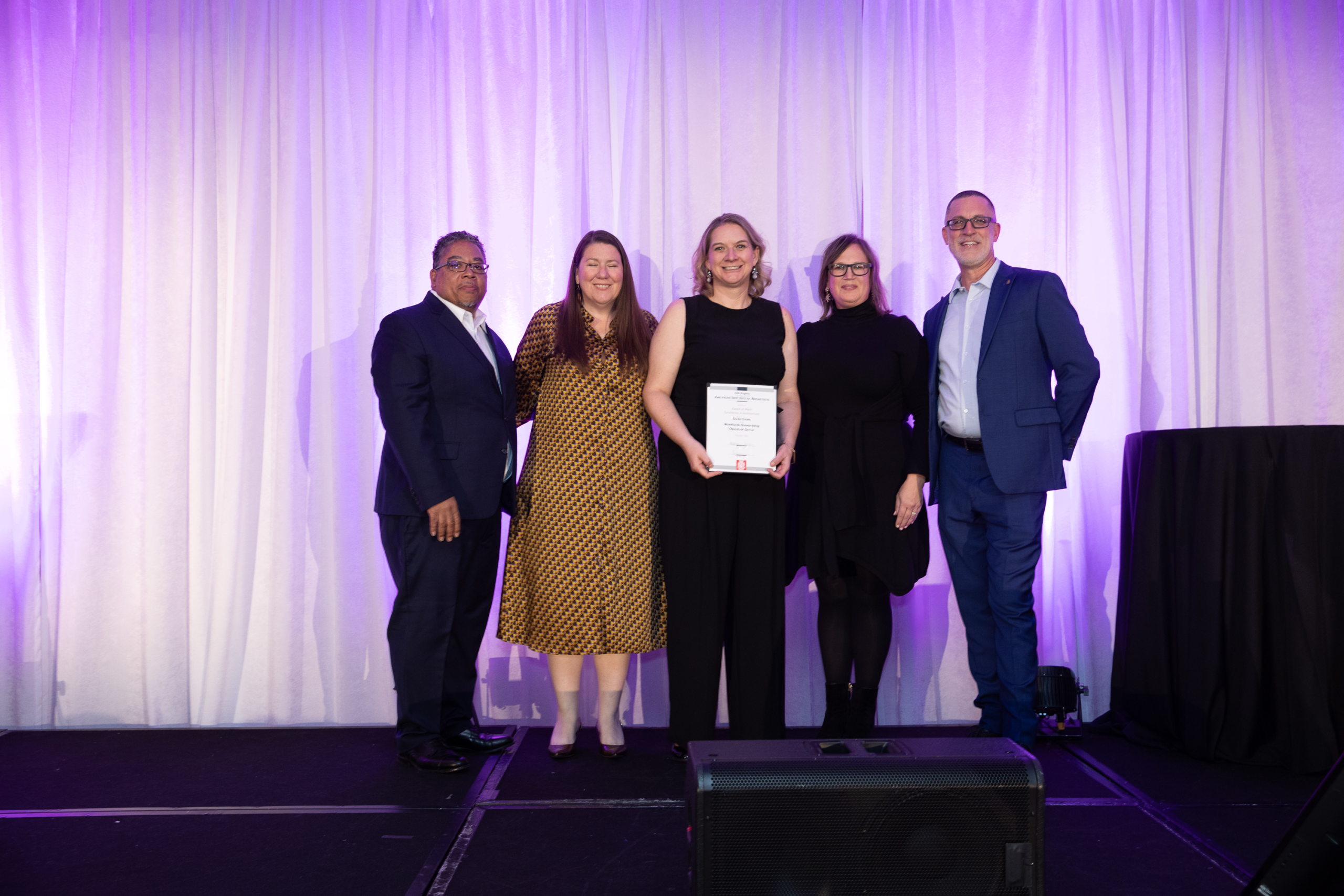
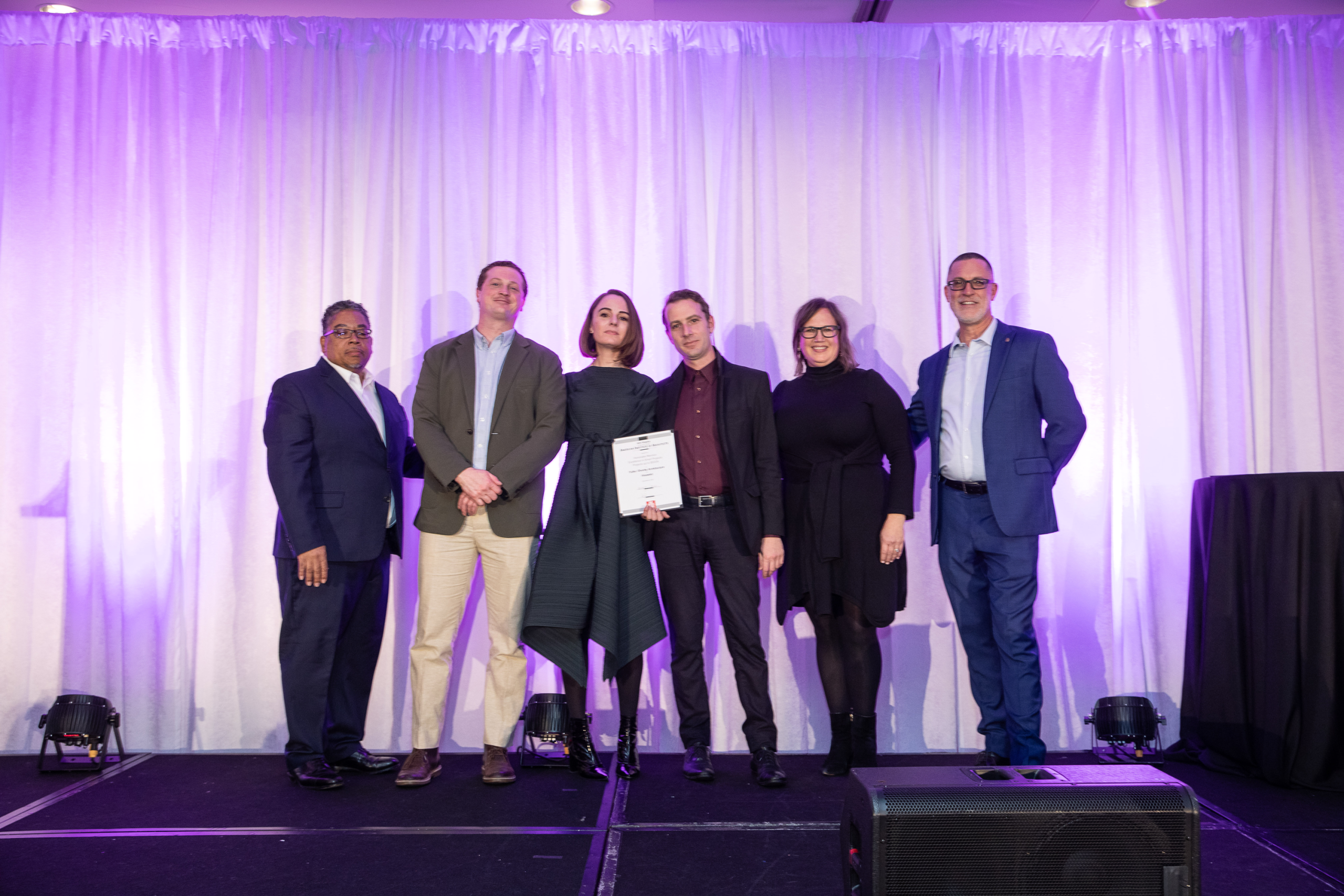
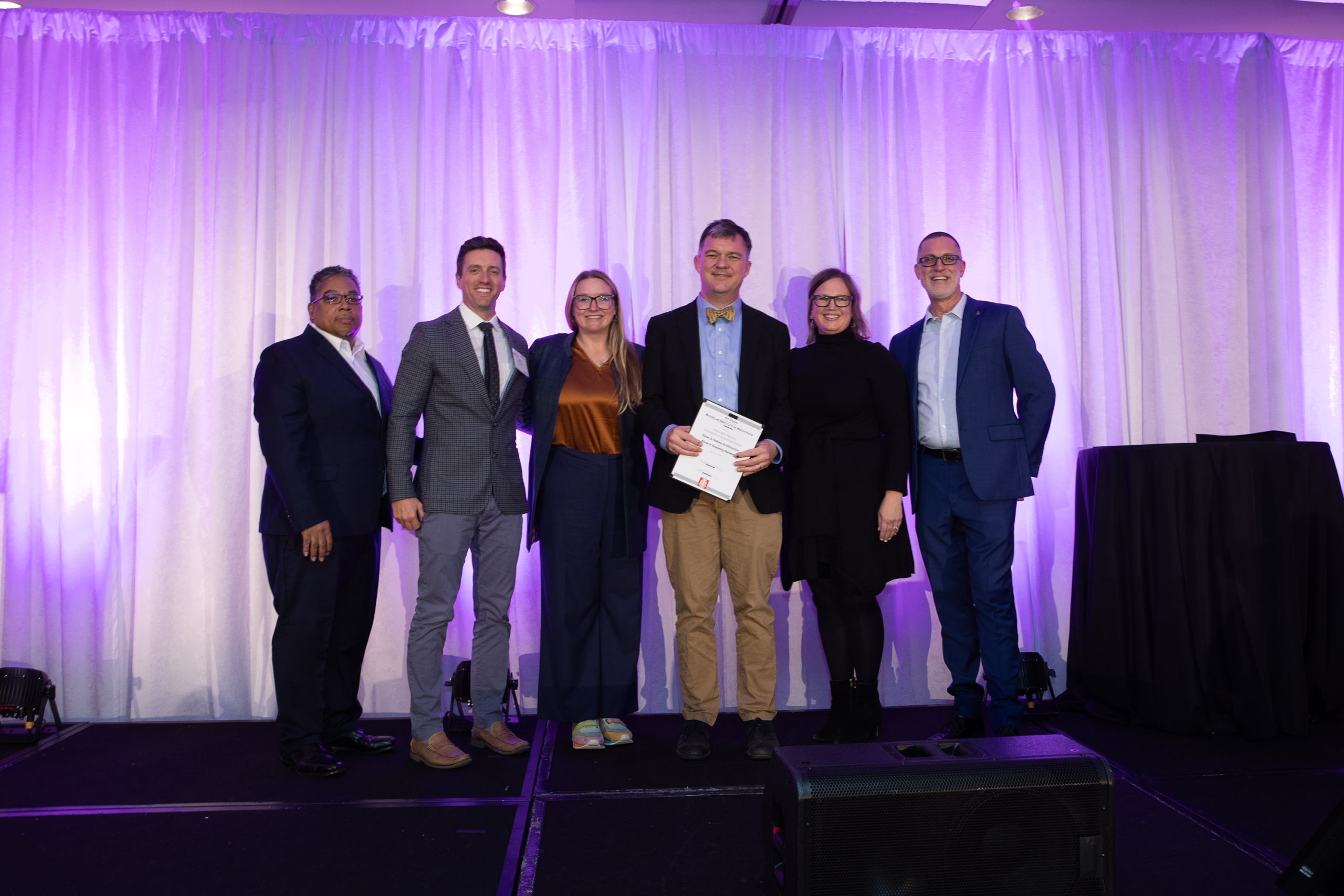
Thursday, November 6, 2025, Design Award winners, Honorees, members, and guests gathered to celebrate the best for 2025. Please enjoy this gallery of photos from the event.
Photos by Cabay Photography – Nancy Parker.
AIA Virginia is pleased to announce the 2025 Design Awards. These honors celebrate projects no older than seven years that contribute to the built environment and are clear examples of thoughtful, engaging design. Within each award category, consideration was given to sustainability, affordability, social impact, innovation, durability, addressing the natural and built context, and meeting the client’s specific needs.
From a field of 125 entries, only 24 were selected by the jury for recognition. These few projects stood above the rest and were particularly notable. Awards of Merit are presented to those projects worthy of recognition and an Award of Honor is reserved for those projects deemed by the jury to be truly exceptional. Consideration is given to aesthetics, social impact, innovation, context, performance, and stewardship of the natural environment — with particular emphasis on the Framework for Design Excellence.
About the Jury
Andrew Chin, Assoc. AIA, Dean of the School of Architecture + Engineering Technology (SAET) at Florida A&M University (FAMU) mustered a tremendously dignified jury to deliberate over the 2025 Design Awards. Joining him was a veritable council of deans, including Abimbola Asojo, FAIA, Dean of the School of Architecture and Planning at Morgan State, C.L. Bohannon, FASLA, Senior Associate Dean of Faculty Affairs and Community Engagement at the University of Virginia, José L.S. Gámez, Dean of the College of Arts + Architecture at UNC Charlotte, Marilys Nepomechie, FAIA, DPACSA, Associate Dean for Architecture at Florida International University, and Quilian Riano, Dean of Pratt Institute’s School of Architecture.
Celebrate these winning designs and designers at Visions for Architecture, the evening of November 6th at the Downtown Richmond Marriott. Purchase Your Tickets>>
In their deliberations, the jury considers aesthetics, adherence to the client program, proven and projected building performance, and concept development.
Sycamore & Oak (Washington, D.C.)
Architecture Firm: Adjaye Associates
Architect of Record: Winstanley Architects & Planners
Contractor: Banneker Ventures
Photographer: Dror Baldinger
New U.S. Embassy Windhoek (Windhoek, Namibia)
Architecture Firm: Honore Carmona / Page
Contractor: Dan Hogan / B.L. Harbert International
Woodlands Stewardship Education Center (Chantilly, Virginia)
Architecture Firm: Quinn Evans (Washington, DC)
Contractor: Cooper Building Services, LLC
Photographer: Joseph Romeo Photography
Ferguson Headquarters 3 (Newport News, Virginia)

Architecture Firm: Clark Nexsen
Contractor: WM Jordan Company, Inc.
Photographer: Mark Herboth Photography LLC
Virginia Tech Academic Building One (Alexandria, Virginia)

Architecture Firm: SmithGroup
Contractor: Whiting-Turner Contracting Company
Photographers: Judy Davis – Studio HDP and Alan Karchmer
James A. Buzzard River Education Center (Richmond, Virginia)

Architecture Firm: 3North
Contractor: Kjellstrom & Lee
Photographer: Yuzhu Zheng Photography, 3North, and QPH Photo
University of Miami Centennial Village (Coral Gables, Florida)

Architecture Firm: VMDO Architects
Contractor: Coastal Construction
Photographer: Alan Karchmer
NASA Langley Research Center Measurement Systems Laboratory (Hampton, Virginia)

Architecture Firm: AECOM
Contractor: W.M. Jordan Company
Photographers: Robb Williamson – AECOM, Scott Wertz – Studio SMW
Micron Team Member Center (Manassas, Virginia)

Architecture Firm: Jacobs
Contractor: The Whiting-Turner Contracting Company
Photographer: Jeffrey Totaro
Howard University Myra Miner Building (Washington, DC)

Architecture Firm: Studio Twenty Seven Architecture
Contractor: MCN Build
Photographer: HDP Studio
Dorothy Height Elementary School (Washington, DC)

Architecture Firm: CGS Architects
Contractor: GCS-Sigal / Grunley JV
Photographer: Chris Ambridge Photography
The awards for contextual design are chosen based on outstanding architecture that perceptibly reflects the history, culture, and physical environment of the place in which it stands and that, in turn, contributes to the function, beauty, and meaning of its larger context.
The Burying Ground Memorial at the University of Richmond (Richmond, Virginia)

Architecture Firm: Baskervill
Contractor: Team Henry Enterprises LLC
Photographers: Ansel Olson and Aaron Doggett
Reservoir District Master Plan: Recreation Center and Park (Washington, DC)

Architect of Record: Quinn Evans
Master Planner and Design Architect: Perkins Eastman DC
Contractor: Gilbane Building Company
Photographers: Quinn Evans and Alan Karchmer Architectural Photographer
Virginia Institute of Marine Science EARC (Wachapreague, Virginia)

Architecture Firm: VIA design architects, pc
Contractor: E.T. Gresham Company, Inc.
Photographer: Yuzhu Zheng Photography
General Assembly Building (Richmond, Virginia)

Architect of Record: Robert A.M. Stern Architects
Associate Architect: Glavé & Holmes Architecture
Contractor: Gilbane Building Company
Photographers: Francis Dzikowski/OTTO and Thomas Holdsworth
Beaverdam Reservoir Park (Loudoun County, Virginia)

Architecture Firm: Studio Twenty Seven Architecture
Contractor: Meridian Construction Co, Inc.
Photographer: HDP Studio
Projects submitted in this category should include either a renovation within an existing building or new construction that expands an existing structure or site. This award intends to recognize thoughtful interventions that create synergy between old and new construction, improve functionality, and energy efficiency, meet contemporary standards for comfort and utility, and/or capitalize on the embodied energy of an existing structure.
Center City Public Charter School, Maker Space (Washington, DC)

Architecture Firm: Page
Contractor: Chiaramonte Construction Company
Photographer: Allen Russ
Slayton House Renovation and Addition (Washington, DC)

Architecture Firm: Robert M. Gurney, FAIA, Architect
Contractor: Peterson & Collins
Photographer: Anice Hoachlander
Interior design projects are judged on mastery of composition, functionality, material and color palettes, and well-integrated adherence to the highest levels of accessibility, health and safety, environmental, and occupant-comfort considerations, standards, and regulations.
Goochland Elementary School (Goochland, Virginia)

Architecture Firm: Stantec
Contractor: Howard Shockey & Sons, Inc.
Photographer: Tom Holdsworth Photography and Jerry Marinzel Photography
Riggs (Washington, DC)

Architecture Firm: Robert M. Gurney, FAIA, Architect
Interior Designer: Baron Gurney Interiors
Contractor: Peterson and Collins, Inc.
Photographer: Anice Hoachlander
Capital Turnaround (Washington, DC)

Architecture Firm: MTFA Design + Preservation, PLLC
Contractor: Forrester Construction
Photographer: Matt Johnson
Aesthetic appeal and functionality are two long-established criteria for home design, as are affordability and resource efficiency. The jury looks at each submission in its totality toward meeting those goals.
Vienna Zero Energy 2024 (Vienna, Virginia)

Architecture Firm: Peabody Fine Architect
Contractor: Allen Built Inc.
Photographer: Kate Wichlinski
Design excellence can be achieved, no matter the size or scope of a project. These awards celebrate projects with modest budgets that have a substantial impact. Small Project Awards are given in three categories, offering opportunities for recognition to a wide range of project sizes and budgets. All projects must demonstrate design achievement, including how the project fits into its environment and how the project connects to the Framework for Design Excellence.
CASA Playhouse/Brown Bear’s Cave (Richmond, Virginia)

Architecture Firm: Hanbury
Contractor: DPR Construction
Photographer: Hanbury
Houselet (Richmond, Virginia)

Architecture Firm: Fuller/Overby Architecture
Contractor: Peregrine Builders LLC
Photographer: Paul Warchol
Andrew Chin, Assoc. AIA, has mustered a tremendously dignified jury to deliberate over the 2025 Design Awards, which are scheduled to be announced to the membership soon.
This year’s jury, a veritable council of deans, includes:
We will celebrate the Design Awardees along with our Honorees in Richmond at our annual Visions for Architecture Gala, the evening of Thursday, November 6, 2025, during our annual convention, Architecture Exchange East. Tickets and registration for the events are available now.
Andrew Chin, Assoc. AIA will serve as the chair of this year’s Design Awards Jury. Andrew is Dean of the School of Architecture & Engineering Technology (SAET) at Florida A&M University (FAMU).
He holds a Bachelor of Design and a Master of Architecture from the University of Florida and a Master of Science in Urban & Regional Planning from Florida State University. Since 1991, he has taught design studios, urban design, and thesis research at the University of Florida, Georgia Institute of Technology, and FAMU.
Chin’s scholarship focuses on the intersection of race and urban form in North Florida communities and has attracted over $2 million in external funding from federal, state, and foundation sources. His contributions to architectural education have been recognized by organizations such as the National Organization of Minority Architects (NOMA) and the Association of Collegiate Schools of Architecture (ACSA), reflecting a sustained commitment to equity, design justice, and community engagement.
Andrew will be inviting professionals and academics to join him on the jury. We look forward to celebrating these achievements at our annual Visions for Architecture Gala on Thursday, November 6, 2025, during Architecture Exchange East.
Entries for the 2025 Design Awards are open until June 27, 2025. For more information and to submit>>
Entries to the 2025 Design Awards program are now being accepted. AIA Virginia’s Awards for Excellence in Architecture (also known as the Design Awards) recognize outstanding design, built and unbuilt, from the past seven years. The program is juried by a team of esteemed practitioners from outside of the region.
No specific number of awards is set, and the program is open to all categories of building as well as interiors projects. The location of projects is not restricted, but any built works submitted for consideration must have been completed on or after Jan. 1, 2018.
All submissions are due by Friday, June 27, 2025 at 5 p.m.
The Design Awards program is sponsored by:
Bronze
Bamforth Engineers + Surveyors
Each entry must include a completed Framework for Design Excellence Project Information Form as page one of their submission. Note: Entrants should not feel obligated to respond to every measure within the Framework — only those that apply to the project being submitted. It is understood that every project is different and may not respond to each measure within the Framework. The jury will consider each design holistically and within context. (Note on the form itself – make sure all of your entry text is visible from the PDF before uploading.)
Submission Requirements
MAY NOT EXCEED 12 MB, 7 pages, and pages 2-7 may not exceed 16:9 widescreen aspect ratio in page size This PDF must include: Page 1: Required Framework for Design Excellence Project Information Sheet (Note on the form itself – make sure all of your entry text is visible from the PDF before uploading) Page 2: Brief project description (voided of design firm’s name or logo) and category to which it is being submitted Pages 3,4,5,6, 7: Photographs, renderings, and/or plans/sections that provide a clear understanding of the project. Also encouraged are concept sketches that communicate the development of the project and or its method of construction. There may not be any information in this document that identifies the firm. Entries with identifying information will be disqualified.
Awards Categories include:
Check out the complete descriptions of each award category, and review the regulations, eligibility requirements, and frequently asked questions for more information.
Entries are due by 5 p.m. on June 27, 2025. Note: You should be prepared to submit your concealed ID and project submission upon entry.
Entry fees
AIA Virginia Members:
$210 for the first project
$180 for each additional project
The Small Projects Category has a reduced entry fee of $100
Note: The entrant must be a member of AIA Virginia to be eligible to receive the member discount. The submitting AIA Virginia member must be a contributor to the design team.
Non-members of the AIAVA (must have an office located in Virginia):
$295 for the first project
$270 for each additional project
The Small Projects Category has a reduced entry fee of $200
Not an AIA Virginia member? Apply for unassigned membership.
Developed by members of the AIA, the Framework for Design Excellence, represents the defining principles of good design in the 21st century. It’s intended to be accessible and relevant for every architect, every client, and every project — regardless of size, typology, or aspiration.
The 10 measures that make up the Framework are intended to inspire progress toward a zero-carbon, equitable, resilient, and healthy built environment. They represent standards of excellence as defined by members of the AIA. These measures align with the AIA’s core values which are collectively defined by members across the country.
The completed Framework for Design Excellence Project Information Form is required and shall be page 1 of each submission. The remaining 6 pages of each submission may be designed and defined by the entrant.
Use the Project Narrative section to describe how the design aligns with the Framework for Design Excellence. Entrants are encouraged to address all applicable measures.
We recognize every project is different and may not respond to every measure within the Framework. The jury will consider the design holistically and within context.
Data may not be available for some metrics on the form, or the client may prefer to keep certain metrics confidential. If this is the case, space is provided on the form to provide an explanation.
Entrants are encouraged to call out extraordinary responses to specific measures in the remaining 6 pages of their submission as well.
Enjoy this photo gallery from the Visions for Architecture Gala on November 7, 2024.
Photos courtesy of Yuzhu Zheng Photography.


AIA Virginia is pleased to announce the 2024 Design Awards. These honors celebrate projects no older than seven years that contribute to the built environment and are clear examples of thoughtful, engaging design. Within each award category, consideration was given to sustainability, affordability, social impact, innovation, durability, addressing the natural and built context, and meeting the client’s specific needs.
From a field of 143 entries, only 19 were selected by the jury for recognition. These few projects stood above the rest and were particularly notable. Awards of Merit are presented to those projects worthy of recognition and an Award of Honor is reserved for those projects deemed by the jury to be truly exceptional. Consideration is given to aesthetics, social impact, innovation, context, performance, and stewardship of the natural environment — with particular emphasis on the Framework for Design Excellence.
About the Jury
A committee of esteemed architects chaired by Mark Cavagnero, FAIA, Principal and Design Leader at Mark Cavagnero Associates Architects in San Francisco, California, judged the entries for AIA Virginia’s 2024 Awards for Excellence in Architecture. Joining Cavagnero on the jury were Craig Hartman, FAIA, Curtis Clay, AIA, Paul Woolford, FAIA, and Bill Leddy, FAIA.
From the jury: In summary, our jury members have all been involved in architectural design for many years. There were many that were very close in our consideration, but the final call was to honor these 19 projects as just slightly more worthy of our accolades and acknowledgment. As a team we thoroughly enjoyed seeing and considering the extremely high-quality designs submitted. Well done, Virginia!
Celebrate these winning designs and designers at Visions for Architecture, on Nov. 7th at the Downtown Richmond Marriott.
In their deliberations, the jury considers aesthetics, adherence to the client program, proven and projected building performance, and concept development.
Stead Park Recreation Center (Washington, D.C.)

Architecture Firm: VMDO Architects
Owner: DC Department of Parks + Recreation
Contractor: GCS SIGAL
Photographer: Tom Holdsworth
Jury Comments: The jury unanimously found this project elegant, handsome, and thoughtful. We discussed its beautiful proportions and its strong, clear diagram. The Net Zero aspect was also very well appreciated. One juror called this project the one true Home Run in the competition, leaving the group with very little need to spend much time reviewing it beyond accolades and appreciation.
U.S. Consulate General in Hyderabad, India

Design Architect: Richard Kennedy Architects
Associate Architect: HGA
Contractor: Caddell Construction Co., LLC
Photographer: Gabe Border
Jury Comments: The jury found this to be a generally very handsome statement of civic presence and cultural architecture. The systems’ explanation in the submittal was well-appreciated. Jurors admired the lobby particularly.
UVA Softball at Palmer Park (Charlottesville, Va.)

Architecture Firm: VMDO Architects
Owner: University of Virginia
Contractor: Jamerson-Lewis Construction
Photographer: Holdsworth Photography
Jury Comments: The jury saw this as a strong and clear architectural form. The base is well detailed and the canopy above is a beautiful form.
The awards for contextual design are chosen based on outstanding architecture that perceptibly reflects the history, culture, and physical environment of the place in which it stands and that, in turn, contributes to the function, beauty, and meaning of its larger context.
Folly & Utility at the MSV (Winchester, Va.)

Architecture Firm: Reader & Swartz Architects, P.C.
Owner: Museum of the Shenandoah Valley
Contractor: Howard Shockey & Sons Inc.
Photography: Beth Reader, FAIA, Chuck Swartz, FAIA, Caleb Snyder, AIA
Jury Comments: The jury appreciated the way the architect clarified the earlier Michael Graves’ project without overshadowing it. The horticultural center was particularly well received as a sophisticated response to the context. Overall the counterpoint was subtle, clear, and in-balance.
Projects submitted in this category should include either a renovation within an existing building or new construction that expands an existing structure or site. This award intends to recognize thoughtful interventions that create synergy between old and new construction, improve functionality, and energy efficiency, meet contemporary standards for comfort and utility, and/or capitalize on the embodied energy of an existing structure.
Canal Window (Washington, D.C.)

Architecture Firm: Cunningham Quill Architects
Owner: Hingham Savings Institution
Contractor: AllenBuilt Inc.
Photographer: Anice Hoachlander Photography, LLC
Jury Comments: The jury saw this as an exemplary piece of workplace architecture and a clever way to engage a historic structure and give it new life. The stair was particularly well received.
The Historic Douglass High School Education & Development Campus (Leesburg, Va.)

Architecture Firm: Beyer Blinder Belle Architects & Planners
Owner: Loudoun County Public Schools
Contractor: Gilbane Building Company
Photographer: Sam Kittner
Jury Comments: The jury, once again, was impressed by the sensitivity and understanding the architects’ displayed in handling such a culturally significant building and all it represents to the community.
The University of Virginia: Renovation of Gilmer Hall (Charlottesville, Va.)

Architecture Firm: Perkins&Will
Owner: University of Virginia
Contractor: The Whiting Turner Contracting Company
Photographers: Todd Mason and Lincoln Barbour
Jury Comments: The jury discussed the care and restraint involved the project execution. It was seen as a very strong example of architects understanding one of our important roles- of maintaining, preserving and communicating the cultural heritage of artifacts entrusted to us.
The historic preservation category focuses specifically on excellence in strategies, tactics, and technologies that advance the art, craft, and science of preserving historically significant buildings and sites. The jury takes into consideration adherence to local, state, and national criteria for historic preservation.
Michigan Central Station (Detroit, Mich.)

Architecture Firm: Quinn Evans
Owner: Michigan Central, Ford Motor Company
Contractor: Christman/Brinker
Photographers: James Haefner, Justin Maconochie, Jason Keen
Jury Comments: The jury found the historic building to be a joyous expression of civic architecture and realized that its preservation was an enormous effort worthy of such a building. The discussion also praised the government entities who found the funding to commit to such a restoration and realization of architecture’s cultural significance within a community.
Renovation of Richmond’s Old City Hall (Richmond, Va.)

Architecture Firm: Quinn Evans
Owner: Virginia Department of General Services
Contractor: Grunley Construction
Photographer: Joseph Romeo Photography
Jury Comments: The jury also found great effort and skill in the resolution of such a complex project. Like the Michigan Central Station, the jury discussed with excitement the wonderful level of commitment it took to not only design and build this but to find the funding to execute it. These projects were really inspiring to the jury for what architects can do with their skill, determination and energy in the 21st Century to carry forward our earlier aspirations and realizations.
The Kanawha (Washington, D.C.)

Architecture Firm: Bonstra | Haresign ARCHITECTS
Owner: Hedden Residential Property Trust
Contractor: Harbor Builders
Photographer: Anice Hoachlander
Jury Comments: The jury appreciated the careful preservation of the street façade and the beautifully detailed contemporary rear face which relates to the historic structure through its sense of scale, craft and care.
Georgetown University Gaston Hall Balcony Reinforcement (Washington, D.C.)

Architecture Firm: Hord Coplan Macht
Owner: Georgetown University
Contractor: The Christman Company
Photographer: Hord Coplan Macht, Anne Chan
Jury Comments: The jury appreciated the hard work and clever determination involved in relocating the columns to celebrate the historic balcony form. The craft and care is very evident.
Interior design projects are judged on mastery of composition, functionality, material and color palettes, and well-integrated adherence to the highest levels of accessibility, health and safety, environmental, and occupant-comfort considerations, standards, and regulations.
Embassy of Australia (Washington, D.C.)

Architect of Record: KCCT
Lead Designer: Bates Smart
Owner: Department of Foreign Affairs and Trade
Contractor: Clark Construction Group, LLC
Photographer: Joe Fletcher
Jury Comments: The jury found the interiors to be stunning and strong in their cohesion. It was seen as a jewel-box in the city, reflecting a level of care and materiality not existing around it. Though submitted as an architecture candidate, the jurors thought the interiors were the strongest of any project submitted and so decided to recategorize the project as such, allowing it to achieve a higher award level.
Design excellence can be achieved, no matter the size or scope of a project. These awards celebrate projects with modest budgets that have a substantial impact. Small Project Awards are given in three categories, offering opportunities for recognition to a wide range of project sizes and budgets. All projects must demonstrate design achievement, including how the project fits into its environment and how the project connects to the Framework for Design Excellence.
North Adams House (Arlington, Va.)

Architecture Firm: Robert M. Gurney, FAIA, Architect
Contractor: Washington Landmark Construction
Photographer: Anice Hoachlander
Jury Comments: The jury enjoyed seeing a home without a huge budget developed into a cheerful, light-filled, and well-organized structure. The plan is logical yet reveals quite a bit of spatial interest throughout.
Sister Cities Pavilion (Philadelphia, Penn.)

Architecture Firm: StudioMB Architects
Owner: Center City District
Contractor: Bittenbender Construction
Photographer: Sahar Coston-Hardy
Jury Comments: The jury found this project to be clever, thoughtful, and quite simple. There is delight in a small but important urban intervention. It reminded one juror of 20th-century pocket parks in its ability to take a small space and create a large engagement.
Sylvan Scrapple (Columbus, Ind.)

Architecture Firm: After Architecture, LLC
Owner: Landmark Columbus Foundation
Contractor: Before Building Laboratory
Photography: Leonid Furmansky, Hadley Fruits for Landmark Columbus Foundation, and After Architecture, LLC
Jury Comments: The jury found this project delightful in the unique combination of humility and budget versus beauty and impact. The submittal was very clearly put together as well. The plan is both rigorous and playful and charming in the way it engages the landscape. The use of materials was also discussed as very clever and well done.
Studio.mp.2 (Washington, D.C.)

Architecture Firm: Robert M. Gurney, FAIA, Architect
Contractor: Ruben Cabrerra
Photographer: Anice Hoachlander
Jury Comments: The jury found this project to be an excellent example of an architect re-purposing smaller elements and fabrics. Nooks and crannies are all utilized to high advantage. It is part of a larger story about clever ways to densify our community without losing character.
CUSHNER (Washington, D.C.)

Architecture Firm: David Jameson Architect, Inc.
Contractor: Ally DC, LLC
Photographer: Paul Warchol Photography
Jury Comments: The jury appreciated the way two small structures were used to create a third element- the garden as the space between. The structures themselves were simple, clear and worked together strongly.
Unbuilt work was considered, as long as it was commissioned by a client as opposed to hypothetical work completed in the mode of research or academic training.
Agricultural Retreat (Churchville, Va.)

Designers: Adam Ruffin, Danny MacNelly
Jury Comments: The jury found this project to be sensitive and emotive in ways not typically seen. One juror was impressed with the development of vernacular forms into a strong contemporary expression.
The Shockoe Project (Richmond, Va.)

Designer: Burt Pinnock, FAIA, NOMA
Jury Comments: The jury found it handsome, lyrical and restrained. One juror appreciated it moving beyond more common African prototypes in its expression. Another jury was happy to see architecture highlighting an important part of history.
AIA Virginia is pleased to announce that Mark Cavagnero, FAIA, Principal and Design Leader at Mark Cavagnero Associates Architects in San Francisco, California will chair the 2024 AIA Virginia Design Awards Jury.
Mark Cavagnero, FAIA, directs a large architecture firm in California. He began his career in New York being mentored by Edward Larrabee Barnes, a nationally prominent architect known for work in the arts and higher education. In 1993, Mark established Mark Cavagnero Associates in San Francisco. The firm’s first project was the modernization of the iconic California Palace of the Legion of Honor. Over the course of the next three decades, Mark has led the design of a large and significant portfolio of new buildings and building modernizations. These projects have been widely published nationally and internationally and have received numerous awards. Projects include the SFJAZZ Center, the Oakland Museum of California, the ODC Theater Center, the Moscone Convention Center, the San Francisco Public Safety Building, the Diane B. Wilsey Center for Opera, the Finn Center in Mountain View, and the Bowes Center for the Performing Arts at the San Francisco Conservatory of Music. His work has included multiple projects in New York, Chicago, and Atlanta. He also has executed projects in numerous locations abroad: London, Amsterdam, Munich, Dublin, Tokyo, Paris, Hyderabad, and Sydney. He also currently serves as the master architect for the global software company Salesforce. Current projects include three embassies for the U.S. State Department- located in Estonia, Trinidad and Tobago, and Burkina Faso.
Mark’s projects have garnered well over 100 major design awards. These awards range from national, state, and local awards from the American Institute of Architecture, the Chicago Athenaeum Awards for both International and American Architecture, the International Interior Design Association Awards and numerous others. Mark was personally honored with the 2010 Distinguished Practice Award and the 2015 Lifetime Achievement Maybeck Award from the American Institute of Architects. In 2012 the firm received the Firm of the Year Award from the California Council of the American Institute of Architects. Under Mark’s leadership, the firm ranked #8 in Architect Magazine’s ranking of the top architecture firms in the country for design.
Mark has been very involved in the community in California. He has been a Board Member for a number of institutions, by way of example, currently serving on the Board of Trustees of the UC Berkeley International House, an organization initiated by the Rockefeller family to promote international understanding and collaboration for the past hundred years. His community efforts have also included many tasks of planning commission participation and chair leadership, athletic coaching, involvement with libraries and theater organizations, and fundraising for his college and graduate school alma maters. He has served UC Berkeley’s School of Architecture as a distinguished Howard Friedman Professor and as a member of the Chancellor’s Curriculum Committee.
Other 2024 Design Awards Jury members include:
Craig Hartman, FAIA
Craig W. Hartman, FAIA, is an architect and Design Partner in Skidmore, Owings & Merrill’s San Francisco, California, office. His most prominent work includes the Cathedral of Christ the Light for the Roman Catholic Diocese of Oakland. It is the first cathedral in the world built entirely in the 21st century. He also completed the International Terminal at the San Francisco International Airport, Harvard University’s Northwest Science Building, and the new US Embassy in Beijing.
Hartman was born in Indianapolis, Indiana, and graduated from Wolf Lake High School in 1968. He enrolled in Ball State University’s College of Architecture & Planning and spent a year studying under Cedric Price at The Architectural Association in London. After graduating from Ball State in 1973, Hartman started his career at SOM in Chicago. He has served as a Design Partner in SOM’s Houston and Washington, D.C. offices prior to joining the San Francisco office as an architectural Design Partner for SOM’s West Coast operations in 1990.
In 2001, Hartman became the youngest recipient of the AIA California Council’s Maybeck Award—an Individual Honor Award for Outstanding Achievement expressed in a body of work. In September 2008, Hartman received the Vatican’s Knighthood for Service to Society (St. Sylvester) from Pope Benedictus XVI during the dedication ceremony for The Cathedral of Christ the Light. He is a member of the AIA’s College of Fellows and a Design Futures Council Senior Fellow.
He received an Honorary Doctor of the Arts Degree, conferred by Ball State University, during the school’s 2009 commencement ceremony. He also received an Honorary Doctor of the Arts Degree from DePaul University in 2017.
Curtis Clay, AIA
Curtis Clay is the Director of Architecture at the Department of State’s Bureau of Overseas Buildings Operations. Mr. Clay is responsible for overseeing a wide range of architectural project design functions that support the design, construction, and renovation of diplomatic posts overseas. Mr. Clay is a licensed architect in Virginia and the District of Columbia and supervises all phases of architectural design and construction. He has over 20 years of experience in the design and construction industry including government, commercial, institutional, and private work.
OBO is the single real property manager for all U.S. diplomatic facilities around the world, managing a portfolio of properties in over 291 locations around the world, valued at over $80 billion. OBO’s mission is to provide safe, secure, and resilient facilities that represent the U.S. government to the host nation and support its staff in the achievement of U.S. foreign policy objectives.
Paul Woolford, FAIA
As the design principal for HOK’s San Francisco studio and member of the firm’s global design board, Paul leads interdisciplinary teams of architects, engineers, interior designers and landscape architects.
Paul has focused his entire career on rethinking the relationships between people and their environments. His design of innovative, people-centered buildings has earned him numerous accolades, including three AIA COTE Top Ten Awards and consistent LEED Platinum certifications.
Under Paul’s guidance, our San Francisco studio has been recognized as AIA California’s Firm of the Year, and his teams have won dozens of regional and national design awards.
Beyond his professional accomplishments, Paul is an influential figure in architectural education, having taught at UC Berkeley, Cornell University and the Savannah College of Art and Design. He is also an engaged member and leader of various organizations, demonstrating his dedication to public service and urban planning.
Bill Leddy, FAIA
William Leddy, FAIA, is a Founding Principal of San Francisco-based LEDDY MAYTUM STACY Architects (LMSA), the 2017 recipient of the national American Institute of Architects Firm Award. For over three decades he has been a national leader in the design of environments that promote social justice and advance urgent climate action. LMSA has received over 175 regional, national and international design awards and has been recognized by numerous organizations including the American Institute of Architects, the French Institute of Architects, the Norwegian Association of Architects, the U.S. Department of Energy, the San Francisco Museum of Modern Art, and the National Building Museum. The firm is one of only three in the nation to have received eleven or more national AIA Committee on the Environment Top Ten Green Project awards. Leddy has lectured widely and served as visiting professor at the Southern California Institute of Architecture and the California College of the Arts, as the Howard A. Friedman Visiting Professor at the University of California, Berkeley, and the Pietro Belluschi Distinguished Visiting Professor at the University of Oregon. As past chair of both the national AIA Committee on the Environment Advisory Group (COTE) and the AIA California Climate Action Committee, he has worked for decades to accelerate the decarbonization of the built environment in California and beyond. His firm’s new book – “Practice with Purpose: A Guide to Mission Driven Design” was published in 2023.