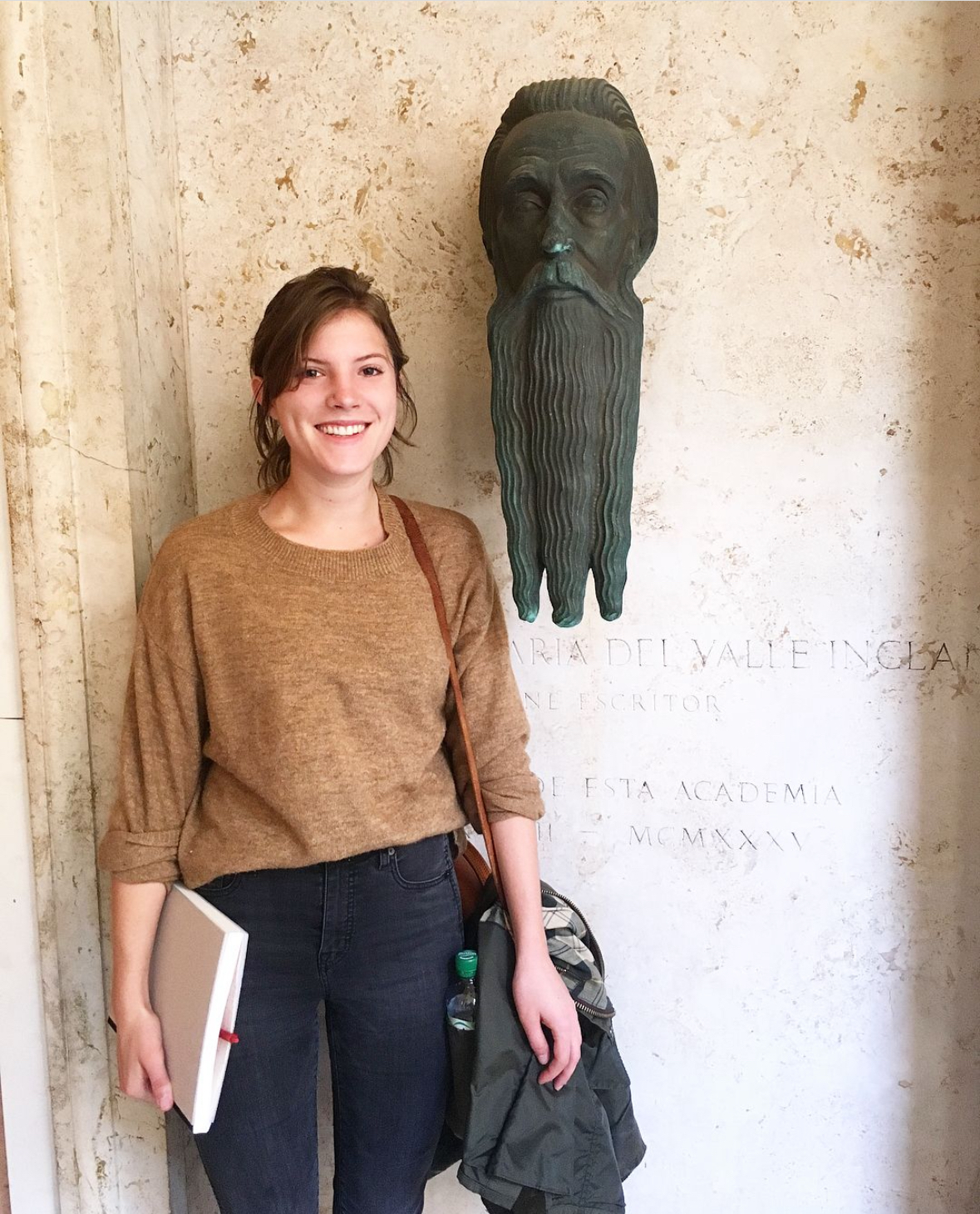
Andrew Chin, Assoc. AIA will serve as the chair of this year’s Design Awards Jury. Andrew is Dean of the School of Architecture & Engineering Technology (SAET) at Florida A&M University (FAMU).
He holds a Bachelor of Design and a Master of Architecture from the University of Florida and a Master of Science in Urban & Regional Planning from Florida State University. Since 1991, he has taught design studios, urban design, and thesis research at the University of Florida, Georgia Institute of Technology, and FAMU.
Chin’s scholarship focuses on the intersection of race and urban form in North Florida communities and has attracted over $2 million in external funding from federal, state, and foundation sources. His contributions to architectural education have been recognized by organizations such as the National Organization of Minority Architects (NOMA) and the Association of Collegiate Schools of Architecture (ACSA), reflecting a sustained commitment to equity, design justice, and community engagement.
Andrew will be inviting professionals and academics to join him on the jury. We look forward to celebrating these achievements at our annual Visions for Architecture Gala on Thursday, November 6, 2025, during Architecture Exchange East.
We understand the dedication and effort required to study for and pass the ARE. Congratulations to the following members for passing their exams and gaining licensure. This is great news that thrills all of us and we are so proud to call you an architect!
Have you recently passed the ARE? Upgrade your membership to Architect using this AIA form. or send an email to your Member Services Director, Cathy Guske, cguske@aiava.org
Are you ready to get licensed? AIA Virginia has discounted 60-day Amber Book subscriptions. Read more about it here>>
Support our Associate members on their path to licensure with your support of the discounted Amber Book subscription. Donate to the AIA Virginia Foundation
Have questions about licensure? Contact AIA Virginia’s State Licensing Advisor, Gina Robinson, AIA, at gina.robinson@hdrinc.com
We are always excited to welcome new members to Virginia. The following members recently joined the ranks of AIA Virginia.
New Architect Members Gwenedd Murray, AIA (Central Virginia) Emily Wright, AIA (Northern Virginia)
New Associate Members Scott Cowell, Assoc. AIA (Northern Virginia) Faye Davies, Assoc. AIA (Northern Virginia) Rezaul Khan, Assoc. AIA (Northern Virginia) Yichun Xu, Assoc. AIA (Northern Virginia)
Transfers into AIA Virginia Mehedi Hasan Bappi, Assoc. AIA (Northern Virginia) from AIA Maryland Scott Cowell, Assoc. AIA (Northern Virginia) from AIA Maryland Spencer S. Sear, AIA (Northern Virginia) from AIA Washington DC
Here’s your chance to design the next AIA Virginia member birthday postcard! AIA Virginia will feature your design on the front of the birthday postcards sent to all members since 2018.
Enter your design(s) for a chance to win a free registration to AIA Virginia’s 2025 annual conference, Architecture Exchange East.
Entries are welcome from AIA Virginia members, Virginia architecture program students, or other architecture firm employees.
Specifications: Size: 4 inches tall by 6 inches wide File type: high-resolution .jpg files all color palettes welcome!
Fellows in the Region of the Virginia’s recently gathered in Virginia Beach for their annual gathering, this year organized by Jane Rathbone, FAIA, at Hanbury. The weekend was filled with really interesting events, including tours of the historic Cavalier hotel renovation and restoration, along with the almost completed Atlantic Park Wave and theater venue, designed by Hanbury. The annual dinner was held at the Brock Environmental Center, owned by the Chesapeake Bay Foundation, with breakfast the morning after at the Cavalier hotel.
Do you have a colleague or a friend of the industry who deserves recognition? Is there a firm with a great culture that consistently produces incredible work? Is there a building that has captured your heart? Consider nominating them for an AIA Virginia Honor.
Nominations for all AIA Virginia honors may be made by individual members, by chapter honors committees, by AIA Virginia committees, or by the Board of Directors itself.
In response to a desire that has been emerging in several pockets of our organization, we are launching a portal through which members can indicate and self-report their interest and expertise in a wide range of subjects. And you are hereby warmly welcomed to enter your information.
We will use the information gathered through this portal as an internal rolodex; to be used within the organization. Members’ interests can be consulted when we are considering and developing programs and events. And individual member’s expertise can be more readily identified when we want to access that specific knowledge for not only our programs and events, but also towards the interests of our strategic partners and stakeholders (e.g., allied organizations, elected officials, policymakers).
Please note that through the SME Portal, you are encouraged to indicate your interests and/or expertise as an individual. (The expertise and experience of your firm should be commended to the Firm Directory; which is public facing.)
Your cooperation is much appreciated – as is the cultivation of your interests and your expertise. Keep up the great work.
Purpose This tool is designed to help organizations identify and evaluate potential risks related to external influences on the Architecture, Engineering, and Construction (AEC) sector. It highlights policy, regulatory, and market trends that may impact planning, operations, partnerships, and program outcomes.
How to Use This Tool
Review the listed risk categories and example impact areas.
Use the sample risk identification questions to guide discussion and analysis.
Incorporate relevant insights into a broader risk assessment process or decision-makingframework.
Use alongside internal risk evaluation tools for a more complete understanding of potentialvulnerabilities.
Why It Was Created The AEC sector operates in a rapidly evolving policy and regulatory environment. This reference was developed to provide organizations with a structured lens to proactively assess how external factors — such as federal executive orders, climate policy, workforce challenges, or funding changes — may influence their initiatives or strategic planning. It is intended as a flexible resource to support strategic foresight, cross-functional discussions, and risk-informed decision making.
Architectural competitions are more than just platforms for recognition, they are laboratories for architectural speculation. They invite us to step beyond constraints and test ideas that may be too radical, too speculative, or simply explore potential architectural ideas. In our recent participation in the Living Ruins competition, our team (Irem Sezer, Alp Esassolak, Bilgehan Duman) embraced this opportunity, and we’re honored to have received an Honorable Mention for our proposal.
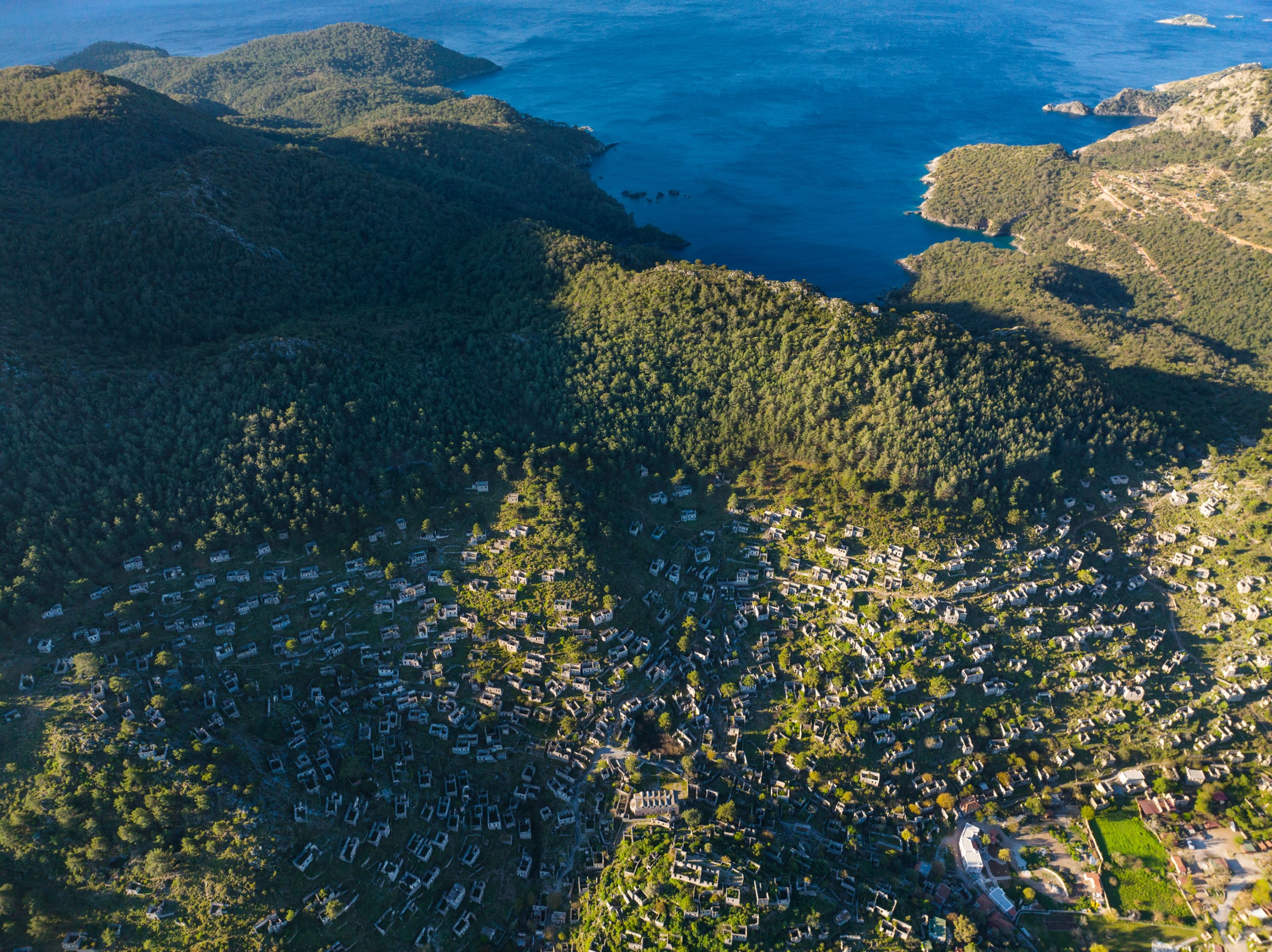
In the Living Ruins competition, our team took this challenge with ReRoot Kayaköy, a proposal that reimagines the abandoned Greek village of Levissi (Kayaköy), Turkey, as an interactive open-air museum.
Kayaköy, once a vibrant Greek village and now a ghost town, is layered with memory and silence. Rather than treat it as a static monument, ReRoot Kayaköy activates the site as a living cultural landscape. Our design introduces lightweight activity pods and new exploratory pathways, all grounded in ecotourism principles. These interventions respect the site’s fragility while inviting deeper engagement through play, learning, and storytelling. Guided by the conceptual framework of memory and shifts, we sought to bridge past and present. The proposed pathways, Tales, Celebration, and Fig & Vineyard, guide visitors through different thematic layers:
Tales Path: Focused on cultural heritage, connecting key historic landmarks with immersive storytelling stations.
Celebration Path: Dedicated to ecological and recreational themes, providing spaces for reflection, education, and community events.
Fig and Vineyard Path: Tied to the local economy, emphasizing agricultural production, tasting experiences, and connections to the land.
Each path is activated by programmed pods, designed with sustainable materials and offering diverse experiences like workshops, sensory play, and historical narratives.
Gamification as a Design Strategy
At the heart of the visitor experience is a game that transforms guests into “time travelers”, who discover the site’s past and present through exploratory missions, so each visit becomes a unique, replayable journey. This gamification strategy blurs the lines between education, adventure, and memory-building, while reinforcing the site’s cultural, historical and ecological identity.
Irem Sezer, Assoc. AIA Coastal Adaptation & Resilience Design Post-Graduate Research & Development Fellow
By the end of each project, most of us are READY for it to be over. We’ve spent months or years working through designing, drawing, (sometimes re-designing and re-drawing), overseeing construction with its countless submittals, RFIs, and on-the-spot problem solving. We know this project like the back of our hands, and are ready at a moment’s notice to answer any question thrown our way. Then suddenly, the day comes where it’s just…. over. The paint has dried, the furniture, art, and finishing touches have been installed, and it’s time to hand your project off to the clients. There is an overwhelming feeling of relief – you’ve made it! It’s no longer your responsibility! It’s out there in the world for others to enjoy! But, is it weird to feel a little sad that the process is over?
Ashleigh Walker, Associate AIA
I am currently about to wrap up a project that has preoccupied a majority of the last ~3.5 years of my career, and while I am ecstatic that the project is finally built, I’ll admit, I’m a little sad it’s ending. I had one of my last site visits earlier this week and am still in awe that the small idea of a design my team worked on all those years ago is now suddenly real and existing in this world. What started with concept images, sketches, renderings, and theoretical discussions has become an actuality. Brought to life by an incredible team from various trades who worked together to create something truly special. And while yes, not ALL of the process was enjoyable **cough door schedules**, **cough 1,000,000 submittal reviews and Bluebeam markups**, we somehow made it to the finish line.
I think it’s a rather humbling moment, seeing a project you worked on be completed. Especially a project you were able to work through all the phases of on. Where the spaces are so engrained in your mind that the project feels like a real person, a friend (or enemy at times). It can also be a bit scary to introduce this project to the world – you feel like you must defend or explain every decision to others. Like “no, that access panel was NOT supposed to be there, but we had to add it because blah, blah, blah…” or “actually, the ceiling transition was supposed to happen here not there because x,y,z…”. Everything about the project feels personal because of the time and effort you put into the process. And now, it’s time to hand it over for someone else to take care of it? If you have any sort of control issues (which I most certainly thing most of us in this field do…), then this is no easy feat.
But what comes next?
Inevitably, there will be a “shoulda, coulda, woulda” phase. You’ll look back and think ‘wow, I really wish we had done this or that differently’. There will be a running list of “lessons learned” haunting you as you begin the next project, and you might wake up in the middle of the night remembering some tiny detail that wasn’t finished correctly. But through all this, it’s important to remember and celebrate what WAS achieved, not what could have been. No project will be 100% accurate to what was drawn or initially designed, and those differences are a testament to the problem-solving, perseverance, and coordination effort between the project teams. At the end of the day, if you can look back and be proud of the work that was built, be proud of the space you’ve created for others to enjoy and experience, then it was all worth it – even that door schedule.
So, take a deep breath, let yourself celebrate a bit, learn from your mistakes, and get ready to start it all over again.
Ashleigh Walker, Assoc. AIA Associate Director AIA Virginia Board of Directors