The Field Station invites participants to design a multidisciplinary campus within the Shenk Property, a secluded nature reserve along Virginia’s Severn River (USA). Surrounded by wetlands and woodlands, this site offers a unique opportunity to blend architecture with one of the East Coast’s most sensitive ecosystems.
Participants are asked to imagine an R&D Field Station that fosters innovation, research and collaboration across fields – science, art, technology and beyond. The architecture must be adaptable, sustainable and deeply responsive to the shifting terrain and climate risks of the site. The project should go beyond functionality: it must serve as a model for resilient design, where built and natural environments interact harmoniously.
Winning proposals will be exhibited during the Architecture Exchange East 2025 Conference, themed “Design the Future: Advancing Technology, Community & Business” to a wide audience of design professionals and industry leaders.
AIA Virginia Members Register for Free AIA Virginia members are eligible for free registration. To use this offer, the registration code must be applied at checkout and must match the email address associated with the member’s AIA account (Only the team leader—the person registering—must be an AIA Virginia member; other team members are not required to be members).
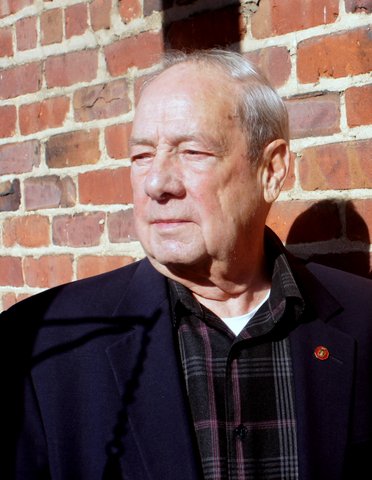
HUGH CLARK MILLER, FAIA, FAPT, 95, passed away peacefully May 12, 2025, at Bon Secours/St. Mary’s Hospital in Richmond, VA after a brief illness.
Born in Lancaster, PA and educated at the Mercersburg Academy and the University of Pennsylvania Graduate School of Fine Arts, MILLER was an architect and educator, an internationally-recognized innovator and leader in historic preservation–especially technical preservation of buildings and structures–landscape preservation, and cultural tourism.
MILLER worked for the US National Park Service for much of his career. His years there were book-ended by restoration of American icons: from Independence Hall in the early 1960s to the Statue of Liberty in the late 1980s. He developed training programs for cultural resource management, preservation maintenance and related technical courses for historical architects. He initiated studies that led to an NPS manual on the preservation of cultural landscapes, organized field schools in cultural landscape management, and coordinated NPS national programs in landscape preservation. Following federal retirement, he was appointed State Historic Preservation Officer for the Commonwealth of Virginia by Governors Gerald Baliles and Douglas Wilder.
He served internationally as an advisor on cultural tourism, development of park systems, and preservation of cultural property in Jordan and Turkey, and made special studies in Lebanon, Greece, Iran, India, Singapore, Macau, Mexico, and England. He was active in the International Council of Monuments and Sites (ICOMOS), serving on its Cultural Tourism Committee, on the US/ICOMOS Board of Directors, and as a Fellow.
MILLER was a life-long educator. He and NPS colleagues pioneered a maintenance-focused approach to preservation taught to craftsmen and other practitioners throughout NPS. He taught seminars and workshops on building and landscape preservation at universities and to national audiences. He was Adjunct Professor of Preservation Technology at Goucher College for over twenty years in their Master of Arts in Historic Preservation program.
He was active in numerous professional organizations. He served the American Institute of Architects (AIA) on its Committee on Historic Resources and as a Fellow. He was a past director and Fellow of the Association for Preservation Technology (APT), and founder and past president of the APT Foundation. He was a founding member of the Executive Committee of the Alliance for the Preservation of Historic Landscapes and served on its Board. He was an Honorary Member of the American Society of Landscape Architects. In addition to fellowships, professional recognition for lifetime achievement included the Marcellus E. Wright, Jr. Award, James River Chapter AIA (2001), and the William C. Noland Medal, AIA Virginia (2003).
MILLER was preceded in death by his wife of over 60 years, STELLA HAWKINS MILLER. He is survived by his brother, Don, three children, four grandchildren, and five great-grandchildren.
Memorial contributions in lieu of flowers may be made to the Rotary Club of Richmond or the charity of your choice. Remembrances can be shared at the Cremation Society of Virginia.
Fresh from AIA24 in Boston, I’m carrying a renewed sense of energy and purpose that always comes from spending three days with brilliant architect friends, both old and new. Surrounded by bold ideas, inspiring keynotes, and the wisdom of architectural heroes, I was reminded that imagination is not just a creative spark, it’s the cornerstone of innovation in our profession.
In every challenge our communities face, architects have the opportunity to dream big and think boldly. Whether harnessing the power of AI in our practice, rethinking housing as infrastructure, or designing with humility for our most vulnerable communities, our creative vision is what turns possibility into progress.
Let this be a reminder to lean into that imagination. Continue to explore, to challenge, and to lead with courage, curiosity, and care.
Stay tuned—this conversation picks back up at Architecture Exchange East, November 5–7 in Richmond, where we’ll dive into Design the Future: Advancing Technology, Community & Business. You won’t want to miss it.
Warmly,
Meagan W. Jancy, AIA, LEED AP bd+c President AIA Virginia
We understand the dedication and effort required to study for and pass the ARE. Congratulations to the following member for passing their exams and gaining licensure. This is great news that thrills all of us and we are so proud to call you an architect!
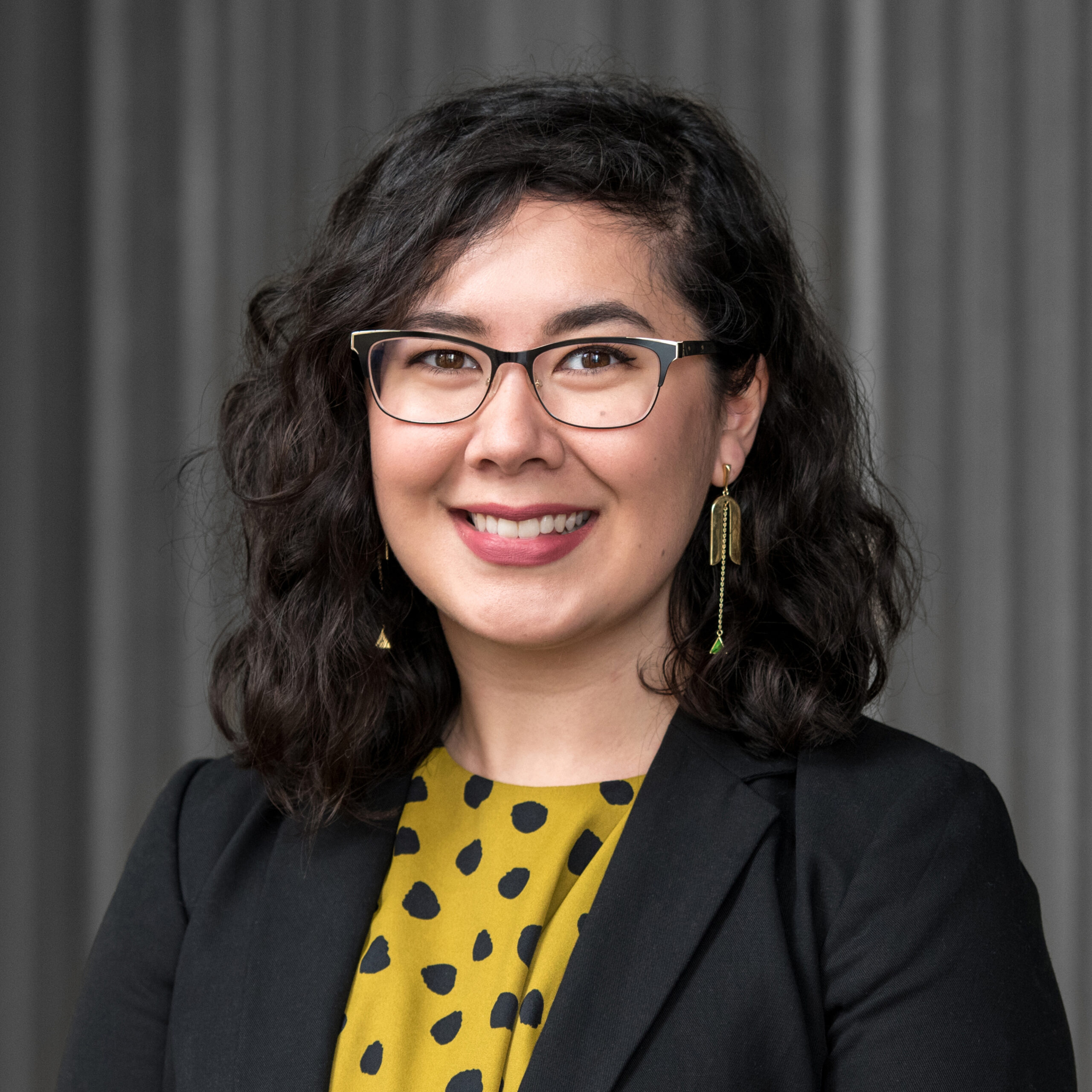
Kayla Snyder, AIA (Northern Virginia)
Have you recently passed the ARE? Upgrade your membership to Architect using this AIA form. or send an email to your Member Services Director, Cathy Guske, cguske@aiava.org
Are you ready to get licensed? AIA Virginia has discounted 60-day Amber Book subscriptions. Read more about it here>>
Support our Associate members on their path to licensure with your support of the discounted Amber Book subscription. Donate to the AIA Virginia Foundation
Have questions about licensure? Contact AIA Virginia’s State Licensing Advisor, Gina Robinson, AIA, at gina.robinson@hdrinc.com
Transfers into AIA Virginia Andrea Huldtgren, AIA (Northern Virginia) from AIA Washington DC Monica Retzke, AIA (Northern Virginia) from AIA Washington DC
New/Renewed Allied Members Patrick Dyer, Vice President, Gulf Seaboard General Contractors Inc Susan Pilato, CEO, Mantra Inspired Furniture Stephan (Hobie) Andrews, Partner, O’Hagan Meyer PLLC
April is Architecture Month in Virginia, a time to elevate public awareness, spotlight the power of design, and invite our communities into the conversation. Design shapes how people live, connect, and flourish. And while we as architects bring the expertise and creative vision, it’s the people we serve who breathe life into our work when we are gone. When we open our process to community members, stakeholders, advocates, and clients alike, we expand our impact.
Throughout April, we saw this in action across Virginia through walking tours, public exhibitions, student showcases, and community conversations that highlighted the profound ways architecture intersects with daily life. These weren’t just celebrations of our profession but reminders that our work matters most when it is rooted in the people and place to which it belongs.
As we look ahead, our focus is simple. Keep showing up, listen closely, and work alongside our community leaders to shape policies, programs, and places that reflect the needs and values of the people they serve. We must seize the opportunity to empower community voices and to advocate for policies and programs that prioritize thoughtful, inclusive, and sustainable design. The future of architecture doesn’t rely on architects alone, it also depends on the partnerships we build and the communities that champion design excellence along with us.
As we move into May, carry the spirit of Architecture Month forward. Step into conversations beyond the office and your current work. Look to partner with those clients and communities who share your values. Invite others into the process. When we design with instead of just for, we build something much greater than buildings. We build trust, shared purpose, and a better future for all.
Meagan W Jancy, AIA, LEED AP bd+c President AIA Virginia
With the 2026 call for volunteers open, SFx is hosting a Zoom on May 27 for anyone interested in learning more about the Member Group and/or volunteering for 2026. Register>>
The Small Firm Exchange (SFx) seeks to advance the mutual interests of architects practicing in small firms. They advocate for small firms within AIA and outside organizations and agencies, promote leadership in small firm professional development and practice, and facilitate and support the local component roundtables and small firm networks. The SFX consists of a board and 53 state representatives.
Apply to SFX board through this annual call for volunteers. See the current SFX board and full position description on aia.org/sfx. (Apply to be a state representative via your state component in the fall (see current list here).
Time commitment: Board terms are three (3) years with two (2) hour-long monthly conference calls. Expect to dedicate five (5) hours per month to this role. State Representative terms are two (2) years with one (1) hour-long monthly call. (Note: The SFX chair currently has registration and travel reimbursed for the AIA Leadership Summit.)
Happening on the local front:
The SFx Central Virginia is conducting a speed mentoring event with AIA CV Emerging Professionals on May 29 from 5:30-6:30 at Alloy Workshop.
The newly formed SFx Central Virginia will host the Workshop for members in Charlottesville on June 20, 2025. More details to follow, but all are welcome.
May always feels like a moment of transition. The days are longer, the weather is warmer, and within our profession, this season marks a meaningful turning point: graduation ceremonies, the start of summer internships, and the arrival of recent architecture graduates into our firms and studios.
For those of us already rooted in practice, it’s a timely reminder that we each play a role in shaping the pipeline of the profession. A one-on-one coffee break, a bit of feedback on a design exercise, or even just making space at the table can leave a lasting impact on a young designer’s sense of belonging—and their belief in what’s possible.
Whether you are hosting interns, onboarding emerging professionals, or simply sharing what you’ve learned along the way of your own journey, this is the season to show up generously. These early experiences can set the tone for a career. They also reflect who we are as a profession and who we hope to become.
As we move into summer, I encourage all of you to think about how we might offer guidance, encouragement, for the next generation of architects. Mentorship can take many forms, and it starts with intention.
To that end, I’d like to share a thoughtful piece written by a friend and colleague (Jack Whalen, Delaware Young Architect Representative), on the different types of mentorship—and how we can all show up to the season of opportunity for interns and recent graduates: https://www.aia.org/aia-architect/article/how-be-exemplary-mentor
Erin Agdinaoay, AIA, NOMA Young Architects Representative