
Architectural competitions are more than just platforms for recognition, they are laboratories for architectural speculation. They invite us to step beyond constraints and test ideas that may be too radical, too speculative, or simply explore potential architectural ideas. In our recent participation in the Living Ruins competition, our team (Irem Sezer, Alp Esassolak, Bilgehan Duman) embraced this opportunity, and we’re honored to have received an Honorable Mention for our proposal.
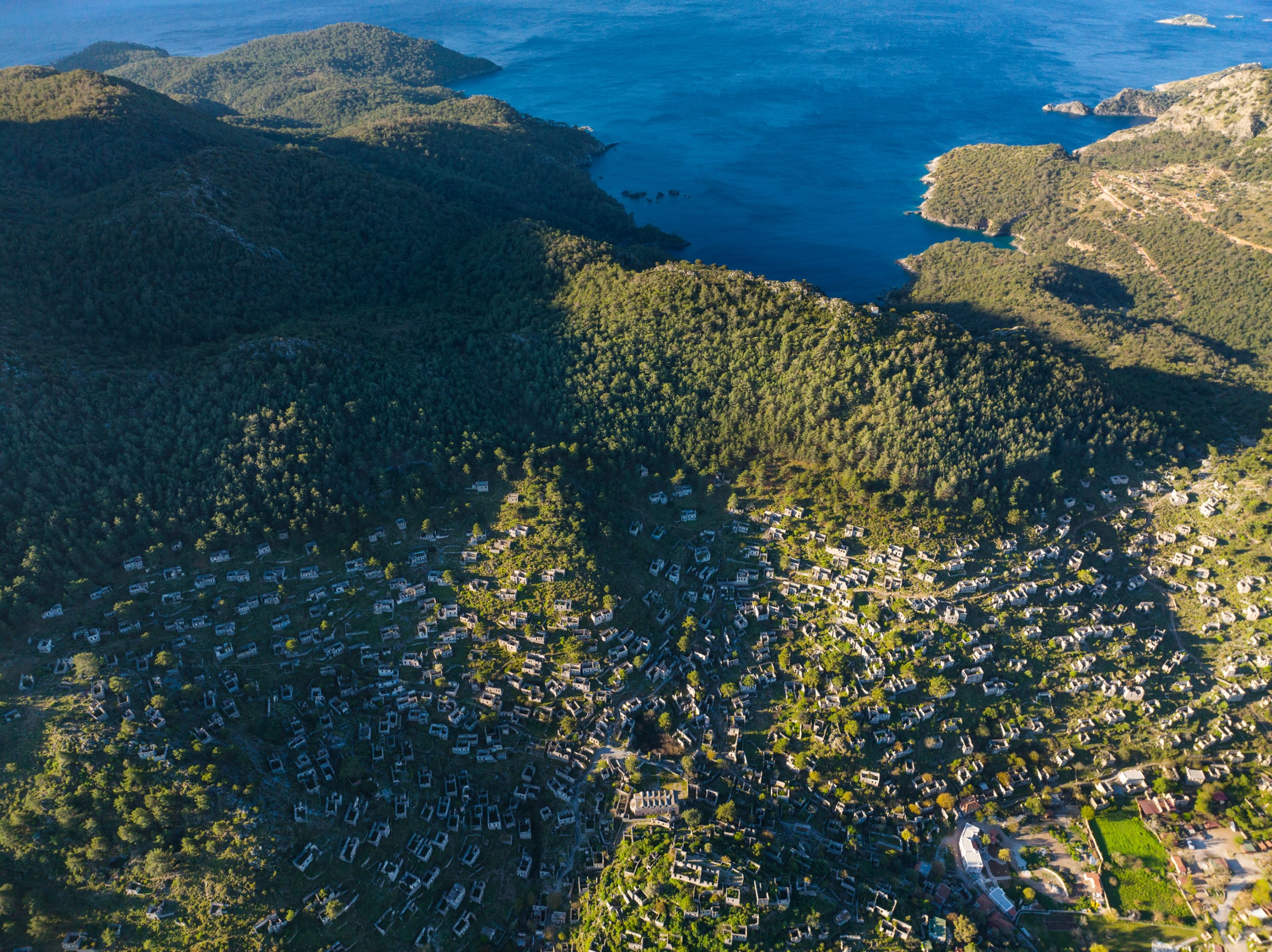
In the Living Ruins competition, our team took this challenge with ReRoot Kayaköy, a proposal that reimagines the abandoned Greek village of Levissi (Kayaköy), Turkey, as an interactive open-air museum.


Rooted in Memory, Toward the Future
Kayaköy, once a vibrant Greek village and now a ghost town, is layered with memory and silence. Rather than treat it as a static monument, ReRoot Kayaköy activates the site as a living cultural landscape. Our design introduces lightweight activity pods and new exploratory pathways, all grounded in ecotourism principles. These interventions respect the site’s fragility while inviting deeper engagement through play, learning, and storytelling. Guided by the conceptual framework of memory and shifts, we sought to bridge past and present. The proposed pathways, Tales, Celebration, and Fig & Vineyard, guide visitors through different thematic layers:
- Tales Path: Focused on cultural heritage, connecting key historic landmarks with immersive storytelling stations.
- Celebration Path: Dedicated to ecological and recreational themes, providing spaces for reflection, education, and community events.
- Fig and Vineyard Path: Tied to the local economy, emphasizing agricultural production, tasting experiences, and connections to the land.
Each path is activated by programmed pods, designed with sustainable materials and offering diverse experiences like workshops, sensory play, and historical narratives.
Gamification as a Design Strategy
At the heart of the visitor experience is a game that transforms guests into “time travelers”, who discover the site’s past and present through exploratory missions, so each visit becomes a unique, replayable journey. This gamification strategy blurs the lines between education, adventure, and memory-building, while reinforcing the site’s cultural, historical and ecological identity.


Irem Sezer, Assoc. AIA
Coastal Adaptation & Resilience Design
Post-Graduate Research & Development Fellow