ARE 5.0’s launch date has been confirmed as November 1st, 2016. To prepare for this upcoming change, below are some tools for those pursuing licensure.
ARE 5.0 Guidelines – For general guidelines as to the changes in 5.0 and tips on how to prepare for your exams the Guide Booklet is an excellent resource. A pdf version of the guidebook can be found here.
ARE 5.0 Handbook – Developed to help you prepare for the ARE this handbook provides information on what content will be assessed on the exam. Find a pdf version of the Handbook here.
5.0 Test Specifications – The test specification identifies the division structure of the exam and additionally defines: the major content areas, called Sections; the measurement Objectives; and the percentage of content coverage, called Weightings. A pdf version of the Test Specifications can be found here.
5.0 FAQs – Have a question about the upcoming transition, check out ARE’s FAQ’s for 5.0 here.
More information will continue to be released on the NCARB website. Additional news will follow in future AIA Virginia newsletters.
“Design can ELEVATE ordinary experiences to extraordinary levels.”
~ Russell E. Davidson, FAIA | 2016 AIA President
ELEVATE your career! You won’t want to miss Architecture Exchange East 2016 …
As I contemplated possible topics for this month’s newsletter article, I decided that concentrating on our largest gathering of architects was well worthy of the space and attention! Last year, for Architecture Exchange East 2015, our focus was on enriching the experience for our attendees. We enlivened our signature member event in a way that had everyone departing with their ‘batteries fully recharged.’ Dozens of aspects of the conference were energized, in alignment with our desire to make it more aspirational – and inspirational – for everyone.
Folks definitely noticed the CHANGE in last year’s Architecture Exchange East. 89% of attendees rated the event good or excellent, and 93% indicated that they plan to attend this year. Their favorite things included the new layout of the ballroom for general sessions, the opening and closing keynote speakers, the convention ‘app,’ and shorter, higher-quality educational seminars. Votes for the least-favorite things included lunch seating, cost and availability of parking, and low exhibitor numbers.
There were a number of excellent suggestions for improving the quality of the experience, and we’ve taken many of those to heart in planning for ArchEx 2016: better registration system, enhanced seminar descriptions, collaboration with allied professional groups, and even more ‘meet and greet’ time.
ArchEx 2016 will elevate the profession with its renewed emphasis on networking, innovative learning methods, and dynamic new materials and products. You should have already received the mega-card in the mail, and registration opened August 30. Additional promotional materials will arrive shortly that will further stimulate your interest in participating. And for those of you who are focused on obtaining credits, a total of 19 hours will be available, 14.5 of which are HSW. Schedule highlights include:
New ‘eye-opener’ educational seminars both mornings;
Thursday morning opening keynote speaker Rosa T. Sheng, AIA, an authority in the AIA on all issues related to equity, diversity, and inclusiveness. Rosa will share why equity in practice matters, and on elevating architecture’s impact;
AIA Virginia Annual Membership Meeting Thursday, November 3, 12:45 p.m., room E11a.
Meet and greet events all of Thursday, with a Welcome Coffee in the morning, the exhibit hall Connections Party late in the afternoon, and Networking parties in the evening;
Seminar tracks on business, design, building science, sustainability, and materials/products;
Tours of the Metl-Span Factory, the Branch House + Broad Street Station (now the Science Museum of Virginia), the State Capitol, and streetscapes of downtown Richmond;
Friday afternoon closing keynote speaker Mickey Jacob, FAIA, the AIA’s favorite Citizen Architect, 2013 AIA President, and 2018 Tampa Mayoral candidate. Mickey’s message will elevate your career and your engagement as a vital contributor to the built environment;
Visions for Architecture, AIA Virginia’s honors and design awards ceremony/celebration at the Virginia Museum of Fine Arts on Friday evening.
I look forward to sharing an elevating experience with you at the Greater Richmond Convention Center during Architecture Exchange East 2016, November 2-4!
Helene Combs Dreiling, FAIA | Executive Vice President/CEO
We are not looking back! Architecture Exchange East 2016 will elevate the profession with our renewed emphasis on networking, innovative learning methods, and dynamic new materials and products. Now in its 29th year, ArchEx continues to be the mid-Atlantic’s largest annual educational event and expo with more than 60 educational sessions, behind-the-scenes architectural tours, engaging special events, and cutting-edge vendors.
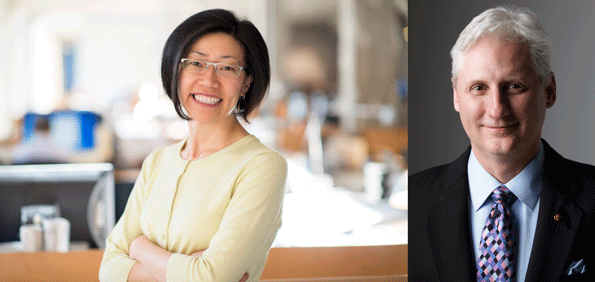
Delivering the opening and closing keynotes this year at Architecture Exchange East will be Rosa T. Sheng, AIA, and Mickey Jacob, FAIA.
Rosa T. Sheng, AIA, LEED AP BD+C
Rosa T. Sheng, AIA, LEED AP BD+C is a Senior Associate at Bohlin Cywinski Jackson, Founder and Chair for Equity by Design and Treasurer of AIA San Francisco. Leading the charge for more research on talent retention in the profession, Rosa led the 2014 and 2016 Equity in Architecture Survey projects, authored AIA National Resolution 15-1, and served on the Equity in Architecture Commission. She has presented keynotes nationally and abroad including Boston, New York, Lisbon, Atlanta, Philadelphia, Seattle and San Francisco. Equity by Design and the Equity in Architecture movement have been featured in Architect Magazine, Architectural Record, The Wall Street Journal, The New York Times, TEDxPhiladelphia and KQED/NPR.
Mickey Jacob, FAIA
A native of Windsor, Ontario, Canada, Mickey Jacob, FAIA graduated from the University of Detroit School of Architecture in 1981 and relocated immediately to Tampa where he has practiced Architecture for 35 years. A founding partner at Urban Studio Architects for over 25 years, currently Mickey is the Executive Vice President for Strategy and Business Development at BDG Architects after a 2013 merger. An Architect dedicated to leadership in the profession of architecture, in business, in the public realm, and in politics with a commitment to create inspiring places and engage with the important issues to make a better-built environment that improves the quality of life for everyone in the community. With a focus on Corporate Interiors and Hospitality projects, Mickey’s work over the years include the Epicurean Hotel, Grand Central on Kennedy, Lykes Lines Corporate Headquarters, myMatrixx Headquarters, Metro 510, The Birchwood, IBM Regional Headquarters, United States Central Command Situation Room and “J” War Rooms, and Mise en Place Restaurant.
Registration opens Aug. 30 at www.ArchEx.net. Don’t miss it!
We’re seeking individuals to serve as volunteers at Architecture Exchange East (ArchEx). In exchange for your service, you can attend ArchEx for free on the day(s) you volunteer. Architecture Exchange East takes place at the Greater Richmond Convention Center, Nov. 2-4, 2016.
We are looking for volunteers who are capable of completing a number of different tasks throughout the conference including hosting events, monitoring classrooms, assisting at registration, and more. Volunteers are expected to commit to a minimum of one full day in order to receive the complimentary conference registration. While we try to accommodate all requests, you’ll be assigned to where you are needed most.
Limited positions available, so please contact us right away.
Rosa T. Sheng, AIA, LEED AP BD+C will deliver the opening keynote address at the 2016 Architecture Exchange East convention this November in Richmond. Sheng will be speaking on “Why Equity (in Practice) Matters – Elevating Architecture’s Impact”
Rosa T. Sheng, AIA, LEED AP BD+C
Equitable practice has the potential to foster success on multiple levels – equity in the workplace, and socially just access to basic resources, healthier communities and resilient public space in our urban centers. The value proposition of equity at all these levels is rooted in empathy, transparency, education, collaboration and trust.
The lack of equity in Architectural practice and allied professions has made Architects prone to lose talent to other more lucrative career paths due to factors that challenge retention; long hours, low pay, work that is misaligned with professional goals, and lack of transparency for promotion and compensation.
In order to achieve equity in the built environment, the design workforce needs to diversify to reflect the rapidly changing demographic of people that we are charged to serve. Architecture is also prone to the public not fully understanding the value or potential of what Architects can bring to the table. In terms of social impact, design has the power to inform more equitable, resilient, sustainable and relevant built environments for the increasingly multicultural population of our nation.
Join us in Richmond this November! Registration for ArchEx opens August 30, 2016.
About Sheng
Rosa T. Sheng, AIA, LEED AP BD+C is a Senior Associate at Bohlin Cywinski Jackson, Founder and Chairperson for Equity by Design an AIA San Francisco committee. As a licensed architect with 21 years experience in Architecture and design, Rosa has led a variety of award-winning and internationally acclaimed projects, from the aesthetically minimal, highly technical development of the glass structures for Apple’s original high-profile retail stores, to the innovative and sustainable LEED NC Gold–certified Lorry I. Lokey Graduate School of Business at Mills College in Oakland, California. She is currently working on innovative and sustainable projects including a lecture hall at the University of California, Davis.
As the Founding Chair of the AIASF Committee Equity by Design, Rosa led the pivotal 2014 and 2016 Equity in Architecture Survey projects, authored AIA National Resolution 15-1, and served on the Equity in Architecture Commission. These efforts have launched a national conversation for achieving equitable practice in the architecture profession. Since the group started, Rosa has been presenting nationally and abroad – including Boston, New York, Lisbon, Atlanta, Philadelphia, Seattle, New Orleans. The group’s outreach for equity in architecture has been featured in Architect Magazine, Architectural Record, The Wall Street Journal, New York Times, TEDxPhiladelphia and KQED/NPR.
Rosa currently serves on AIA San Francisco’s Board of Directors as Treasurer, the AIA National Equity in Architecture Commission, AIA National Diversity & Inclusion Council, is a member of SCUP, USGBC, and NCARB Supervisor.
About the Equity by Design
Fueled by the persistent and striking gender inequity within architectural practice, where women compose only 12–18 percent of AIA members, licensed architects, and senior firm leadership, Equity by Design, a committee of AIASF, was developed as a call to action for both women and men to help realize the goal of equitable practice to retain talent, advance the profession and communicate the value of design to society. The 2014 Equity in Architecture Survey with nearly 2300 respondents has sparked a much-needed dialogue that has resulted in a sold-out 250 person symposium, wide-spread media coverage and requests for EQxD presentations nationally and beyond. In 2016, the group conducted its 2nd survey with over 8,000 respondents and the 4th symposium planned on 10/29 at the San Francisco Art Institute.
Managing the Liability Risks of Materials Transparency Documents
Register for this free webinar on September 8, 3:00-4:00 PM EDT, where legal, insurance, and practice leaders will help you understand the risks and opportunities of materials transparency. Learn contract language addressing some of the risks to incorporate in your AIA Contract Document. Earn 1 LU. Register.
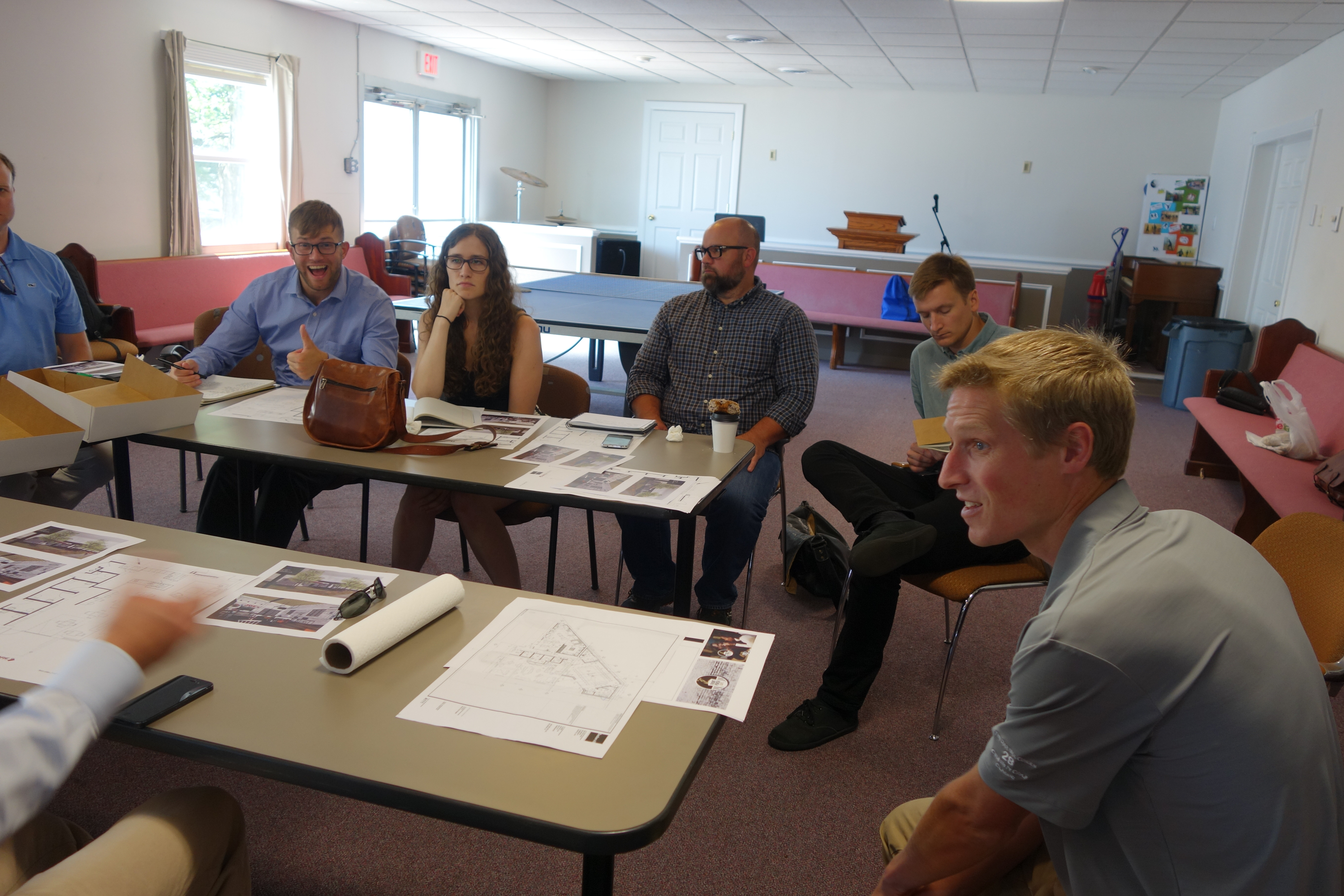
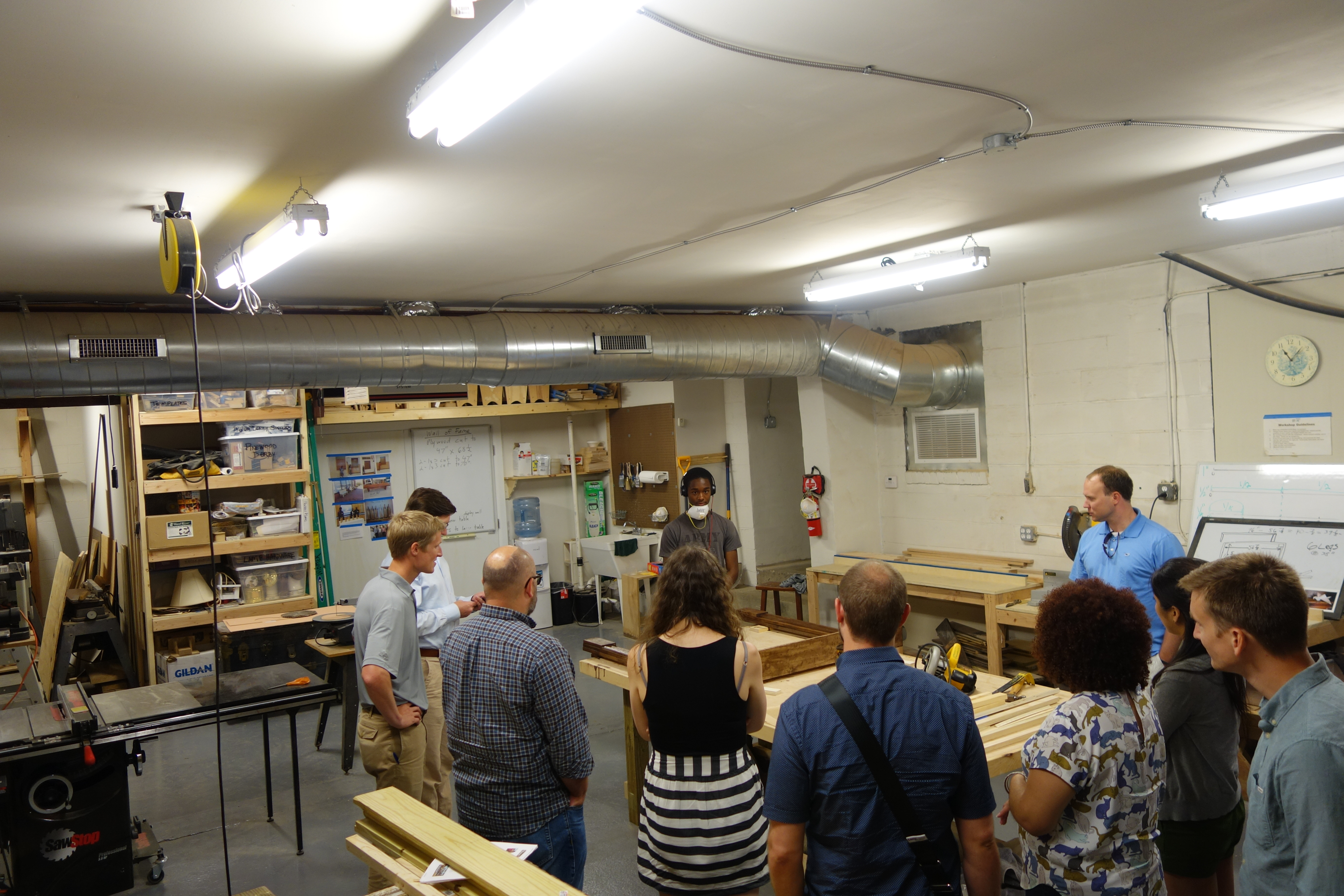
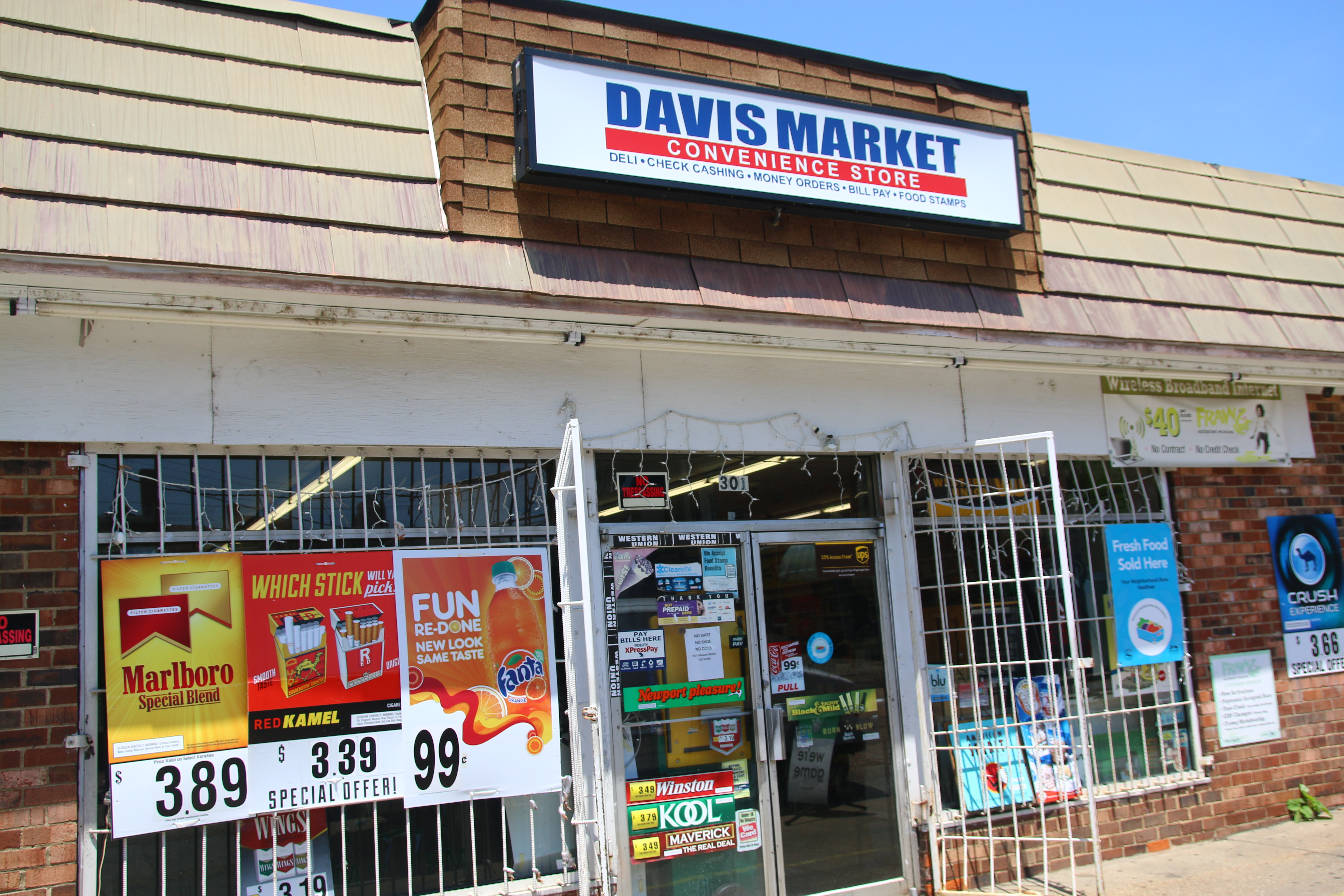
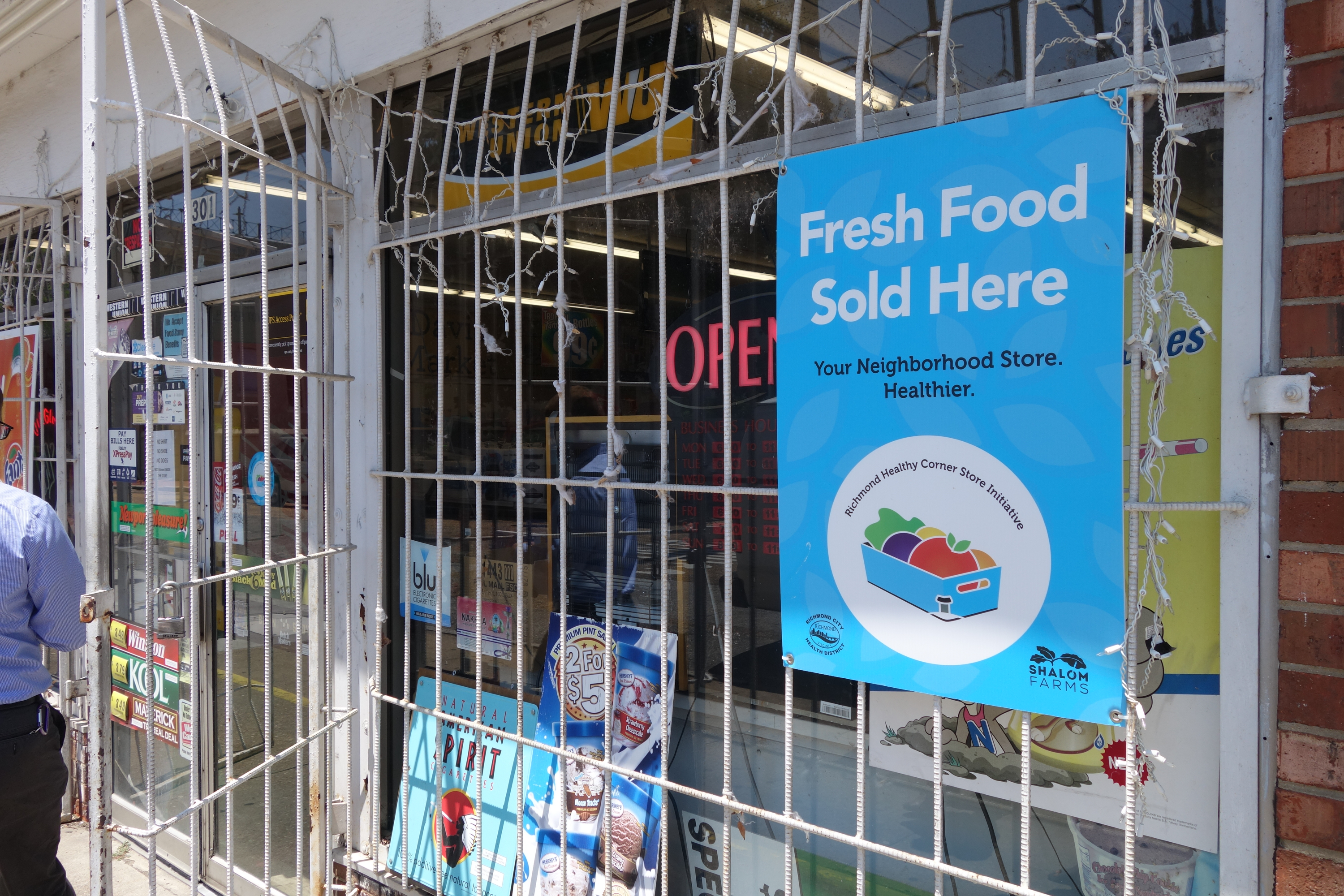
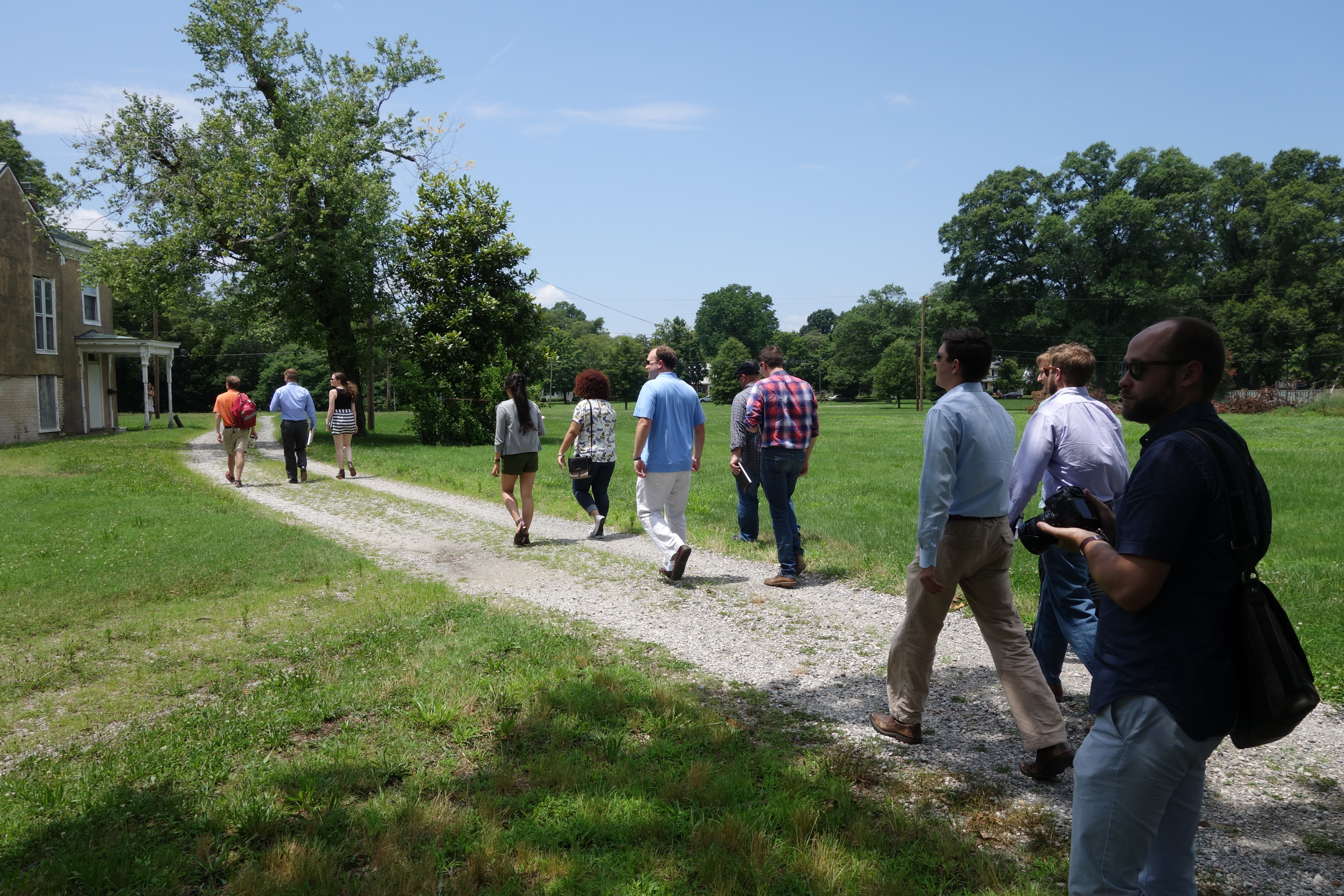
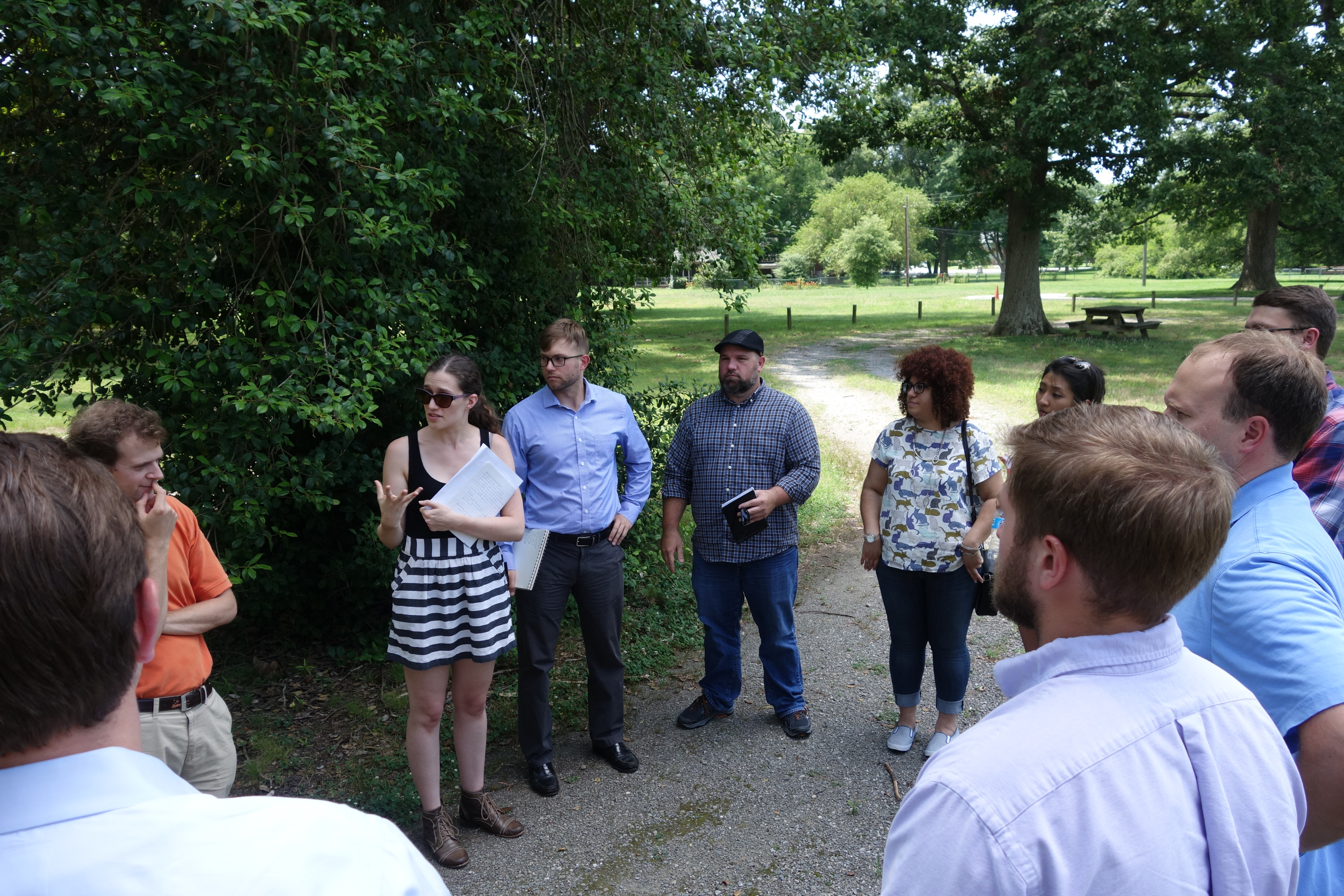
This year, the participants of AIA Virginia’s Emerging Leaders in Architecture (ELA) program have decided to tackle the issue of low-income communities with limited access to healthy food, more commonly known as food deserts.
Through meetings with numerous local Richmond groups, they have seen that food deserts are a systemic problem in Virginia’s capital city that require a multifaceted approach rather than a targeted solution.
Their project, Closing the Food Gap: Grow. Learn. Share., doesn’t attempt to solve food disparity through access alone, but rather is a series of insertions that provide, educate, and engage the communities for which they serve.
Mickey Jacob, FAIA has been confirmed as the closing keynote speaker for Architecture Exchange East 2016. Many of you will recall that Mickey as AIA President in 2013, the 89th President. He has a keen focus on government advocacy, and with his own “citizen architect” story – including a run for Mayor of Tampa, Florida in 2018, his message will respond to our strategic plan and resonate with our members as we all strive to elevate the profession.
Registration for Architecture Exchange East, Nov. 2-4, 2016 at the Greater Richmond Convention Center, opens August 30.
The 2017 Women’s Leadership Summit will be held September 14-17 in Washington, D.C. for women in positions of leadership. The Summit will focus on supporting women in leadership by providing a forum to recognize, inform, and champion the work being created by women in architecture.
The Summit is part of an ongoing national conversation for women in architecture. Goals include: raising the profile of women principals and leaders in the profession; sharing and promoting the design work of women; exploring new paths to leadership; learning from each other regarding issues and challenges.
The Committee wants to make sure that a wide range of people have an opportunity for their ideas to be considered. We not only encourage your direct participation, but we ask you to please encourage the participation of other people you know who would be compelling as speakers.
Seminar proposals will only be accepted through an electronic form. The call for seminar proposals is now open. Information is available at: http://www.aiawls.org/#!speakers/fjlru If you would like to submit a proposal the submission form is available at http://www.aiawls.org/#!proposal-form/fij6b We really need to receive submissions before the end of July to keep on schedule.
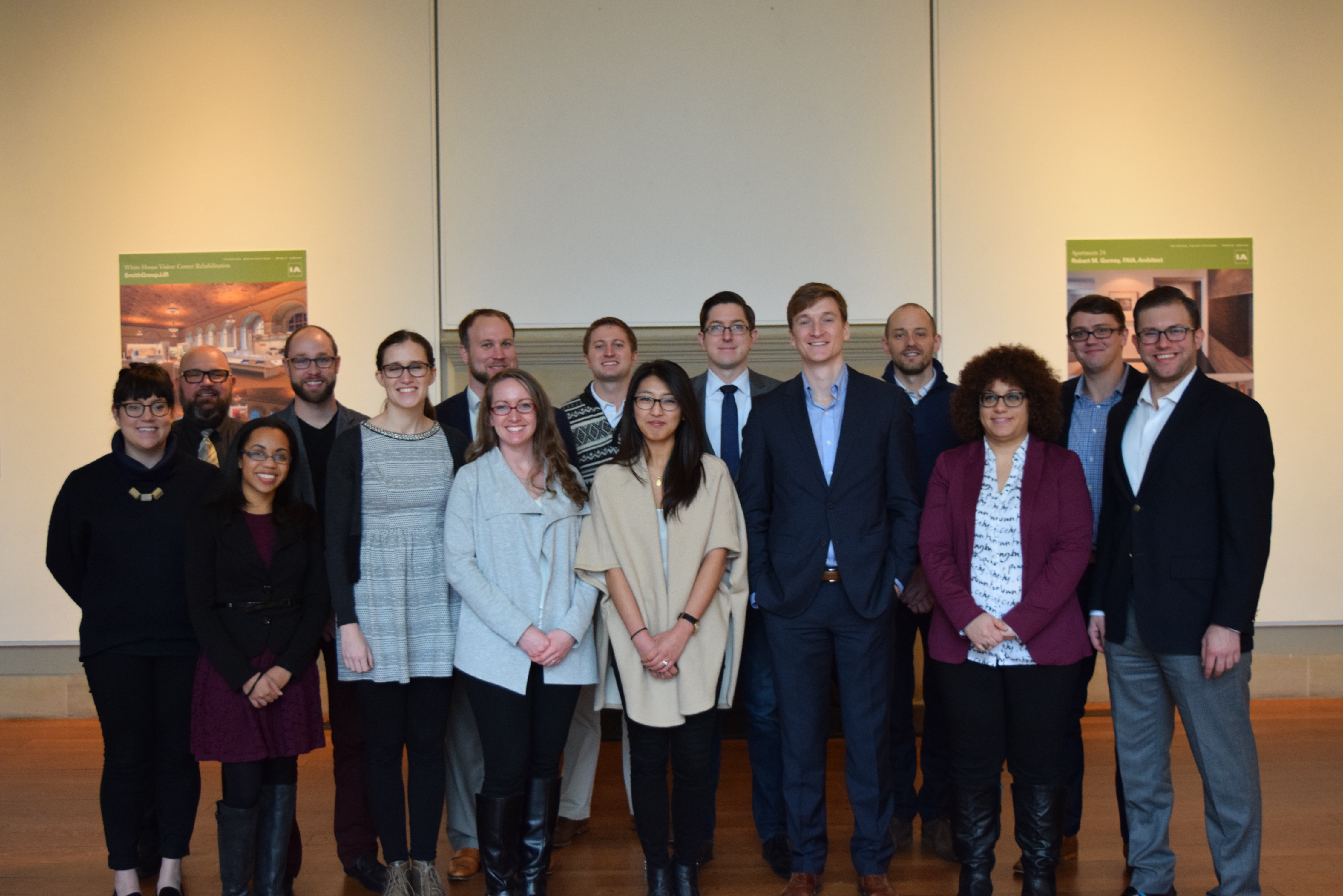
AIA Virginia’s award-winning Emerging Leaders in Architecture (ELA) program was developed to jump-start the careers of young professionals. Conceived of and lead by a passionate steering committee of successful architects, the program was designed to share the things they wished they had learned in architecture school.
Each of the seven day-long-sessions focus on developing essential skills like financial management, communication and negotiation, advocacy and public service, and much more.
Want to be a member of this elite group of leaders? The application for the 2017 class will be available later this summer. Contact Marshall Dreiling for information on how to nominate an emerging leader or with any questions about the program.
We asked members of the ELA class of 2016 the same five questions, take a look at their inspiring answers.
Alexander Cheng
Alex Cheng
Q: What building evoked a strong reaction from you recently—either positive or negative?
A:“Tulou” structures are found in the village of Xiashi in the Fujian province of China. They are incredibly massive rammed-earth structures that appear monolithic on the exterior, but more amazingly within the tulou, we find a microcosm of a city. The contemporary lifestyle of the village finds its place in the ancient built forms of the past.
Q: What is the last book you read?
A: The last book I read was The Happiness Advantage by Shawn Achor. The essential message of the book is that your happiness precedes your success. It changed my outlook on how to live and how to work.
Q: How did you discover your passion for architecture?
A: I found my passion for architecture in the place where I was raised – in a mid-century modern neighborhood called Hollin Hills, designed by the architect Charles Goodman. The neighborhood is characterized by glass box houses nestled within dense tree canopies, that offers a profound connection between architecture and nature.
Q: What is your favorite thing to do to relax?
A: When I get the chance to relax, I like to play tennis, golf, or run – really any outside activity brings me peace.
Q: What advice do you have for aspiring architects?
A: As an aspiring architect myself, it’s hard to say! But to steal a piece of advice that I took from my college professors, I would say it is important to “learn how to learn.” I think that somehow, you have to keep up a ravenous appetite for learning to have more knowledge to draw from in the practice of architecture.
Alyssa Tope
Alyssa Tope
Q: What building evoked a strong reaction from you recently—either positive or negative?
A: I recently learned about Tanner Springs Park in Portland, OR. It was very inspiring to see the designers honor both the ecological and industrial history of the site in a sustainable way. Although it is not a building, this way of thinking will absolutely inform my future projects.
Q: What is the last book you read?
A: Architecture-related: Landscape Urbanism Reader by Charles Waldheim. Non-Architecture-related: Yes Please by Amy Poehler
Q: How did you discover your passion for architecture?
A: I first knew I wanted to be an architect in 5th grade when I was told to design “the ultimate dog house.” Since then, I continue to fall in love with architecture because it gives me the ability to express all facets of my mind. Design allows me to solve problems, be creative, and serve people and the environment.
Q: What is your favorite thing to do to relax?
A: Whether I am hiking or bicycling down a rural road, I am never more relaxed and my thoughts are never clearer than when I am in nature.
Q: What advice do you have for aspiring architects?
A:Working in the studio or the office until 3 a.m. won’t teach you or inspire you nearly as much as a new experience (especially those outside of the architectural world). As author Kent Nerburn wrote, “If we don’t offer ourselves to the unknown, our senses dull, our world becomes small, and we lose our sense of wonder.”
Asher McGlothlin
Asher McGlothlin
Q: What building evoked a strong reaction from you recently- either positive or negative?
A: The church at Stykkisholmur, Iceland, designed by Jon Haraldsson. The church’s simplicity is comforting and inviting, allowing one to feel at ease upon entering the space.
Q: What is the last book you read?
A: Musicophilia by Oliver Sacks. A great book on music’s effects on the brain. Oliver Sacks pulls inspiration from E.O. Wilson’s hypothesis of Biophilia to propose that human beings have an innate connection and need for music.
Q: How did you discover your passion for architecture?
A: My grandfather was a carpenter and growing up I spent a lot of time helping him with his projects. He has a great eye for design and inspired me to follow in his footsteps.
Q: What is your favorite thing to do to relax?
A: Play music. Being able to focus only on the current moment is the essence of meditation and music is the best route I’ve found to do this. When you really get into a song, and put your all into playing it, it is impossible to focus on anything but the present moment.
Q: What advice do you have for aspiring architects?
A: Follow your heart down whatever road it leads you. It is always wise to listen to those who have more experience than you and to account for their advice in your decisions, but at the end of the day, you are the one who has to live with those decisions. So follow the trail that calls to you. It may be rough at times, but a great story has never been told in which conflict wasn’t present.
Braden Field
Braden Field
Q: What building evoked a strong reaction from you recently—either positive or negative?
A: Not exactly a building, but I was mesmerized by the Wonder exhibit at the Renwick Gallery in DC earlier this year.
Q: What is the last book you read?
A: The Burglar’s Guide to the City by Geoff Manaugh.
Q: How did you discover your passion for architecture?
A: I’ve always been curious about by how things go together. I was also fascinated by the scale of architecture’s impact on the world and found beauty in good design. Sometime late in high school, I decided that I wanted to pursue architecture as a career, and haven’t looked back since.
Q: What is your favorite thing to do to relax?
A: I love to cook. Preparing a meal from scratch, especially without a recipe, and sharing it with good friends and family is always enjoyable.
Q: What advice do you have for aspiring architects?
A: Don’t wait for the next great project or client, the next better job, or the next promotion – find ways to make whatever you’re working on, wherever you’re working on it, in whatever role you have, the best thing you’ve ever done. Be careful – what you’re working on right now may be the best thing you ever do. Stay curious, and never stop trying to learn.
Brian Gurczynski
Q: What building evoked a strong reaction from you recently—either positive or negative?
A: Pantheon, positively.
Q: What is the last book you read?
A: Code Commentary, I don’t have much time to read these days.
Q: How did you discover your passion for architecture?
A: When I was a kid I liked drawing floor plans of my ideal snowboarding cabin. I must have drawn over 1,000 of them in middle school.
Q: What is your favorite thing to do to relax?
A: Boating
Q: What advice do you have for aspiring architects?
A: Do not let your limited experience intimidate you to provide creative input.
Chris Warren
Chris Warren
Q: What building evoked a strong reaction from you recently—either positive or negative?
A: 400 Grove by Fougeron Architecture really made a positive impact on me about how I want to approach façade shape and details in my buildings.
Q: What is the last book you read?
A: The Kaplan Site Planning and Design Study Guide since I am taking my exams right now. But I wish I was reading Plato’s Republic right now.
Q: How did you discover your passion for architecture?
A: I was born this way. Seriously, though, I’ve always wanted to be an architect my whole life, so it wasn’t something I discovered.
Q: What is your favorite thing to do to relax?
A: I like to make things. Recently I restored my Great Grandfather’s dresser into a cabinet.
Q: What advice do you have for aspiring architects?
A: Apply to one of those new programs where you take all the ARE’s in school. Having a job and studying after work is not fun.
Donna Ryu
Donna Ryu
Q: What building evoked a strong reaction from you recently—either positive or negative?
A: Albert Kahn’s Herman Kiefer Hospital in Detroit, Michigan (1954). Positive – Detroit is a historically rich and inspiring city that is rebuilding from the ground up. This historic hospital is one of many being advocated for and anticipated to be preserved and reimagined in Detroit’s efforts to rebuild their urban landscape!
Q: What is the last book you read?
A: The Girl on the Train by Paula Hawkins
Q: How did you discover your passion for architecture?
A: I can’t recall an exact moment where I knew architecture was for me. It has become a profession that fills my curiosity and continues to challenge the way I see & experience the world.
Q: What is your favorite thing to do to relax?
A: I can’t choose just one – watching a good movie or reading a book (or a comic book!)
Q: What advice do you have for aspiring architects?
A: Don’t only do architecture. Be inspired and re-inspired by people, music, film, animation, food, etc.
Janine Stewart
Janine Stewart
Q: What building evoked a strong reaction from you recently—either positive or negative?
A: It has yet to be completed, but the design for the National Museum of African American History and Culture, Washington, D.C., by Freelon, Adjaye, Bond/Smith and Group JJR really struck me. The symbolism is clear in the building’s form.
Q: What is the last book you read?
A: The Kite Runner by Khaled Hosseini. Once I started it, I couldn’t put it down.
Q: How did you discover your passion for architecture?
A: Both my parents (neither of whom are architects) led me to this passion. I watched my father design our house and was fascinated by the process, and my mother started the tradition of driving around looking at houses and buildings whenever we were out and had time to kill.
Q: What is your favorite thing to do to relax?
A: Watch movies or TV shows. The creators of Netflix have simultaneously enriched my life and stolen my time.
Q: What advice do you have for aspiring architects?
A: Architects can shape cultures and lifestyles: don’t take that for granted and the learning never stops – embrace it, it’s wonderful.
Kelsey Oesmann
Kelsey Oesmann
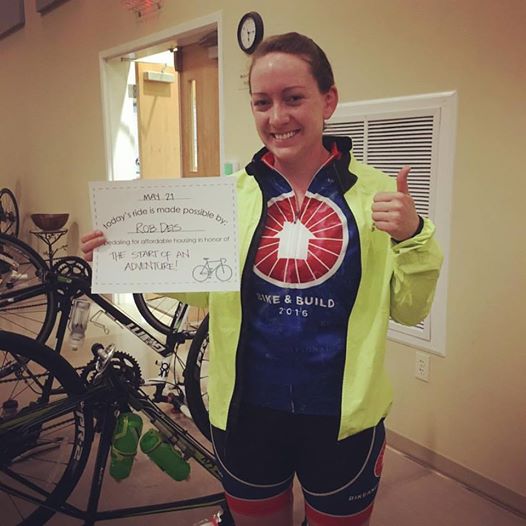
Kelsey is currently biking across America with Bike & Build, to raise funds and awareness for affordable housing.
You can follow her trek at https://coasttocoastkelsey.com/
Watch for her answers to the 5 questions later this summer!
Kevin Svensen
Kevin Svensen
Q: What building evoked a strong reaction from you recently—either positive or negative?
A: While in Rome my wife and I attended a traditional Baroque concert at Sant’ Agnese in Piazza Navona and I had never experienced beauty so fully before. Being surrounded by Classical Baroque architecture, painting, sculpture and music delighted all the senses in an amazing way. It was a spiritual experience I did not expect going into it.
Q: What is the last book you read?
A: I read a lot of children’s books these days to my 2 ½-year-old daughter Linnea. The last I read was The Very Hungry Caterpillar among many others.
Q: How did you discover your passion for architecture?
A: I have wanted to be an architect for as long as I can remember. That passion was developed through art, woodworking and construction. I have always been curious about how things go together.
Q: What is your favorite thing to do to relax?
A: I enjoy traveling, which mostly consists of finding beautiful places and cities to enjoy good food, wine, and coffee.
Q: What advice do you have for aspiring architects?
A: Travel, especially to Europe, and never stop drawing.
Kyle Springer
Kyle Springer
Q: What building evoked a strong reaction from you recently—either positive or negative?
A: The Whitney Museum
Q: What is the last book you read?
A: Wolf in White Van by John Darnielle
Q: How did you discover your passion for architecture?
A: I found my passion while my father built an addition on his house. Watching the process go from sketches to something real was quite transformative to the way I saw buildings.
Q: What is your favorite thing to do to relax?
A: Record shopping
Q: What advice do you have for aspiring architects?
A: Travel. I don’t think it’s possible to see too much.
Lauren McQuistion
Lauren McQuistion
Q: What building evoked a strong reaction from you recently—either positive or negative?
A: Marcel Breuer designed the original Whitney Museum in New York City in 1966. It recently reopened as the Met Breuer after the Whitney as an institution relocated to a new Renzo Piano building. Some people hate the original Breuer building. Some people love it. I happen to love it so much I found a way to make it the focus of my graduate thesis, and I’m so glad it’s finally open again and full of art! If you haven’t ever seen images or details of the staircase, look it up.
Q:What is the last book you read?
A: Detroit City is the Place to Be by Mark Binelli
Q: How did you discover your passion for architecture?
A: My dad is an architect. I grew up around drafting boards and trace paper. I suppose going to the office with him on Saturday mornings as a little kid should have been a foreshadowing of all the hard work and long hours that go into this profession, but at the same time, that challenge to work hard and constantly learn and grow is exactly what I enjoy the most about it.
Q: What is your favorite thing to do to relax?
A: I read. A LOT.
Q: What advice do you have for aspiring architects?
A: Stick up for yourself and the things you believe in. Don’t be afraid to take chances in your design work and you career path. Listen and learn as much as you can about as many things as you can even if it doesn’t seem directly relevant to architecture. And ask questions. Lots of questions.
Luke Stearns
Luke Stearns
Q: What building evoked a strong reaction from you recently—either positive or negative?
A: Philharmonie de Paris, Jean Nouvel. Not without some controversy and construction challenges, this definitely still evoked a positive reaction.
Q: What is the last book you read?
A: Seven Eves by Neal Stephenson. I have a soft spot for well-written science fiction.
Q: How did you discover your passion for architecture?
A: While studying abroad as an undergraduate in Budapest, Hungary I grew increasingly passionate about the architecture that surrounded me there and on my travels.
Q: What is your favorite thing to do to relax?
A: Hiking in the mountains and working in my shade garden have recently been my favorite ways to relax.
Q: What advice do you have for aspiring architects?
A: Walk. Slowing down allows us to notice things that would otherwise buzz by in anonymity. Take the time to see the world around you and explore to find as many different worlds as you can.
Michael Chapa
Michael Chapa
Q: What building evoked a strong reaction from you recently—either positive or negative?
A: When I first visited New York City I took a train and arrived through Grand Central Station and was awestruck by the grand hall. I recently visited Calatrava’s new World Trade Center hub and it took me back to that moment. I still feel humbled and challenged to build something as gripping.
Q: What is the last book you read?
A: The Food Lab by J. Kenji Lopez-Alt
Q: How did you discover your passion for architecture?
A: I had a great art teacher in high school who patiently taught a friend and I the fundamentals of collage and composition. A few weeks into architecture school I made the connection between those lessons and our studio assignments. (Thanks, Ms. Malbon!) I’ve lost and found it another 100 times since then, but that was the first.
Q: What is your favorite thing to do to relax?
A: I crave variety and I fight every day against routine, though cooking is the one thing I will do to tune out everything else. I have no problem spending three or four hours on a weeknight making an amazing meal, practicing with a new ingredient, or learning a new technique.
Q: What advice do you have for aspiring architects?
A: Do what you want to do.
Robert Crawshaw
Robert Crawshaw
Q: What building evoked a strong reaction from you recently—either positive or negative?
A: I am constantly inspired by the work of those that put as much time into the detail as they do the form. There are a few firms out there that are starting to mix fabrication into their design culture; if you can resolve the level of ornament needed on a stand-alone piece of furniture, you likely can translate that into emotional environments.
Q: What is the last book you read?
A: As a proud Hampton Roadsteader, most of my “reading” is on CD…in traffic. Lately, I have been listening to the speeches of Martin Luther King, Jr. for his ability to find center.
Q: How did you discover your passion for architecture?
A: Every summer my family would visit my grandparents and we would stay in a house my grandfather built on a steep slope overlooking a lake. From the front door, you could see the window wall at the back of the house but the transparency was less about looking out over the water and more about drawing you into the house with the sky.
Q: What is your favorite thing to do to relax?
A: Whenever I find time to devote to myself, I like to learn some new skill applicable to arts in general; not to master, but to increase my appreciation for those that have mastered and have a better understanding of what my hands can do.
Q: What advice do you have for aspiring architects?
A: There are few things I appreciate more than my parent’s insistence on me developing my writing skills; not just for the compositional outcomes, but the analytical mindset required to cultivate and convey an argument. Couple writing with a willingness to get your hands dirty through art and fabrication and anyone could have an incredible career.
Simone Saidel
Simone Saidel
Q: What building evoked a strong reaction from you recently—either positive or negative?
A: Barnes Foundation, Philadelphia, PA (very positive reaction)
Q: What is the last book you read?
A: Ballast ARE 4.0 Structural Systems
Q: How did you discover your passion for architecture?
A: I began asking for house tours at a young age. I was fascinated by how people lived in their homes. The requests for building tours followed shortly after.
Q: What is your favorite thing to do to relax?
A: Listening to music
Q: What advice do you have for aspiring architects?
A: Don’t be afraid to speak up and ask questions. Your knowledge base increases and it will help you find your voice.