

AIA Virginia’s award-winning Emerging Leaders in Architecture (ELA) program was developed in 2009 to jump-start the careers of young professionals. Conceived of and lead by a passionate steering committee of successful architects (ALL past ELA alumni!), the program was designed to share the things they wished they had learned in architecture school.
Each of the seven day-long sessions focuses on developing essential skills like community engagement, collaboration, firm creation, financial management, advocacy, public service, and much more. The remaining monthly sessions are dedicated to their class project from a region around the commonwealth.
Want to be a member of this elite group of leaders? The application for the 2027 class will be available in August. Contact Delaney Ogden for information on how to nominate an emerging leader or with any questions about the program.
We asked members of the ELA class of 2026 the same five questions. Get to know them better by reading their inspiring answers.
Rebecca Barker, AIA
What Building evoked a strong reaction from you recently – either positive or negative?
During ELA’s Charlottesville session, we were able to walk around the Lawn and see the Rotunda at the University of Virginia. Though I’ve experienced the Rotunda before, each time I am drawn to it’s impact as a central gathering spot. Set at the center of the academic village, the configuration reminds of the plazas in Europe that create a place for community connection. This is along Jefferson’s intention though as he modeled the Rotunda after the Pantheon in Rome. I appreciate that Jefferson paid great attention to the detailing of his designs – from the scale and proportion of the classical orders to the layout of the University of Virginia.
What was the last book you read?
I recently acquired The Let Them Theory by Mel Robbins. The concept of releasing stress over things I can’t control and focusing on what I will do next is a concept I’m trying to grasp as I grow as a Project Manager.
How did you discover your passion for Architecture?
As a child, I was drawn to design through an interest in making dioramas and watching Extreme Makeover: Home Edition. In High School, my interests in art and math helped me recognize my calling to the field of architecture. However, coming from a small town, I did not fully comprehend the vastness of the profession until college. My passion for architecture truly ignited while studying abroad in Europe. Through getting to observe and experience various architectural styles, I developed an interest in the architecture of place and how the built environment can bring people together. Now, as a practicing professional, my passion thrives in developing solutions from programmatic adjacencies and conceptual massing all the way through to the smallest of details – all aspects are important and meaningful.
What is your favorite thing to do to relax?
My personal time involves getting lost in nature whether that be hiking mountain trails or running 5Ks in new places. Of the evenings, I can frequently be found going for a walk in my neighborhood. While I’m out and about, I never stop analyzing architecture as I’m constantly looking at the built environment to study and learn what others have done before.
What advice do you have for aspiring architects?
As the field of architecture has so many areas of influence, it’s to your own benefit to explore the various areas to find what interests you the most. When you are passionate about what you do, you will go farther in your career. With each new project, approach it as a learning opportunity so that you always seek new solutions. Don’t be afraid to ask questions, especially as you are staring out. I’ve found both as a mentee and a mentor that asking and answering questions can be just as beneficial for the answerer as the one asking the questions. Through my experience, I’ve developed my own motto to “Never stop learning!”
Mars Ben, Assoc. AIA

What building evoked a strong reaction from you recently—either positive or negative?
Traveling to Cambodia with my family and seeing the Angkor Wat up close meant more to me than I expected. Feeling its scale, seeing the building material up close, and sitting with the weight of its history made the moment deeply reflective. In many ways, that experience solidified my understanding of how important architecture is.
What is the last book you read?
Strange Houses by Uketsu, translated by Jim Rion. Architectural mystery + horror!
How did you discover your passion for architecture?
I learned I loved design when I spent way too many hours building houses in The Sims as a middle schooler.
What is your favorite thing to do to relax?
I love playing video games, watching Anime, and playing DnD or board games with friends!
What advice do you have for aspiring architects?
Be humble and kind! Good architecture grows from a person who is always learning, always refining, and still able to stand by their ideas with confidence. Kindness feels like a given, but in the corporate world I sometimes have to pause to remind myself that the work we do carries real weight that touches all forms of life. I believe practicing humility allows you to reflect on these decisions every day so you can better serve the world around you.
Pei Lin (Adeline) Chen, Assoc. AIA
What building evoked a strong reaction from you recently—either positive or negative?
I would say it is probably the Palace of Fine Arts. I believe that when architecture is devoid of physical function and people, yet attempts to evoke emotion, it has to challenge the human senses. The Palace of Fine Arts feels almost like a pure architectural object. It certainly serves as a physical function, but functionality never seemed to be its primary purpose. In some ways, it feels no different from a monumental sculpture.
Nothing around is natural; walking through it makes people feel incredibly small. Combined with the surrounding atmosphere and the sunset, the entire scene almost resembles an oil painting. It even reminds me of Romanticism landscape paintings depicting explorers wandering through ancient ruins.
The emotions it evokes are probably more neutral, but if I had to choose between positive and negative, I would describe the experience as positive.
What is the last book you read?
I am currently reading Atmospheres by Peter Zumthor, and expect to finish it by the time this introduction is published.
The book reads almost like a narrative or a piece of prose: calm, reflective, and inspiring. After I start working, I realize how difficult it is to sit quietly and truly read a book. Work never really ends, and there always seems to be something happening around you. It often feels as if you stop for even a moment, you risk falling behind. That constant pace can feel exhausting sometimes. I occasionally wonder when life will finally feel stable enough to simply breathe, slow down, and read a book in peace again…..
How did you discover your passion for architecture?
Through travels. Before coming to the United States for my undergraduate studies, I visited 20 countries.
A culture cannot be created overnight, but a building can be (compared through a timeline). Architecture becomes one of the physical traces through which culture continues to exist across time.
Growing up in an environment with limited access to resources (really jealous of what people back home could have access to these days), the range of careers I could meaningfully understand was relatively narrow. Architecture felt like the most natural path for someone drawn equally toward art, engineering, and the visualization of ideas.
As physical beings, humans shall not live entirely in the spiritual world, yet we cannot deny the importance of the mental world. Even though we are constantly constrained and may not be able to change much in the end, that does not prevent us from appreciating beauty, creating it, and pursuing ideals. And that is architecture, not merely building.
What is your favorite thing to do to relax?
Honestly, I really enjoy sleeping and reading manga. Sometimes I also relax through sports like skiing, ice skating, K-pop, and boxing, all of which I love. I also enjoy making things with my hands. Interestingly, while answering these questions, I realized how focused and calm I become when reflecting and creating in this way. It has been extremely harsh for the past year, still now, but finding things to do has really helped with recovery.
What advice do you have for aspiring architects?
You do not need to spend more than half of your entire life in architecture….. Life and people in general can be much more diverse than that. Many people in this field are talented and hardworking, but a lot of things ultimately come down to wealth and luck as well. At the end of the day, most of us are just ordinary people, and architecture has never been something accomplished by a single individual. Because of that, there is no need to overly idolize one person.
Don’t be afraid to ask questions and fail. When you are young, you have the privilege to be outspoken. Don’t give up the things you genuinely love and that power you, even if they do not bring any financial or growth benefits; believe in the kindness the world and the people around you have for you. Those are the things that give you the strength to stand up again after setbacks. These are also things that I have been telling myself on my recovery journey.
Atheeni Menon Eacharath, Assoc. AIA

What building evoked a strong reaction from you recently—either positive or negative?
Vadakkumnathan Temple, Kerala, India
Revisiting this temple during my recent trip to India, after spending a long time away, made me experience the space in a very different way. Beyond its layout, spatial planning, and intricate woodwork, what truly struck me was the sanctity and aura of the place.
What fascinated me most is how this temple sits at the center of a busy roundabout, yet feels completely detached from that chaos. Inside, it is calm and quiet, filled with birds, long-rooted banyan trees, and the sound of people chanting prayers. There is an energy to the space that is hard to explain but deeply felt, something that seems to have transcended through generations. ‘ Aura’ of a building has so much to do with the people occupying it and this was a beautiful realization.
What is the last book you read?
The Ministry for the Future by Kin Stanley Robinson.
How did you discover your passion for architecture?
Growing up, I used to watch Bob the Builder on the PoGo channel with my sister, and I think that’s where the initial curiosity of “building things” really began. I started falling in love with the process of building things later as I grew up as it was a fun thing to do with my sister, dad and mom. It became family time , just a like ‘Bob’ and it later grew into this strong passion for architecture. Even now, I sometimes find myself revisiting that cartoon – it brings a sense of nostalgia and reminds me of how something so simple played a role in shaping the profession
What is your favorite thing to do to relax?
To unwind, I find myself drawn to the sun and the outdoors. . I enjoy getting lost in a good book, often pausing to jot down lines that resonate and reflect on how they connect to the rhythms of city life – the urban fabric. And as a dancer, I continue to learn and evolve while staying rooted in my classical training. It may not always look like rest, but it has its own kind of release, helping me quiet an overactive mind and return to a sense of balance.
What advice do you have for aspiring architects?
I would say , don’t chase firms, chase skills. Take a moment to understand what skills you want to develop and then seek out the people, places, or environments that will give you that opportunity. The people you meet- your peers, mentors, collaborators—become an integral part of your story. Those connections, built with sincerity and care, often shape your path in ways you could never have planned.
Amanda Harlow, Assoc. AIA

What building evoked a strong reaction from you recently—either positive or negative?
I recently visited the Depot Boijmans Van Beuningen in Rotterdam, Netherlands. It’s a bowl-shaped art depot covered in reflective glass, so as you walk toward it, you see the city skyline and yourself mirrored on its surface. It gave me a literal moment of reflection, where I felt part of the landscape and an immediate sense of place. Inside, as you move from space to space, the use of glass for the walls, railings, elevators, and displays makes the whole building feel connected and gives you a look behind the scenes of how the collection is stored and preserved.
What is the last book you read?
Atlas of the Heart by Brené Brown
How did you discover your passion for architecture?
I’ve always been interested in the intersection between community, art, and design, but I didn’t realize architecture was the path for me until I heard a professor at my college open house describe its impact on the built environment. The studio experience in school deepened my passion as I began thinking more critically about architectural history, light, materiality, and connection. Traveling abroad was also life-changing because it showed me how architecture shapes different parts of the world and it continues to shape how I see my own surroundings.
What is your favorite thing to do to relax?
On a nice sunny day I want to be outside on a walk or on my bike. On a rainy or cold day, I want to be inside crafting (painting or knitting) or at a cozy coffee shop.
What advice do you have for aspiring architects?
Stay true to yourself and enjoy the process rather than focusing on the product. The world of architecture is broad and not linear, so don’t be discouraged if your path is meandering. It’s important to listen and be curious about the community and context in which you build in. Be inspired by other creatives and professions, we’re all interconnected.
George Hiss, AIA

What building evoked a strong reaction from you recently—either positive or negative?
Positive – Earthships by Michael Reynolds. I had heard about these buildings when I was in school, but I recently attended a lecture by him about his life and process, and I thought it was amazing. His buildings are objectively beneficial in terms of energy use, efficiency, and carbon footprint, but they do not conform in many ways to the standards written into the building code, which highlights their rigidity that may cause more harm than good.
What is the last book you read?
Fahrenheit 451 – Much more enjoyable than being forced to read it in 8th grade.
How did you discover your passion for architecture?
Originally I had a dream to work in the automotive industry in design, but in high school I took an architectural drafting class that changed my mind. I’m more function over form, and I get enjoyment from designing comfortable and useful spaces that people want to inhabit.
What is your favorite thing to do to relax?
Scenic drive or swimming, both of which I probably don’t do enough.
What advice do you have for aspiring architects?
Architecture as a practice is more than just design, and you don’t need to be a star creative to be successful. Keeping organized (both time and information), public speaking, being responsive and adaptable, or even just writing cohesive emails are valuable skills that don’t require the ‘design gene’ but will make you successful nonetheless.
Sydney Johnson, Assoc. AIA

What building evoked a strong reaction from you recently—either positive or negative?
Nathelyne Archie-Kennedy Building by Michael Rotondi and HKS.
What is the last book you read?
Imagination A Manifesto by Ruha Benjamin
How did you discover your passion for architecture?
My grandfather, an architect who took me to a renovation of a diner that he had completed, was the happiest I had ever seen him.
What is your favorite thing to do to relax?
I love to go to the beach and sit and look at the water.
What advice do you have for aspiring architects?
Work on understanding and growing your own voice and style. The sooner you understand how you approach something, the better you can understand how to move with others.
Hanna Keplinger, Assoc. AIA

What building evoked a strong reaction from you recently—either positive or negative?
My coworker’s childhood home in Bethesda, MD (very positive).
What is the last book you read?
People From My Neighborhood by Hiromi Kawakami. I honestly bought it for its cute cover, but was pleasantly surprised by the whimsical collection of short stories.
How did you discover your passion for architecture?
I think my passion really started my first year of college. I was already passionate about things adjacent, like creating art and learning about history, but I don’t think I truly understood what architecture was until then. Although, the fun thing is that I feel like I continue to discover and develop my passion for it every day.
What is your favorite thing to do to relax?
Napping, cooking, walking outside when it’s sunny, reading, drawing, shopping, watching YouTube videos, painting my nails – the list goes on, I really like relaxing.
What advice do you have for aspiring architects?
Be super curious about everything – whether related to architecture or not. If you are interested in or inspired by something, learn how it works, how to do it, how it started, how it ends, how it effects people, where it comes from, why it exists, who is it for – all the who, what, when, where, why, and hows.
Ramatoulie Sallah Matengu, AIA

What building evoked a strong reaction from you recently—either positive or negative?
The Virginia General Assembly Building. The details of the building are beautiful, including the Pegasus pilasters.
What is the last book you read?
The Eye of the Bedlam Bride in the Dungeon Crawler Carl series
How did you discover your passion for architecture?
In my school’s GT program, we had a project to make building models, and I did the Taj Mahal. It’s been a constant pursuit ever since.
What is your favorite thing to do to relax?
Afternoon Tea at different locations.
What advice do you have for aspiring architects?
- Architecture is a marathon, not a sprint.
- Pace yourself but understand that the longer you take for the individual steps, the longer it takes to get to the finish line.
- You don’t get extra points for doing it under duress.
- Book your first exam before you start studying or you won’t take it as seriously.
Talia Moore-O’Neill, Assoc. AIA
What building evoked a strong reaction from you recently—either positive or negative?
I was riding my bike along a wooded section of the Capital Trail the other day, skirting around a curve, when suddenly the trees parted to reveal a small structure between the trail and the riverbank. The nearby neighborhood has several abandoned industrial buildings stuck in limbo–one of them a frequent news headline for its revitalization potential–but this old pump house sits beyond the fray, tucked along the trail. I was surprised and delighted by the way its dilapidated brick form jumped out at me–as if to say, “Don’t forget about me!”
What is the last book you read?
I recently finished the first half of the Hyperion Cantos by Dan Simmons at my coworker’s recommendation. I’ll be thinking about that story for a while. The two books, published in 1989 and 1990, comprise one narrative arc that imagines a space-faring future for an AI-dependent humanity. Despite being written more than 30 years ago, it feels enormously relevant to this cultural moment. It’s a wacky, unpredictable story, though–if you pick it up (and I do recommend it), know that you’re in for a tale that’s equal parts bizarre and biting.
How did you discover your passion for architecture?
I have always been surrounded by the design world, thanks to my architect parents. Our coloring paper, growing up, was the reverse side of draft construction documents, and I remember loving the creative atmosphere of the office whenever I stopped by. When we went on a family vacation, it was usually to see an architecturally significant place (and sketch it). I am grateful to have had such immersive early experiences.
What is your favorite thing to do to relax?
If my book review didn’t make it clear, I love to read–though the books I choose aren’t generally relaxing. After a nail-biting book, you’ll find me walking my two very spoiled dogs around the neighborhood or along the James River to wind down.
What advice do you have for aspiring architects?
To aspiring architects, I say: start drawing! More specifically, start drawing with a pencil. You can never invest too much in the relationship between your hand and your eye. It’s meditative, grounding, and a great contingency plan for when your computer crashes before a meeting and the client is walking through the door.
Brett O’Brien, Assoc. AIA

What building evoked a strong reaction from you recently—either positive or negative?
The datacenters in Ashburn that my parents just moved near.
What is the last book you read?
The Monster Manual from dungeons and dragons.
How did you discover your passion for architecture?
I took a robotics class in high school and learned how to use CAD. The intersection of technology and drawing has always interested me.
What is your favorite thing to do to relax?
Rolling die. IFYKYK
What advice do you have for aspiring architects?
Find a niche you’re passionate about and explore it.
Hafsa Ramay, Assoc. AIA
Camille Ramirez, Assoc. AIA

What building evoked a strong reaction from you recently—either positive or negative?
520 West 28th Street by Zaha Hadid. Its blend of modernism, curvature, and organic structure resonated with me. Many criticize her for breaking classical architectural expectations, but I see that boundary pushing as a strength. As a second‑year student, it inspires me to explore how innovation and code compliance can coexist.
What is the last book you read?
Play It as It Lays by Joan Didion
How did you discover your passion for architecture?
By noticing what I naturally gravitate toward. I’ve always loved physics and art, I even began college as a physics major. Over time, I realized the science I loved is embedded in the art I admired, and that intersection is architecture.
What is your favorite thing to do to relax?
Snowboarding: relaxation becomes adrenaline for me, and it’s my way of resetting.
What advice do you have for aspiring architects?
You are a living legacy within your own artistry, translated into the spaces people use every day. Never forget the power of that.
Harshit Verma, Assoc. AIA
What building evoked a strong reaction from you recently—either positive or negative?
A building that sparked a strong reaction for me was the Centre Pompidou in Paris. What fascinates me is its radical inversion, the way it turns the building inside-out. It is not just a building but a town…a piece of the city. What it really evoked in me were speculative, media-driven, surreal-technological environments, which is my core topic of interest. I also enjoy how it relates to Cedric Price’s work associated with Archigram-era thinking and media/technology visions, and relating architecture with a transparent cultural machine.
What is the last book you read?
The last book I read was The Order of Time by Carlo Rovelli. It explores the nature of time from a quantum physics perspective, but what intrigued me most is how it blurs the boundaries between science, perception, and existence.
How did you discover your passion for architecture?
My journey into architecture didn’t start with buildings—it started with patterns, narratives, and curiosity. Over time, I realized architecture is not just about designing objects; it’s a medium to think about the world. It sits between history and imagination, craft and computation, memory and possibility. That intersection is what drew me in. What keeps me interested is the idea that architecture can operate simultaneously across multiple dimensions—physical, cultural, and even metaphysical—and can translate abstract ideas into spatial experiences.
What is your favorite thing to do to relax?
I really enjoy cooking—it’s something I find both relaxing and creative. I like experimenting with different cuisines, especially Asian and Cuban. I also really enjoy going on walks and being outside, but the thing that gives me the most relaxation is spending hours on fun, illogical phone games.
What advice do you have for aspiring architects?
I think the most important thing is to develop a way of thinking, not just a set of skills. Architecture today exists beyond its traditional boundaries—it intersects with technology, philosophy, culture, science, and logistics. The more you allow yourself to explore those overlaps, the more meaningful your work becomes. Also, don’t rush to find answers. Architecture is not just about solving problems—it’s about asking more questions. Over time, you start to realize that architecture is less about creating objects and more about constructing relationships—between enterprise, people, ideas, and experiences.
Taylor Wypyski, Assoc. AIA
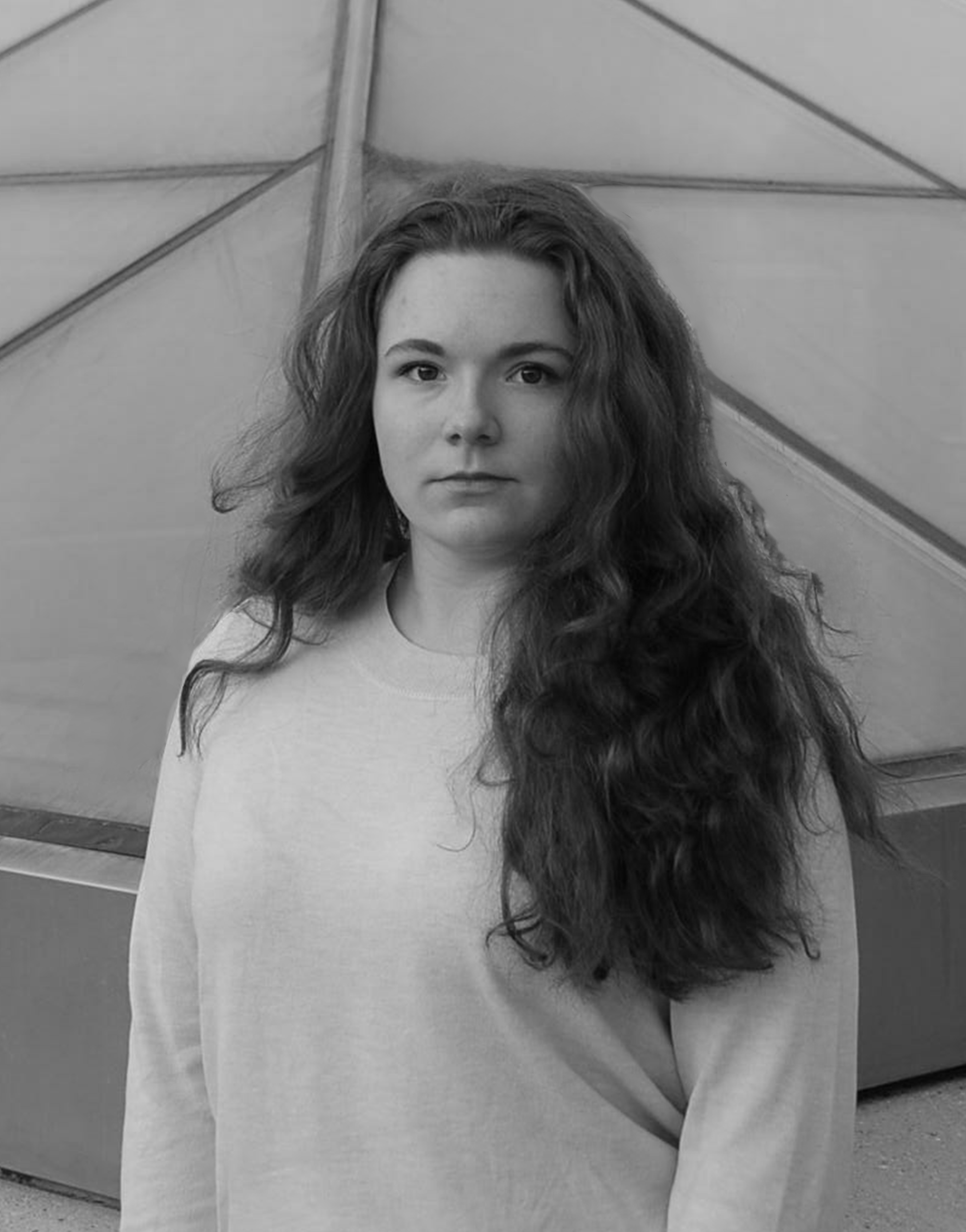
What building evoked a strong reaction from you recently—either positive or negative?
Habitable lantern by Untitiled Architects and Freddi Mamani’s Radical Repair in El Alto, both are extreme opposites, but are human-oriented in nature. Both show the ability of architects to thoughtfully design for others in vastly different architectural languages, context, scale, and typology. Both care.
What is the last book you read?
I am currently reading The Eyes of the Skin.
How did you discover your passion for architecture?
I went to a summer camp at Virginia Tech, and a week later my parents said they picked up a different kid. Growing up in Mississippi, I was lucky enough that 4 years later when I applied I got into VT and had a bit of homecoming to finding myself as an architect.
What is your favorite thing to do to relax?
I really love to go on hikes with my friends, as well as crochet or paint while listening to music.
What advice do you have for aspiring architects?
Advocate for yourself. Surround yourself with those you find comradery with and are filled with compassion; those who challenge you to be a better person so you design for people as your first priority.