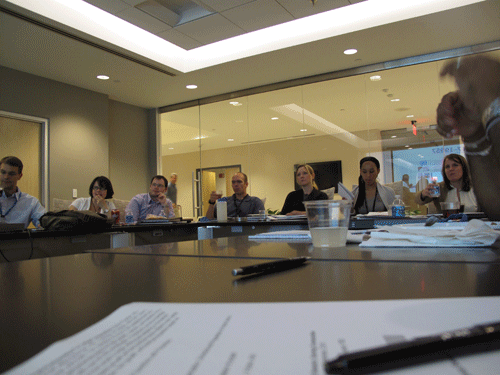
The Northern Virginia ARE Prep Series was awarded the Council of Architectural Component Executives (CACE) ARE Excellence Award at the recent CACE Annual Meeting in Detroit.
Selected from among chapters nationwide, AIA Northern Virginia was recognized “for designing a comprehensive ARE Prep Program that prepares emerging professionals for the ARE exam and at the same time offers AIA CE credits.”
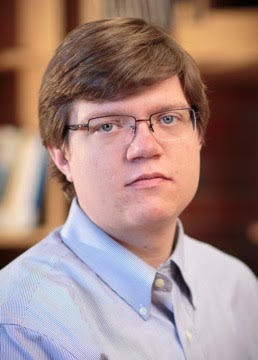
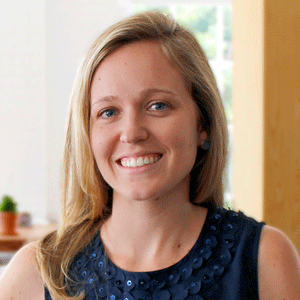
Congratulations to the Young Architects Forum co-chairs Anna Barbour, AIA and Spencer Lepler, AIA and their committee for planning such an outstanding ARE program. Thank you to all the instructors and volunteers, and to the host locations – Jacobs for Structures, Dewberry for Building Systems, and especially to AECOM for hosting all of the Wednesday and Saturday sessions. The exceptional letters of support from both Rachael Johnson, AIA and Spencer Lepler, AIA were a fundamental piece of the submittal, demonstrating the impact of the program on their path to licensure.
article courtesy of AIA Northern Virginia Sept/Oct 2015 Newsletter
The AIA Northern Virginia Women in Architecture Committee has been selected as the host for the AIA Women’s Leadership Summit 2017!
One of nine groups submitting proposals, the selection committee selected Northern Virginia because of the incredible scope of collaboration, both locally and regionally, to host the Summit. WIA has reached out to chapters in the Region of the Virginias and the Mid-Atlantic Region to collaboratively plan the Summit.
Watch for more details and opportunities to volunteer soon from AIA Northern Virginia.
Article courtesy of AIA Northern Virginia Sept/Oct 2015 Newsletter
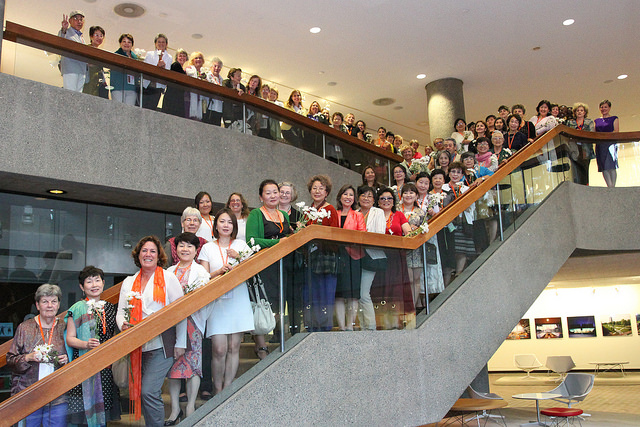
The International Archive of Women in Architecture (IAWA), a center within Virginia Tech’s College of Architecture and Urban Studies, hosted the 18th Congress of the International Union of Women Architects (UIFA), July 26-31, 2015, in Washington, D.C. and Blacksburg, Va.
UIFA Congress at AIA, July 2015
The congress’s theme, “Contributing to the Constellation,” honored both organizations’ aims to exhibit and illuminate the woman’s influence in the field of architecture and other design disciplines. This idea of a constellation advances the archive’s mission to preserve the works of women pioneers – the first bright stars – in architecture and design.
Around 60 participants which comprised representatives from 15 countries on five continents trekked to Blacksburg to get a first-hand view of Tech’s International Archive of Women in Architecture.
Donna Dunay, G.T. Ward Professor of Architecture in Virginia Tech’s School of Architecture + Design and chair of the IAWA said, “It has been almost 30 years since the UIFA Congress was first held in the United States, and the IAWA is excited to welcome a gathering that carries such weight, importance, and authority to empower, connect, and celebrate women in architecture.”
Dunay’s efforts were applauded by A. Jack Davis, FAIA LEED AP, Dean, College of Architecture and Urban Studies. “Professor Dunay is like a dedicated farmer who year after year, plants professional seeds and sows the crop for generations to come. Her selfless and dogged commitment to preserving the work of women designers from the past has created an impressive lasting legacy for all future designers.”
Read more about the Congress’ visit to Blacksburg in The Roanoke Times.
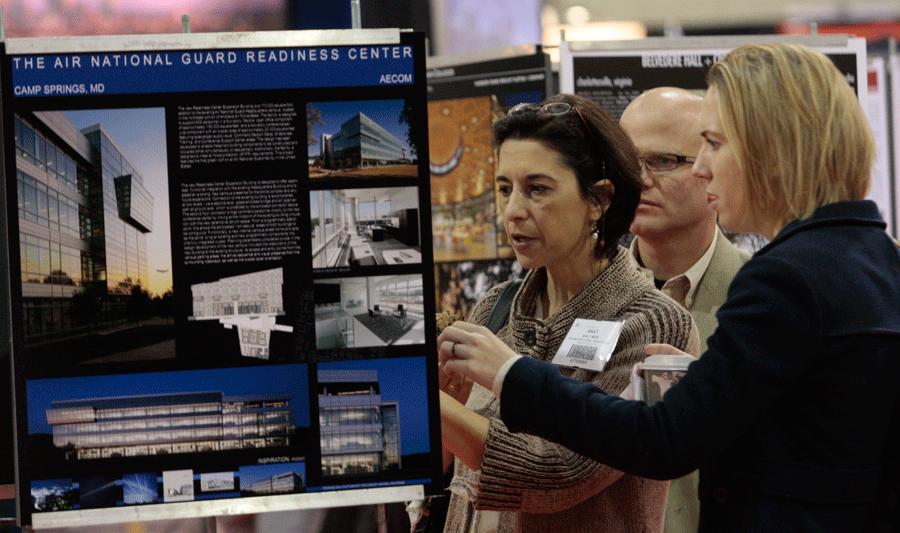
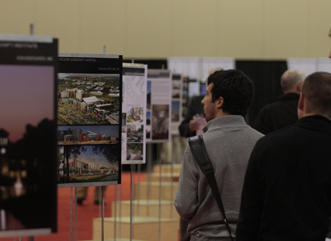
The Mid-Atlantic Design Showcase places your work on display at Architecture Exchange East – the mid-Atlantic’s premier annual conference and expo for the profession.
The deadline for the order form and payment has been extended to Oct. 16, 2015. Boards are due by Oct. 26, 2015.
Project boards are centrally displayed in the ArchEx Exhibit Hall and seen by nearly 1,000 attendees. Architects, interior designers, professional engineers, and landscape architects in the mid-Atlantic are eligible to submit images of built or un-built work. Built projects may be anywhere in the world.
The entry fee is $120 per board and spaces are extremely limited. Reserve your space in the Showcase today online or by downloading and submitting the application, or by contacting Rebecca Jones, at (804) 237-1760 or rjones@aiava.org.
Architecture Exchange East, held Nov. 4-6, 2015, in historic Richmond, Va., features over 80 educational sessions, spectacular behind-the-scenes architectural tours, engaging special events, and more than 100 vendors in the ArchEx Exhibit Hall.
You can find out more at www.archex.net. Registration is now open!
We’re seeking a limited number of individuals to serve as volunteers at Architecture Exchange East. In exchange for your service, you can attend ArchEx for free on the day(s) you help out. Architecture Exchange East takes place at the Greater Richmond Convention Center on Nov. 4-6, 2015. Find out more at www.archex.net.
We are looking for volunteers who are capable of completing a number of different tasks throughout the conference. Volunteers are expected to commit to a minimum of one full day in order to receive the complimentary conference registration.
While we try to accommodate all requests, you’ll be assigned to positions where we have the need. You must fulfill your entire commitment to receive complimentary conference registration.
If you are interested, please contact us right away.
The jury for the AIA Virginia Prize for Design Research and Scholarship, chaired by Patrick Rand, FAIA, Alumni Distinguished Professor of Architecture at North Carolina State University, has voted to award the 2015 Prize to Virginia Tech professor Joe Wheeler, AIA, for Virginia Tech’s futureHAUS.
Virginia Tech futureHAUS
The jurors recognized that Wheeler’s submission was “exemplary in regards to innovation” and “the potential impact on housing could be substantial.”
The Prize will be awarded during the AIA Virginia Membership Meeting on Thursday, Nov. 6 in room E11b and Wheeler’s work will be presented that same day during Architecture Exchange East in session 152 at 2 p.m.
Additionally, the jury awarded Honorable Mention to Virginia Tech professor Mehdi Setareh, Ph.D., for the Structure and Form Analysis System (SAFAS). The jury praised the work as “an excellent teaching method for space frame design” which could “provide an excellent tool for structures course instructors.”
The Prize is intended to encourage theoretical awareness, educational exchange, thought and research in architecture, both within academic institutions and within the offices of practicing architects who participate in theoretical pursuits.
We are excited to announce a pilot webinar which will expand our partnership with the Virginia Department of Housing and Community Development and make it easier for you to stay up-to-date on Virginia Building Codes.
The first pilot webinar, Virginia Statewide Building Code: Significant Changes, will be presented on October 14. To participate in this webinar, please contact Marshall Dreiling. The pilot webinar is free, but space is limited.
The AIA Virginia Prize is a design charrette that engages students at all of the accredited schools of architecture in Virginia. Conducted simultaneously at each institution, students are given the competition program Friday at 5 p.m and they work over the weekend to create a board presenting their design solution by 9 a.m. Monday morning.
For 2015, the students will spend the weekend of Sept. 11–14, designing their response to the problem created by faculty from one of Virginia’s architecture schools. The competition is intended to promote collaboration between the profession, students and professors in Virginia.
Each school’s faculty reviews the submissions and sends up to 10 finalists to Richmond for final judging. Submissions and winners will be showcased in the exhibit hall at Architecture Exchange East, Nov. 4–6, 2015 in Richmond.
For more information on the AIA Virginia Prize, contact Marshall Dreiling, Education Manager at (804) 237-1769.
You’ll enjoy two inspiring keynotes at this year’s Architecture Exchange East, Nov. 4-6, 2015, in Richmond.
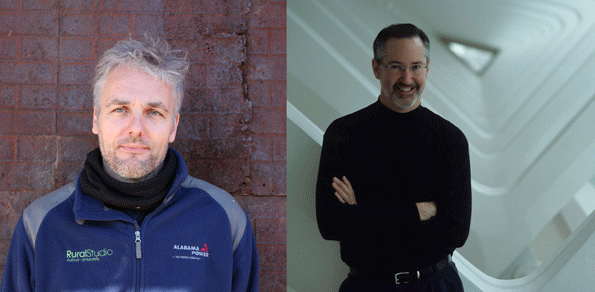
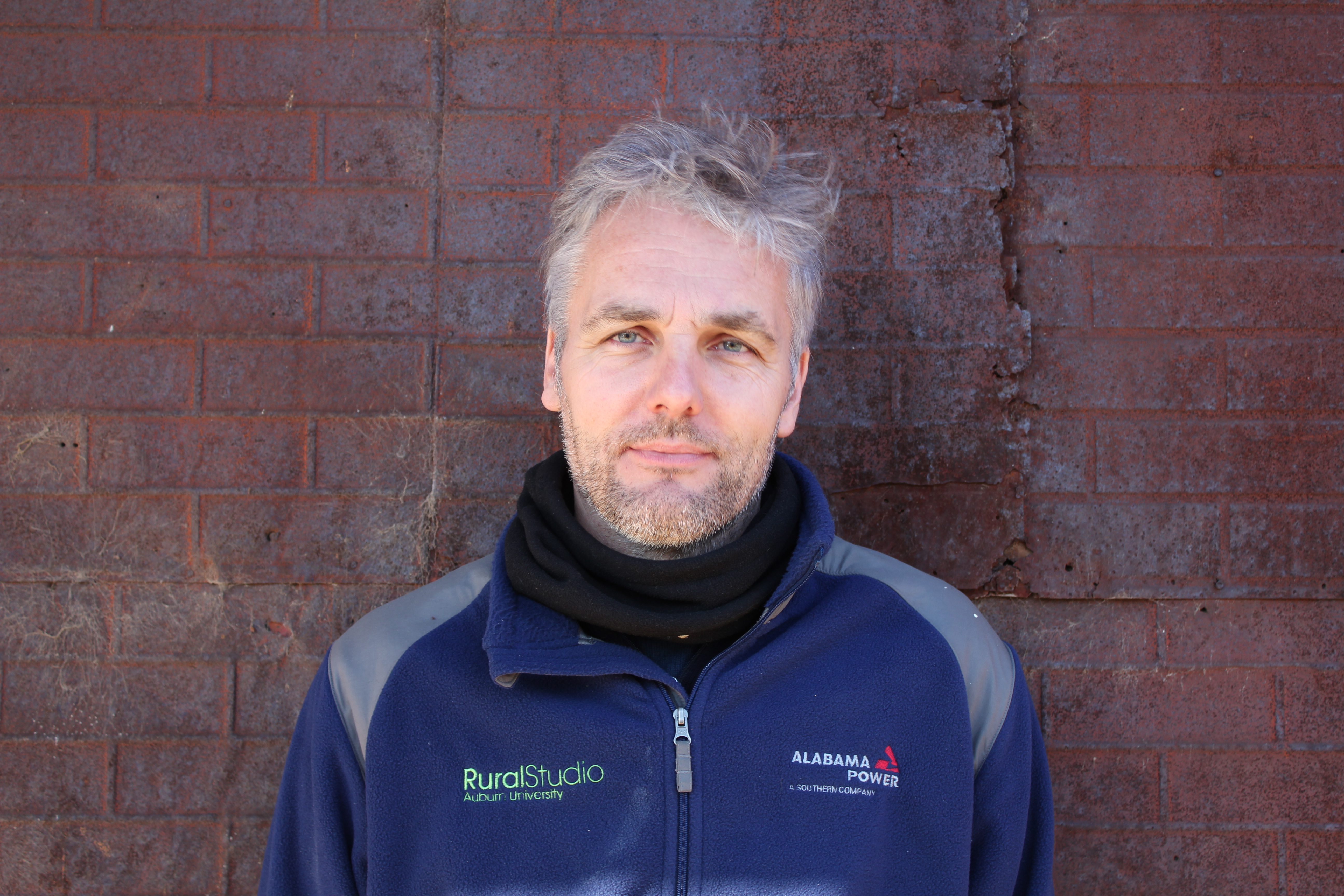
On Thursday, we’ll hear from Andrew Freear.
Andrew Freear
Andrew Freear, from Yorkshire, England, is the Wiatt Professor at Auburn University Rural Studio. After the untimely death of Samuel Mockbee, he became the Director of the Studio in 2002.
For sixteen years Freear has lived in the small rural community of Newbern, West Alabama where his main role, aside from directing Rural Studio is project advisor to fifth-year undergraduate students: designing and building charity homes and community projects to improve local conditions.
Freear has designed Rural Studio exhibits in Chicago, Cincinnati, Vienna, Barcelona, 2002 Whitney Biennial, the 2005 Sao Paulo Biennal, the 2008 Venice Biennale and most recently at the V&A in London, and at MOMA NYC. He lectures across the United States and Europe. In contrast, he is a member of the Newbern Volunteer Fire Department in Newbern.
In 2006 Freear was honored with The Ralph Erskine Award, from Sweden, which aspires to promote urban planning and architecture which is functional, economical and beautiful, and which is to the advantage of underprivileged and deprived groups in any society. In 2008 he was a Laureate in the second edition of the Global Awards for Sustainable Architecture.
He has just written a book about the Rural Studio educational process entitled: “Rural Studio at twenty: designing and building in Hale County, Alabama.
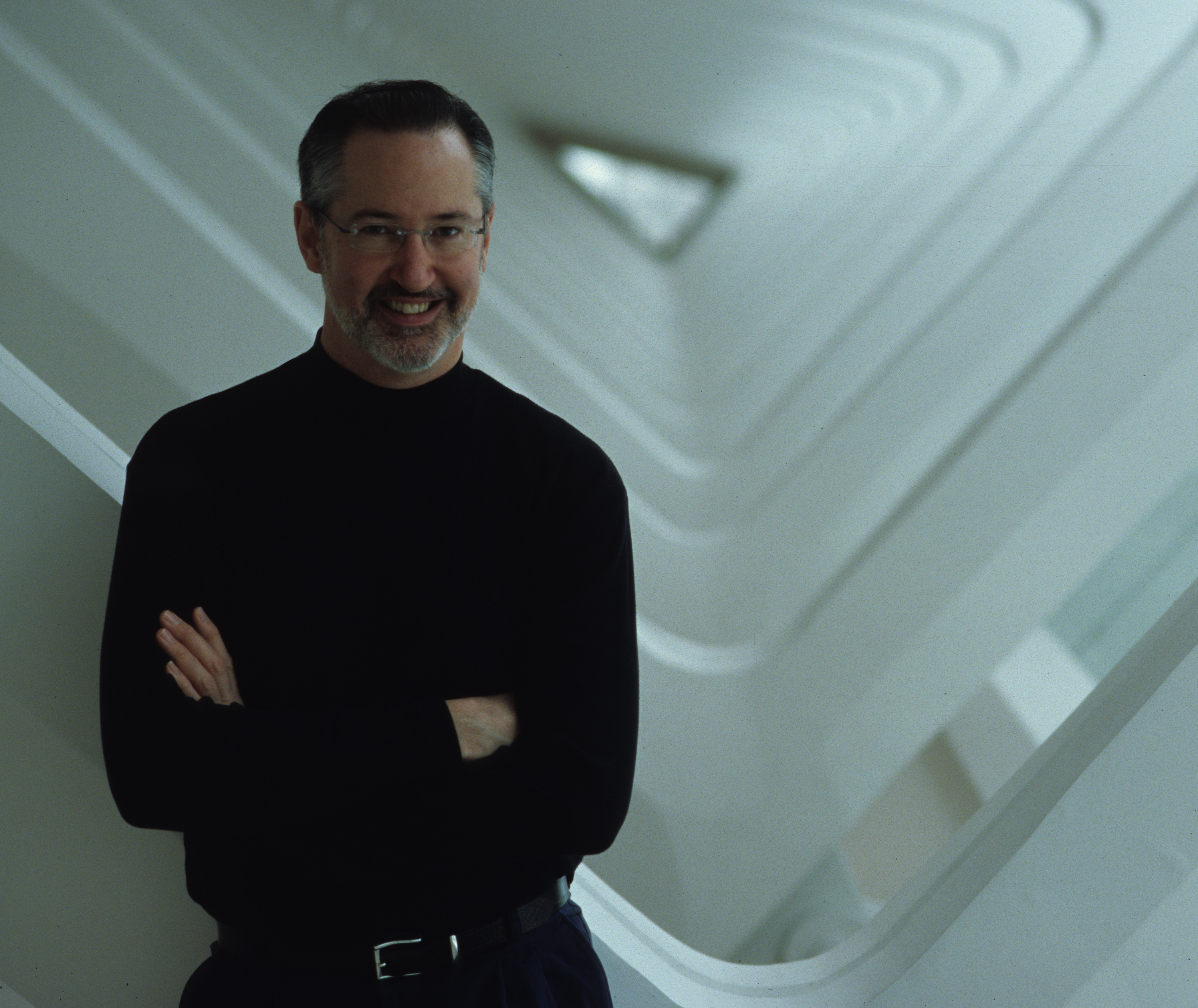
And on Friday, we’ll hear from David Zach.
David Zach
The future depends upon design – and designers need to understand how important their role is in building that future. Some have said that the future requires us to be open to change, but futurist David Zach disagrees. It’s not that simple. To design and build a better future, we have to hold on to the best of the past and make sure we learn from the lessons of history. To believe that everything can change, that nothing is permanent, is to believe that we have learned nothing.
Design and logistics are now at the center of the economy and these two forces are both clashing and cooperating to create an explosion of innovation. The boundaries between design occupations are fading. Design professionals are not only taking their talents into other realms, so those other realms are poaching into theirs too. 3D printing could help spark a manufacturing renaissance and the reindustrialization of America. Virtual design could have many people not caring for the built environment. The down sourcing of design talent into a variety of inexpensive apps raises questions, for instance: Can designers be automated? (Brief answer: No. Not the good ones.) It also raises questions about what will define a design professional in the 21st century.
This is the most exciting time to be an architect at the intersection of logistics and design. You’ve got questions about the future and your careers? David does too. Join him on Friday for this poignant discussion.
David Zach is a futurist who have given over 1,500 talks throughout North America and Europe. He was the 2010-2013 Public Director on the AIA National Board. In 2012, he received a Presidential Citation from AIAS for his work with Emerging Professionals. He loves architecture and design. He’s hopeful about architects.
Registration for Architecture Exchange East opens soon!
AIA Virginia’s award-winning Emerging Leaders in Architecture (ELA) program was developed to jump-start the careers of young professionals. Conceived of and lead by a passionate steering committee of successful architects, the program was designed to share the things they wished they had learned in architecture school.
Each of the seven day-long-sessions focus on developing essential skills like financial management, communication and negotiation, advocacy and public service, and much more.
Want to be a member of this elite group of leaders? Apply to be a member of the ELA class of 2016. Contact Marshall Dreiling for more information on how to nominate an emerging leader or with questions about the program.
We were curious about these leaders, so we asked members of the ELA class of 2015 the same five questions, and this is what they had to say.
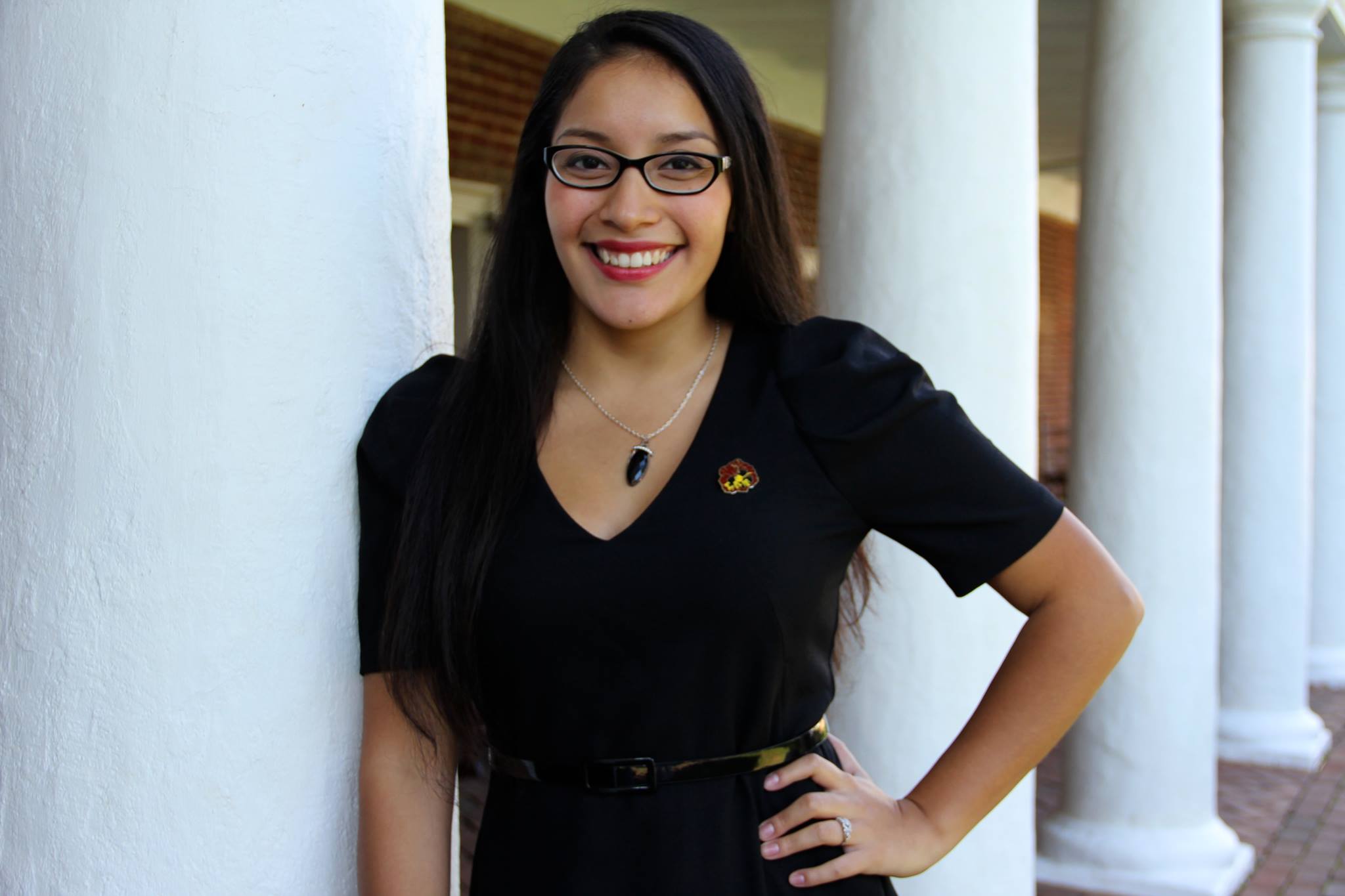
Isabel Argoti
Isabel Argoti
Q: What building evoked a strong reaction from you recently—either positive or negative?
A: The Woodies Building in Washington D.C. – positive. It has an interesting combination of classical architecture with intense color décor.
Q: What is the last book you read?
A: Consider Lily by Anne Dayton and May Vanderbilt
Q: How did you discover your passion for architecture?
A: My uncle is a contractor. I grew up around amazing houses and mansions being built my family first hand. Seeing the plans in drawings in his office come to life absolutely fascinated me. I wanted to design the houses he built, and plus he always told me that he would build my designs.
Q: What is your favorite thing to do to relax?
A: Sleep. Architects do not sleep enough.
Q: What advice do you have for aspiring architects?
A: I am still an aspiring architect myself. But find your inner drive for architects –I can’t see myself studying or pursing anything else in school and that makes the late nights easier.
Taylor Clark
Taylor Clark
Q: What building evoked a strong reaction from you recently—either positive or negative?
A: The ruins of St. John’s Episcopal Church in Harpers Ferry. Good architecture should aspire to leave beautiful ruins.
Q: What is the last book you read?
A: Breakfast of Champions – Kurt Vonnegut
Q: How did you discover your passion for architecture?
A: In my previous life, I studied and performed music. When I first heard Goethe’s quote, “Music is liquid architecture. Architecture is frozen music,” I was hooked.
Q: What is your favorite thing to do to relax?
A: Play my guitar or upright bass.
Q: What advice do you have for aspiring architects?
A: A professor once told me, “If the only tool I have is a hammer, then every problem looks like a nail.” Build a well-rounded knowledge of things beyond architecture. Also, spend some time swinging a hammer.
Angella Dariah
Angella Dariah
Q: What building evoked a strong reaction from you recently—either positive or negative?
A: The Beinecke Rare Books and Manuscript Library on Yale’s campus gave me a positive reaction. I thought it was quite interesting how this huge concrete block was being held by just these four tiny pillars on each corner.
Q: What is the last book you read?
A: Honestly, the last book I read was the Handbook for the Practice of Architecture. I’m one of the few in this ELA group that is still in school.
Q: How did you discover your passion for architecture?
A: My dad is an architect in Hartford, CT, and when I was little, he always took me to work with him whenever I was off from school. From then, it was history.
Q: What is your favorite thing to do to relax?
A: I absolutely love to sing and dance. Some people may say that these two activities are far from relaxing, but to me, they bring you to a whole other place, away from your problems, thoughts etc.
Q: What advice do you have for aspiring architects?
A: I know it’s so cliché but, FOLLOW YOUR DREAMS AND NEVER GIVE UP! Don’t be that person that always says “I should have”; be the person that always says “I have” (and then some lol).
Matthew Fadel
Matthew Fadel
Q: What building evoked a strong reaction from you recently—either positive or negative?
A: I just got back from a trip where I was able to see The Guggenheim in Bilbao from the outside. The most interesting part was the large portion of building that was left open to the elements, allowing people to see how the materials come together.
Q: What is the last book you read?
A: Since having my first-born child this past year, I’ve been looking forward to reading many different things.
Q: How did you discover your passion for architecture?
A: Not until I was introduced to architectural theory in college; I found the philosophy and the thinking that guides design to be alluring and very powerful. Being able to convincingly reason aesthetic expression hooked me and opened me up to the profession in new ways.
Q: What is your favorite thing to do to relax?
A: Stream programs via Netflix with my wife
Q: What advice do you have for aspiring architects?
A: Take the initiative with your professional education and advancement; do not wait for things to be handed to you. Ask for them, demand them, and when you’re faced with issues that are new and unknown, don’t hesitate to ask questions.
Erika Feggestad
Erika Feggestad
Q: What building evoked a strong reaction from you recently—either positive or negative?
A: The Beinecke Rare Book and Manuscript Library by Gordon Bunshaft. It didn’t look like much to me on the outside, but the inside is amazing when the sun is filtering through the marble.
Q: What is the last book you read?
A: The Bone Clocks by David Mitchell
Q: How did you discover your passion for architecture?
A: Who wouldn’t want to draw pretty pictures for a living?
Q: What is your favorite thing to do to relax?
A: Sit on the beach and read a book.
Q: What advice do you have for aspiring architects?
A: Your social skills can be as important as your design skills in this profession.
Lynden P. Garland, AIA
Lynden P. Garland, AIA, MBA, CDT, LEED AP
Q: What building evoked a strong reaction from you recently—either positive or negative?
A: The National Building Museum in Washington DC – It’s just an incredible space.
Q: What is the last book you read?
A: 1776 by David McCullough and Management Lessons from Mayo Clinic by Kent Seltman and Leonard Berry
Q: How did you discover your passion for architecture?
A: I have always had a passion for learning and sharing knowledge to help and improve people’s lives. My personal mantra is to find ways of making today better than yesterday. Once I realized how architecture could deeply affect people, it became the vehicle that allowed me to best express my personal mantra.
Q: What is your favorite thing to do to relax?
A: Cooking and baking are always a great joy. I’m a bit of a foodie and I like to try new recipes. I also make sure to work out. It helps to relieve stress and, more importantly, it allows me to eat whatever I want.
Q: What advice do you have for aspiring architects?
A: It’s smart to admit that you don’t know, just make sure you’re asking plenty of questions. Never let anyone diminish you, your work, or the value of your profession.
Emily Hope
Emily Hope
Q: What building evoked a strong reaction from you recently—either positive or negative?
A: Women’s Opportunity Centre by Sharon Davis Design located in Rwanda, completed in 2013. It is a campus development that includes a series of circular pavilions, built with materials that were locally sourced and produced. The design thoughtfully responds to the project’s climate, its program and the needs of its users in a way that I find inspiring.
Q: What is the last book you read?
A: 1493 by Charles Mann
Q: How did you discover your passion for architecture?
A: It was just a realization of the common theme in all my childhood pursuits- killing dinosaurs was never as much fun as laying out the base camp.
Q: What is your favorite thing to do to relax?
A: Take a long walk while drinking a nice, strong cup of tea.
Q: What advice do you have for aspiring architects?
A: The reality of getting projects built will zap your enthusiasm if architecture is only a mild interest. Make sure being an architect is your true goal. Own the person you are and find a way to pursue your passion.
Chelsea Lindsey
Chelsea Lindsey
Q: What building evoked a strong reaction from you recently—either positive or negative?
A: I actually just visited the Washington Monument and Jefferson Memorial at night. There was something very powerful about visiting such iconic monuments while they were lit.
Q: What is the last book you read?
A: I’ve just started to read I Know This Much Is True by Wally Lamb.
Q: How did you discover your passion for architecture?
A: My passion evolved while I was very young. I had a dollhouse that after a few years I realized was not large enough for the plastic family that lived inside. I decide to add an addition made entirely out of empty tissue boxes and books. Then in third grade, our teacher presented a lesson on architecture, where we learned about a few famous buildings and architects and why there are different typologies of building depending on their specific location. Around the same time, I started to look at mail order blueprint home magazines. I would look at a house plan and start sketching different ways to redesign the house. All of that pushed me towards a passion for design and the desire to become an architect.
Q: What is your favorite thing to do to relax?
A: I love doing yoga as a way to relax. I also really enjoy experimenting with cooking and baking, though not everything is a success!
Q: What advice do you have for aspiring architects?
A: If you are really passionate about architecture, you’ll find a way to make your dream come true. It takes a lot of hard work to go from an interest in architecture and design in high school to becoming licensed, but the people who have that passion will find a way to make their dream into a reality. Also, don’t be afraid to ask questions, that really is the best way to learn.
Alejandro J. Medina
Alejandro Medina
Q: What building evoked a strong reaction from you recently—either positive or negative?
A: Lately I am not so much in love with “great architecture” but I am taking great note of the offices of other business associates in a wide range of professions. I can’t say that I have a strong conclusion yet, but rather a sense that we need to devote more attention and design to the places of employment where more of America spends its life.
Q: What is the last book you read?
A: The last book I read was given to me by ELA. It is called Walkable City.
Q: How did you discover your passion for architecture?
A: When I was a young kid I watched Sleepless in Seattle; Tom Hank’s character in that movie is an architect. That’s where it all started but of course it grew from there.
Q: What is your favorite thing to do to relax?
A: I Create. It’s in my nature. Sometimes it is woodworking or photography. My focus right now is creating/launching a new young professional organization for Hampton Roads called THRIVE.
Q: What advice do you have for aspiring architects?
A: Stay strong if you love it. The profession requires many sacrifices, but all of it is worth it when you see you first building come to life. Especially when you realize that what you created will live long past your time on this earth.
Elizabeth Morgan
Elizabeth Morgan
Q: What building evoked a strong reaction from you recently—either positive or negative?
A: I was recently shocked by renderings for a new skyscraper at the Thermal Baths in Vals, Switzerland by Morphosis Architects. Having visited Peter Zumthor’s Therme Vals a few years ago, and delighting in the building’s sensitivity to place, scale, light, sound, and material, I can only say that this new resort hotel appears to be on the other end of the spectrum.
Q: What is the last book you read?
A: Beautiful Ruins, a novel by Jess Walter
Q: How did you discover your passion for architecture?
A: While in college pursuing a fine art degree, I became involved with a couple of non-profit organizations and found that I had great passion for both creating and community outreach. Art and architecture have always been present in my life, (my dad is a landscape architect/designer and my mother is an artist in many ways), but I never really considered how well my interests and skills aligned with the profession of architecture until I read two books: “Design Like You Give a Damn” by Cameron Sinclair and “Rural Studio: Samuel Mockbee and an Architecture of Decency” by Dean and Hursley.
Q: What is your favorite thing to do to relax?
A: I relax either by practicing yoga or sipping on a martini with a good book, usually not together though. I’m also a sucker for a well-made film or television series.
Q: What advice do you have for aspiring architects?
A: Don’t take yourself too seriously but put some serious energy and positivity in to your work, and nurture the relationships you make with colleagues/faculty/mentors in school and beyond.
Kristin Moye
Kristin Moye
Q: What building evoked a strong reaction from you recently—either positive or negative?
A: Not a building, but The Plot 2.0 in downtown Norfolk by Work Program Architects is a really fun civic project that I thoroughly enjoyed.
Q: What is the last book you read?
A: The Left Hand of Darkness by Ursula K. Le Guin
Q: How did you discover your passion for architecture?
A: Through my academic community. I had some incredible professors and some amazing friends who showed me that architecture is a challenging and wildly beneficial profession for the soul and for the community.
Q: What is your favorite thing to do to relax?
A: Read science fiction novels.
Q: What advice do you have for aspiring architects?
A: Find a community of architects, builders, engineers, or tinkerers that you can talk to openly about architecture and the built environment. Don’t stop talking about it.
Vanessa Raquel Reisin
Vanessa Reisin (right)
Q: What building evoked a strong reaction from you recently—either positive or negative?
A: Casa Azul – Frida Kahlo’s house in Mexico City
Q: What is the last book you read?
A: The Boys in the Boat: Nine Americans and Their Epic Quest for Gold at the 1936 Berlin Olympics
Q: How did you discover your passion for architecture?
A: My path was indirect, however gave me the background and experience that brought me to where I am today. I studied and worked in urban planning for a few years before exploring architecture through two non-degree graduate programs in New York and Paris. The exhilaration and pure adrenaline of studio drew me in.
Q: What is your favorite thing to do to relax?
A: Eat. I love big meals with close friends and family.
Q: What advice do you have for aspiring architects?
A: Take advantage of all of your resources, especially the architects around you of earlier generations. Be engaged, and present, and humble, yet bold. Travel.
John A. Salmons
John Salmons
Q: What building evoked a strong reaction from you recently—either positive or negative?
A: The Walters in Baltimore. It was a positive reaction for me; I really enjoyed how the spaces flowed into one another.
Q: What is the last book you read?
A: The last book that I read was Thinking Architecture by Peter Zumthor
Q: How did you discover your passion for architecture?
A: It was on a trip to New York, when I saw the Guggenheim I knew I wanted to be an architect.
Q: What is your favorite thing to do to relax?
A: I really enjoy day trips, traveling is the best way to find unexpected wonders of architecture.
Q: What advice do you have for aspiring architects?
A: Don’t ever give up on the passion that fires your inspiration.
Lauren Shumate
Lauren Shumate
Q: What building evoked a strong reaction from you recently—either positive or negative?
A: Hagia Sofia (Istanbul, Turkey) – positive
Q: What is the last book you read?
A: Quiet: The Power of Introverts in a World That Can’t Stop Talking by Susan Cain
Q: How did you discover your passion for architecture?
A: I’ve always liked the idea of architecture (played with lots of legos as a kid, etc.) but it wasn’t until my first architecture studio that I had an outlet for my creativity and I developed a true passion for design.
Q: What is your favorite thing to do to relax?
A: I love to travel. There is nothing like dropping into a new culture and experiencing new food, language, and people. My husband and I recently took a trip to Istanbul and I highly recommend it!
Q: What advice do you have for aspiring architects?
A: Work hard but value quality, contribution, and a healthy work/life balance above all. Value relationships with classmates and colleagues – the architecture profession is much smaller than you may realize – you will continue to cross paths!
Emily Striffler, Assoc. AIA
Emily Striffler, Assoc. AIA
Q: What building evoked a strong reaction from you recently—either positive or negative?
A: While in Cape Cod we came across the East Sandwich Preparative Quaker Meeting House, which was built over 200 years ago. It’s a very humble building, but it is incredibly well made. Everything was thought about as it was built, and the materials are honest and rough. It’s still used today, and that really caused me to pause and appreciate its simplicity and timelessness.
Q: What is the last book you read?
A: The life-changing magic of tidying up by Marie Kondo
Q: How did you discover your passion for architecture?
A: My mother is an artist and my father is an engineer – I can’t recall a specific moment where I discovered it – I think my upbringing enabled me to acknowledge it very early in life.
Q: What is your favorite thing to do to relax?
A: Gardening. Can’t beat it, in my opinion. Walking the dog is a close second!
Q: What advice do you have for aspiring architects?
A: Relax, and find time to do something that interests you every day.
Daniel Whitmire
Daniel Whitmire
Q: What building evoked a strong reaction from you recently—either positive or negative?
A: Morphosis Architect’s minimalist skyscraper at Vals – I’m intrigued!
Q: What is the last book you read?
A: Mere Christianity
Q: How did you discover your passion for architecture?
A: I realized I loved architecture during my 4th year of architecture school at Virginia Tech
Q: What is your favorite thing to do to relax?
A: Fighting and other non-relaxing things
Q: What advice do you have for aspiring architects?
A: Pay attention – you can see more by traveling less. Also, pens are invaluable!